Paint for Plastic Outdoor Furniture That Won’t Peel Off in One Summer
Updated: June 2026 | By Sophie Ulman
The wrong paint for plastic outdoor furniture peels off in sheets after one summer, leaving your chairs looking worse than the faded gray you started with. Plastic flexes in the heat, sheds water, and bakes under UV all day, so ordinary spray paint never stands a chance. The four picks below are the ones that actually bond, flex with the plastic, and hold their color through a full seasonal cycle.
I learned this the expensive way. The first time I repainted a set of resin patio chairs, I grabbed a can of generic gloss enamel from the garage shelf. It looked perfect for about six weeks. Then the first heat wave hit and the paint started flaking at every stress point where the chair flexed when you sat down. Here is what I learned: on outdoor plastic, adhesion and flexibility matter far more than color or sheen. Get those two right and the finish lasts years.
What this guide covers
Quick picks at a glanceThe 4 paints, reviewed
Pro tips for a finish that lasts
Spray can calculator
How to choose paint for plastic outdoor furniture
When NOT to paint your plastic furniture
Do you have to sand plastic furniture first?
Prep steps that decide everything
FAQ
Quick picks at a glance
| Paint | Best for | Finish | Bonds without primer? |
|---|---|---|---|
| Krylon Fusion All-In-One (Satin White) | Best overall, most furniture | Satin | Yes |
| Rust-Oleum Painter’s Touch 2X Ultra Cover (Satin) | Best value, big sets | Satin | Mostly |
| Krylon Fusion for Plastic | Heavily weathered, textured resin | Gloss/Satin | Yes |
| Krylon Fusion All-In-One Clear | Sealing color and adding UV armor | Clear matte/gloss | Topcoat |
The 4 best paint for plastic outdoor furniture picks
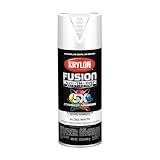
Krylon Fusion All-In-One (Satin White)
Fusion All-In-One carries its own bonding agent in the formula, so the paint chemically grips bare plastic instead of just sitting on top of it. That is the difference that stops the flaking I described above. The acrylic binder stays slightly flexible after curing, which means it moves with the chair when the plastic expands in heat instead of cracking at the stress points.
It suits white resin chairs that have gone chalky and gray, in two thin coats without sanding or primer; armrests that get daily hand contact are where wear shows first. The one honest limitation: the satin sheen flattens slightly after several months outdoors, so if you want showroom gloss long-term, plan on a clear topcoat.
- Bonds to bare plastic, no primer
- Flexible film resists heat cracking
- Fast recoat window
- Satin sheen dulls slightly over time
- White shows overspray on dark patios
Best for: repainting faded resin chairs and tables where you want one product to do the whole job.
Check Price on Amazon ->Via Amazon.com
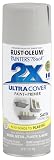
Rust-Oleum Painter’s Touch 2X Ultra Cover (Satin Stone Gray)
Painter’s Touch 2X lays down twice the pigment of a standard rattle can, so you reach full, even coverage in fewer passes. That double-coverage formula is what makes it cheap to paint a whole patio set: you burn through fewer cans on a six-chair job than you would with most sprays. The satin finish also matters outdoors, because satin scatters light and hides the surface scratches that gloss would spotlight.
This one is not a true no-prep plastic bonder, so it rewards a light scuff and a wipe-down first. I have seen it lift on slick, untreated plastic when people skip that step. On scuffed and cleaned plastic, though, it holds beautifully and the color stays true through the season. Stone gray in particular fades less visibly than bright colors under UV.
- Double coverage, fewer cans
- Satin hides scratches outdoors
- Wide color range
- Needs a light scuff on slick plastic
- No built-in plastic bonder
Best for: repainting a large multi-chair patio set on a budget, where you are willing to scuff-sand first.
Check Price on Amazon ->Via Amazon.com
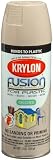
Krylon Fusion for Plastic
The original Fusion for Plastic line was built for one job: gripping the slick, textured resin that defies normal paint. Its binder softens the very top layer of the plastic on contact, so the coating fuses into the surface rather than coating over it. On the pebbled texture of old molded chairs, where paint loves to skip and bead, that fusing action is what gives you an even film.
I keep a can of this for the chairs that are too far gone for an all-purpose spray, the ones with a rough chalky surface from years of sun. It bites into that texture where other paints slide off. The trade-off is a thinner build per coat, so heavily faded plastic needs three light passes instead of two. Patience here beats one heavy coat that runs in the texture grooves.
- Fuses into slick textured resin
- Excellent on chalky weathered plastic
- No sanding required
- Thinner build, needs more coats
- Narrower color selection
Best for: rescuing old, chalky, heavily textured molded resin furniture other paints will not stick to.
Check Price on Amazon ->Via Amazon.com
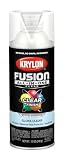
Krylon Fusion All-In-One Clear
This is the clear version of the same bonding formula, and its job is UV armor. A clear topcoat puts a sacrificial layer over your color so the sun degrades the clear instead of your paint, which is what keeps bright colors from chalking out by August. It also adds a second flexible film, doubling the abrasion resistance on seats and armrests that take the most contact.
I started adding a clear coat after watching a cobalt-blue chair fade to a sad powder blue in a single season. The next set got two clear passes over the color, and a year later the blue still reads as blue. The limitation is honest: clear coat will not save a color coat that was applied over dirty or unbonded plastic. It protects good work, it does not fix bad prep.
- UV layer protects color from fading
- Adds abrasion resistance
- Same bonding chemistry as the color coats
- Extra step and dry time
- Cannot rescue poor adhesion underneath
Best for: protecting bright or dark colors on high-sun patios where fading is the main enemy.
Check Price on Amazon ->Via Amazon.com
Pro tips for a finish that actually lasts
Two thin coats always beat one thick coat. Always. A heavy pass on textured plastic pools in the grooves, runs, and stays soft underneath for days.
Paint in the shade, not direct sun. Hot plastic flashes the solvent off too fast and you get a gritty, poorly bonded film. Early morning or a shaded corner of the yard is ideal.
Keep the can 10 to 12 inches off the surface and keep your wrist moving past the edge of the chair. Stopping mid-pass is how you get drips. If you want the paint to flash off faster between coats, the same logic in how to make paint dry fast applies here.
Wipe the whole piece with a degreaser and let it dry fully before the first coat. Plastic furniture carries an invisible film of sunscreen, mold, and mold-release wax, and that film is the number one reason paint lifts.
How many cans will you need?

How to choose paint for plastic outdoor furniture
Choosing paint for plastic outdoor furniture comes down to three things that nobody puts on the front of the can. Get these right and almost any reputable spray will hold. Get them wrong and the best paint on the shelf still fails.
1. Adhesion: it has to bond, not coat
Plastic is slick and chemically inert, so paint has nothing to grab. You either need a paint with a built-in bonding agent, like the Fusion lines, or you scuff the surface and use a plastic primer first. There is no third option that lasts. This is the same principle behind painting other tricky surfaces, like the bonding question in can you paint vinyl windows.
2. Flexibility: the film has to move
Outdoor plastic expands and contracts with temperature swings, and your seat flexes every time someone sits down. A brittle paint film cracks at those stress points within a season. Look for acrylic or specialty plastic formulas that stay slightly elastic. Hard automotive enamels look great on rigid metal but split on flexing plastic.
3. UV resistance: the sun is the real enemy
Fading is what kills most outdoor paint jobs before peeling ever gets the chance. Darker and brighter colors fade fastest. Either accept some fade with a muted color like the stone gray above, or add a clear UV topcoat to take the hit for you. For broader exterior color durability, the same UV logic in our guide to the best exterior house paint carries straight over to furniture.
How plastic furniture paint compares to general plastic spray
If your project is indoors or not weather-exposed, you have more latitude and can lean on our broader roundup of the best paint for plastic. Outdoor furniture is the harder case because it has to survive UV and rain on top of the adhesion challenge, so the bar is higher.
When NOT to paint your plastic outdoor furniture
Do not paint plastic that is already cracking, brittle, or crazed with fine surface lines. Paint will not hold a substrate that is failing, and you will just be repainting flakes within weeks. Once polypropylene gets that dry, chalky, micro-cracked look all the way through, the furniture is at the end of its structural life, full stop.
Skip painting in humidity above 70 percent or when rain is due within 24 hours. Trapped moisture under the film is a guaranteed peel. And never paint the weight-bearing webbing of a strap chair, the flexing there is too extreme for any coating.
Do you have to sand plastic furniture before painting it?
Not in the way you sand wood, and this is where most people either waste an afternoon or skip the one step that actually matters. On plastic patio furniture you are not sanding to level anything. You are scuffing to break the mold-release sheen and give the paint something to key into.
What that means in practice: a light pass with 220-grit or a red scuff pad until the gloss goes evenly dull. That is it. You are looking for a uniform matte haze, not bare material. Aggressive sanding on resin furniture opens the surface up, and open plastic drinks paint and holds moisture at the edges, which is exactly the failure you were trying to prevent.
The step that genuinely cannot be skipped comes before the scuff: degreasing. Outdoor plastic collects a film of sunscreen, pollen, cooking grease and mold-release agent that no paint bonds through. Warm water with dish soap, a stiff brush into the texture, a clean rinse, and a full day to dry. I have seen paint peel off a perfectly scuffed chair because the arms still had a summer of sunscreen on them.
Can you get away with no sanding at all? With a true bonding formula like the Krylon Fusion line, on smooth and genuinely clean plastic, yes - that is what those paints are built for, and the same is true of the bonding spray paint for plastic formulas built on the same chemistry. On chalky, sun-baked resin that has been outside for five years, no. Chalked plastic sheds a powder layer, and paint sticks to the powder rather than the chair. Scuff that back until the surface stops leaving white on your hand. If the piece is beyond that point, a general paint for plastic guide covers the primer route, and sealing the finished color with a clear topcoat buys you a season or two more of UV protection.
One honest limitation on the scuff-and-spray approach: it does nothing for structural damage. Hairline cracks at the leg joints and chairs that flex more than they used to are telling you the plastic has gone brittle from UV. Paint hides that, which is the last thing you want on something you sit in.
Prep steps that decide everything
Durability is roughly 50 percent product and 50 percent surface preparation. Prep matters more than the brand on the can, and on slick outdoor plastic it matters most of all. Here is the sequence that works.
First, wash every piece with warm water and a degreasing dish soap to strip off sunscreen, body oils, pollen, and the waxy mold-release film from manufacturing. Rinse and let it dry completely, ideally in the sun for a few hours.
Second, scuff the whole surface with a fine sanding sponge, around 220 grit. Even with a no-prep bonding paint, a light scuff gives the coating extra mechanical grip and it costs you five minutes. Wipe the dust off with a tack cloth.
Third, mask the ground and anything nearby, because spray drifts further than you think. Then warm the can in your hands, shake it for a full minute, and commit to thin coats. The discipline of two thin coats is the whole game.
The verdict
For most people repainting a faded patio set, Krylon Fusion All-In-One is the pick: it bonds without primer, flexes with the plastic, and does the whole job in one product. Painting a big set on a budget? Rust-Oleum Painter's Touch 2X stretches further per can if you scuff first. Got old chalky resin? Reach for Fusion for Plastic. And on a high-sun patio, add a clear UV topcoat so the color survives the summer.
FAQ
Do you have to sand plastic furniture before painting?
Not always, but you should. With a no-prep bonding paint you can technically skip it, but a quick scuff with 220 grit gives the paint extra mechanical grip and noticeably improves how long the finish lasts outdoors. Five minutes of sanding buys you an extra season or two.
What kind of paint stays on plastic outdoor furniture the longest?
A spray paint with a built-in plastic bonding agent and a flexible acrylic film lasts longest, especially when topped with a clear UV coat. Krylon Fusion and Rust-Oleum's plastic-rated sprays both fit. The clear topcoat is the single biggest factor in fade resistance.
Will spray paint peel off plastic chairs in the rain?
Properly bonded and fully cured paint will not peel in the rain. Peeling happens when the surface was not cleaned, the plastic was not scuffed, or the paint was applied too thick. Let each coat cure fully and keep rain off it for the first 24 to 48 hours.
How many coats of paint does plastic furniture need?
Two thin coats for most pieces, three for heavily faded or chalky plastic. Thin coats bond better and dry harder than one thick coat, which tends to run in the texture and stay soft underneath. Let each coat flash off before the next.
Can I use regular spray paint on outdoor plastic furniture?
You can, but it usually fails. Ordinary spray paint has no bonding agent and a rigid film, so it flakes off flexing plastic within a season. Use a paint rated for plastic, or scuff and prime first if you only have a general-purpose can on hand.
How long should paint cure before I sit on the furniture?
Dry to the touch happens in 20 to 30 minutes, but full cure takes longer. Wait at least 24 hours before normal use and a few days before heavy contact or stacking. Cured paint is far more scratch and chip resistant than paint that is merely dry.
Further reading on outdoor finishes and weathering from This Old House and spray technique guidance from Family Handyman.
ThePaintly is reader-supported. Our picks are based on manufacturer specifications and what users report. When you buy through links on this site, we may earn an affiliate commission at no extra cost to you.