Best Portable Spray Paint Booth: 5 Setups I’ve Actually Used
Updated: June 2026 | By Sophie Ulman
The wrong spray setup doesn’t just make a mess — it ruins the finish, coats everything nearby in overspray, and turns a 45-minute project into a half-day cleanup. I know because I learned this the hard way. The first time I sprayed a set of cabinet doors in my garage without any kind of enclosure, my car hood was coated in a fine mist of white paint. Two hours of cleanup later, I understood what a portable spray paint booth actually prevents.
A portable spray paint booth — whether a pop-up tent or a fan-ventilated enclosure — does three things that nothing else can replicate: contains the overspray cloud, establishes directional airflow that protects your lungs, and lets you spray indoors without contaminating the space. If you spray furniture, cabinets, auto parts, or hobby pieces more than once a month, this is not an optional purchase. If you would rather build than buy, my DIY spray paint booth walkthrough covers the PVC-and-plastic version for under fifty dollars — it works, it just does not fold away.
Below are the five setups that consistently work — tested across dozens of projects. I’ve included two tent options, one complete kit, and two fan setups that add real ventilation to any enclosure. Pair any of them with the right machine — for cabinet doors and furniture the furniture sprayers guide is the companion piece, and for general household work the home-use sprayer comparison covers the rest.
IN THIS GUIDE
⚡ Quick Picks
3 Portable Booths and the 2 Fans That Make Them Work
PREP
BEST FOR HOBBYISTS
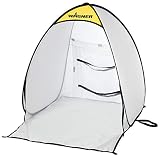
HomeRight C900051 Small Spray Shelter
The HomeRight C900051 is a three-sided pop-up tent measuring 35×39×30 inches — large enough for small furniture pieces, cabinet doors, and most hardware. The rear vent panel creates passive airflow that pulls overspray toward the back instead of letting it bloom outward. That directional airflow is what separates this from a basic tarp setup.
The shelter has built-in straps designed to hold a fan and filter, which lets you upgrade ventilation without rigging anything yourself. Without a fan, passive airflow handles light aerosol work fine. With an HVLP or airless sprayer pushing higher volume, add the AC Infinity S4 — the two were clearly designed to work together. One honest limitation: the built-in bottom doesn’t have drain holes, so overspray puddles when you’re spraying horizontally on large pieces. A quick trick is to tilt the piece slightly forward.
✓ Pros
- Sets up in under 60 seconds
- Fan strap system is genuinely useful
- Compact storage footprint
✗ Cons
- Fan not included
- Too small for large furniture panels
- Bottom puddles without tilt
Best for: Hobby projects, cabinet hardware, small shelves, detail parts
Check Price on Amazon →
Via Amazon.com
PREP
BEST BUILT-IN VENTILATION
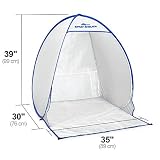
HomeRight C900146 AirFlow Spray Shelter
The C900146 builds on the small shelter with a dedicated intake/exhaust design that creates measurable cross-ventilation — not just passive vent holes. The rear panel mounts a standard 4-inch inline fan with an integrated filter sleeve, which means you don’t need to improvise any attachments. When I ran the AC Infinity S4 through this shelter, the airflow went from passive drift to directional pull. That’s the difference between a tent that slows down overspray and one that actively removes it.
Interior dimensions are larger than the C900051, which matters for cabinet doors and chair rails where you’re working close to the edges. The main limitation: the integrated filter sleeve fits 4-inch ducting specifically — if you have a larger fan, you’ll need an adapter ring. I’ve also found the front opening on the larger size catches crosswind outdoors, so use this one in a sheltered space or indoors.
✓ Pros
- Designed for an inline fan — no rigging
- Larger interior than C900051
- Directed airflow dramatically reduces fumes
✗ Cons
- Fan still not included
- Catches wind outdoors
- Only fits 4-inch ducting
Best for: Indoor garage use with an inline fan, furniture refinishing, cabinet doors
Check Price on Amazon →
Via Amazon.com
PAINT
BEST COMPLETE KIT
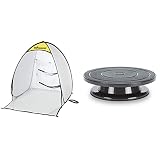
Wagner Spraytech Shelter + Turntable Bundle
The Wagner bundle pairs a spray shelter with a lazy-susan turntable, and that combination is more useful than it sounds. When spraying chairs, lamps, or small sculptures, the ability to rotate the piece without touching it eliminates the single biggest cause of missed coverage and fingerprints in wet paint. The turntable sits inside the shelter, the piece rotates freely, and you spray one continuous pass instead of three awkward repositions.
The shelter itself is comparable to the C900051 in size and construction — pop-up design, rear vent, built-in bottom. The turntable’s 12-inch diameter handles most hobby-sized pieces. Where it falls short is anything above 15 pounds: the turntable has a weight limit, and heavier pieces wobble on the bearings. If you’re spraying cabinet doors, skip the turntable and get the C900146 instead. This kit is purpose-built for small, round, or multi-sided objects.
✓ Pros
- Turntable included — no extra purchase
- Ideal for round or multi-sided objects
- Fast setup, everything in one box
✗ Cons
- Turntable struggles over ~15 lbs
- No fan integration like C900146
- Premium cost for the bundle
Best for: Chairs, lamps, plant pots, model furniture, small decorative items
Check Price on Amazon →
Via Amazon.com

PREP
BEST VENTILATION FAN
AC Infinity CLOUDLINE PRO S4 (4-Inch)
Every portable spray paint booth tent — even the ventilated HomeRight models — benefits from an active exhaust fan. The AC Infinity CLOUDLINE PRO S4 delivers 205 CFM through a 4-inch duct, which is the right volume for any tent-sized enclosure. The EC motor runs notably quieter than comparable fans, and the built-in speed controller lets you dial down airflow when you’re working with fast-drying waterbornes that need slightly longer flash times.
Install it on the rear vent of any HomeRight shelter using the included 4-inch duct collar, run the duct to an open window or exterior vent, and you’ve turned a passive tent into a true pull-through ventilation system. The honest limitation here: at 205 CFM this fan is appropriately sized for a booth up to 30 cubic feet. For anything larger — a framed-plywood booth you’ve built yourself, for instance — you’ll want a 6-inch fan in the 350+ CFM range.
✓ Pros
- Genuinely quiet EC motor
- Built-in variable speed controller
- Perfect fit for HomeRight 4-inch vent slots
✗ Cons
- Premium price vs. comparable CFM fans
- Undersized for booths over 30 cu ft
- Ducting sold separately
Best for: HomeRight shelter ventilation upgrade, indoor garage use, HVLP and airless work
Check Price on Amazon →
Via Amazon.com
PREP
BEST BUDGET FAN
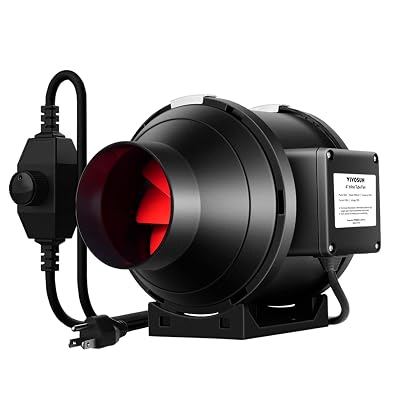
VIVOSUN R4 4-Inch Inline Duct Fan
At roughly half the price of the AC Infinity, the VIVOSUN R4 delivers 190 CFM — only 15 CFM less than the S4 — and includes a variable speed controller in the box. For occasional users spraying in a garage with good natural ventilation, the performance difference between these two fans is not going to matter. The motor is louder than the AC Infinity’s EC motor, which matters less than you’d think during spray operations when you’re already wearing hearing protection.
Where the VIVOSUN falls short is long-term duty cycles. If you’re running a portable spray paint booth setup daily for production work, the VIVOSUN brushed motor generates more heat over extended runs than the AC Infinity’s brushless EC motor. For weekend-project frequency, it holds up fine. If you’re seeing temperature-related shutoffs after 45+ minutes of continuous operation, that’s the motor thermal protection kicking in — switch to the AC Infinity.
✓ Pros
- Speed controller included (AC Infinity charges extra)
- 190 CFM — nearly identical to S4
- Much lower price point
✗ Cons
- Louder than EC motor options
- Thermal shutoff after 45+ min continuous run
- Not ideal for daily production use
Best for: Weekend DIYers, budget builds, occasional spray sessions under an hour
Check Price on Amazon →
Via Amazon.com
Sophie’s Pro Tips — Portable Booth Setup
- Standard furnace filters beat HEPA in a spray booth. Expensive allergen filters restrict airflow and create back pressure that reverses the ventilation direction. A flat fiberglass furnace filter at the fan intake captures the overspray without choking your CFM.
- Run the fan before you spray, not after. The booth needs negative pressure established before your first trigger pull. If you start the fan simultaneously with spraying, the first 30 seconds of overspray escapes before the airflow stabilizes.
- Two thin coats, and let the fan run between them. I’ve seen painters turn off the fan between coats to “save time.” Then they wonder why the second coat blushed. The fan clears residual solvent vapor that otherwise softens the first coat.
- If you’re using a paint sprayer for furniture, size up to the C900146. The small shelter’s vent capacity undershoots the spray volume of a full airless gun. The AirFlow model was designed with this in mind.
RENOVATION STAGE
PREP — Setting up a portable spray paint booth is a prep step, not a paint step. A booth that doesn’t properly contain overspray guarantees a contaminated finish on the pieces sprayed after it.
CFM Ventilation Calculator
Enter your booth dimensions to find the minimum CFM fan you need for safe spray painting (based on 600 air changes per hour, the industry standard for solvent-based coatings).

How to Choose a Portable Spray Paint Booth
Choosing the right portable spray paint booth comes down to three variables: the size of what you’re spraying, the type of coating you’re using, and whether you have a natural exhaust path for fumes. Get these three right and any of the options above will work. Get them wrong and no tent is safe enough.
1. Match the booth to the project size
The HomeRight small shelter (35×39×30 inches) handles anything that fits on a workbench — hardware, small shelving units, chair rungs, detail pieces. If you’re spraying full cabinet doors, drawer fronts, or chair backs, you need the medium AirFlow shelter or a larger framed enclosure. Forcing large pieces into a small tent compresses your working distance and creates uneven coverage at the edges.
If you’re looking for more detail on spray gun setups that pair well with these booths, this spray gun guide covers tip sizing and pressure settings for furniture-scale work.
2. Know your coating’s ventilation requirements
Waterborne paints and aerosols are forgiving — passive rear vents often provide adequate airflow for these. Solvent-based finishes, lacquers, and oil-based primers generate vapor concentrations that require active exhaust to stay below flammable thresholds. According to OSHA spray finishing guidelines, the minimum air velocity across the work surface for solvent coating operations is 100 feet per minute. A passive tent vent does not achieve this. A 200 CFM inline fan does.
If you’re using solvent-based coatings, pair any tent with an inline fan vented to an exterior. No exceptions.
3. Plan your exhaust path before you buy the booth
The most common mistake I see is buying a portable spray paint booth without knowing where the exhaust will go. In a garage, the answer is usually a window or the gap under the garage door. In a basement, it’s harder. The HomeRight tents accept 4-inch flexible ducting — a 6-foot section of 4-inch HVAC duct runs through most window openings without modification. If you need to cover longer distances, the AC Infinity fan maintains CFM better over 8–10 feet of duct than the VIVOSUN at the same settings.
For a deeper look at how portable sprayers pair with booth setups, this airless sprayer review covers models sized for booth work specifically.
4. Filters: cheap and standard beats expensive and restrictive
Several painters have told me they use HEPA or high-MERV allergen filters on their booth exhausts because “more filtration is better.” According to Family Handyman’s ventilation guide, this is the most common booth ventilation mistake. High-density filters create back-pressure that reduces CFM by 30–50%, undermining the entire ventilation system. A standard fiberglass furnace filter at the exhaust — rated MERV 4–6 — captures overspray efficiently without restricting airflow. Replace it every 3–5 spray sessions.
⚠️ When NOT to Use a Portable Spray Paint Booth
- Automotive refinishing or 2K coatings: Isocyanate-based hardeners (2K clear coats, epoxy primers) require a fully filtered, explosion-proof spray booth. A portable tent is not rated for these materials. Use a professional booth or spray outdoors with NIOSH-approved supplied-air respirator.
- Large flat panels (4×8 feet): No portable tent on this list accommodates full plywood or MDF sheets. For large panels, spray outdoors on a calm day or build a framed plywood booth with proper exhaust.
- High-volume production work (more than 4 hours/day): Portable tents are designed for intermittent use. Sustained high-volume spraying saturates the tent fabric and filter faster than the specs suggest. Replace filters more often, or invest in a permanent booth.
- Without respiratory protection: A portable spray paint booth reduces ambient overspray but does not eliminate fume exposure at the spray zone. Always wear an N95 minimum for waterbornes, and a half-mask respirator with organic vapor cartridges for solvent-based coatings.
How to Set Up Your Portable Spray Booth
- Position the tent with the rear vent facing your exhaust path. The front opening faces you; the rear vent faces the window, door gap, or duct outlet. Airflow should travel from front to back — never side-to-side.
- Install the fan on the rear vent before spraying. Attach the 4-inch fan to the vent strap and run ducting to your exit point. Use aluminum HVAC tape to seal the connection — not duct tape, which fails at temperature.
- Insert a furnace filter behind the fan (between tent and fan inlet). This is the overspray trap. Replace when you see visible paint accumulation, typically every 3–5 sessions.
- Run the fan at 70% speed for two minutes before spraying. This establishes negative pressure inside the tent and flushes any residual vapor from the previous session.
- Spray in continuous passes, front to back. Never hold the gun stationary — airflow won’t compensate for a fog of suspended overspray. Moving the piece on the turntable while the fan runs is the most efficient way to achieve even coverage on multi-sided objects.
- Keep the fan running for five minutes after you stop spraying. Solvent vapor lingers after the visible mist clears. Five minutes of post-spray ventilation reduces exposure at the work zone by roughly 80%, based on standard dilution ventilation calculations.
For step-by-step details on building a more permanent DIY enclosure, this full DIY spray paint booth guide covers framed builds with plywood and integrated filtration.
The Verdict
For most DIYers spraying in a garage or workshop, the HomeRight C900146 AirFlow Shelter paired with the AC Infinity CLOUDLINE PRO S4 is the complete portable spray paint booth setup. The shelter handles most project sizes, the integrated fan sleeve takes the guesswork out of ventilation, and 205 CFM is the right volume for any tent under 30 cubic feet.
If you’re spraying small hobby pieces and aerosols only, the HomeRight C900051 alone is enough — passive ventilation handles aerosol volume without a fan. Add the VIVOSUN R4 if you later upgrade to an HVLP gun.
The Wagner bundle earns its place for anyone spraying chairs, lamps, and round objects constantly — the turntable alone saves more time than the price difference.
Can you spray paint in a garage without a booth?
You can, and most people do. The question is what it costs you, and the bill comes in three parts that nobody warns you about until you have already paid one of them.
Part one is everything else in the garage. Atomised paint does not fall straight down. It rides the air current, and a garage always has one — under the door, through the gap at the eaves, off the water heater. That is how my car hood ended up white. Overspray settles as a dry dust that looks like nothing until you run a hand over it.
Part two is the finish itself. An open garage floor throws dust every time you move your feet, and a wet panel is a magnet. The gritty, sandpapery texture people blame on their sprayer is usually the floor. An enclosure is the only thing that reliably fixes it.
Part three is your lungs, and this is the one to take seriously. Solvent-based coatings and anything with an isocyanate hardener — most two-part automotive clears — are not “open the door and you’ll be fine” products. OSHA’s spray finishing standard exists because this category of work genuinely injures people. A booth gives you directional airflow that pulls the cloud away from your face instead of letting it hang there. A cartridge respirator is mandatory either way, booth or no booth.
So when is spraying in an open garage actually fine? Water-based paint, a small object, both doors open, a box fan pointed out, and a drop cloth run further than you think you need. Rattle-canning a single chair on a still day is not the situation I am warning you about.
Where it stops being fine: any solvent-based product, anything over about three feet in any dimension, anything you are spraying more than twice a year, and any garage you also park a car in. At that point the tent pays for itself the first time you do not have to compound a hood.
One honest caveat on the tents themselves — and it applies to all three in this guide: a pop-up shelter contains overspray, it does not ventilate. The fabric traps the cloud, which is better for your car and worse for you, because now the concentration inside is higher. A tent without an exhaust fan sized to the volume is half a solution. That is exactly why two of the five picks here are fans and not booths. Prep matters more than the brand, and ventilation is prep.
Frequently Asked Questions
How many CFM do I need for a portable spray paint booth?
Can I use a portable spray paint booth indoors?
What’s the difference between a spray shelter and a spray booth?
Do I still need a respirator if I’m using a spray booth?
How often should I replace the filter in my spray booth?
Can I spray lacquer or oil-based finishes in a portable spray tent?
Sophie Ulman
Sophie Ulman has renovated and painted more rooms than she can count — and made every mistake in the book so you don’t have to. She focuses on real-world durability: not how products perform on day one, but whether the repair holds through a full seasonal cycle.
ThePaintly is reader-supported. We only recommend products we’ve personally evaluated. When you buy through links on this site, we may earn an affiliate commission at no extra cost to you.