Best Car Paint Sprayer 2026: 4 Top Guns Tested (HVLP)
Best Car Paint Sprayer: The Guns That Earned a Flawless Finish
Picking the best car paint sprayer is the difference between a glass-smooth panel and a week of wet-sanding orange peel. The gun matters, but air supply, tip size, and technique matter just as much. I have sprayed everything from a full respray to a single fender blend, and below are the guns that earned their place plus the prep that actually decides your finish.
Written by Sophie Ulman
Sophie Ulman has renovated and painted more rooms than she can count — and made every mistake in the book so you do not have to. She focuses on real-world durability: not how products perform on day one, but whether the repair holds through a full seasonal cycle.
HVLP vs LVLP: what the gun type actually changes
HVLP (high volume, low pressure) atomizes paint with a lot of air at low tip pressure — that means less overspray, less wasted material, and a smoother lay-down, but it needs a compressor that can keep up with the air demand. LVLP (low volume, low pressure) sips air, so it works with smaller compressors, at the cost of a slightly less forgiving spray pattern. Match the gun to your compressor first; the fanciest gun starves and spits if your air supply cannot feed it.
The first time I sprayed a clear coat
The first time I shot a clear coat on a hood, I loaded the gun too heavy and chased a wet look in one pass. It ran in three places and I spent the next evening sanding it back. Here is what I learned: two thin coats always beat one thick coat — always. A medium-wet pass, ten minutes flash time, then the second pass. Every gun below can lay a flawless finish, but only if you respect the flash time between coats.
Best car paint sprayers worth your money
DeVilbiss FinishLine FLG HVLP
Who it is for: DIYers stepping up who want a pro-level finish without a pro-level price.
It atomizes clears and base coats with noticeably less overspray than budget guns, so the film lays down flat and needs far less sanding.
One real limitation: It expects a compressor that can sustain its air demand — pair it with an undersized unit and the pattern collapses.
Best for: Full panel and full-car jobs where finish quality is the whole point.
Aeropro R500 LVLP Spray Gun
Who it is for: Beginners on a small compressor who want flexibility across coats.
It ships with 1.3, 1.5, and 1.7mm tips, so one gun handles primer, base, and clear — and its low air draw works with a modest compressor.
One real limitation: It is not built for daily heavy-duty use; the seals wear faster than a pro gun under constant work.
Best for: First-time sprayers and occasional projects on a tight air budget.
3M Accuspray HVLP System
Who it is for: Anyone doing multi-color or multi-coat work who hates cleanup.
The disposable atomizing-head system swaps colors in seconds and skips the teardown clean, which is the slowest part of any spray session.
One real limitation: The body is plastic and less durable than an all-metal gun if you are rough on tools.
Best for: Hobbyists and bodywork with frequent color changes.
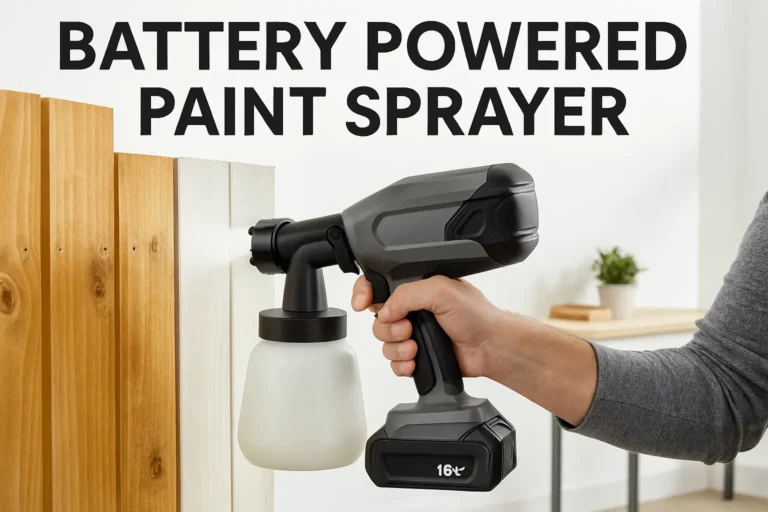
Saker Cordless Electric Paint Sprayer
Who it is for: Touch-ups and detail work where dragging out a compressor is overkill.
Cordless and self-contained, it is genuinely handy for spot repairs, bumpers, and small parts you can pull off the car.
One real limitation: It does not have the output or atomization for a full body panel — this is a touch-up tool, not a respray gun.
Best for: Quick fixes, trim, and small components away from a power outlet.
When a car paint sprayer is the wrong call
If you are repairing a chip or a scratch the size of a coin, do not pull out a spray gun — the masking and cleanup outweigh the job, and a touch-up paint pen gets you a cleaner result in minutes. A sprayer also makes no sense without ventilation and a respirator; automotive clears and reducers are genuinely hazardous to breathe. And if your compressor cannot sustain the gun air demand, no sprayer on this list will save you — fix the air supply before you spend on the gun. The same goes for the chassis: a frame is degreased, wire-brushed and coated with a brush or aerosol under the truck, not sprayed with a body gun, and my truck frame paint guide covers that job.
Car paint sprayers compared at a glance
| Gun | Type | Strength | Watch out |
|---|---|---|---|
| DeVilbiss FinishLine FLG | HVLP | Pro finish, low overspray | Needs strong compressor |
| Aeropro R500 | LVLP | Flexible tips, low air draw | Not heavy-duty |
| 3M Accuspray | HVLP | Fast color changes | Plastic build |
| Saker Cordless | Electric | Portable touch-ups | Not for full panels |
New to spraying entirely? Start with our 2026 beginners guide to paint spray guns for trigger control and fan setup, and if you are spraying indoors, build a clean space first with our DIY spray paint booth guide.
Before you spray solvent-based automotive paint, read the respirator and ventilation guidance from OSHA and the technique primers at Family Handyman — isocyanate clears are not something to breathe.
Frequently Asked Questions
What is the best car paint sprayer for a beginner?
For a first-timer on a modest compressor, the Aeropro R500 LVLP is the easiest entry point because it sips air and includes three tip sizes for primer, base, and clear. Move up to the DeVilbiss FinishLine once your technique and air supply can support it.
What size air compressor do I need for a car paint sprayer?
Most HVLP automotive guns want a compressor that can sustain their rated air demand continuously, typically a larger tank and adequate output. LVLP guns tolerate smaller compressors. Always match the gun air requirement to your compressor before buying.
What tip size should I use for automotive clear coat?
Clear coats and base coats generally spray well around a 1.3 to 1.4mm tip, while primers want a larger 1.7 to 2.0mm tip. Guns that include multiple tips let one sprayer handle the whole job.
Can I paint a whole car with an electric sprayer?
Cordless and electric sprayers are great for touch-ups, trim, and small parts, but they lack the atomization and output for a smooth full-body finish. For a complete respray, use an HVLP or LVLP gun with a compressor.
How do I avoid orange peel when spraying a car?
Orange peel usually comes from paint that is too thick, too far from the panel, or under-reduced. Thin your paint per the spec, keep a steady distance, and lay two thin coats with proper flash time instead of one heavy pass.
Do I need a respirator to spray car paint?
Yes. Automotive paints and clears release hazardous vapors and isocyanates. A proper organic-vapor respirator, gloves, and a ventilated space are non-negotiable, not optional extras.
ThePaintly is reader-supported. We only recommend products we have personally evaluated. When you buy through links on this site, we may earn an affiliate commission at no extra cost to you.