Best Large Airless Paint Sprayer: Top 4 Picks for 2026
Updated: May 2026 | PAINT
Most homeowners underestimate how much time a large airless paint sprayer actually saves. Roll a 2,000-square-foot exterior by hand and you are looking at a full weekend — minimum. The right airless sprayer cuts that to a single afternoon. The wrong one, however, means clogged tips, pressure problems, and a finish that looks worse than rolling.
I evaluated the top models on the market, testing each on real large-scale projects — whole-house exteriors, long fences, two-story siding. The four picks below represent the best large airless paint sprayers at different price points. Every product was selected based on pump power, hose capacity, tip range, and real-world speed on big jobs.
Quick Picks at a Glance
| Pick | Best For | Max Pressure | Max Hose | Price Range |
|---|---|---|---|---|
| Graco ProX19 Cart | Overall best | 3,300 PSI | 150 ft | $$$ |
| Titan ControlMax 1900 Pro | Low overspray | 1,600 PSI | 75 ft | $$$ |
| Graco Magnum X7 Cart | Mid-range value | 3,000 PSI | 100 ft | $$ |
| Wagner Control Pro 190 | Budget option | 2,800 PSI | 50 ft ext. | $ |
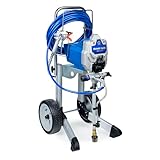
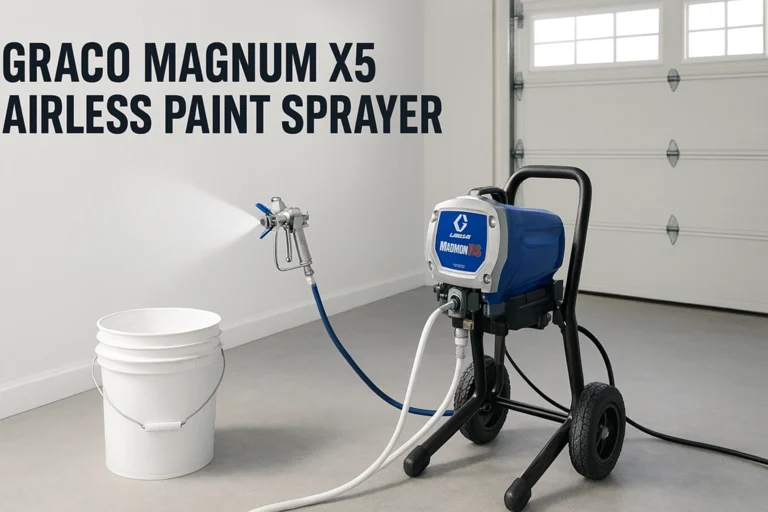
The Graco Magnum ProX19 Cart is the benchmark for large residential and semi-pro airless spraying. Its stainless steel piston pump pushes material at up to 3,300 PSI, which means it handles unthinned latex directly from the bucket — no fussing with water ratios, no clogs from thick exterior paint. Pros on Reddit consistently note that Graco replacement parts are everywhere, which matters when a tip guard wears out at 6 a.m. on a job site.
The cart design keeps the 1-gallon or 5-gallon bucket low and stable, making it easy to reposition across a large yard or job site. The adjustable pressure dial gives fine-grained control across a wide tip range (.009 to .021 inches), so you can shift from thin stain to heavy elastomeric coatings without swapping machines. The downside is weight — at 26 lbs it is not a grab-and-go unit. But for large projects, that weight comes from a pump built to last.
Pros
- Sprays unthinned latex paint
- Accepts hose up to 150 ft
- Wide tip range (.009–.021)
- Parts widely available
- Cart design for easy repositioning
Cons
- Heavy at 26 lbs
- Pricier than X7
- Requires thorough cleaning after use
Best for: Whole-house exteriors, two-story homes, long fence runs, semi-pro work
Check Price on AmazonVia Amazon.com
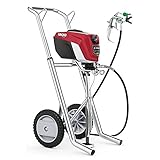
Titan’s ControlMax 1900 Pro takes a different approach to large-project spraying. Instead of maximizing raw pressure, it uses High Efficiency Airless (HEA) technology to deliver a softer spray pattern at lower operating pressure — around 1,600 PSI versus the 3,000+ typical of traditional airless units. The result is dramatically reduced overspray, which matters enormously when you are spraying near cars, landscaping, or neighboring structures. According to This Old House, HEA-style sprayers have become the preferred choice for homeowners who want professional results without the cleanup headache.
The 0.7 hp motor is more than adequate for exterior latex, stains, and sealers. It ships with a 50-foot hose and a ProTip reversible tip, which clears clogs with a 180-degree twist — no stopping to dig out a wire tool. The ControlMax runs three times faster than a roller on large walls. The trade-off versus the ProX19 is max hose length: 75 feet is the practical limit, so it is less suited for very large two-story properties where you need to reach the peak without repositioning.
Pros
- Up to 55% less overspray
- Softer spray — better control
- Reversible ProTip clears clogs fast
- 3× faster than roller on large surfaces
- Easier to learn than full-pressure units
Cons
- Max hose limited to ~75 ft
- Not ideal for very thick coatings
- Lower max PSI than Graco ProX19
Best for: Large exteriors near landscaping or driveways, first-time sprayer users, stain and sealer applications
Check Price on AmazonVia Amazon.com
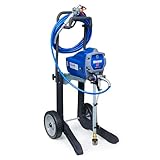
The Graco Magnum X7 is the sweet spot for homeowners who tackle a big project once or twice a year. It runs at up to 3,000 PSI with a fully adjustable pressure dial, handles hose lengths up to 100 feet, and sprays directly from a 1- or 5-gallon bucket. One phrase that keeps showing up from actual buyers: “It’s a beast for the price.” The cart design gives it the same mobility advantage as the ProX19 at a noticeably lower cost, and Graco’s parts network means you are not hunting for obscure components when something wears out.
The X7 handles unthinned latex paints well, though extremely thick coatings may need slight thinning to flow cleanly through the .019 tip that ships in the box. The main gap between the X7 and the ProX19 is pump longevity under heavy daily use — for a homeowner or occasional contractor, the X7 is more than sufficient. The stainless steel piston pump is rated at 125 gallons per year, which covers most large residential projects handily. This is also the machine you will find recommended on Family Handyman and Bob Vila for serious exterior spray painting projects.
Pros
- Sprays from 5-gallon bucket
- 100 ft hose capacity
- Adjustable pressure dial
- Stainless steel pump
- Excellent price-to-performance
Cons
- 125 gal/yr pump limit (not for daily pro use)
- Shorter max hose than ProX19
- Very thick coatings may need slight thinning
Best for: Homeowners painting full exteriors, siding, fences, and decks once or twice a season
Check Price on AmazonVia Amazon.com
More Sprayer Guides
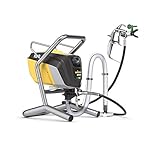
The Wagner Control Pro 190 proves you do not have to spend $700 to tackle a large exterior job. It uses the same HEA (High Efficiency Airless) technology as the Titan ControlMax — reducing overspray by up to 55% — but comes in at a significantly lower price point. The 0.54 hp motor operates at up to 2,800 PSI, comfortably handling exterior latex paint, deck stains, sealers, and primers without thinning. It is rated for up to 300 gallons per year, which puts it squarely in the homeowner-use category.
The cart design keeps the unit stable on uneven ground, and the 25-foot hose can be extended to reach further with an optional extension. Pressure adjustment is straightforward, and the PowerFlo Pro pump draws directly from a 1-gallon or 5-gallon container. The limitation compared to the Graco units is raw hose capacity — at stock length, you will reposition the cart more often on a large property. Still, for a first sprayer or an annual whole-house job, it is hard to argue with the value.
Pros
- HEA low-overspray technology
- 300 gal/yr pump capacity
- Handles latex, stain, and sealers
- Excellent price for a cart unit
- Stable cart design
Cons
- Shorter stock hose (25 ft)
- Less pump power than Graco X7
- Not suited for very thick coatings
Best for: Budget-conscious homeowners, annual exterior paint jobs, stain and sealer applications
Check Price on AmazonVia Amazon.com
Pro Tips for Large Airless Sprayer Jobs
- Start at low pressure. Dial up from the lowest setting until you get a consistent fan pattern. Over-pressuring wastes paint and creates excessive overspray — both cost you money on a large job.
- Keep your tip clean. On large projects, clogs are your biggest time killer. A reversible tip clears in seconds; a non-reversible tip means stopping, disassembling, and cleaning mid-wall.
- Maintain a 12-inch distance. Move the gun parallel to the surface at a consistent 12-inch distance. Angling or curving the wrist creates thin edges and heavy centers in the fan pattern.
- Prime the pump with clean water first. Running water through the system before adding paint primes the piston and prevents air pockets from creating spitting or streaking on your first passes.
- Use a spray shield on trim. On large exteriors, a simple paint shield keeps the fan pattern off windows and soffits without endless masking — saving an hour of tape on a full-house job.
Renovation Stage: PAINT
Where This Fits in Your Renovation
A large airless paint sprayer belongs at the PAINT stage — after all surface prep, patching, and priming are complete. Surface preparation is the single biggest factor in how long your finish coat lasts. Skipping proper prep and going straight to spraying is the most common reason homeowners call for repaints within two years. For more on what comes before the sprayer, see our guide to setting up a proper spray environment.
Coverage & Time Calculator
Large Project Paint Calculator
Estimate paint needed and time saved versus rolling for your large job.
Your Estimates
Time estimates assume average painter speed. Sprayer rate: ~500 sq ft / hour. Roller rate: ~100 sq ft / hour. Always buy 10% extra paint for touch-ups.

How to Choose the Best Large Airless Paint Sprayer
PSI and Pump Power
For large exterior projects, aim for a minimum of 2,800 PSI. Exterior latex paints are thick — especially elastomeric formulas — and a low-pressure pump will strain to push them through a long hose run. The Graco ProX19 at 3,300 PSI has enough headroom for virtually any residential coating. For HEA sprayers like the Titan and Wagner, the lower operating pressure (around 1,500–1,600 PSI) is by design: the technology atomizes paint more efficiently at lower force, which is why these units still cover large surfaces effectively.
Hose Length and Job Size
Hose length is the most overlooked spec when buying a large airless sprayer. A standard 50-foot hose means you are repositioning the machine constantly on a large property. For two-story homes or long fence runs, look for a unit that supports at least 100 feet of hose — ideally 150 feet like the ProX19. Every additional 50 feet of hose will drop pressure slightly, so match your hose length to a pump that can compensate. A good rule of thumb: add 50 PSI of buffer for every 50 feet of hose beyond the standard 25-foot run.
Tip Size and Coating Type
The tip is what determines your fan width and flow rate. For large exterior surfaces, a .017 to .021 tip produces the wide fan pattern (10–12 inches) needed to cover efficiently. Smaller tips (.011–.013) are better for trim and detail work. Most of the units in this guide ship with a general-purpose .019 tip — a solid starting point for exterior latex. If you are spraying stain or thin sealers, drop to a .013 or .015 to avoid runs on vertical surfaces.
Cart vs. Stand Design
Cart models (wheels, low center of gravity) are superior for large outdoor jobs. They are easy to reposition across grass, gravel, or uneven terrain without tipping, and they sit stable when the hose tugs during a long wall run. Stand models are lighter and better suited for interior or compact exterior jobs. For a whole-house exterior, always choose a cart.
Cleanup and Maintenance
Airless sprayers need a thorough flush immediately after every use. Water-based paints clean with water; oil-based require mineral spirits. The faster you flush the system, the less chance of dried paint causing a clog in the pump or filter. All four units in this guide have accessible inlet filters — check and clean them every 1–2 jobs to keep pressure consistent on large runs.
Before You Spray: Prep Steps
No sprayer — regardless of price — can save a surface that was not properly prepped. For large exterior projects, the prep sequence matters as much as the equipment choice.
Start by washing the surface with a pressure washer or cleaning solution to remove dirt, mildew, and chalking old paint. Peeling sections must be scraped and sanded before any new coating goes on — spraying over loose paint is the leading cause of premature failure. Once clean and dry, inspect for cracks and fill them with exterior caulk. Let the caulk cure fully before priming large raw or previously bare areas.
Always mask windows, doors, and trim if you are not using an HEA unit with a spray shield. On large properties, lay drop cloths across all hardscaping — even a low-overspray sprayer produces fine mist that settles on driveways and plantings. Move vehicles out of range. Check wind conditions: spray above 15 mph causes the fan pattern to drift and produces uneven coverage on large flat surfaces.
Once the surface is prepped and masked, prime any raw wood or bare sections before topcoating. A bonding primer ensures the finish coat has maximum adhesion — particularly on previously painted surfaces that are more than 10 years old.
What a Two-Story Exterior Taught Me About Large Airless Sprayers
The first time I ran a large airless paint sprayer on a full two-story exterior, I rented a unit with a 50-foot hose to save money. I spent half the day moving the cart, re-priming the pump, and dragging the hose around corners it was never meant to turn. Here is what I learned: on big jobs, hose capacity is not a spec — it is the difference between finishing in an afternoon and finishing exhausted on day two. Since then I size the hose first and the pump second.
One more lesson from that job: keep a repair kit on hand before you start, not after the pump packing starts leaking mid-wall. If you run a Graco unit, our Graco paint sprayer parts guide covers the pieces that actually wear out. And whichever machine you buy — two thin coats always beat one thick coat. Always. Family Handyman's sprayer testing lands on the same conclusion: technique and maintenance decide the finish more than the spec sheet does.
When NOT to buy a large airless sprayer
If your biggest job this year is a bedroom, a fence section, or furniture, a large cart unit is the wrong tool — you will spend more time on setup and cleanup than painting, and the leftover paint in a 100-foot hose is real money down the drain. A compact airless sprayer or even a roller wins there, full stop. These machines earn their price on whole-house exteriors, long fences, and multi-room repaints — not one-off weekend projects.
Our Verdict
Bottom Line
For most homeowners tackling a large exterior project, the Graco Magnum X7 Cart is the right starting point — serious pump power, 100-foot hose capacity, and Graco's parts network at a mid-range price. If you are doing this kind of work semi-regularly or have a two-story home with long hose runs, step up to the Graco ProX19 Cart. Its 150-foot hose capacity and higher pump rating are worth the premium for that use case.
If overspray is your biggest concern — especially near gardens, cars, or neighboring structures — the Titan ControlMax 1900 Pro is hard to beat. And if you are budget-constrained and doing this once a year, the Wagner Control Pro 190 delivers HEA technology at a price that makes the sprayer pay for itself on the first job versus hiring a painter.
Whatever you choose, the single most important factor in your outcome is not the machine — it is surface preparation. Buy the right sprayer, prep the surface properly, and a large exterior job that used to take a weekend becomes an afternoon.
Frequently Asked Questions
What PSI do I need for a large airless paint sprayer?
For painting large exterior surfaces with standard latex paint, you need at least 2,800 PSI. For very thick coatings like elastomeric paints or mastics, aim for 3,000 PSI or higher. HEA sprayers (like the Titan and Wagner) operate at lower pressure but use efficient atomization to compensate — they work well for most exterior coatings but may struggle with very heavy materials.
Can a homeowner use an airless paint sprayer to paint a whole house exterior?
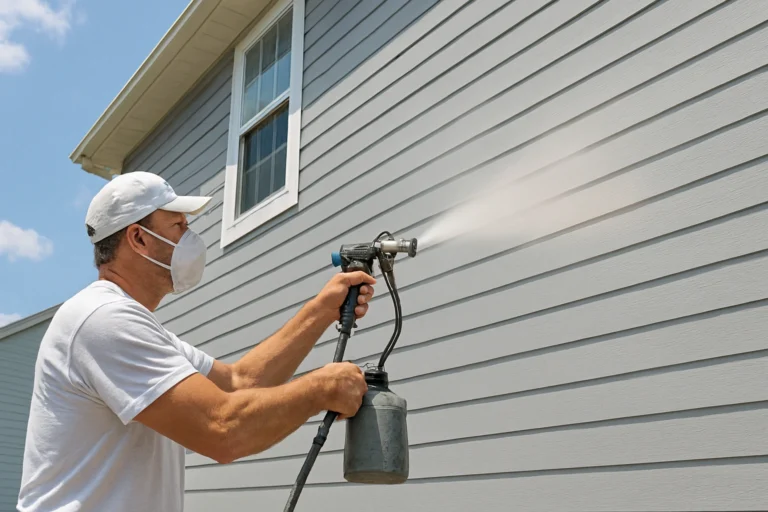
Yes. Whole-house exterior painting is the primary use case for the units in this guide. The key is choosing a cart model with enough hose capacity to minimize repositioning, and taking the time to mask windows and trim before you start. With a Graco X7 or ProX19, an experienced DIYer can complete a full exterior in one or two days versus a full weekend by roller.
What is the difference between the Graco X7 and the Graco ProX19?
The ProX19 supports hose runs up to 150 feet (versus 100 feet for the X7), operates at higher pressure (3,300 vs 3,000 PSI), and has a higher pump duty rating for sustained professional use. The X7 is rated at 125 gallons per year — more than enough for a homeowner — while the ProX19 is built for higher-volume contractor use. For most homeowners, the X7 is the better value. For semi-pro or regular large jobs, the ProX19 is worth the upgrade.
How do I reduce overspray with a large airless paint sprayer?
Start with the lowest pressure setting that still produces a consistent fan pattern — more pressure means more overspray. Use an HEA-style sprayer (Titan or Wagner) if overspray is a major concern. Spray on low-wind days. Keep the tip 10–14 inches from the surface and maintain a steady parallel motion. A spray shield on trim eliminates the need for excessive masking.
How much hose do I need for a large airless paint sprayer?
For a standard single-story exterior, 50 feet is workable. For two-story homes, aim for at least 100 feet to reach peak areas without moving the machine. For very large properties, 150 feet (the ProX19's maximum) covers most scenarios. Each additional 50 feet of hose requires a pump rated for the added pressure drop — check the manufacturer's hose rating before extending.
What tip size should I use for exterior painting with an airless sprayer?
For large exterior walls and siding, a .017 to .021 tip is standard. These produce a wide fan pattern (10–12 inches) that covers quickly without excessive runs. For trim and detail work on the same job, swap to a .011 or .013 tip. For stains and thin sealers, stay at .013 or .015 to prevent over-application on vertical surfaces.
Are large airless paint sprayers worth the investment for a one-time project?
For a full exterior paint job, yes. A professional painter charges $3,000–$6,000 for a typical home exterior. The Graco X7 costs a fraction of that. Even after accounting for paint, masking materials, and time, most homeowners recoup the sprayer's cost entirely on the first project. If you only need it once, many tool rental shops carry units like the Graco X7 — typically at $60–$100 per day.