
Can Paint Freeze? What Happens When Paint Gets Too Cold
If you’ve ever stored leftover paint in your garage during the winter, you may have wondered: can paint freeze? The short answer is yes, paint can freeze, and the effects depend on the type of paint, how many times it’s frozen, and whether it can be revived. Let’s explore what happens when paint freezes, how to deal with it, and how to prevent wasting your investment.
What Happens If Paint Freezes?
When paint freezes, the water or solvents inside expand and separate. This separation can ruin the smooth texture of the paint, leaving clumps, uneven consistency, and a grainy finish when applied.
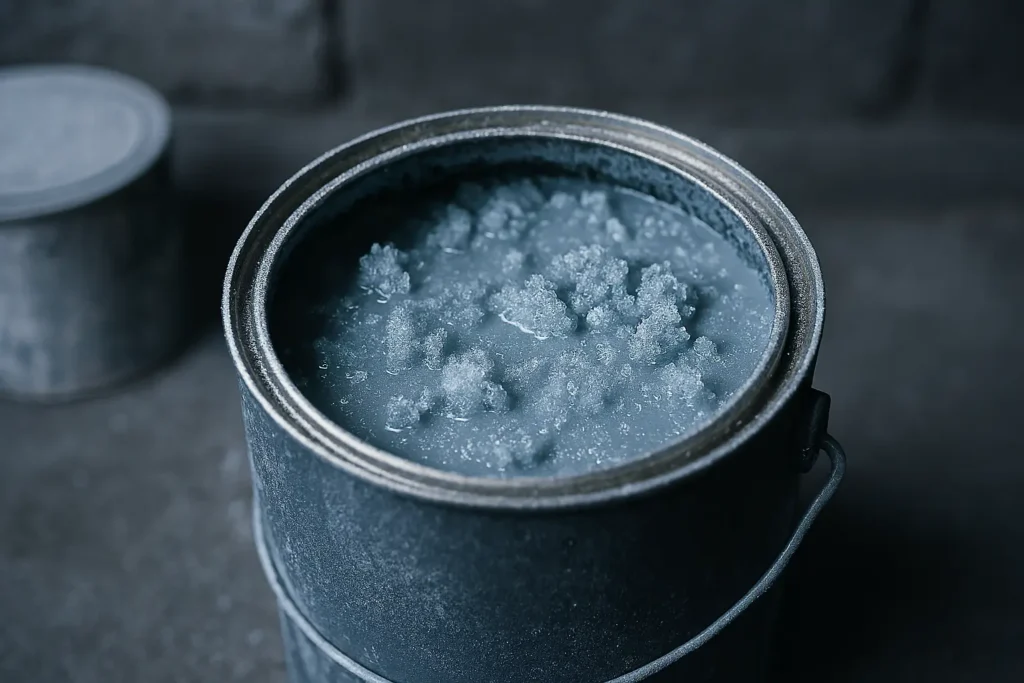
If the can has already been opened, frozen paint may also form a skin on top, making it harder to mix back into a usable state. That’s why it’s just as important to prep your surfaces correctly, learn how to clean walls before painting to avoid other paint problems.
Is Paint Good After Freezing?
Whether your paint survives freezing depends on how many times it has been exposed and the type of paint.
- Latex paint: Sometimes recoverable after one freeze-thaw cycle, but often ruined if it happens repeatedly.
- Oil-based paint: More resistant, but can still thicken or separate after extreme cold.
- Acrylic paint: More vulnerable; freezing often causes permanent damage.
If you stir thawed paint and it blends back into a smooth consistency, it may still be usable. If it stays lumpy, it’s best to discard it. For tips on maximizing paint longevity, see does paint expire.
Does Freezing Ruin Acrylic Paint?
Yes. Acrylic paint contains water, which expands when frozen. This expansion breaks down the paint’s binding agents, leading to clumps and a texture that no amount of stirring will fix. If you rely on acrylics for projects, always store them indoors, just as you would when painting interior doors black to ensure a smooth, professional finish.
Will Paint Freeze in Garage?
Paint stored in garages, sheds, and basements without climate control is at high risk of freezing. Temperatures often dip below freezing, especially overnight.

If your garage gets cold, store paint indoors in a closet, utility room, or a heated basement. If you’re looking to upgrade your space, the best paint for garage walls will give you both durability and style.
What Temperature Does Paint Freeze?
- Latex paint: Around 32°F (0°C)
- Acrylic paint: Around 32°F (0°C)
- Oil-based paint: Closer to -4°F (-20°C), but still suffers quality issues if stored too cold
Knowing these ranges helps you decide where to safely keep your paint, especially if you are working on seasonal projects like staining a fence.
Will Oil Based Paint Freeze?
Oil-based paint is more tolerant of cold than water-based paints, but it can still freeze. The solvents may separate, leaving you with thicker, less usable paint. To avoid wasted product, make sure to store it like you would specialty coatings such as solar reflective roof paint.
Can Spray Paint Freeze?
Yes. Spray paint cans are pressurized and can freeze if stored below 32°F. Freezing may cause the nozzle to clog or the paint to spray unevenly. Extreme cold may also weaken the can’s structure, making it unsafe. For better results with spray applications, consider tools like the best ceiling paint sprayer.

Can You Freeze Frozen Paint Again?
Each freeze-thaw cycle damages the paint further. While technically possible, multiple freeze cycles usually render paint unusable. If your paint has frozen more than once, replacement is often the best option. To avoid surprises, always store extra cans properly, just as you would with leftover supplies from painting wood paneling.
Can You Paint a Deep Freezer?
Yes, you can paint a deep freezer to refresh its appearance. However, you need appliance-friendly or epoxy-based paint that adheres to metal and withstands cold. Regular wall paint will not hold up. For other heavy-duty jobs, see how to prepare surfaces in our guide on how to paint a concrete floor.
Does Paint Freeze in Garage vs Indoors?
- Garage or shed: High risk of freezing
- Unheated basement: Risky in very cold climates
- Indoors (closet or utility room): Best option for safe storage
Keeping paint inside not only protects it but also ensures you are ready for fast projects like the best way to paint a ceiling.
How to Save Frozen Paint
- Bring the paint inside and let it thaw at room temperature.
- Stir thoroughly with a paint stick or use a power mixer.
- If the paint becomes smooth and creamy, it is still usable.
- If it stays chunky, stringy, or separated, discard it.

If the thawed paint fails, don’t take chances on your walls. Instead, learn how to make paint dry fast with fresh, high-quality paint.
Tips to Prevent Paint Freezing
- Always store paint in heated spaces.
- Do not leave paint in cars, garages, or sheds during winter.
- Transfer leftover paint into smaller airtight containers.
- Label cans with the date and paint type for tracking.
For better storage and application, tools like the best paint can opener and respirators for paint can make your next project easier and safer.
Final Thoughts
So, can paint freeze? Yes. While some types can survive one freeze, repeated freezing often ruins paint permanently. From latex to acrylic to oil-based, every type reacts differently, but all are vulnerable. Storing paint properly indoors saves money and ensures a smooth finish for your next project.