Need it Done Now? How to Get Paint to Dry Fast and the Best Cordless Sprayers for Large Projects
Word Count: ~1,400 | Focus Keyphrase: how to get paint to dry fast
Introduction: Speed vs. Quality — You Don’t Have to Choose
The clock is ticking. You’ve got a fence to finish, a deck to coat, or a garden wall that desperately needs attention — and rain is in the forecast. Knowing how to get paint to dry fast isn’t just a nice-to-have skill. It’s the difference between a job done right and a job done twice.
Here’s the good news: speed and quality are not enemies. With the right techniques and the right equipment, you can slash your drying time without sacrificing a professional finish. Whether you’re a weekend warrior or a seasoned DIYer, this guide gives you everything you need.
We’ll cover the science of fast drying, the environmental hacks that actually work, and the three cordless paint sprayers that are changing the game for large outdoor projects. Let’s move.
1. Why Paint Takes So Long to Dry (And How to Fix It)
Before you can speed things up, you need to understand what’s slowing you down.
Paint dries through evaporation. The solvents — water in latex paint, mineral spirits in oil-based — need to escape the film. Anything that slows evaporation slows your drying time. Three culprits are almost always responsible: humidity, poor airflow, and thick coats.
Attack those three, and you’ll be putting tools away hours sooner.
2. Tips for Faster Drying
Humidity: Your Biggest Enemy
High humidity is a silent project-killer. When there’s already a lot of moisture in the air, your paint’s solvents have nowhere to go. Drying slows to a crawl.
The sweet spot: Paint when relative humidity is between 40% and 70%. Above 80%? Stop. Wait.
- Check a weather app before you start. Most show hourly humidity forecasts.
- Early morning and late afternoon often offer the lowest humidity windows.
- Avoid painting after rain or before a storm. The air is saturated even if it looks dry.
- If you’re working indoors, run a dehumidifier for 30 minutes before you start.
Low humidity won’t just speed up drying — it will improve adhesion and reduce the risk of blistering or peeling down the road.
Airflow: Make the Air Work for You
Moving air is your best friend. It carries evaporating solvents away from the surface continuously, stopping them from re-saturating the area directly above the wet paint.
Outdoors: Pick a breezy day — not a windy one. Light, consistent airflow (5–10 mph) is ideal. A gusting wind will kick up debris and ruin your finish.
Indoors or in enclosed spaces:
- Point box fans toward open windows to create cross-ventilation.
- Use oscillating fans to keep air moving across the painted surface.
- Never seal yourself into a space with oil-based paint without ventilation. Safety first — always.
One often-overlooked tip: stand your painted panels or boards upright rather than flat. Horizontal surfaces trap a micro-layer of still air. Vertical surfaces let airflow hit both sides naturally.
Thin Coats: The Single Biggest Game-Changer
This is where most DIYers go wrong. They load the brush or roller, slap on a thick coat, and then wonder why it’s still tacky four hours later.
Thin coats dry exponentially faster than thick ones.
Here’s why: a thick coat traps solvents underneath a skin of dried paint on top. The bottom stays wet long after the surface looks dry. You end up with a finish that feels dry but isn’t — and then you add another coat on top of a foundation that hasn’t cured. That’s a recipe for cracking, peeling, and wasted effort.
Instead:
- Apply two or three thin coats rather than one heavy one.
- Let each coat dry to touch before recoating — usually 30–60 minutes with latex in good conditions.
- Use a sprayer (more on this shortly) to apply ultra-thin, even layers automatically.
Pro tip: Add a paint conditioner like Floetrol (for latex) or Penetrol (for oil-based) to improve flow and reduce brush marks — without adding significant dry time.
Temperature Matters Too
Ideal painting temperature is between 50°F and 85°F (10°C–30°C). Cold temperatures slow evaporation and can prevent paint from curing properly. Very hot sun can cause the surface to dry too fast, leading to cracking and poor adhesion.
If you’re painting a fence or exterior wall, follow the shade. Work on the shaded side of the structure in the morning and move with the sun during the day.
3. The Sprayer Solution: Why Cordless Is Best for Large Projects
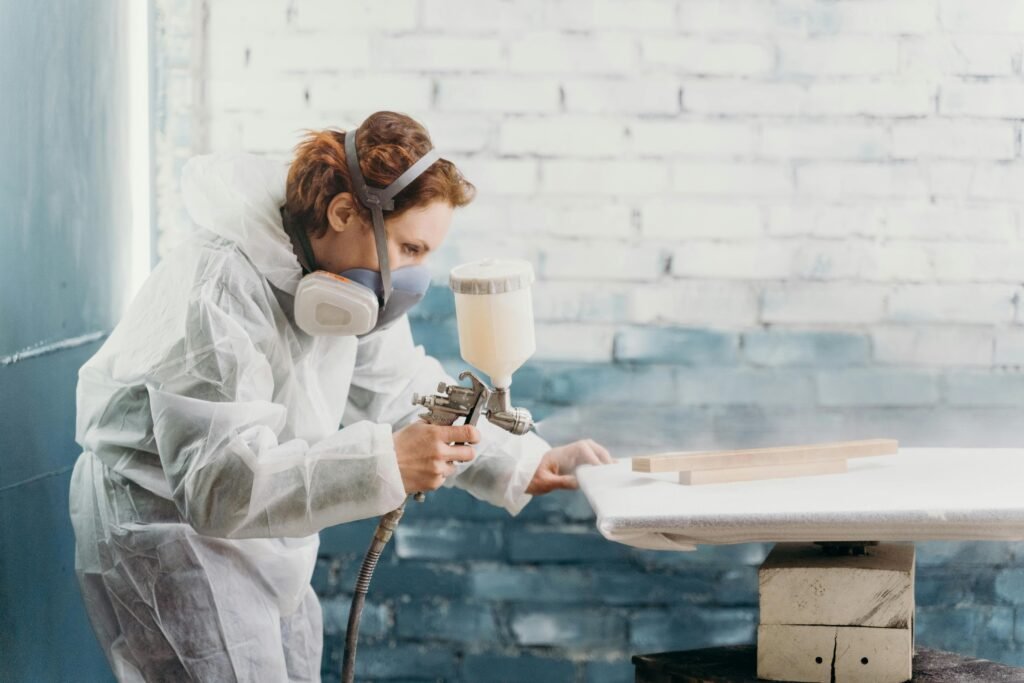
Brushes and rollers have their place. But for large surfaces — fences, garden walls, outbuildings, decks — they are slow, uneven, and exhausting.
A quality paint sprayer applies thin, consistent coats in a fraction of the time. And cordless sprayers take that a step further. No dragging an extension cord across the yard. No tripping hazards. No outlet hunting. Just grab, spray, and move.
Here are the three cordless sprayers worth your money right now.
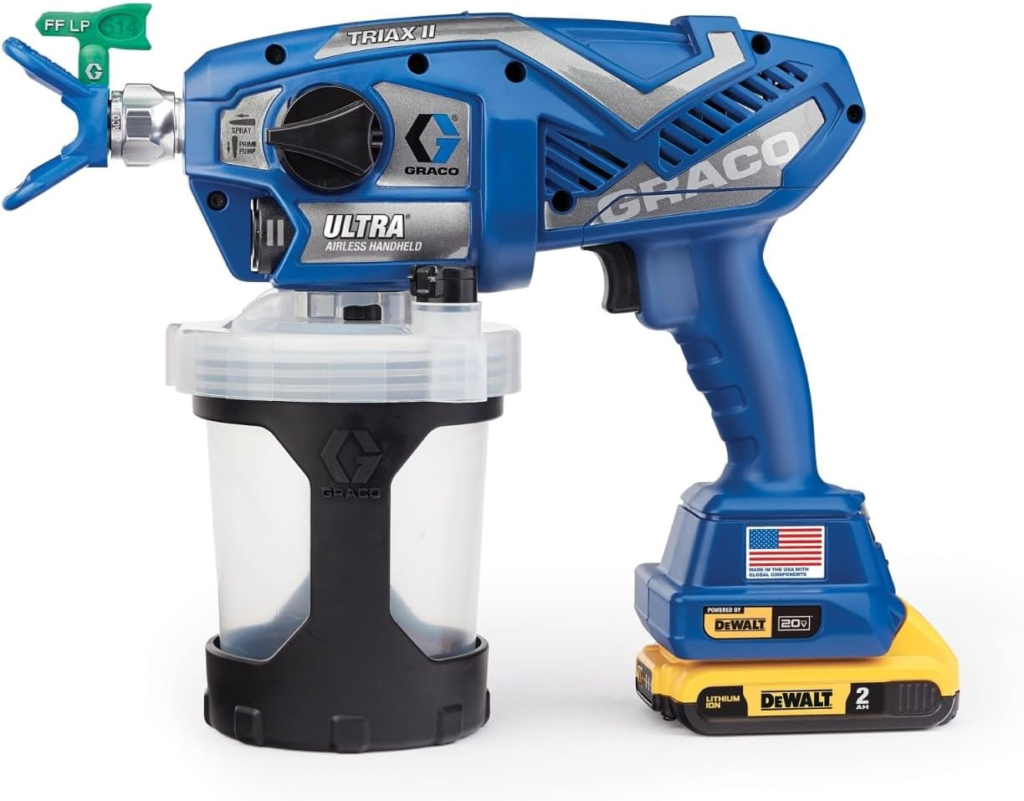
Graco Ultra Cordless Airless Paint Sprayer
The Graco Ultra Cordless is built for professionals who happen to be working on a Saturday afternoon. It uses true airless technology — the same system used by professional painting contractors — to atomize paint at high pressure without thinning required.
Why it matters for drying speed: Airless sprayers produce finer particles than traditional HVLP guns. Finer particles mean a thinner coat per pass. Thinner coat means faster drying. It’s physics working in your favor.
CHECK CURRENT PRICE ON AMAZON: Graco Ultra Cordless Airless Paint Sprayer
Key specs worth knowing:
- No thinning required for most latex and oil-based paints
- Runs on an 18V Li-Ion battery with solid runtime for large projects
- Tip sizes adjustable for different materials
- Consistent pressure from first trigger pull to last
This is the top-shelf choice for anyone painting a full fence line, a large deck, or multiple outbuildings in a day.
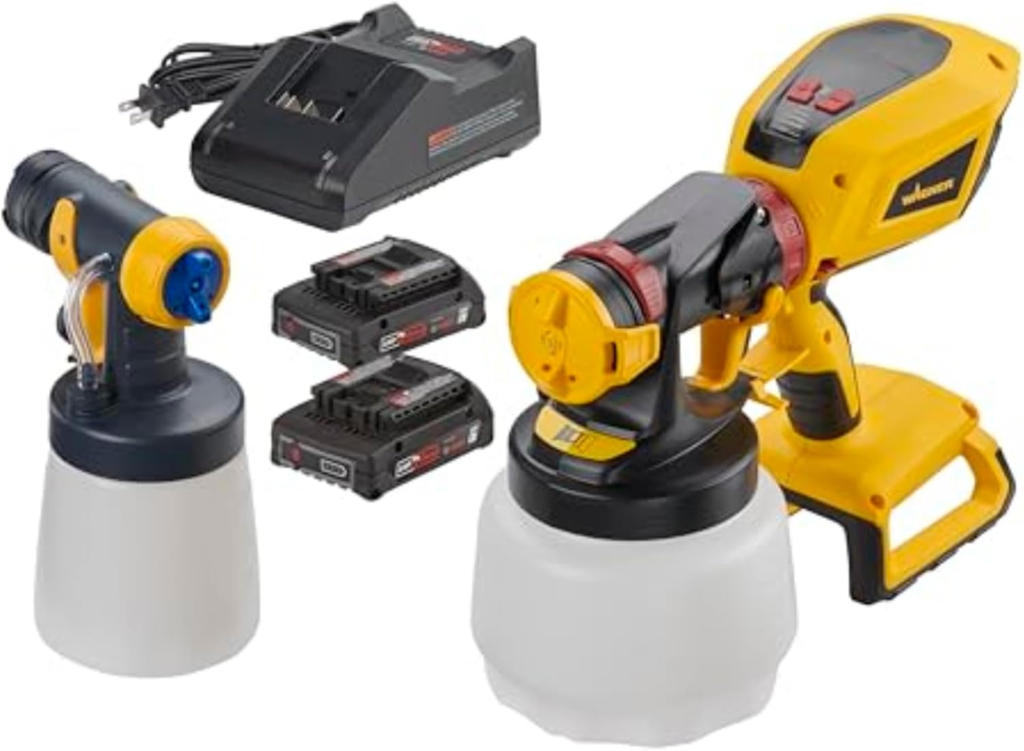
Wagner FLEXiO 3550 Cordless HVLP Sprayer
Wagner’s FLEXiO 3550 is the go-to choice for DIYers who want professional results without the professional learning curve. It uses HVLP (High Volume Low Pressure) technology, which delivers excellent control and minimal overspray.
Why it stands out: The 3550 comes with two nozzles — the iSpray nozzle for large, flat surfaces and the Detail Finish nozzle for trim and furniture. That versatility means one tool handles the whole project.
CHECK CURRENT PRICE ON AMAZON: Wagner FLEXiO 3550 Cordless HVLP Sprayer
For speed:
- The X-Boost turbine powers through thicker paints without thinning
- Adjustable speed and pattern settings let you dial in a thin, fast-drying coat every time
- Lightweight and balanced, reducing fatigue on long sessions
If you’re painting a standard backyard fence and want a reliable, user-friendly machine, the FLEXiO 3550 delivers excellent value.
Ryobi ONE+ Compatible Paint Sprayer
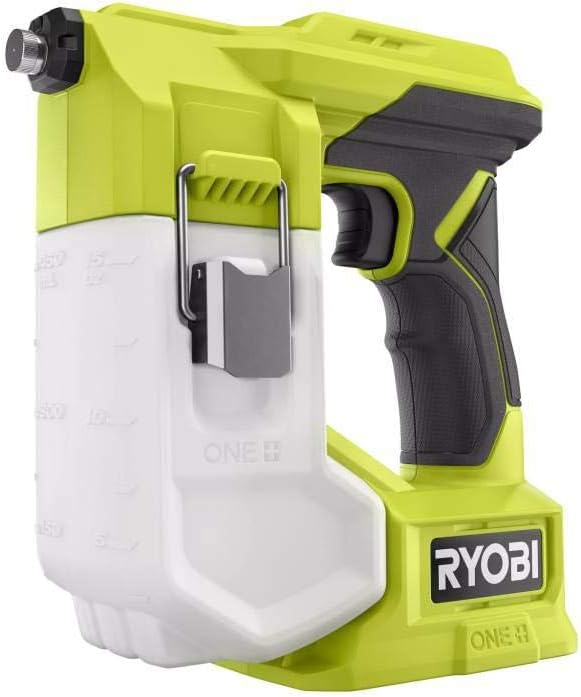
Already in the Ryobi ONE+ ecosystem? Then this is a no-brainer. The Ryobi ONE+ Compatible Paint Sprayer runs on the same 18V batteries that power your drill, your circular saw, and your leaf blower.
The value proposition is hard to beat. If you already own ONE+ batteries, the cost of entry drops significantly. And for weekend-scale projects — a side fence, a garden shed, a retaining wall — this sprayer absolutely gets the job done.
CHECK CURRENT PRICE ON AMAZON: Ryobi ONE+ Compatible 18V Paint Sprayer
Key highlights:
- Compatible with all Ryobi ONE+ 18V batteries
- Adjustable spray pattern: horizontal, vertical, circular
- Easy-clean design for fast cleanup
- Lightweight at under 5 lbs with battery
It won’t match the Graco in raw power or the Wagner in versatility, but for its price point and convenience, it’s an outstanding choice for the casual DIYer.
4. Quick-Reference: Fastest Drying Checklist
Before every project, run through this list:
- Humidity below 70%? Check the forecast.
- Temperature between 50°F–85°F?
- Light breeze or fans set up for airflow?
- Paint thinned appropriately for your sprayer?
- Using thin, even coats — not one heavy pass?
- Surface clean, dry, and primed if needed?
- Sprayer nozzle matched to paint viscosity?
Tick every box and you’re set up for a fast, clean result.
Conclusion: Fast Drying Starts With Smart Decisions
Knowing how to get paint to dry fast comes down to controlling three things: humidity, airflow, and coat thickness. Master those, and half the battle is won before you pick up a tool.
The other half? Your equipment. A cordless sprayer doesn’t just save your back — it applies thinner, more even coats than any brush or roller, which means faster drying, fewer touch-ups, and a better-looking finish. The Graco Ultra Cordless leads the pack for power, the Wagner FLEXiO 3550 wins on versatility, and the Ryobi ONE+ is the smart choice for existing battery ecosystem users.
Pick your sprayer. Control your environment. And stop waiting for paint to dry.
Disclosure: This post contains affiliate links. As an Amazon Associate, thepaintly.com may earn a commission from qualifying purchases at no extra cost to you.