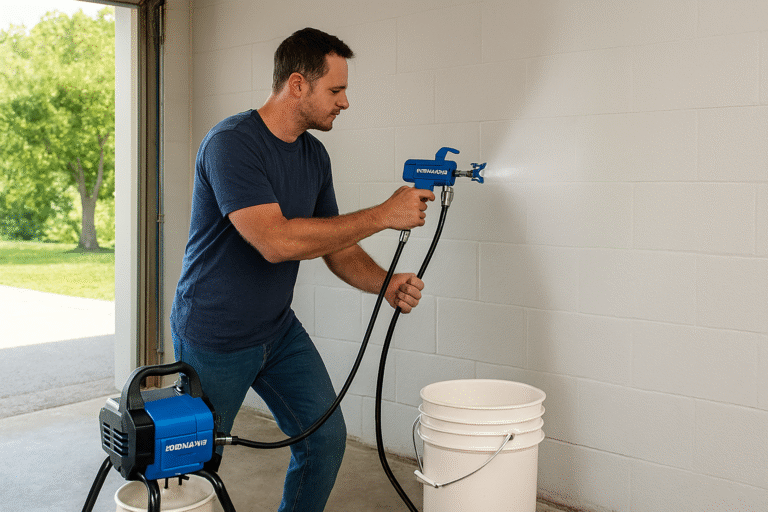
6 Best Airless Paint Sprayer for Professionals, 2026 Rated
Updated July 2026 · By Sophie Ulman
Rigs That Survive a Crew: 6 Pro-Grade Sprayers Ranked
A homeowner’s sprayer runs eight hours a year. A professional’s runs eight hours a day — and the machine that cannot tell the difference will tell you at the worst possible moment, mid-job, with a customer watching. The best airless paint sprayer for professionals is not the one with the biggest number on the box; it is the one with the duty cycle, the rebuildable pump, and the hose reach that keeps a crew moving instead of waiting. These six earn their place on a truck. I have worked alongside pros running most of them, and the ranking below reflects what holds up, not what demos well.
In This Guide
Quick Picks: Best Airless Paint Sprayer for Professionals
| Pick | Model | Output | Max Hose | Best Pro Use |
|---|---|---|---|---|
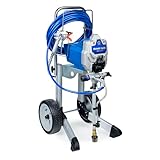
| Best Overall | Graco Magnum ProX19 | 0.38 GPM | 150 ft | Daily residential repaints |
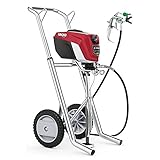
| Low Overspray | Titan ControlMax 1900 Pro | 0.40 GPM | 50 ft incl. | Occupied-home interior work |
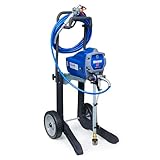
| Crossover | Graco Magnum X7 | 0.31 GPM | 100 ft | Part-time pros, side work |
| Budget Crew | Wagner Control Pro 190 | 0.24 GPM | 25 ft | Second rig, punch-list work |
| Touch-Up | Graco TrueCoat 360 VSP | Handheld | — | Punch lists, closets, touch-ups |
| Entry | Graco Project Painter Plus | 0.24 GPM | 50 ft | Apprentice or backup unit |
Sophie’s Field Note
The first time I worked alongside a two-man pro crew, I brought my own consumer sprayer to keep pace on the trim while they ran walls. By early afternoon their rig was still pulling from its third five-gallon bucket without a hiccup — and mine was cutting out every twenty minutes as the motor heat-cycled. Here is what I learned: duty cycle is the spec nobody prints in big letters. A pro machine is built to run continuously; a consumer machine is built to run occasionally. Price follows that line almost exactly, and pretending otherwise costs you a workday.
The 6 Sprayers, Reviewed
Pros
- User-replaceable pump, no downtime
- 150 ft hose support — pump stays at the truck
- Sprays unthinned latex all day
Cons
- Not built for multi-crew volume
- Heavier than the Magnum consumer line
🎯 Best for: The full-time solo pro or small crew doing daily residential repaints.
Check Price on Amazon →Via Amazon.com
Pros
- Dramatically less masking in occupied homes
- 0.40 GPM keeps a crew moving
- 50 ft hose included
Cons
- HEA tips are a recurring cost
- Slower on big open exteriors
🎯 Best for: Interior repaint specialists working furnished, occupied homes week after week.
Check Price on Amazon →Via Amazon.com
Pros
- Pro-adjacent capability at consumer price
- 100 ft hose support
- Simple, proven Magnum platform
Cons
- Duty cycle below true pro rigs
- Pump not user-rebuildable like ProX19
🎯 Best for: Part-time pros and remodelers — serious output without pro-tier investment.
Check Price on Amazon →Via Amazon.com
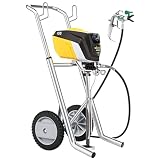
Pros
- HEA low overspray in finished spaces
- Cheap enough to be a second rig
- Fast setup for small scopes
Cons
- 0.24 GPM — not a crew machine
- Short 25 ft hose
🎯 Best for: The truck’s second sprayer — punch lists and small scopes where the big rig is overkill.
Check Price on Amazon →Via Amazon.com
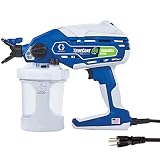
Pros
- Zero-setup touch-ups on unthinned paint
- Sprays inverted and sideways
- Variable speed for finish control
Cons
- FlexLiner bags are a recurring cost
- Wrong tool beyond small scopes
🎯 Best for: Punch-list touch-ups and awkward-angle work — the glovebox sprayer of a pro operation.
Check Price on Amazon →Via Amazon.com
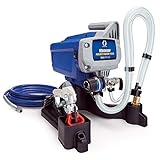
Pros
- True airless at entry price
- Same tip system as bigger Gracos
- Ideal trainer or backup unit
Cons
- Low duty cycle — backup only for pros
- Struggles with the thickest coatings
🎯 Best for: The apprentice’s first rig, or the backup that saves a job when the primary goes down.
Check Price on Amazon →Via Amazon.com
What Separates a Professional Airless Paint Sprayer From a Consumer One
Duty cycle is the real spec
PSI numbers look similar across the whole market — almost everything says 2,800 to 3,000. The spec that actually divides pro from consumer is the annual gallon rating and the continuous-run behavior behind it: hardened pump internals, motors that shed heat for hours, and packings designed to be serviced rather than to be the reason you buy a new machine.
Rebuildability is the second price tag
A consumer sprayer with a worn pump is a paperweight. A pro sprayer with a worn pump is an afternoon and a parts order. When you quote year-round work, machine downtime is lost revenue — which is why the ProX19’s field-swappable pump matters more than any horsepower figure. It is also why crews carry spare tips, filters, and packings as routinely as they carry tape; my best airless paint sprayer for contractors guide goes deeper on the heavy end of that logic.
Hose reach is crew speed
Every time the pump moves, the crew stops. A rig that supports 100 to 150 feet of hose stays at the truck or the garage while painters work the whole floor — and pressure loss over long runs is exactly why pro machines carry pump reserve that consumer units skip. If your work leans that way, I break down the long-run options in the best airless paint sprayer with long hose roundup, and ceilings-and-stairwell crews should look at the best airless paint sprayer extension wand options before buying a taller ladder.
Prep matters more than the brand
Twelve years in, I will say it again: durability is 50% product quality and 50% surface preparation — and professionals know it, which is why the crew you hire spends the first day washing, scraping, and priming instead of spraying. Two thin coats always beat one thick coat. Always. A pro rig makes thin coats fast; it does not make thick coats smart. For jobsite respiratory and containment rules — non-negotiable when spraying commercially — OSHA is the authority, and the EPA RRP rule governs any pre-1978 home your crew touches.
⚠ When NOT to Buy a Pro-Grade Sprayer
Do not buy pro iron for occasional use — full stop. If you spray fewer than ten jobs a year, a ProX19-class machine is capital sitting in a garage: you pay for duty cycle you never use, and the packings still age whether you spray or not. The consumer crossover class (X7, ControlMax) delivers the same finish quality at your volume for half the money. Buy pro-grade when downtime costs you real income — that is the entire, honest case for it.
My Verdict
The Graco Magnum ProX19 is the best airless paint sprayer for professionals who spray daily — the field-swappable pump alone pays for the price gap the first time it saves a job. Interior specialists in occupied homes should take the Titan ControlMax 1900 Pro and bill the masking hours it eliminates. Spraying weekly, not daily? The Graco Magnum X7 is the honest crossover — and put a TrueCoat 360 VSP next to whichever you choose for the punch list.
Frequently Asked Questions
What is the best airless paint sprayer for professionals?
The Graco Magnum ProX19 for daily work — 0.38 GPM, 150 ft hose support, and a pump you swap yourself. The Titan 1900 Pro wins for occupied interiors.
What do most pro painters actually run?
Graco and Titan dominate trucks; Wagner owns the low-overspray niche. The divide is annual gallons, not brand.
How many gallons a year can these handle?
ProX19 class: ~500. X7 class: ~125. Contractor iron: thousands. Exceed it and you trade purchase price for repair bills.
Is HEA worth it professionally?
For occupied-home interiors, yes — less masking is billable time back. Exterior-heavy crews should stay conventional.
Which tips should I carry?
517 for walls/ceilings, 515 all-rounder, 411/311 for trim, 619+ for heavy exterior coatings. Replace them before they stop spraying.
How long should a pro rig last?
Frame and motor: years. Pumps and packings: consumables by the gallon. Flushing discipline beats brand choice.