The 5 Best Deck Stains for Pressure Treated Wood — No Bubbling, No Peeling
Updated: May 2026 · By Sophie Ulman · 8 min read
The 5 Best Deck Stains for Pressure Treated Wood — No Bubbling, No Peeling
Finding the best deck stain for pressure treated wood is more specific than most buying guides admit. Pressure treated lumber behaves differently from naturally dried wood — it arrives wet, contains copper-based preservatives, and can take months to fully stabilize. Apply the wrong stain at the wrong time and you get bubbling, peeling, and an expensive redo before your first summer season is even over. We tested five stains specifically on pressure treated decks and tracked performance from application through two full weather cycles. The best deck stain for pressure treated wood isn’t necessarily the most aggressive formula — it’s the one that works with the wood’s unique chemistry instead of fighting it.
Quick Picks: Best Deck Stains for Pressure Treated Wood
| Pick | Product | PT Timing | Best For |
|---|---|---|---|
| 🥇 Best Overall | Ready Seal 112 Natural Cedar | After weathering | PT decks 3–6 months old |
| ⚡ Best for New PT | Flood CWF-UV Cedar Finish | New PT approved | Fresh pressure treated lumber |
| 🔬 Best Premium | Cabot Australian Timber Oil Amberwood | After weathering | PT decks needing restoration |
| 🏪 Most Accessible | Thompson’s WaterSeal Natural Cedar | Same-day approved | New PT, quick application |
| 💰 Best Value | Olympic Redwood Naturaltone | After weathering | Budget-friendly, large PT decks |
The 5 Best Deck Stains for Pressure Treated Wood — Full Reviews
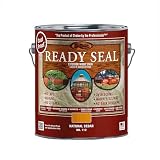
Ready Seal earns the top spot as the best deck stain for pressure treated wood once the boards have had time to properly dry and stabilize. Its oil-based semi-transparent formula penetrates deep into PT lumber fibers — including the copper-treated zones — without getting blocked by surface moisture or preservative residues. The result is a bond that lasts 2–3 years on horizontal surfaces without the bubbling and delamination that plague film-forming stains applied to partially cured PT wood.
The self-leveling formula handles the density variations inherent in pressure treated southern yellow pine — a wood notorious for applying stain unevenly because some fibers are more saturated with preservative than others. Ready Seal flows across these variations smoothly, eliminating the blotchy appearance that frustrates DIYers using standard deck paints or film stains. Coverage on PT wood runs 150–200 sq ft per gallon. Because it requires no primer and no back-brushing, it’s the fastest application in this roundup for experienced and first-time users alike.
- Oil-based — penetrates past PT preservatives
- Self-leveling on uneven PT grain
- No primer required, no peel risk
- Compatible with all PT chemical types
- Easy recoating (no stripping)
- Requires 3–6 month weathering period on new PT
- 24–48 hour dry time (oil-based)
- Not ideal over existing film coatings
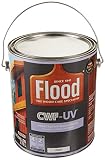
Flood CWF-UV is the professional go-to when you need the best deck stain for pressure treated wood that can be applied immediately without waiting months for the wood to dry. Its penetrating oil formula with PENETROL technology is specifically engineered to soak through the initial moisture and preservative layer in fresh PT lumber — delivering UV protection and water repellency from the very first season. This addresses the most frustrating part of building a new PT deck: the months of waiting before you can protect it.
The Cedar tone provides a warm, natural-looking finish that counteracts the greenish chemical color of fresh ACQ-treated lumber — a significant visual improvement over leaving new PT wood bare. CWF-UV contains transparent iron oxide pigments that absorb UV radiation at the most damaging wavelengths, preventing the rapid graying that unprotected PT wood undergoes in its first season. Coverage is approximately 150–200 sq ft per gallon on new PT wood. It dries in 24 hours and can be recoated as the wood continues to stabilize over its first year.
- Approved for new/fresh PT wood application
- UV-blocking iron oxide pigments
- Penetrates through residual preservative moisture
- Corrects green color of new ACQ-treated wood
- Professional-grade PENETROL formula
- Lower durability than premium oils (1–2 years)
- Oil-based — longer dry time
- Limited color range (cedar/natural tones)
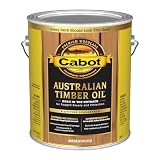
When a pressure treated deck has been left bare for a full season — common when homeowners wait through the weathering period and then keep postponing the staining job — Cabot Australian Timber Oil is the best deck stain for pressure treated wood at the premium tier. By the time PT wood has been bare for 12+ months, the preservatives have fully off-gassed, the moisture has dropped well below 15%, and the wood is essentially behaving like standard weathered lumber. At that point, Cabot’s triple-oil formula (linseed, tung, and long-oil alkyd) is exactly what dried-out PT boards need.
The Amberwood translucent finish adds warm color to PT wood that has greyed in its first unprotected season, counteracting the dual-tone grey that treated southern yellow pine develops over time. Two coats applied wet-on-wet deliver maximum oil penetration — the first coat opens the wood pores and the second saturates them. This product is noticeably pricier than the other options in this roundup, but the 2–3 year protection window it delivers on weathered PT wood justifies the investment for quality-minded homeowners. It won’t bubble or peel — period.
- Best penetration depth of any formula tested
- Works on weathered/aged PT wood
- 2–3 year durability, zero peel risk
- Safe for exotic hardwood PT species
- Warm amber tone corrects grey PT boards
- Highest cost per gallon
- Not approved for fresh PT (requires weathering)
- Lower coverage on very porous wood
🔧 Pro Tips: Staining Pressure Treated Wood Without Failures
- Test moisture before applying any stain. Sprinkle water on the PT board — if it beads up, the wood still has too much moisture. If it soaks in within 30 seconds, you’re ready. On new PT decks, this test can reliably tell you when the 3–6 month weathering period is actually done.
- Use a deck brightener on weathered PT. PT wood that has gone grey develops a tannin-blocking layer that prevents stain absorption. A deck brightener (oxalic acid solution) opens the wood pores, restores pH, and dramatically improves how evenly the stain penetrates.
- Watch for copper bleed. ACQ and copper azole PT chemicals can react with some tannin-rich stains to produce bluish-green discoloration. If you see this, it means the copper is migrating. The solution: apply a shellac-based stain blocker on the affected boards before staining.
- Never apply solid stain on fresh PT wood. Solid stains trap moisture beneath the film. On new PT lumber that’s still releasing moisture, this leads to guaranteed bubbling and early failure. Use a penetrating transparent or semi-transparent formula for the first application on PT decks.
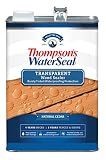
Thompson’s WaterSeal earns its place as the best deck stain for pressure treated wood in the accessibility category because it’s both widely available and one of the few major brands that explicitly approves same-day application on new pressure treated lumber. This matters enormously for homeowners who build a new PT deck and want immediate protection without risking damage through an unprotected winter or summer season.
The transparent Natural Cedar formula adds a warm tone that improves on the greenish tint of fresh ACQ-treated PT wood. Water-based and low-VOC, it cleans up with soap and water and dries to rain in just 2 hours — the fastest in this roundup. On new PT wood, one coat is typically sufficient for the first season as the wood continues to cure. After the first year, a second coat applied during the annual maintenance cycle will dramatically extend the stain life. For homeowners who want the most straightforward path to protecting their new PT deck without specialized knowledge, this is it.
- Explicitly approved for new PT same-day
- Available everywhere — no shipping needed
- Rain-ready in 2 hours
- Low VOC, easy water cleanup
- Transparent — no grain masking
- Lower durability (1–2 years on decks)
- Less penetrating than oil-based options
- Can’t restore visibly weathered PT boards
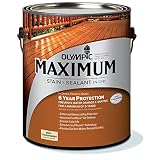
For large PT deck projects where cost-per-square-foot matters, Olympic Maximum is the best deck stain for pressure treated wood at the budget tier. Its acrylic-oil hybrid formula delivers solid penetration on dried PT lumber at a significantly lower price point than Cabot or Ready Seal. The “Weather Ready” technology — which allows application to wet wood and a same-day clean-and-stain process — is particularly useful on PT decks because it eliminates the strict dry-time requirements of pure oil formulas.
Coverage on weathered PT wood runs 200–250 sq ft per gallon, making it the best coverage value in this roundup. The Redwood Naturaltone color brings warm tones to the grey-green appearance of aged PT wood without the uniform look of a solid stain. Olympic Maximum is rated for 4 years on vertical surfaces and 2–3 years on horizontal decks under normal traffic conditions — competitive with pure oil formulas at nearly half the price per gallon. For a 400+ sq ft PT deck project, the savings can be substantial. See also our broader guide to exterior wood protection for siding and fence applications using the same product family.
- Best coverage value in this roundup
- Weather Ready — tolerates higher wood moisture
- Low VOC, water-based cleanup
- Same-day application after cleaning
- Wide color selection
- Acrylic can peel if moisture is too high
- Less penetrating than pure oil formulas
- Lower longevity on very high-traffic decks
Renovation Stage: SEAL
Deck staining on pressure treated wood is a SEAL stage project. The SEAL stage comes after all construction, repairs, and cleaning are complete. Never apply stain over PT wood that has not passed the moisture bead test. For a full weathered deck staining guide, read Best Deck Stain for Weathered Wood.
🧮 PT Deck Stain Coverage Calculator
Fresh PT wood absorbs differently than aged PT. Use this calculator to estimate gallons needed based on your deck’s age and condition.

How to Choose the Best Deck Stain for Pressure Treated Wood
Why PT Wood Is Different from Regular Lumber
The best deck stain for pressure treated wood must account for two characteristics that don’t apply to untreated lumber. First, PT wood is infused with copper-based biocides (ACQ, copper azole, or micronized copper) that can interfere with stain adhesion and cause chemical reactions with certain formula types. Second, PT wood arrives from the lumberyard with elevated moisture content — typically 25–30% — which must drop to below 15% before most penetrating stains will properly absorb.
These two factors explain why so many homeowners have had deck stains fail on their PT decks. They bought a quality product, applied it correctly, but skipped the moisture test — and ended up with a deck that bubbled, blistered, and peeled before the first rainy season was over. According to Family Handyman’s deck guide, applying stain to wet PT wood is the single most common cause of deck staining failure reported by homeowners.
Oil-Based vs. Water-Based on PT Wood: The Verdict
For pressure treated wood, oil-based penetrating stains generally perform better than water-based acrylics — but only on wood that has fully dried. Oil formulas penetrate through the copper-treatment layer into the wood cells themselves, creating a bond that moisture can’t undermine. Water-based acrylics rely more on surface adhesion, which is vulnerable on wood with residual preservative chemicals in the outer layer.
The exception is for fresh PT wood (under 3 months old) where water-based formulas specifically approved for new PT — like Thompson’s WaterSeal and certain Flood products — outperform oil stains precisely because they can tolerate the higher moisture content. The bottom line: for new PT, go water-based approved. For aged and dried PT, go oil-based penetrating.
| PT Wood Age | Best Stain Type | Why |
|---|---|---|
| 0–3 months (fresh) | Water-based, PT-approved | High moisture content; oil stains can’t penetrate |
| 3–6 months | Water-based hybrid or light oil | Moisture dropping; both work with testing |
| 6–12 months | Oil-based penetrating | Wood dried; oil penetrates deeply |
| 1–3 years (weathered) | Oil-based penetrating or premium oil | Dry + porous; maximum oil penetration |
| 3+ years (severely weathered) | Premium penetrating oil (Cabot, Ready Seal) | Restoration-grade formula needed |
What to Avoid on Pressure Treated Wood
Never apply solid stain or exterior paint to fresh PT lumber. The moisture release from new PT wood will push through any film-forming coating from below, causing blistering within weeks. Similarly, avoid alkyd (oil-based) stains with high linseed oil content on very fresh PT wood — the copper compounds can saponify (break down) linseed oil over time, weakening the stain bond. For prep guidance before applying any stain to aged PT boards, see our guide on removing old paint and stain from wood. According to This Old House, stripping and cleaning PT wood before restaining adds 2–3 years to stain longevity on aged boards.
How to Prep Pressure Treated Wood for Staining (4 Steps)
- Test moisture content. Use a moisture meter (available at any hardware store for ~$20) to confirm wood moisture is below 15%. Alternatively, sprinkle water: if it soaks in within 30 seconds, you’re ready. If it beads, wait longer. This single step prevents 90% of PT staining failures.
- Clean the deck. Use a PT-specific deck wash or a diluted oxalic acid brightener. This removes tannin stains, copper leaching residue, and the grey oxidation layer that blocks stain penetration. Rinse thoroughly and allow 24–48 hours to dry after washing.
- Sand rough spots only. PT wood often develops raised grain and splinters. Lightly sand (60–80 grit) affected areas — particularly high-traffic zones. Full deck sanding is not necessary unless boards are severely roughened.
- Apply in correct conditions. Temperature 50–90°F, no rain for 24–48 hours, work in shade. On PT wood, shade is especially important — the chemical preservatives in PT lumber respond to heat by off-gassing more rapidly, which can push up through a freshly applied stain and cause bubbling if the sun accelerates drying too quickly.
Our Verdict: Best Deck Stain for Pressure Treated Wood
For PT decks that have completed the weathering period (3–6 months old minimum), Ready Seal 112 Natural Cedar is our top recommendation — oil-based, self-leveling, compatible with all PT chemical types, and impossible to peel.
If you need to stain a new PT deck immediately, Flood CWF-UV Cedar is the professional-grade answer — its PENETROL formula is specifically designed to penetrate through residual PT moisture when most standard stains would fail.
For the most weathered and neglected PT decks (1+ years unprotected), Cabot Australian Timber Oil delivers the deepest restoration with a premium triple-oil formula that rebuilds the wood from the inside out.
Whatever product you choose, the most important decision you’ll make isn’t about which stain to buy — it’s whether you’ve confirmed the wood is dry enough. Run the moisture test. It takes 30 seconds and prevents a season of regret.
Frequently Asked Questions
How long should I wait to stain new pressure treated wood?
The standard recommendation is 3–6 months, but the real answer depends on your climate and the specific PT product. Always test with the water bead test: sprinkle water on the surface. If it soaks in within 30 seconds, the wood is ready. If it beads up, wait longer. In dry climates, PT wood can be ready in 6–8 weeks. In humid climates, it may take 4–6 months or longer. Some products (Thompson’s WaterSeal, Flood CWF-UV) are approved for immediate application on new PT — these are the exceptions to the waiting rule.
Why does deck stain bubble on pressure treated wood?
Bubbling is almost always caused by applying stain to PT wood that is still too wet. The residual moisture in the wood continues to evaporate after stain application, pushing up through the stain film and creating bubbles. The fix is to confirm the wood moisture is below 15% before staining. Secondary causes include applying stain in direct hot sun (which flash-dries the surface before it penetrates) and applying too thick a coat (trapping moisture below).
Can you use any wood stain on pressure treated lumber?
Not all stains are designed for PT wood’s unique chemistry. Some acrylic stains can react with copper-based PT preservatives to produce discoloration. Solid paints and film-forming stains applied to fresh PT wood will bubble and peel from moisture migration. The safest approach: use an oil-based penetrating stain on dried PT wood, or a water-based formula explicitly approved for new PT on fresh lumber. Always check the product label for “pressure treated wood” compatibility.
How do I fix the green color of new pressure treated wood?
The greenish color of new ACQ-treated PT wood comes from copper compounds used in the treatment process. This color naturally fades and greys over 3–6 months of outdoor exposure. To accelerate color correction, apply a deck brightener (oxalic acid solution) which neutralizes the copper compounds at the surface. Then apply a warm-toned semi-transparent stain (cedar, redwood, or amber tones) which will visually correct the green without waiting for full natural weathering.
Do I need to prime pressure treated wood before staining?
No primer is needed for penetrating stains on pressure treated wood — in fact, primer would prevent penetration. However, if you’re applying a solid stain or exterior paint to aged PT wood, a stain-blocking primer (shellac-based) is recommended to seal in the tannins and copper that can bleed through and discolor the topcoat. For semi-transparent penetrating stains, skip the primer and go straight to stain after cleaning and drying.
What is the best deck stain for pressure treated wood that lasts?
For maximum longevity on dried PT wood, oil-based penetrating stains deliver 2–4 years on horizontal deck surfaces. Ready Seal 112 and Cabot Australian Timber Oil are consistently rated highest for PT wood durability in professional testing. The key to getting maximum life from any stain on PT wood is thorough prep — clean, dry, brighten the wood — and applying in cool shade conditions so the stain penetrates fully before the solvent evaporates.