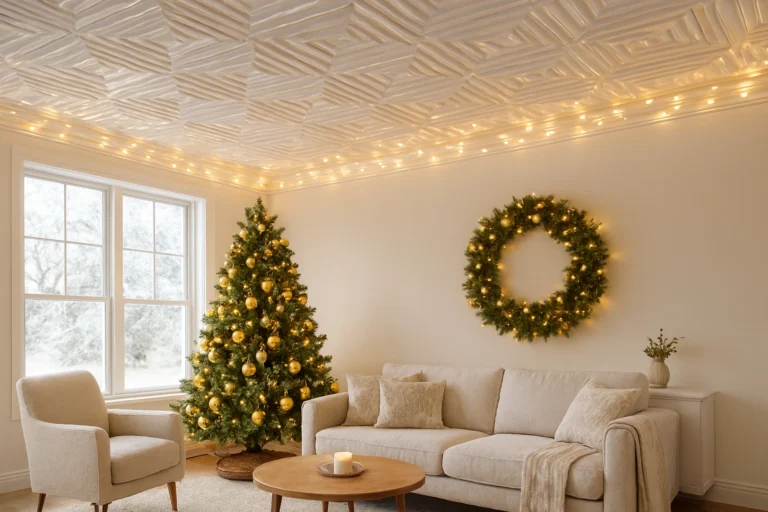
7 Warm Ceiling Colors That Make Rooms Feel Instantly Cozy
Updated June 2026 · By Sophie Ulman
Ceilings are the one surface in a room that nobody makes awkward eye contact with — which is exactly why changing them has such an outsized effect. Warm ceiling colors push light downward in a golden or amber tone that makes every other surface in the room look richer. The effect is immediate and requires zero furniture changes. This guide covers the 7 best warm ceiling colors — what they do in different room types, what lighting conditions suit them, and which ceiling paints to use to get a clean, professional result.
The first time I talked a client into a warm ceiling, I was nervous. We took a north-facing living room with a builder-white ceiling that always looked faintly gray and rolled a warm cream over it. The room changed before the second coat was dry — the same beige walls suddenly read warm instead of flat, and the afternoon light landed gold instead of cold. Here’s what I learned: in a north room, a warm ceiling does more work than a wall color change, and it does it for the price of a single gallon. That’s why I now reach for warmth overhead before I touch the walls.
7 Warm Ceiling Colors That Actually Work
1. Warm Cream / Pale Butter
Warm cream is the most universally flattering of all warm ceiling shades. It reads as “white” at a glance but radiates a golden undertone that warms every surface below it. It works in both north-facing rooms (where cool light makes standard white ceilings look gray) and south-facing rooms (where it prevents the ceiling from reading too yellow under direct sun). Paint color references: Benjamin Moore White Dove OC-17, Sherwin-Williams Antique White SW 6119.
2. Toasted Linen / Warm Sand
A step deeper than cream, warm sand adds visible depth to a ceiling while still reading as neutral. This is one of the best shades for open-plan living areas where the ceiling needs to “do something” without competing with bold wall colors. It pairs beautifully with earthy terracotta, sage green, or warm white walls. Paint references: Sherwin-Williams Accessible Beige SW 7036, Behr Swiss Coffee N-100.
3. Soft Honey / Pale Gold
Pale gold ceilings turn late afternoon sunlight into something spectacular. West-facing rooms that catch the evening sun benefit enormously from this shade — the natural warm light and the ceiling color amplify each other, creating a glow that feels almost like candlelight. Use it in dining rooms, living rooms, and bedrooms. Be cautious in north-facing rooms where it can read as yellow without warm light to activate it. Paint reference: Benjamin Moore Hawthorne Yellow HC-4.
4. Warm Greige / Clay Mist
Greige (gray-beige) with a warm undertone is the safe bet for anyone who wants warmth without the risk of yellow. It’s one of the most designer-approved ceiling shades of 2026 — appearing in home tours, hotel lobbies, and high-end residential projects in equal measure. The gray keeps it from feeling dated; the warm undertone prevents coldness. Paint references: Sherwin-Williams Accessible Beige SW 7036, Benjamin Moore Gray Owl OC-52 with warm white.
5. Blush Peach / Warm Rose
Blush and warm rose ceiling shades feel flattering rather than cold under candlelight and warm LED bulbs — which is why they’ve long been used in hospitality and fine dining. In a bedroom or dining room, a pale blush ceiling gives skin tones warmth that a white ceiling simply cannot. Keep walls neutral (warm white, linen, or light sage) so the ceiling reads as an architectural accent rather than a color clash. Paint reference: Benjamin Moore Pale Pink 2093-70.
6. Warm Caramel / Light Terracotta
This is the bolder end of this warm palette — caramel and light terracotta work best in larger rooms with high ceilings where the ceiling feels distant. At standard 8-foot ceiling height, mid-depth warm colors can feel enclosing. At 10 feet and above, they create a cocoon effect that reads as sophisticated and intentional rather than oppressive. Pair with warm-toned natural wood floors and cream walls for maximum effect. Paint reference: Sherwin-Williams Caramel SW 6117.
7. Aged Ivory / Antique White
Aged ivory is the most versatile shade on this list — it works in any room, any light direction, at any ceiling height. It avoids the clinical starkness of pure white while never going dark enough to risk feeling heavy. If you’re unsure which warm shade to choose, start here. It also photographs beautifully, which makes it popular with short-term rental hosts and home stagers. Paint references: Benjamin Moore Linen White OC-146, Sherwin-Williams Navajo White SW 6126.
🎨 Painting the ceiling and the walls together? See our guide on best paint colors for large rooms with high ceilings to coordinate ceiling and wall shades into a cohesive palette.
Room-by-Room Guide to Warm Ceiling Colors
| Room | Best Warm Shade | Why It Works |
|---|---|---|
| Living Room | Warm Cream or Toasted Linen | Neutral enough for any décor; adds warmth without drama |
| Bedroom | Blush Peach or Aged Ivory | Flattering under warm lamplight; cozy without being dark |
| Dining Room | Soft Honey or Blush Peach | Enhances candlelight; makes food and faces look warmer |
| Kitchen | Aged Ivory or Warm Cream | Reflects warm task lighting; prevents clinical feel |
| Home Office | Warm Greige or Aged Ivory | Reduces glare from overhead lights; neutral focus environment |
| High-Ceiling Room | Warm Caramel or Toasted Linen | Visually lowers the ceiling to create a more intimate scale |
Top Ceiling Paint Products for Warm Shades
Choosing warm ceiling colors is only half the equation — the right flat ceiling paint makes the color look professional and hides application marks. Here are three ceiling paint bases that work well with custom warm tints.
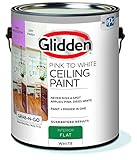
Glidden’s ceiling paint includes a pink indicator that shows coverage as you apply — it goes on pink and dries white (or your tint), making missed spots visible before they dry. For these warm tints that require even, full coverage in a single coat, this feature eliminates the frustrating “where did I miss” problem that makes ceiling painting take twice as long. The flat finish hides imperfections and roller marks in cured state.
It can be custom-tinted at most hardware stores to any of the warm shades listed above. Ask for a light or mid-tint base — warm cream shades use a small amount of yellow and red pigment that most ceiling paint bases accept easily.
Key fact: Pink-to-white application indicator — shows missed spots before they dry. Flat finish, suitable for all warm ceiling color tints.
- Coverage indicator prevents misses
- Flat finish, hides imperfections
- Tintable to custom warm shades
- Low spatter formula
- White/light base only — deep tints may need two coats
Best for: Warm cream, aged ivory, and linen ceiling colors — any shade in the light-to-medium warm range
Check Price on Amazon → Via Amazon.com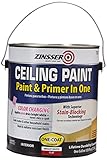
Rust-Oleum’s dedicated ceiling paint is formulated with stain-blocking technology — useful for older homes where ceiling stains from past water damage, smoke, or cooking grease can bleed through standard paint and discolor these warm ceiling tones from below. The flat, low-sheen finish is optimized for ceilings specifically, with reduced spatter for overhead application and a thickness that covers in fewer coats.
It ships as a bright white base but can be tinted. For warm shades below LRV 75 (mid-depth warm tones like caramel or warm greige), you may need two coats for opacity, especially over existing cool-white ceilings where undertone competition is an issue.
Key fact: Built-in stain-blocking — seals water stains, smoke discoloration, and grease bleed-through in one coat before your warm tint goes on.
- Stain-blocking formulation
- Low-spatter for ceiling application
- Flat finish, hides texture
- Trusted brand, wide availability
- Stronger odor than low-VOC alternatives
Best for: Older ceilings with stains or discoloration before applying any warm ceiling color
Check Price on Amazon → Via Amazon.com
PRESTIGE’s ceiling paint formula offers solid coverage at a lower price point — an accessible entry into proper ceiling-specific paint for anyone doing a single-room warm ceiling color project. The flat finish and anti-spattering formula behave as expected for ceiling work. For light warm tints (cream, ivory, pale gold), one coat typically provides good opacity over previously painted white ceilings.
Key fact: Budget-friendly ceiling-specific formula. Good one-coat coverage for light warm tints over existing white ceiling paint.
- Lower price point
- Ceiling-specific formula
- Good coverage for light tints
- No stain-blocking properties
- Deeper warm tints may need 2 coats
Best for: Budget ceiling repaints in light warm cream or aged ivory shades on clean existing ceilings
Check Price on Amazon → Via Amazon.com
How to Choose the Right Warm Ceiling Color
Step 1: Check Your Natural Light Direction
North-facing rooms receive cool, indirect light all day — warm ceiling colors work hardest here. Almost any of the 7 shades above will look better than standard white. South-facing rooms receive direct sun — use lighter warm tints (LRV 80+) so the ceiling doesn’t read as yellow under full sun. East and west rooms are variable; test a sample before committing to mid-depth tones.
Step 2: Consider Ceiling Height
Low ceilings (under 8 ft) should stay in the LRV 80–88 range — cream and aged ivory. Anything darker will visually compress the room. High ceilings (10 ft+) can handle warmer, deeper shades like caramel or warm greige without feeling oppressive. According to This Old House’s painting guide, a ceiling painted 1–2 shades darker than the walls can visually lower a too-tall space to a more intimate scale.
Step 3: Match to Your Light Bulb Temperature
Warm ceiling colors and warm light bulbs (2700K–3000K) reinforce each other beautifully. These warm tones under cool white bulbs (5000K) can look jaundiced. Before committing to a shade, paint a test swatch and observe it under your actual bulbs at night — not just in daylight. The nighttime reading is what you’ll live with most.
🎨 Renovation Stage: PAINT
Ceiling color selection happens at the PAINT stage — after surface prep and priming are complete. If you’re repainting over an existing dark or stained ceiling, prime first with Rust-Oleum’s stain-blocking formula above. For more on surface preparation before ceiling painting, see our guide on how to approach a full room renovation.
🏠 Painting more than just the ceiling? See our full exterior guide: best exterior house paint · best white paint for kitchen cabinets
⚠ When NOT to Use a Warm Ceiling Color
Warm ceilings aren’t universal. In a small, low room (under 8 ft) that already gets warm afternoon sun, a mid-depth warm shade like caramel will read heavy and close the space in — stay near-white (LRV 80+) or skip the warmth entirely.
They also fight cool, blue-gray color schemes. If your walls and floors lean cool, a yellow-warm ceiling looks out of place; choose a warm-greige with a gray base instead, or keep the ceiling a clean white. And under 5000K daylight bulbs, warm tones can look jaundiced — if you can’t change the bulbs, test the shade under that light before you buy a gallon.
Summary — Warm Ceiling Colors That Work
The best warm ceiling colors for most homes are Warm Cream and Aged Ivory — they’re universally flattering, work in any light direction, and pair with virtually any wall color or furniture style. For dining rooms and bedrooms where atmosphere matters most, step up to Soft Honey or Blush Peach. For high-ceiling rooms where you want architectural drama, Warm Caramel delivers a result that standard white never could.
Choose your ceiling paint product based on the condition of your existing ceiling — Glidden for clean, paintable surfaces; Rust-Oleum for anything with stains or odor history. Then tint to your chosen warm shade and apply in two thin coats for a professional result.
FAQ — Warm Ceiling Colors
Do warm ceiling colors make a room feel smaller?
Slightly — but the effect is usually desirable. These warm shades visually lower the ceiling plane, which makes a room feel more intimate and cozy rather than smaller. In rooms with high ceilings, this is actively beneficial. In rooms with standard 8-foot ceilings, keep to light warm shades (LRV 80+) to minimize the compression effect.
Should the ceiling be lighter or darker than the walls?
Traditionally, ceilings are lighter than walls. With these warm ceiling options, aim for a shade 1–2 LRV values lighter than your wall color. Exception: color-drenching (painting walls and ceiling the same shade) is a 2026 trend that works well with warm earth tones — the effect feels enveloping rather than oppressive as long as you keep the shade light enough (LRV 70+) and pair it with warm lighting.
What finish should warm ceiling colors be?
Flat (matte) finish is standard for ceilings. It hides roller marks, imperfections, and brush strokes — all of which are more visible on a ceiling than on walls due to raking overhead light. Eggshell or satin finishes on ceilings show every imperfection and are hard to touch up invisibly.
Can I use regular interior paint instead of ceiling paint for warm colors?
Yes — regular interior flat paint can be used on ceilings and tinted to any warm shade. Ceiling-specific paint is formulated to reduce spatter and drip during overhead application, which makes the job significantly easier. If you’re using regular interior paint, apply it thicker on the roller and work in smaller sections to minimize dripping.
Will a warm ceiling color clash with cool gray walls?
It can, and this is the mistake I see most often. A yellow-warm ceiling fights a blue-gray wall and the room feels disjointed. If your walls are cool, choose a warm shade with a gray base — warm greige or aged ivory — so the undertones meet in the middle instead of competing. Test a sample against the actual wall before you commit.
How many coats does a warm ceiling color need?
Over an existing white ceiling, light warm tints (cream, ivory, pale gold) typically cover in two coats. Deeper warm shades (caramel, warm greige) may need three coats for full opacity — especially if the existing ceiling is a different color. Always allow full dry time between coats — ceiling paint typically needs 2–4 hours.