How to Paint a Garage Door That Won’t Peel in Year One
Updated: August 17, 2026 | By Sophie Ulman
Figuring out how to paint a garage door is one of the highest-ROI projects in home renovation. A freshly painted garage door adds curb appeal, protects the material underneath, and costs a fraction of a replacement. Done right, the finish looks factory-smooth and lasts 5–7 years. Done wrong — skipping primer on steel, painting in direct sunlight, using the wrong brush technique on panels — and you’ll be looking at peel in under a year.
This guide gives you the exact approach professional painters use, the best products for steel, wood, and fiberglass doors, and a step-by-step process that eliminates the most common mistakes. Whether you want a clean classic black, a bold color statement, or a realistic wood-grain look without replacing the door, the answer is here.
The first time I painted a steel garage door I washed it, let it sit an hour, and started rolling. It looked perfect. Nine months later the paint was lifting off in sheets along the bottom two panels — the ones that catch every bit of splash-back from the driveway. The problem was not the paint. It was that a garage door holds a film of road grime and exhaust residue that plain water does not touch, and I had painted straight over it. Now I degrease the bottom third with a detergent wash, rinse it twice, and give it a full overnight dry before anything else happens.
That is the whole lesson of this project: prep matters more than the brand. Durability on a garage door is roughly half product and half surface preparation, and the half most people skip is the cleaning. And when you do get to the paint — two thin coats always beat one thick coat. Always.
Quick Picks: Best Paint for Garage Doors
| Category | Product | Door Type | Finish | Best For |
|---|---|---|---|---|
| Best Overall | Rust-Oleum Front Door Paint, Black | Metal, Wood, Fiberglass | Semi-Gloss | Clean one-coat coverage on any door |
| Best for Steel Doors | Rust-Oleum Advanced Dry Door & Trim Paint, Alpine Gray | Steel, Wood, Fiberglass | Satin | Fast-dry exterior durability on steel panels |
| Best Faux Wood Look | Giani Wood Look Paint Kit (Royal Mahogany) | Any material | Matte/Natural | Realistic wood grain without replacement |
| Best DIY Transformation | Retique It Exterior Paint for Garage Doors | Any material | Natural/Textured | Zero-VOC, waterproof, dramatic color change |
In-Depth Product Reviews
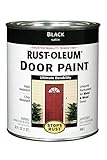
This is the product most professional painters reach for when a homeowner wants a fast, clean result on any door material. Rust-Oleum specifically engineered Front Door Paint for vertical door surfaces — it self-levels beautifully to eliminate brush marks, dries to a smooth semi-gloss that doesn’t show fingerprints, and delivers full coverage in a single coat on most surfaces. The black colorway is perennially the top-selling shade for garage doors because it hides surface imperfections and pairs with virtually every exterior palette.
On a paneled steel garage door, the usual method is one coat with a foam roller and an angled brush for the panel recesses. The quart size covers a standard single-car garage door comfortably. Drying time is approximately one hour to touch and four hours to full cure — meaning you can apply a second coat the same day if you want extra depth on older, weathered surfaces.
Key fact: Formulated specifically for doors — self-levels on vertical surfaces to eliminate brush marks and roller stipple that plague generic exterior paints.
- Self-leveling formula for brush-mark-free finish
- Works on metal, wood, and fiberglass
- One coat on most surfaces
- Quart size — large two-car doors need 2 quarts
- Black only in this SKU (other colors available separately)
Best for: Homeowners wanting a fast, professional-grade result on any door type in one weekend.
Check Price on Amazon →Via Amazon.com
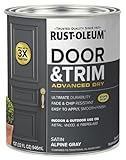
Alpine Gray has emerged as one of the most sought-after garage door colors in 2026 — it’s the contemporary alternative to basic white that pairs with modern exterior finishes without the maintenance demands of a true dark color. Rust-Oleum’s Advanced Dry formula adds an important feature for exterior use: rust inhibition. Steel garage doors are constantly exposed to moisture, particularly at panel edges and hardware cutouts where the factory coating wears first. This satin formula bonds to steel and creates a moisture barrier that standard acrylic paints can’t match.
The water-based formula dries faster than traditional oil-based door paints — roughly 30 minutes to touch and 1 hour to recoat — which is a meaningful advantage when you’re working on an exterior project and watching the weather. DIY painters on Reddit specifically call out this product for its smooth roll-out on steel panels, with several noting they got zero texture on the flat panel faces using a 4-inch foam roller.
Key fact: Built-in rust inhibition — specifically formulated for steel door surfaces where moisture penetration at panel seams causes premature peeling.
- Rust-inhibiting formula for steel doors
- Fast dry — recoat in 1 hour
- Low odor, water-based cleanup
- Satin (not semi-gloss) — slightly less dramatic sheen
- Alpine Gray only in this listing
Best for: Steel garage doors in humid climates, or any door where rust prevention is a priority.
Check Price on Amazon →Via Amazon.com
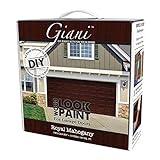
The most common garage door upgrade question on every home improvement forum is some version of “can I make my steel door look like wood without replacing it?” Giani built an entire product category around this. The Wood Look Paint Kit uses a multi-step layering system — base coat, mid-tone, dark grain layer — that, when applied with the included grain tool, produces a texture and depth that passes as real wood at normal viewing distance. Royal Mahogany is the flagship shade: warm, rich, and convincing.
Each kit covers up to 180 square feet, which is precisely the surface area of a standard two-car garage door. Everything needed is included — brushes, tools, and full instructions. The water-based acrylic formula is weather-resistant and outdoor-durable. Homeowners who’ve completed the process consistently report that neighbors ask whether they got a new door. The learning curve on the grain step is real, but Giani provides detailed video instructions and the technique is learnable in one practice session on cardboard.
Key fact: Covers exactly 180 sq ft — sized specifically to handle one standard two-car garage door with every tool included in the kit.
- Realistic faux-wood result
- All tools and materials included
- Weather-resistant water-based acrylic
- Multi-step process requires patience
- Grain technique has a learning curve
Best for: Homeowners with steel or fiberglass doors who want a wood look without the cost of a real wood replacement door.
Check Price on Amazon →Via Amazon.com

Retique It carved out a unique niche in garage door paint: a zero-VOC exterior formula that adheres to almost any hard surface without priming, including surfaces most paints can’t handle without extensive prep. The Barn Wood colorway creates a weathered, textured appearance with organic depth that flat colors can’t replicate. Applied with a brush or roller, the formula self-textures during drying to mimic aged wood grain — no special tools required.
The waterproof, scratch-resistant formulation performs well in freeze-thaw climates where expansion and contraction of steel panels stress the paint bond. Zero VOC means no fumes during application, which is particularly relevant for attached garages. Forum users who’ve tried Retique It on older doors with light surface rust consistently report that it covers and protects without the rust treating step that most paints require.
Key fact: Zero-VOC, waterproof, and scratch-resistant — bonds to almost any hard surface without a separate primer coat, even surfaces with light rust.
- Zero-VOC — safe for enclosed adjacent spaces
- Waterproof and scratch-resistant
- Adheres without primer on most surfaces
- Textured result not suited for everyone’s taste
- Barn Wood colorway is niche
Best for: Older steel doors with light surface rust, or anyone wanting a dramatic textured look without heavy prep work.
Check Price on Amazon →Via Amazon.com
⚡ Pro Tips: What Separates a Good Garage Door Paint Job from a Great One
- Never paint in direct sunlight. The surface temperature of a steel door in direct afternoon sun can exceed 120°F — paint skins over before it levels, leaving permanent brush marks and a rough texture. Paint in shade or on an overcast day.
- Brush panels first, then roll the flat faces. Get the angled brush into every recessed edge and corner. Immediately follow with a 4-inch foam roller on the flat panel face while the brush paint is still wet. This blends the two applications into a uniform surface.
- Remove hardware before you start. Masking handles and hinges is slower and messier than pulling them off. A flat-head screwdriver handles most garage door hardware in under 10 minutes.
- Apply rust-inhibiting primer to bare steel. Any spot where the factory finish has worn through to bare metal will rust through your new paint within a season if left unsealed. A rust-inhibiting primer on those spots takes 20 minutes and extends the life of the paint job by years.
🎨 Renovation Stage: PAINT
Painting a garage door is a PAINT stage project in the Renovation Protocol. Before this step, complete any panel repairs, hardware replacement, and surface degreasing. On steel doors, address rust spots at the PREP stage with a wire brush and rust-inhibiting primer. Need to strip old peeling paint before starting? Our guide to the best paint removers for metal and wood covers exactly what to use.
🧮 Garage Door Paint Calculator
Select your door size to estimate how much paint and primer you’ll need.

Buying Guide: How to Choose the Right Garage Door Paint
The biggest mistake in choosing garage door paint is treating it like choosing any exterior paint. A garage door is a moving, articulated surface that flexes, expands and contracts with temperature, and takes direct UV punishment on its horizontal surface areas. The wrong paint formulation simply won’t survive that environment.
Steel Doors: Rust Inhibition is Non-Negotiable
Steel garage doors are the most common type and the most demanding from a paint perspective. Factory powder coat or alkyd primer protects the steel at the factory, but once that coating wears — at panel edges, hardware cutouts, or anywhere the door was dented — moisture hits bare steel and rust begins. Any paint you apply over rust that isn’t properly treated will peel within months. For steel doors, choose paints with built-in rust inhibition (like the Rust-Oleum Advanced Dry formula) or apply a dedicated rust-inhibiting primer to bare metal spots before your topcoat. Also see our guide to the best paint for rusty metal for primers and topcoats that bond to oxidised steel.
Wood Doors: Moisture Barrier First
Real wood garage doors are beautiful, but they’re also the most high-maintenance surface in exterior painting. Wood expands and contracts with seasonal moisture changes more dramatically than steel or fiberglass. This movement breaks paint bonds at joints and panel edges, causing cracking and peeling. For wood doors, always prime with a high-quality exterior primer that penetrates the wood grain before applying topcoat. Use 100% acrylic latex — never oil-based — because acrylic remains flexible through wood movement. According to Family Handyman’s garage paint guide, repainting wood doors every 3–5 years is the expected maintenance cycle in most climates.
Fiberglass Doors: The Easiest Surface to Paint
Fiberglass doors don’t rust, don’t rot, and don’t expand significantly with temperature changes. They’re also the easiest surface to prep and paint. Light sanding with 220-grit to scuff the smooth factory surface, a coat of primer designed for fiberglass or plastic, and any 100% acrylic exterior paint produces a durable result. The Giani Wood Look Kit is especially effective on fiberglass because the smooth surface allows the grain tool to produce the most convincing wood texture.
Paint vs. Sprayer Application: Which is Better?
Professional painters almost exclusively use airless sprayers on garage doors because they produce the smoothest finish and eliminate all brush and roller texture. However, spraying requires proper masking of the surrounding driveway, walls, and landscaping — a setup that takes 30–45 minutes and adds complexity. For most homeowners, brush-and-roller produces excellent results when you follow the panel-first, roller-second technique described in the prep section below. If you want to try spraying, check our guide to cordless sprayers for large projects before investing in equipment.
How to Prep and Paint a Garage Door (Step by Step)
- Choose the right day. Ideal conditions are 50–75°F, low humidity, overcast or in shade. Avoid direct sunlight and temperatures below 50°F. Both extremes cause adhesion failures.
- Wash the door thoroughly. Mix mild detergent in warm water and scrub with a soft brush or sponge. A pressure washer on low setting speeds this up. Rinse completely and allow to dry for at least 4 hours, or overnight.
- Remove all hardware. Pull off handles, hinges, and decorative hardware with a screwdriver. This eliminates the need for masking and gives you access to edges where paint buildup and peeling often starts.
- Sand and address rust or peeling paint. On steel doors, use a wire brush or 80-grit sandpaper on any rust spots. Feather the edges of any peeling areas with 120-grit. On wood doors, sand any raised grain or rough spots smooth. Our guide to paint removal for metal and wood covers chemical stripping for heavily degraded surfaces.
- Apply rust-inhibiting primer to bare metal. Apply a thin coat over any bare steel with a small brush. Allow to cure per the manufacturer’s instructions — typically 24 hours — before proceeding.
- Work section by section, top to bottom. Paint one panel at a time, starting at the top row and working down. Brush the recessed edges first, then immediately follow with a foam roller on the flat panel face to blend and smooth.
- Allow full dry time before second coat. Check the manufacturer’s recoat window. Recoating too soon traps solvent and causes wrinkling or adhesion failure.
- Reinstall hardware after 24 hours. Allow at least 24 hours of cure time before reattaching hardware to avoid pulling or smearing the fresh finish.
How do you paint a garage door so it doesn’t peel?
Peeling is the only failure mode that really matters on a garage door, and it almost never starts in the middle of a panel. It starts at an edge, a seam, or a bare-metal chip, and then it travels. Four things cause nearly all of it, and each fix costs you time rather than money.
Contamination under the film. A garage door lives at bumper height. Exhaust soot, brake dust and driveway splash build up as an oily layer that water alone leaves behind. Wash with a degreasing detergent, rinse twice, and let it dry overnight. If you rub a clean white cloth across the bottom panel and it comes away grey, you are not ready to paint.
Bare steel left unsealed. Every chip and dent worn through to metal will bloom rust under a fresh topcoat within a season. Spot-prime those areas with a rust-inhibiting primer and let them cure fully before the topcoat goes on. If the door already has active rust rather than a few bare spots, treat it as a rust job first — our guide to the best paint for rusty metal covers the products that bond to oxidised steel instead of sitting on top of it.
Heat during application. A dark steel door in afternoon sun can pass 120°F at the surface. Paint hitting that skins over before it levels, and a skinned film traps solvent underneath and never bonds properly. Paint in shade, on an overcast day, or start on the shaded side and follow the shadow around.
Film applied too thick. One heavy coat looks like a shortcut and behaves like a defect. The surface cures while the underside stays soft, so the film releases at the edges as the door flexes on its tracks. Two thin coats, with the manufacturer’s full recoat window between them, outlast one thick coat by years.
If the door itself is sound and it is the surrounding surfaces letting the look down, the same prep logic applies inside — see the best paint for garage walls for the interior half of the job.
When NOT to paint your garage door
- The existing paint is peeling across more than about a quarter of the door. At that point you are not painting, you are stripping. New paint over widespread failing paint fails with it, on the same schedule.
- The door is vinyl-clad or carries a vinyl overlay. Vinyl moves far more than the paint film over it, and a dark colour on vinyl absorbs enough heat to warp the panel itself. Manufacturers routinely void warranties over this.
- Rust has gone through the panel. If a screwdriver goes through it, paint is cosmetic. That panel needs replacing, and on a sectional door single panels can usually be swapped without touching the rest.
- It is below 50°F, or rain is due within 24 hours. Acrylic latex forms its film by coalescence, and that stalls in the cold. A door that feels dry at 45°F may not have cured at all.
- The factory powder coat is still intact and in good condition. Powder coat outlasts anything you can brush over it. Clean it and leave it alone until it actually starts to fail.
✅ Our Verdict
For most garage doors, Rust-Oleum Front Door Paint delivers the cleanest, most professional-looking result with the least complexity — self-leveling, fast-drying, and compatible with all door materials. Steel doors in humid climates benefit from the rust-inhibiting properties of the Rust-Oleum Advanced Dry Door & Trim Paint. If you want a dramatic transformation — faux wood grain that looks genuine at a fraction of replacement cost — Giani’s Wood Look Kit is the most convincing option on the market. For zero-VOC, no-fuss adhesion with a textured result, Retique It handles surfaces that would stump conventional paints.
If this project is one door in a longer list, the same prep logic carries over to the entry door — though the paint does not, since a front door is judged from three feet away and wants a harder, glossier film. Our exterior door paint comparison sorts that out. On the tool side, the flat panels on a steel or fiberglass door lay down best with a short-nap foam sleeve rather than the ¾-inch roller most people already own; a foam paint roller leaves no stipple to sand out later.