Best Exterior Paint Sprayer in 2026: Top Airless Picks
Updated May 2026 · By Sophie Ulman
Best Exterior Paint Sprayer in 2026: Top Airless Picks for Any Home
Choosing the best exterior paint sprayer cuts a full house repaint from three exhausting days down to one — but only if you pick the right machine for the job. The wrong sprayer wastes paint, clogs mid-project, and leaves an uneven finish that looks worse than a roller job. The right best exterior paint sprayer delivers a flawless coat in half the time, even on rough surfaces like stucco and lap siding.
This guide covers the exterior paint sprayers worth buying, compared on pressure output, tip range, how long a full clean-out actually takes, and whether they hold a fan pattern across a whole house rather than a test board. Whether you’re painting a single-story ranch or a two-story colonial, there’s a machine here that matches your scope and skill level.
In This Guide
| Pick | Sprayer | Best For | Max PSI | Hose |
|---|---|---|---|---|
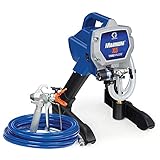
| 🥇 Best Overall | Graco Magnum X5 | Single-story homes, fences, decks | 3,000 PSI | 25 ft |
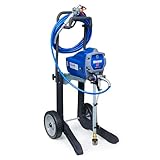
| 🏠 Large Homes | Graco Magnum X7 | Two-story homes, large surfaces | 3,000 PSI | Up to 100 ft |
| 💰 Best Value | Wagner Control Pro 150 | Smaller homes, first-time DIYers | 1,500 PSI | 20 ft |
Pros
- Sprays unthinned paint from a 5-gal bucket
- Fully adjustable pressure (0–3,000 PSI)
- PowerFlush adapter for fast garden-hose cleanup
- Compatible with professional tip sizes for exterior work
Cons
- 25 ft hose — limiting on two-story work
- No wheels — must be carried between locations
- Pressure settings have a learning curve for first-timers
🎯 Best for: Single-story and small two-story homes, fences, outbuildings, decks
Check Price on AmazonVia Amazon.com
New to sprayers? Before buying the best exterior paint sprayer for your project, read our complete beginner’s guide to paint spray guns — it covers tip sizing, pressure settings, and the most common first-timer mistakes on exterior jobs.
Pros
- Runs up to 100 ft of hose — reaches upper stories from ground level
- Wheeled cart for repositioning without lifting
- 3,000 PSI and a .017 in max tip handle thick elastomeric coatings
- 125 gal/year rating, same as the X5 — the gain is reach, not duty cycle
Cons
- Higher cost than the X5
- Bulkier to store and transport
- A long hose run adds weight and drag — heavier to manage on a ladder
🎯 Best for: Two-story and large homes, professional-grade DIY, high-volume seasonal projects
Check Price on AmazonVia Amazon.com
Choosing paint for the job? See our guide to the best exterior paint for wood siding to pair your new best exterior paint sprayer with the right coating — the two decisions together determine your final result.
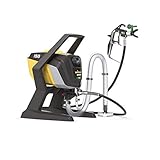
Pros
- HEA technology dramatically reduces overspray
- Lowest price — best value for occasional use
- Lightweight and easy to reposition
- Forgiving for first-time exterior sprayers
Cons
- 1,500 PSI — won’t handle thick elastomeric coatings
- 20 ft hose requires frequent repositioning
- Not suitable for rough stucco or masonry
🎯 Best for: First-time exterior sprayers, single-story homes with smooth siding, occasional-use projects
Check Price on AmazonVia Amazon.com
Working on a tight deadline? See our guide on how to get paint to dry fast and the best cordless sprayers for large projects — cordless options are worth considering when working in areas without easy power access.
More From ThePaintly
- Spray Gun Beginner’s Guide
- Best Exterior House Paint
- Sprayers for Furniture
- How to Paint House Exterior
- Best Paint Remover Guide
⚡ Pro Tips for Exterior Spraying
- Mask everything. Airless sprayers produce fine overspray that travels far in wind. Cover windows, doors, light fixtures, plants, and any cars within 15 feet before you start. Budget 45 minutes for masking — it saves 2 hours of cleanup.
- Test your pattern first. Before hitting the house, spray onto cardboard. Check for tails (adjust tip angle), heavy center (increase pressure), or streaks (replace worn tip). Don’t start the house until the pattern looks right.
- Keep the gun moving. Trigger before moving across the surface, release after. A stationary trigger deposits too much paint and causes drips. Maintain a consistent 12–14 inch distance throughout each pass.
- Never spray in wind above 10 mph. Wind scatters overspray and causes dry spray — tiny dried particles that land on wet coat and create a gritty texture.
Where This Fits in the Renovation Protocol
The best exterior paint sprayer belongs in the PAINT stage — but only after thorough surface prep. Washing, scraping, caulking, and priming must all be complete before any sprayer goes on. If your current exterior paint is peeling or failing, see the guide to the best paint removers for wood and metal first. Once prep is done, pair your best exterior paint sprayer with the right exterior house paint for your surface type.
🕐 Exterior Spray Project Time Estimator
Estimate total project time including masking, spraying, and cleanup.

Best Exterior Paint Sprayer: What to Look For Before You Buy
Not every airless sprayer is built for house exteriors. The demands of exterior work — thick coatings, long continuous runs, rough surfaces — separate capable machines from ones that overheat and clog. Here’s what actually matters when choosing the best exterior paint sprayer for your project.
Airless vs. HVLP vs. HEA — Which Type Is Right?
Traditional airless sprayers (Graco X5, X7) use high pressure to atomize paint through a small tip orifice. They cover large surfaces fast and handle thick exterior coatings without thinning — the industry standard for house exteriors. HVLP sprayers are excellent for fine furniture finishing but too slow for a full house repaint. HEA (High Efficiency Airless) — Wagner’s approach — combines airless pressure with tip technology that reduces overspray, making it a forgiving middle ground for beginners who haven’t yet built consistent technique.
According to Family Handyman, airless is the professional standard for house exteriors because of its speed and compatibility with thick latex coatings.
Pressure Output and Tip Size
For exterior house paint, you need at minimum 2,000 PSI to atomize thick 100% acrylic exterior latex properly. Below that, paint breaks into large droplets that create orange-peel texture. Tip size must match your paint’s viscosity. A 515 tip (0.015″ orifice, 10″ fan) is the standard starting point for exterior latex on siding. For elastomeric coatings on stucco, move to a 517 or 519. According to This Old House, always check the paint manufacturer’s tip recommendation on the can — mismatched tip size is the most common cause of poor results from an otherwise capable best exterior paint sprayer.
Hose Length Determines How Often You Move
On a single-story home, 25 ft is workable. On a two-story home, 25 ft forces constant repositioning — slow and dangerous on a ladder. A long hose run (the X7 supports up to 100 ft) lets you work from ground level for the entire job. Longer hoses create pressure drop, which is why higher-capacity pumps are recommended with extended lengths. For furniture and smaller indoor projects between exterior jobs, see our guide to the best airless paint sprayers for furniture where shorter hoses and lower pressure are advantages.
Cleanup System
Cleaning is non-negotiable — paint left in the pump destroys the machine. Graco’s PowerFlush adapter connects to a garden hose and flushes the entire system in 5–10 minutes. Without it, manual backflushing takes 20–30 minutes per session. Over a season, this time difference is significant. Always flush with clean water immediately after finishing — never let latex dry in the pump.
Exterior Spraying Technique: Getting the Finish Right
Even the best exterior paint sprayer produces poor results with bad technique. These fundamentals change your results immediately, regardless of which machine you buy.
Distance and Angle
Hold the spray gun 12–14 inches from the surface, perpendicular to the wall. Moving closer concentrates too much paint and causes runs. Moving farther creates dry spray — paint that partially dries before hitting the surface and lands as gritty particles. Keep a consistent distance by maintaining your elbow at a fixed radius, not arcing your wrist — wrist arc changes the distance mid-pass and creates uneven coverage bands.
50% Overlap Pattern
Each pass must overlap the previous pass by 50%. This eliminates the lighter-coverage edges of your spray fan and creates uniform film thickness. Work in horizontal passes on horizontal siding, vertical passes on board-and-batten. Maintain a steady pace — roughly 1 foot per second as a starting benchmark, adjusted by your pressure and tip settings.
Top-Down Sequence
Always spray from the top down. Overspray drifts downward — working top-to-bottom means fresh overspray falls on areas you haven’t yet painted rather than onto your finished surfaces. Start under the roofline, work across the full width, then step down and repeat. Complete cut-in work around windows and trim with a brush first, or back-roll those areas after spraying for full coverage in areas the spray fan can’t reach cleanly.
Final Verdict
For most homeowners painting a single-story home, the Graco Magnum X5 is the best exterior paint sprayer for the money — 3,000 PSI, unthinned latex capability, PowerFlush cleanup. On a two-story or larger home, the Graco X7, which supports up to 100 ft of hose on a wheeled cart, makes the job meaningfully faster and safer — the upgrade cost is justified by the time saved over a full repaint.
If you’re painting your first exterior and want a forgiving machine that minimizes overspray while you learn, the Wagner Control Pro 150 is the right starting point. Its HEA technology dramatically reduces the mess of traditional airless spraying, which matters before you’ve built the technique to control overspray consistently.
Frequently Asked Questions
What is the best exterior paint sprayer for a house?
The Graco Magnum X5 is the best exterior paint sprayer for most homeowners — 3,000 PSI, unthinned latex from a 5-gallon bucket, PowerFlush cleanup. For two-story homes, step up to the Graco X7, which runs up to 100 ft of hose from a wheeled cart.
How many PSI do I need to spray exterior paint?
At least 2,000 PSI to properly atomize thick exterior latex. Most professional exterior work uses 2,500–3,000 PSI for standard siding. Elastomeric coatings may require higher. Below 2,000 PSI, you get orange-peel texture instead of smooth coverage.
Do I need to thin paint before spraying the exterior?
Not with a true airless sprayer (Graco X5/X7) — they handle undiluted exterior latex. Thinning reduces coverage, durability, and color depth. Check the can label, but thinning is rarely needed at adequate pressure.
How long does it take to spray paint a house exterior?
Roughly 2–3 hours spray time per coat on 1,500–1,800 sq ft. Add 1.5 hours masking, 4–6 hours dry time between coats, 30 minutes cleanup. A two-coat job typically spans 8–12 elapsed hours across two days.
What tip size for exterior house paint?
515 tip for standard exterior latex on siding. 517 or 519 for thick elastomeric coatings on stucco. 310 or 312 for trim cut-in work. Always check the paint manufacturer’s tip recommendation on the can.
Is it better to roll or spray exterior paint?
Spraying is 4–6× faster on large open surfaces. Rolling provides better adhesion on rough or porous surfaces. Many pros spray and back-roll immediately. First-timers: brush-and-roll is more forgiving and needs no masking expertise.
How far should the spray gun be from the wall?
12–14 inches, perpendicular to the surface throughout each pass. Too close = drips. Too far = dry spray and gritty texture. Consistent distance and steady walking pace beat speed.
Can I use an HVLP sprayer for exterior house painting?
Not recommended. HVLP is excellent for thin stains and fine finishes but too slow for a full exterior repaint with thick latex. Airless is the correct tool for exterior house work.
The Elevation I Sprayed Twice
The first house exterior I sprayed, I did the south-facing wall on a bright, slightly breezy afternoon because that was when I had the time. It looked even while I was working. Two days later, in flat morning light, the whole wall had a faint striping to it — wide vertical bands where each pass had dried a shade differently from the one beside it.
What had happened is that the breeze and the sun were drying the leading edge of each pass before I overlapped it, so instead of a continuous film I had laid down a series of half-set strips. On the shaded north wall the same technique gave a perfect finish, which is how I know it was the conditions and not the gun.
Spray the shaded side. Follow the sun around the house rather than working into it, and stop when the wind picks up. On an exterior, timing decides more of the result than the machine does.
When Not to Spray an Exterior
- It is windy, or neighbours are close. Airless overspray carries a long way and settles on cars, windows and next door’s siding. Masking your own property does not prevent it.
- The surface is chalky or previously failed. Sprayed paint sits on top of a chalky surface rather than keying into it. Wash it down, let it dry, and back-roll the first coat so it works into the substrate.
- Temperature is dropping below the product’s minimum overnight. A film that has not cured before it gets cold can stay soft or crack. Check the label minimum, not just the daytime high.
- You are painting only trim, doors and shutters. Masking the house to spray the trim costs more time than brushing it. Sprayers earn their keep on continuous surface area.
- You have not handled an airless gun before. At 3,000 PSI a tip can inject paint through skin without an obvious wound, and it is a surgical emergency. Engage the trigger lock every time you set the gun down, never point it at anyone, and never clear a blocked tip by hand.
Written by Sophie Ulman. ThePaintly is reader-supported: when you buy through links on this site we may earn an affiliate commission at no extra cost to you.