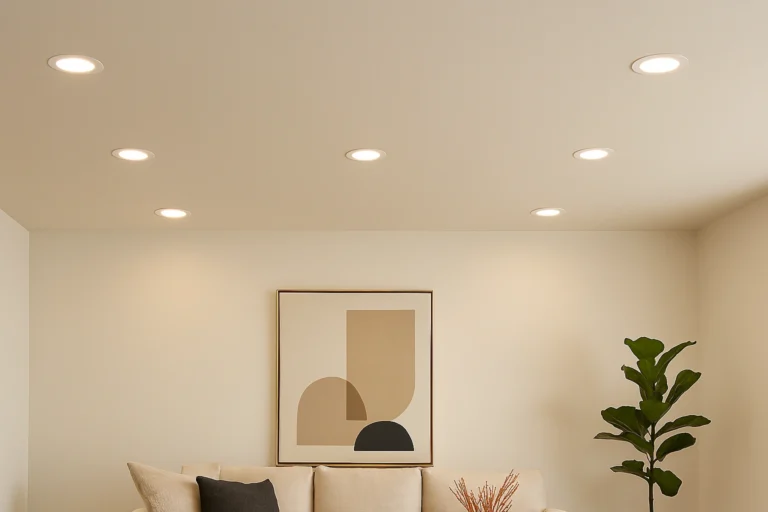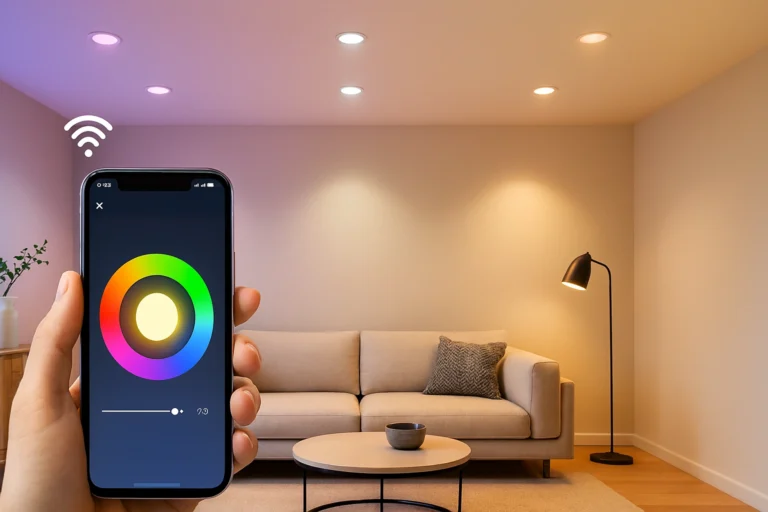
Best LED Recessed Ceiling Lights: A Bright Decision for Your Home
Best LED Recessed Ceiling Lights: The Ultimate 2026 Buyer’s Guide
⚡ Quick Summary: The Best Picks for Your Home
- The All-Rounder: [Amico 6-inch 5CCT] – Best for flexibility in any room.
- The Brightest Option: [Ensenior 6-inch 1050LM] – Perfect for high ceilings and kitchens.
- The Pro Choice: [Lithonia Lighting WF6] – Industry-leading durability and dimming.
- Best for Retrofit: [Halo RL560] – The easiest upgrade for old “can” lights.
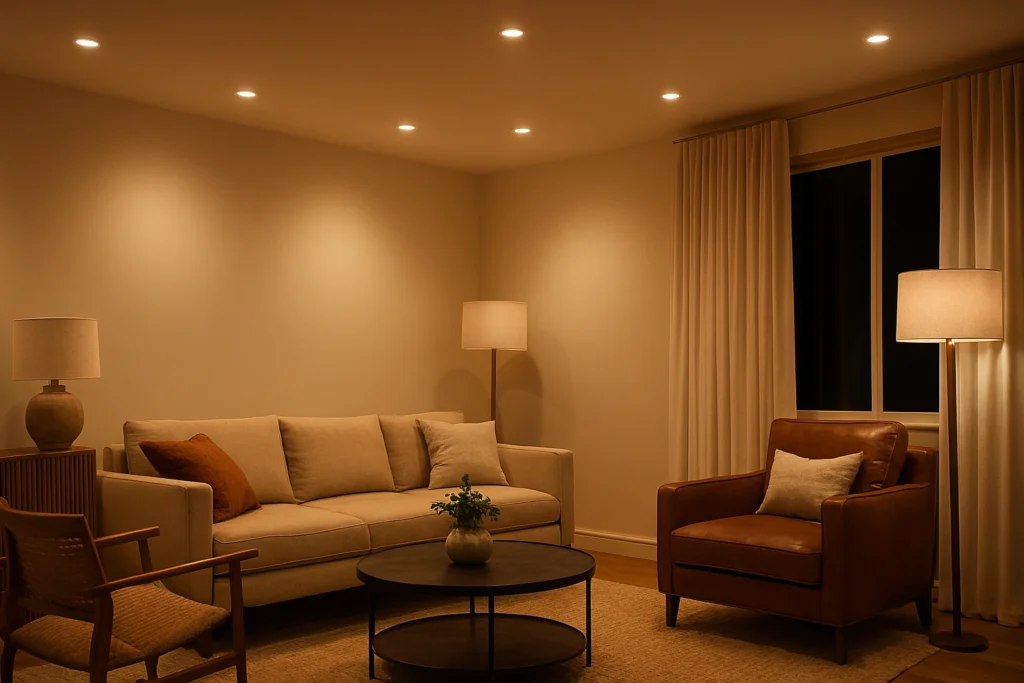
Selecting the best LED recessed ceiling lights in 2026 isn’t just about brightness—it’s about “Visual Comfort,” energy efficiency, and long-term driver reliability. A poor choice leads to the two biggest headaches in home lighting: flickering and buzzing. In this guide, we’ll break down the technical specs that actually matter and review the top-rated units that electricians and DIYers swear by.
(“Top LED Recessed Lights: Don’t Buy Until You See This!”)
5 Critical Mistakes to Avoid (The “Expertise” Section)
Most homeowners fail their lighting projects because they ignore these three factors:
- Mismatching the Dimmer: Using a standard incandescent dimmer with high-efficiency LEDs causes “ghosting” or strobing. Always pair your lights with an ELV (Electronic Low Voltage) or LED-compatible dimmer.
- Wrong CRI (Color Rendering Index): Low CRI (under 80) makes your food and skin look gray. For kitchens and bathrooms, aim for CRI 90+ to see colors as they truly are.
- Ignoring the IC Rating: If your lights will be in contact with attic insulation, they must be IC-Rated. Non-rated lights are a fire hazard.
- Mixing Color Temperatures: Don’t mix 3000K (warm) and 5000K (cool) in the same open space. It creates visual chaos.
- Over-Lighting: Too many “big lights” can make a room feel cold. Pro Tip: Layer your light. Use recessed for ambient, but check our guide on Modern Home Lighting Trends to add warmth.
🏆 Top Picks: Best LED Recessed Lights Reviews
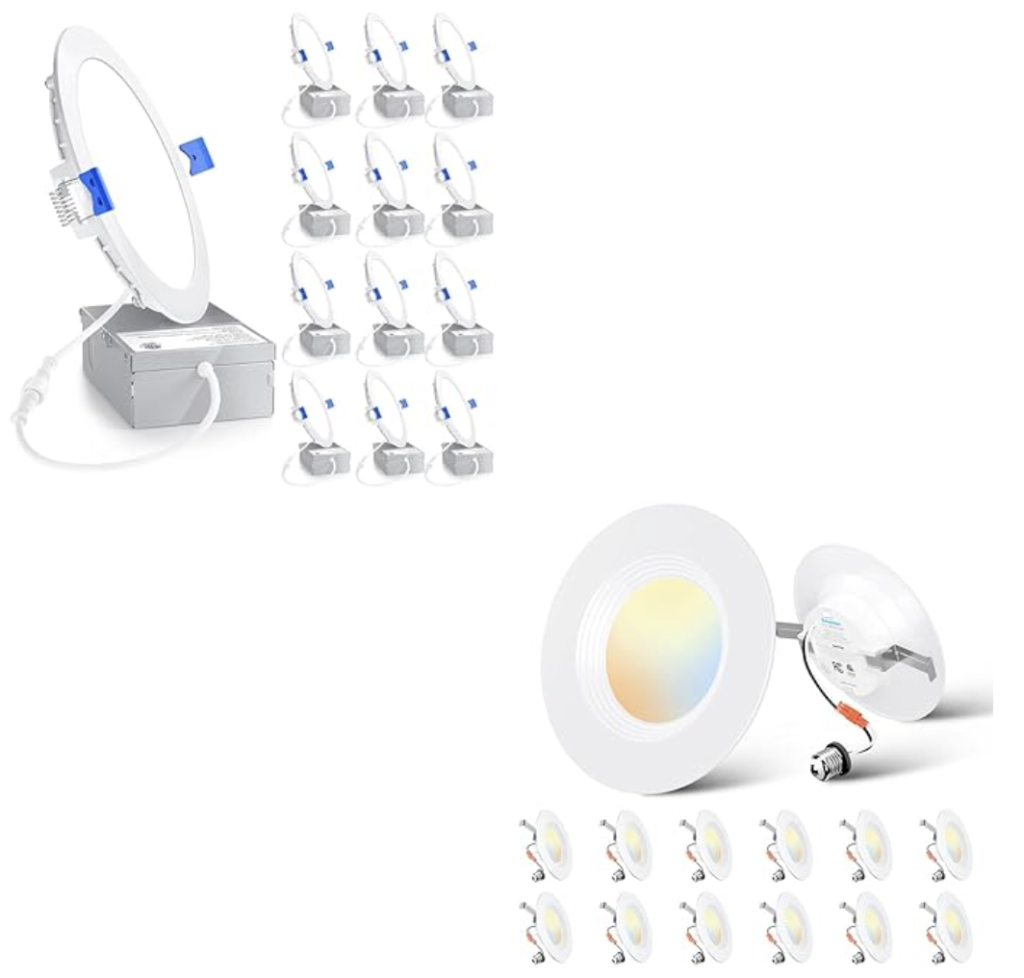
1. Best Overall: Amico 6″ 5CCT Ultra-Thin LED
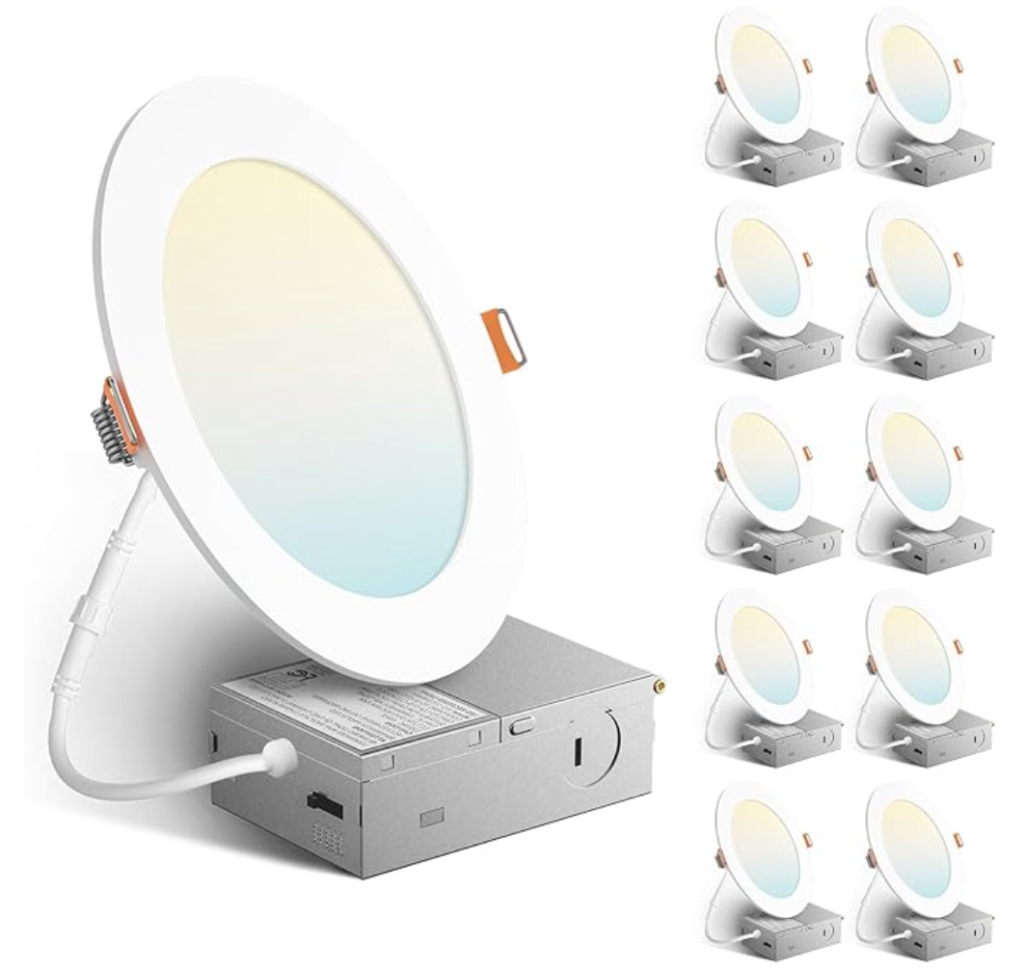
This is the “gold standard” for DIYers. Its wafer-style design means you don’t need a housing can, making it perfect for shallow ceilings.
- The Killer Feature: A physical switch on the junction box lets you choose between 5 color temperatures (CCT) from 2700K to 5000K.
- Best For: Living rooms, bedrooms, and hallways.
- [Check Price on Amazon: ]
⚡ Mid-Article Pro Tip: If you’re currently renovating and just finished your ceiling, make sure you’re using the best ceiling paint for kitchen before installing your new LEDs. A high-quality finish reflects the light much better without glare.
2. Best for High Brightness: Ensenior 6″ 1050LM
When you need to light up a large kitchen or a workshop, lumens are king. At 1050 Lumens, these are significantly brighter than the industry average of 750-800.
- Pros: Incredible light distribution and anti-glare diffuser.
- Cons: Runs slightly warmer; ensure good ventilation.
- [Check Price on Amazon:]
3. The Professional Grade: Juno WF4 Ultra-Thin (90 CRI)
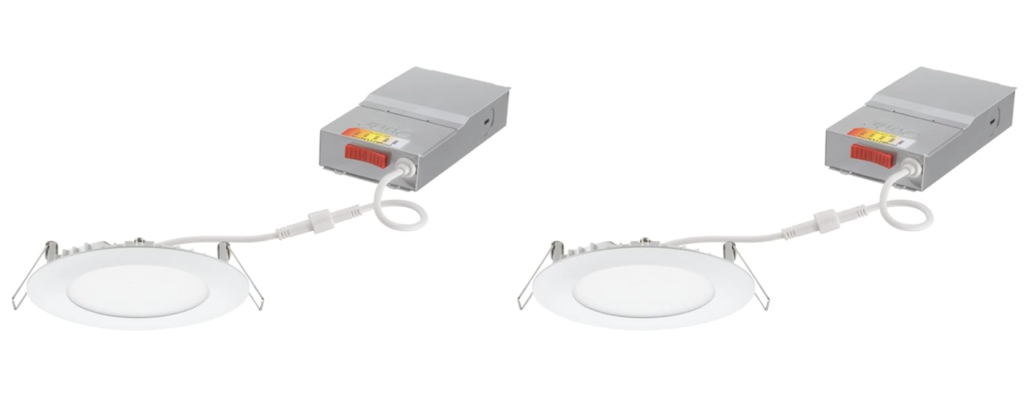
If you are looking for a lighting solution that electricians and designers trust for high-end renovations, the Juno WF4 is in a league of its own. While others focus on brightness, Juno focuses on Light Quality.
- The Edge: With a 90 CRI (Color Rendering Index), this unit ensures that colors in your room—from your wall paint to your furniture—look vivid and true to life. It also features a 5-in-1 switch to toggle between 2700K and 5000K easily.
- Durability: Rated for 50,000 hours and certified for wet locations, making it the perfect choice for high-moisture areas like bathrooms or outdoor soffits.
- [Check Price on Amazon: ]
Technical Comparison: Lumens, Watts, and CRI
| Feature | Amico 5CCT | Lithonia WF6 | Ensenior 6″ |
| Brightness | 750 – 850 Lumens | 1100 Lumens | 1050 Lumens |
| Color Accuracy | 80+ CRI | 90+ CRI | 85+ CRI |
| Energy Usage | 12 Watts | 13 Watts | 12 Watts |
| Best Use Case | General Living | Professional/Design | Kitchens/Bright Work |
The Essential Installation Checklist
Before you cut that hole in your drywall, ensure you have:
- Hole Saw (4″ or 6″): Sized exactly to your light’s trim.
- LED-Compatible Dimmer Switch: (e.g., Lutron Caseta or Diva).
- Voltage Tester: Safety first—always ensure the power is off.
- Wire Strippers: For clean connections in the junction box.
Putting It All Together: How to Choose Your Best LED Recessed Ceiling Lights
Assess your ceiling depth and structure: wafer or canless units may be your only choice in tight ceilings.
Define your target brightness and spacing: calculate lumens needed per square foot, then pick units accordingly.
Check driver specs and dimming behavior: always test a unit/dimmer combo.
Pick a trusted brand or model with strong user reviews: use reviews and best led recessed lights reviews as a sanity check.
Plan your layout and layer your lighting: avoid relying solely on downlights for all illumination.
FAQ: Questions Google Wants Answered (Schema Ready)
Q: Can I replace my old “can” lights with these wafer lights?
A: Yes! These are often called Retrofit or Canless LEDs. You simply remove the old bulb and trim, and use the included junction box to bypass the old housing.
Q: How many lumens do I need per square foot?
A: For general lighting, aim for 20-30 lumens per square foot. For task lighting (like a kitchen island), aim for 50-70 lumens.
Q: What is the best color temperature for a living room?
A: Most designers recommend 3000K (Warm White). It’s cozy but provides enough clarity for reading.
Final Verdict: Which One Should You Buy?
If you want the safest, most flexible bet, go with the Amico 5CCT. If you are a professional looking for the absolute best color rendering and dimming performance, invest the extra money in the Lithonia WF6.
Ready to upgrade the rest of your home? If you’re moving from lighting to larger projects, don’t miss our breakdown on how to paint Trex decking to ensure your outdoor space looks as good as your indoor lighting!