Best Recessed Ceiling Lights for Garage: 7 IC-Rated Picks
Garage Lighting Fails Because the Fixtures Are Wrong, Not Because There Are Too Few
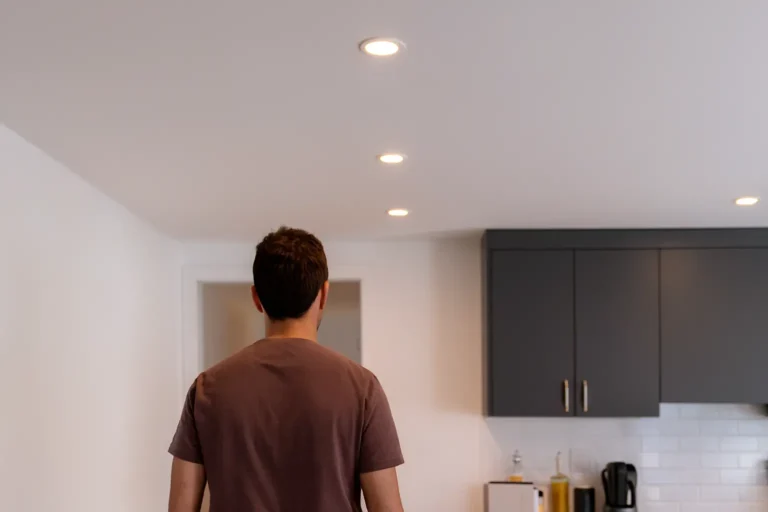
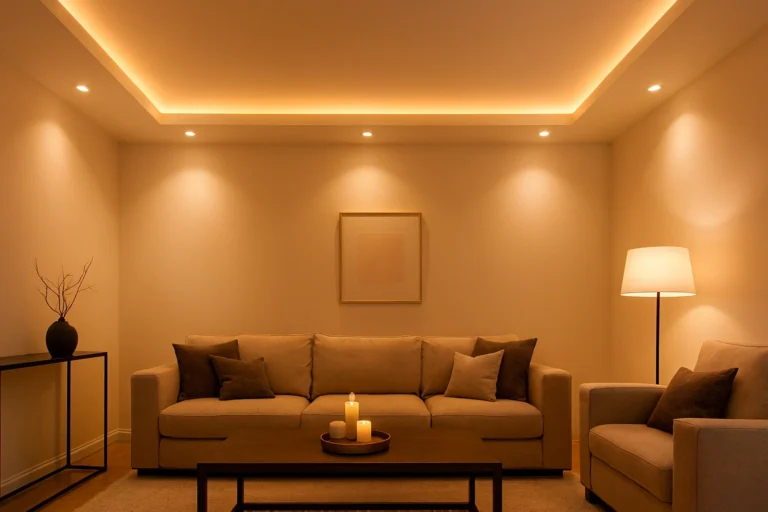
A single bulb on a garage ceiling throws your own shadow onto whatever you are working on. The fix is not a brighter bulb — it is spreading light across the ceiling. Recessed ceiling lights for garage spaces do that better than anything else at the price, and they do not hang low enough for a ladder or a roof rack to take one out.
I have wired, replaced and lived with a lot of garage lighting. What follows is the seven fixtures I would actually buy, plus the lumen arithmetic that tells you how many you need, and the one rating that turns a cheap downlight into a fire risk.
Top Picks at a Glance
| Fixture | Best for | Output |
|---|---|---|
| Sunco 6-inch Slim Downlight | Best overall value, multi-packs | ~965 lm, 5 CCT |
| Ensenior 6-inch 5CCT | Largest and darkest garages | ~1200 lm |
| HALO HLB 6-inch Canless | Longest service life | ~1200 lm, CRI 90 |
| Lithonia WF6 Wafer | Damp, cold or unheated garages | ~1200 lm, damp rated |
| Juno WF6 Switchable White | Workshops with mixed tasks | Field-selectable CCT |
| Sunco Motion Sensor Downlight | Hands-full entry and parking bays | ~1050 lm + sensor |
| TORCHSTAR 6-inch CRI 90 | Colour-critical work, spray finishing | ~1100 lm, CRI 90 |
The first time I lit a garage properly, I made the mistake everyone makes: I bought the brightest single fixture I could find and mounted it dead centre. The garage was blindingly bright and completely useless. Standing at the bench, my own body blocked the light onto the work. I pulled it out and put in six 900-lumen downlights in two rows instead — less total output, far more usable light, and no shadow anywhere. Spread beats brightness. Every time.
How Many Lumens Does a Garage Actually Need?
The working number is 50 to 75 lumens per square foot for a garage you use as a workspace, and around 30 if you only park in it. A standard two-car garage is roughly 400 square feet, which puts you at 20,000 to 30,000 lumens for real work — around eighteen to twenty-five 1200-lumen downlights, or a mix of downlights over the bench and fewer over the parking bays.
That number surprises people, and it is why one 5,000-lumen shop light never feels like enough. The This Old House garage lighting guide lands in the same range. Buy in multi-packs and plan two rows running the length of the garage, roughly four feet apart, with the rows about two feet in from each side wall so the light falls on the walls and bounces back.
Paint the ceiling before you cut the holes. A white ceiling reflects 80% or more of what hits it; a bare grey joist ceiling reflects under 30%. Painting first is the cheapest lumen upgrade there is, and cutting into fresh paint is far easier than cutting first and trying to cut in around seven fixtures afterwards. Our guide to garage ceiling paint covers what holds up to temperature swings.
What to Look For — Five Specs That Matter
IC rating — the one that is a safety issue
IC stands for Insulation Contact. An IC-rated fixture is built to shed heat safely even when loft insulation is packed against it. A non-IC fixture in the same position is a genuine fire hazard, and in a garage under a habitable room there is almost always insulation up there. If you are not certain the cavity is clear, buy IC-rated. It costs a couple of dollars more per unit.
Damp rating
Garages swing between freezing and humid, and a car brings snow, rain and road salt in with it. A damp-location listing means the fixture is sealed against condensation forming inside the housing. Wet-rated is a step further and unnecessary unless you have a leak, in which case fix the leak.
Colour temperature
4000K to 5000K is the working range. 5000K reads as crisp daylight and keeps you alert; 6500K is technically brighter-feeling but goes blue and unpleasant over long sessions. Below 3500K everything looks warm and sleepy, which is fine for a garage you only park in. Switchable-CCT fixtures let you decide after they are installed, which is worth the small premium.
CRI
Colour Rendering Index is how faithfully colours appear. CRI 80 is fine for parking and storage. If you do any paint work, touch-up, or wiring where you need to read colour codes, pay for CRI 90 — the difference between a red and an orange wire under cheap LEDs is not academic.
Canless vs canned
Canless (wafer) fixtures are a driver box and a thin disc that clips into a hole cut with a hole saw. No housing to fit between joists, no ceiling rebuild, and they fit shallow cavities. For a retrofit garage ceiling they are almost always the right answer. Read more on canless recessed ceiling lights if your joist depth is tight.
The 7 Best Recessed Ceiling Lights for Garage Ceilings
 Best overall value
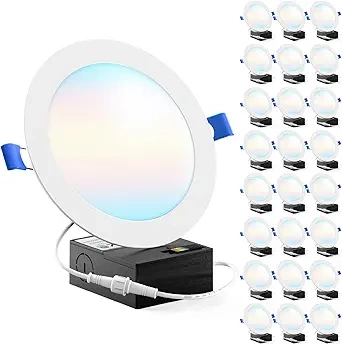
1. Sunco 6-Inch Slim Downlight
The default choice when you need a lot of fixtures and do not want to spend a lot per fixture. IC-rated, damp-rated, five selectable colour temperatures on a switch on the driver, and it comes in 6, 12 and 24 packs — which matters when the honest answer to “how many do I need” is eighteen.
One real limitation: the drivers are the weak point. Across a large multi-pack you should expect one or two to fail earlier than the rest. At this price that is an acceptable trade, but buy one spare pack rather than exactly the number you calculated.
Best for: lighting a whole two-car garage evenly on a fixed budget.
 Brightest for large garages
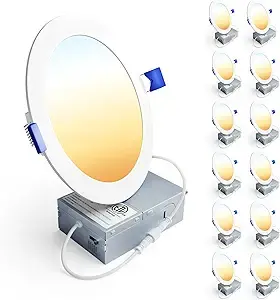
2. Ensenior 6-Inch 5CCT 1200LM
1200 lumens per fixture is roughly 25% more than the budget slims, which means fewer holes in the ceiling for the same total light. Also IC-rated and damp-rated, with the same five-position CCT switch. The junction box is roomy enough to wire without fighting it, which sounds trivial until you are on a ladder doing the eleventh one.
One real limitation: the trim ring sits very slightly proud on ceilings that are not perfectly flat. On a plasterboard garage ceiling with visible joist bow you will see a hairline gap on a few of them.
Best for: three-car garages, high ceilings, or anywhere you want fewer fixtures doing more.
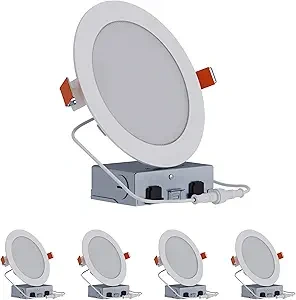 Longest service life
3. HALO HLB 6-Inch Canless
Halo is the fixture electricians specify when the customer is not paying by the unit. Better driver, better thermal design, CRI 90, and a warranty that the company actually honours. In a garage that gets used daily for a decade, the cost per year works out lower than the budget packs.
One real limitation: two to three times the price per fixture. Buying eighteen of these to light a whole garage is hard to justify. The sensible approach is Halo over the workbench and something cheaper over the parking bays.
Best for: the four to six fixtures over the area you actually work in.
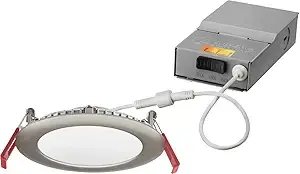 Best for damp or cold garages
4. Lithonia WF6 Wafer 6-Inch
Lithonia’s sealing on the WF6 is noticeably better than most wafers in this price band, which is what you want in an unheated garage where warm humid air meets a cold ceiling every evening. Three selectable colour temperatures and a low-profile driver box that fits shallow cavities.
One real limitation: the dimming range is narrow and it flickers at the bottom of the scale with cheap dimmers. If you want it dimmable, budget for a compatible LED dimmer rather than reusing the old one.
Best for: detached, unheated or coastal garages where condensation is the real enemy.
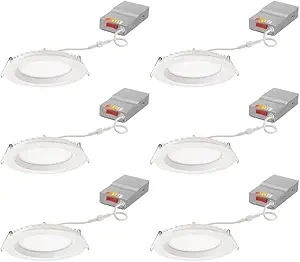 Best for mixed-task workshops
5. Juno WF6 Switchable White
The colour temperature switch is on the trim, not buried in the driver box, so you can change it after the ceiling is closed up. That sounds like a small thing. It is not — most people guess wrong on CCT the first time, and with everything else you are choosing between living with it and pulling fixtures back out.
One real limitation: the trim is a slightly warmer white plastic than the Halo and Lithonia units. Mixed in the same ceiling with other brands, it shows under daylight.
Best for: a garage that doubles as a workshop, gym and general room, where the right light differs by task.
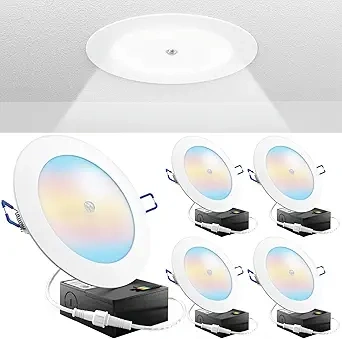 Best for hands-full entry
6. Sunco Motion Sensor Downlight
Two or three of these near the door and by the car, wired on their own circuit, with the rest of the garage on a normal switch. You walk in carrying shopping or a toolbox and the light is already on. Adjustable time delay and sensitivity on the back of the driver.
One real limitation: do not light the whole garage with these. The sensors trigger each other, they drop out while you are standing still at the bench, and having a ceiling full of lights cycling around you is genuinely irritating. Two or three, on the approach path, nowhere else.
Best for: the entry door, the bin area, and the walk between the car and the house.
 Best for colour-critical work
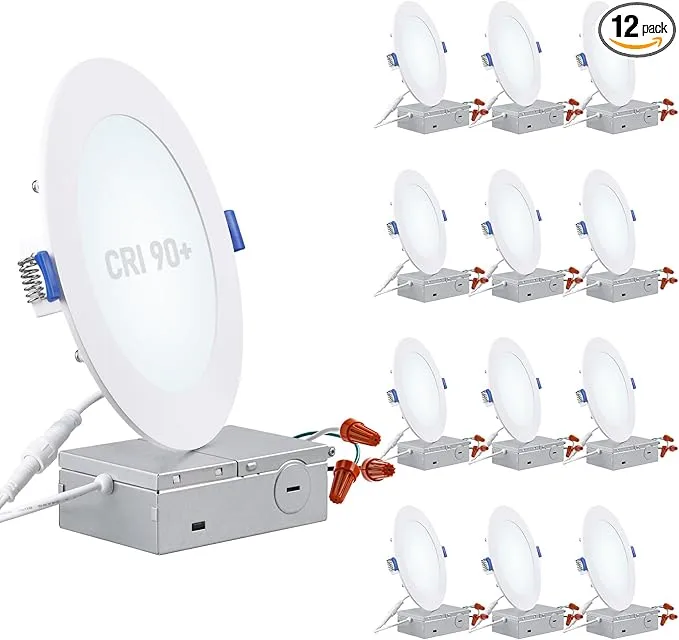
7. TORCHSTAR 6-Inch Slim CRI 90
CRI 90 at close to budget-fixture pricing, which is the reason it is on this list. If you spray, touch up bodywork, match paint, or sort wiring by colour, everything under CRI 80 lighting is a guess. This is the cheapest honest way to get accurate colour over a bench.
One real limitation: fixed colour temperature per SKU, no switch. Check which CCT you are ordering before you click, because you cannot change it later.
Best for: spray booths, paint prep areas and any bench where colour has to be right. If you spray in the garage, read our airless sprayer picks before you set the area up.
When NOT to Use Recessed Lights in a Garage
Recessed downlights are the wrong choice in three situations, and I would rather say so than sell you seven of them:
- Exposed joists with no ceiling. There is nothing to recess into. Cutting a ceiling in purely to hide the lights is a large job to solve a small problem — use LED shop lights or surface-mounted LED ceiling panels instead.
- A garage under 8 feet of headroom that you use as a workshop. Downlights throw a narrow-ish cone. On a low ceiling you need a lot of them to avoid scalloping, and a couple of wide-beam surface fixtures will be cheaper and more even.
- Insulation you cannot inspect. If you genuinely cannot see what is above the ceiling and cannot confirm the fixture is IC-rated, stop. This is the one item on this page that is a safety question, not a preference.
And a general note: on any circuit work you are not confident about, the cost of an electrician for an afternoon is small next to the cost of getting it wrong in a room full of fuel and solvents.
Recommended Layout for a Two-Car Garage
Two rows running the depth of the garage, about two feet in from each side wall, fixtures spaced four feet apart. In a typical 20 x 20 garage that is five per row, ten total, at 1200 lumens each — 12,000 lumens, which is a well-lit parking garage and the baseline for light work.
If the space is a real workshop, add a third row over the bench, or double up the two nearest fixtures. Put the bench row on its own switch. The single most useful thing you can do beyond fixture choice is to be able to light the bench without lighting the whole garage.
Finish the room properly while the ceiling is open: light bounces, and a garage with painted garage walls and a sealed floor reads far brighter at the same wattage than bare block and concrete. Our guide to garage floor coatings that actually stick covers the floor side.
Frequently Asked Questions
How many recessed lights do I need in a two-car garage?
Ten to twelve 1200-lumen fixtures for general use, or eighteen to twenty-four if you work in there regularly and want 50–75 lumens per square foot. Space them about four feet apart in two rows, two feet in from each side wall.
Do garage recessed lights need to be IC-rated?
If there is any insulation in the ceiling cavity, or you cannot confirm there isn’t, yes. A non-IC fixture in contact with insulation traps heat and is a fire hazard. IC-rated units cost only slightly more.
What colour temperature is best for a garage?
4000K to 5000K. 5000K reads as daylight and keeps you alert for detailed work. 6500K feels brighter for the first ten minutes and unpleasant after an hour. Below 3500K is fine if you only park in there.
Are canless recessed lights good enough for a garage?
Yes, and they are usually the better choice. Canless wafers need only a hole saw and a shallow cavity, which suits garage ceilings where joist depth is tight and there is no existing housing to work with.
Can I put recessed lights in a garage with exposed joists?
Not without building a ceiling first. With open joists, use LED shop lights or surface-mounted panels — you get the same output without the construction work.
Do I need damp-rated fixtures in a garage?
In an unheated or detached garage, yes. Warm humid air meeting a cold ceiling forms condensation, and a damp-listed fixture is sealed against it. Wet-rated is unnecessary unless the roof leaks, which is a different problem.
Should I paint the garage ceiling before installing lights?
Yes. A white ceiling reflects over 80% of the light that hits it against under 30% for bare joists or grey board, and cutting into fresh paint is far easier than cutting in around installed fixtures.
The Short Version
Buy IC-rated, buy damp-rated, buy more fixtures than feel necessary, and spread them. If the budget is tight, Sunco slims across the whole ceiling. If you work in there, Halo or TORCHSTAR over the bench and something cheaper elsewhere. And paint the ceiling white before you cut a single hole — it is the only free lumens you will ever get.
About the author — Sophie Ulman has renovated and painted more rooms than she can count — and made every mistake in the book so you don’t have to. She focuses on real-world durability: not how products perform on day one, but whether the repair holds through a full seasonal cycle.
ThePaintly is reader-supported. We only recommend products we’ve personally evaluated. When you buy through links on this site, we may earn an affiliate commission at no extra cost to you.