Best Garage Paint Colors: Ideas & Combinations That Work
Updated: April 25, 2026 | By Sophie Ulman
The best garage paint colors do more than look good — they make the space feel larger, hide dirt longer, and set the tone for how you actually use the garage. A workshop deserves a different palette than a clean showroom bay. The wrong color makes a garage feel cramped, dirty, or clinical within weeks. The right one transforms a utilitarian box into a space you want to spend time in.
This guide covers the top performing garage colors for 2026 — from the perennial light gray to bold navy and modern greige — with specific product picks for each, finish recommendations, and a complete breakdown of what works for different garage types. Whether you’re painting walls, ceiling, or both, the color decision starts here.
Top Garage Paint Colors for 2026
Color trends in garage interiors track about two years behind living spaces — which means 2026 is the year warm neutrals and sophisticated grays finally replace the flat white that’s dominated garages for the past decade. Here are the six colors with the strongest performance data, ranked by popularity and practical durability.
Quick Picks: Best Paints by Color
| Color Category | Product | Finish | Best For |
|---|---|---|---|
| Best White | Rust-Oleum Sure Color Interior Paint + Primer, White | Semi-Gloss | Bright, clean look — workshops & utility garages |
| Best Gray | Rust-Oleum Painter’s Touch Latex, Dark Gray | Gloss | Hides tire marks & grease — car storage garages |
| Best Bold/Dark | Rust-Oleum Sure Color Interior Paint + Primer, Black | Semi-Gloss | Showroom aesthetic, high-contrast modern garage |
In-Depth Product Reviews
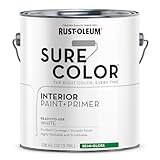
White remains the most requested garage color for a simple reason: it maximizes light. A two-car garage painted in bright white can feel 30–40% larger than the same space in a mid-tone color — purely from light reflection. Rust-Oleum’s Sure Color is the right formula for this application: it’s a paint-and-primer hybrid that delivers true semi-gloss brightness in one or two coats. The semi-gloss finish is critical for white garages because it wipes clean when grease splatters hit the wall.
Reddit painters consistently flag white garages as showing dirt faster than any other color — which is accurate. The trade-off is the brightening effect and the visual cleanliness between cleanings. If your garage has good lighting and you’re willing to wipe walls twice a year, white produces the most impressive result. One practical tip: don’t use flat white on garage walls. The semi-gloss formula here is the minimum viable finish for a white garage that looks good longer than six months.
Key fact: Semi-gloss white reflects the most light of any finish and meaningfully brightens dark or windowless garages.
- Maximum light reflection — brightens any garage
- Paint + primer in one formula
- Cleanable semi-gloss finish
- Shows scuffs and dirt more than mid-tones
- Requires repainting more frequently in working garages
Best for: Clean, organized garages; home gyms; photography studios; spaces where maximum brightness matters.
Check Price on Amazon →Via Amazon.com
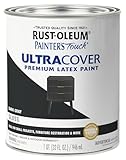
Dark gray is the most practical garage color on this list. It hides tire rubber marks, grease splatters, oil drips, and road dust better than any other shade — without making the space feel as closed-in as true black. Rust-Oleum’s Painter’s Touch in Dark Gray delivers a gloss finish that adds visual depth and reflects enough light to keep the space functional. The 1-quart format makes it easy to test on a section before committing to the full garage.
In working garages — spaces where cars get serviced, tools get used, and walls take daily abuse — dark gray is the professional painter’s standard recommendation. Forum users on Garage Journal who’ve switched from white to dark gray consistently report the same outcome: the garage still looks clean a year later with zero wall-washing. For those who want the brightness of white with better dirt-hiding, light gray (LRV 50–60) hits the sweet spot between the two extremes.
Key fact: Mid-to-dark gray hides common garage contaminants — tire marks, exhaust residue, oil — far better than light colors, extending repaint cycles by 2–3 years.
- Hides dirt and marks exceptionally well
- Gloss finish adds depth and wipes clean easily
- Works on multiple surface types
- 1-quart only — need multiple for full garage
- Can feel heavy without adequate lighting
Best for: Working garages, car storage, workshops — any space that takes daily abuse and needs to look presentable.
Check Price on Amazon →Via Amazon.com
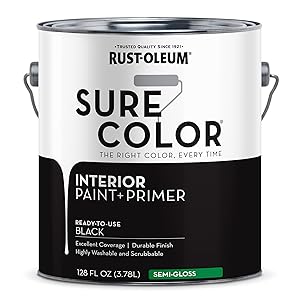
Black garage walls are a statement — and in 2026, they’re having a significant moment in modern garage design. The combination of black walls, white ceiling, and bright LED lighting produces a high-contrast aesthetic that photographs dramatically and makes vehicles pop visually. Rust-Oleum’s Sure Color Black delivers this in a semi-gloss formula that self-levels cleanly on drywall. Applied with a foam roller, it achieves an even, deep finish without the light-absorbing flatness of matte black.
The practical consideration: black walls require excellent lighting to function well. If your garage has one fluorescent tube fixture and no windows, black walls will make it feel like a cave. But with LED shop lights at 5,000K or above, the high-contrast look works beautifully. Black also hides virtually all marks and contamination, which is the main reason garage owners choose it.
Key fact: Black semi-gloss with 5,000K LED lighting creates the highest-contrast garage aesthetic — the go-to choice for car enthusiast and showroom-style spaces.
- Hides all marks and contamination
- Dramatic, modern showroom aesthetic
- Paint + primer formula, clean coverage
- Requires strong lighting to avoid cave effect
- Bold commitment — hard to undo without multiple coats
Best for: Car enthusiasts, showroom-style garages, modern homes with strong LED lighting setups.
Check Price on Amazon →Via Amazon.com
⚡ Pro Tips: Color Choices That Most Guides Miss
- Test under your actual lighting, not daylight. A color swatch looks completely different under fluorescent tubes versus LED shop lights versus a window. Paint a 12×12 inch test patch and live with it for 48 hours before committing to 400 square feet.
- Light gray outperforms white in most working garages. It reflects almost as much light as white but hides five times more dirt. LRV 60–70 is the sweet spot: bright but forgiving.
- Match wall sheen to your use case. Semi-gloss for walls you’ll clean regularly. Flat for ceilings where you never want glare. The finish matters more than most people realize.
- Two-tone can double the visual space. Lighter color on the upper half, slightly darker on the lower half adds visual height and hides ground-level splatter where it hits hardest.
🎨 Renovation Stage: PAINT
Choosing the best garage paint colors is a PAINT stage decision. Before selecting your color, complete all surface repairs, priming, and degreasing. Color selection is irrelevant if the surface isn’t ready. For guidance on getting the walls ready before painting, see our complete guide to how to paint garage walls.
🧮 Paint Budget Calculator
Estimate the total paint cost for your garage based on square footage and price per gallon.

Buying Guide: How to Choose the Right Garage Color
Color selection for a garage is more constrained than for a living room — practical factors narrow the field significantly. The four variables that matter most are lighting, use case, dirt tolerance, and finish.
Lighting: The Single Biggest Variable
Garage lighting transforms how every color reads. A light gray in a naturally lit garage looks warm and inviting. The same color under a single 4-foot fluorescent tube looks clinical and flat. Before finalizing any color, install your planned lighting first — or at minimum, test the color swatch under the actual bulbs you’ll use. According to Family Handyman’s garage paint guide, most homeowners significantly underestimate how much their lighting changes the final color appearance. If your garage is dark, choose lighter colors (LRV 60+) or add more fixtures before committing to mid or dark tones.
Use Case: How You Actually Use the Space
A garage used exclusively for clean car storage tolerates white or light gray just fine. A working garage — oil changes, woodworking, metalwork — needs a color that hides contamination. For the latter, mid-gray (LRV 40–55) is the professional standard. It absorbs visual dirt without going so dark that the space feels gloomy. If you want design inspiration for large garage spaces with high ceilings, see our guide on best paint colors for large rooms with high ceilings — the same principles apply to oversized garages. Workshops benefit from warm neutrals like greige and taupe, which reduce eye strain over long work sessions in ways that cool grays and whites do not.
Finish: Semi-Gloss vs. Satin vs. Flat
The EPA’s data on VOCs and interior spaces confirms that finish type affects not just appearance but off-gassing behavior. For garages: semi-gloss is the default recommendation for walls — it cleans, reflects light, and holds up to scrubbing. Satin is acceptable for a softer look. Flat finishes are appropriate for ceilings only. Gloss provides the most dramatic depth for dark colors like charcoal and navy, but amplifies every surface imperfection underneath.
Dirt Tolerance: The Real Differentiator
The most overlooked color selection criterion is simply how long the color looks clean between paintings. White garages in active use typically show their age within 18–24 months. Light gray extends this to 3–4 years. Mid to dark gray effectively never looks dirty until it physically chips or scuffs. For homeowners who want to minimize maintenance, going two shades darker than your instinct is almost always the right move.
Prep Steps Before Choosing and Applying Your Color
- Fix the lighting first. Install LED shop lights and assess the actual light output before selecting a color. Color temperature (warm 3000K vs. cool 5000K) dramatically shifts how paint reads.
- Degrease all surfaces. TSP substitute removes oil, grease, and carbon — the surface enemies of adhesion. This step is non-negotiable before any color goes on.
- Buy sample pots and test patches. Paint at least a 12×12 inch patch of each finalist color. Live with it for two days under garage lighting before buying gallons.
- Prime bare or stained surfaces. Primers seal stains and create a consistent base. Dark colors applied over uneven surfaces show every flaw. White and light colors over stains will bleed through.
- Paint ceiling before walls. Always work top to bottom. Ceiling drips onto unpainted walls are irrelevant. Ceiling drips onto freshly painted walls create rework.
- Apply two coats. One coat of any color in a garage is a starting point, not a finish. The second coat provides the depth, coverage, and durability the space demands.
✅ Our Verdict
For most garages, light to mid gray in semi-gloss is the correct answer — it brightens the space, hides real-world contamination, and requires the least maintenance of any color family. White wins when maximum brightness is the priority and the owner commits to regular cleaning. Dark gray and black work brilliantly in well-lit showroom-style spaces but require a lighting upgrade to justify. The 2026 trend toward warm greige is real and worth considering for workshops and multi-purpose garages where the space needs to feel less industrial.
Garage colour rules do not transfer indoors, and people learn that the expensive way. A shade that reads as smart and utilitarian under a fluorescent strip in an unheated garage can turn flat and cold in a living room with two windows. If this project is the start of a longer repaint, the same families behave differently inside: our dark green paint colors round-up covers what stays rich under warm bulbs, and the warm cream paint colour guide covers the neutrals that do not drift yellow.