How to Match Paint Already on a Wall: A Complete Guide
When you How to Match Paint Already on a Wall: The Complete Technical Guide
By The Paintly Professional Color Consultation Team
Understanding how to match paint already on a wall is one of the most technically demanding challenges in residential and commercial painting. Unlike selecting a fresh color from scratch, matching existing paint requires you to reverse-engineer a formula that may be years old, chemically altered by environmental exposure, and visually distorted by your room’s lighting conditions. This guide breaks down the science, the tools, and the professional techniques used by master painters to achieve what the industry calls an “invisible repair.”
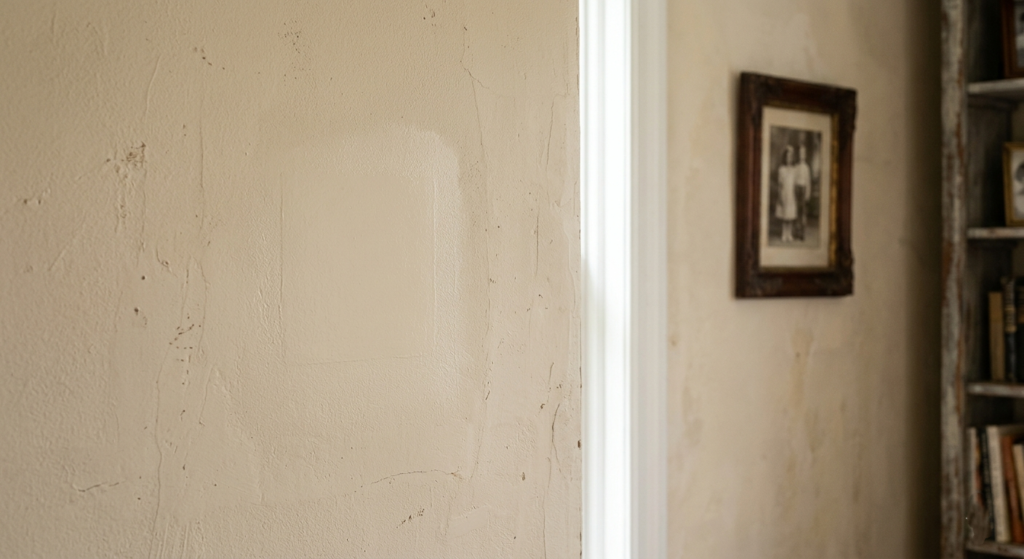
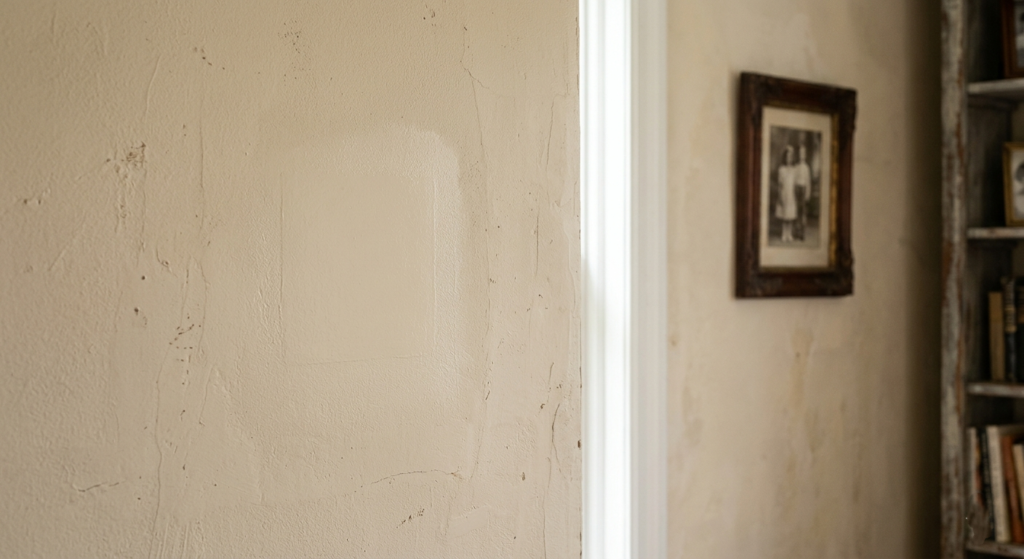
The Physics of “Invisible Repairs”: Why Color Matching Is Harder Than It Looks
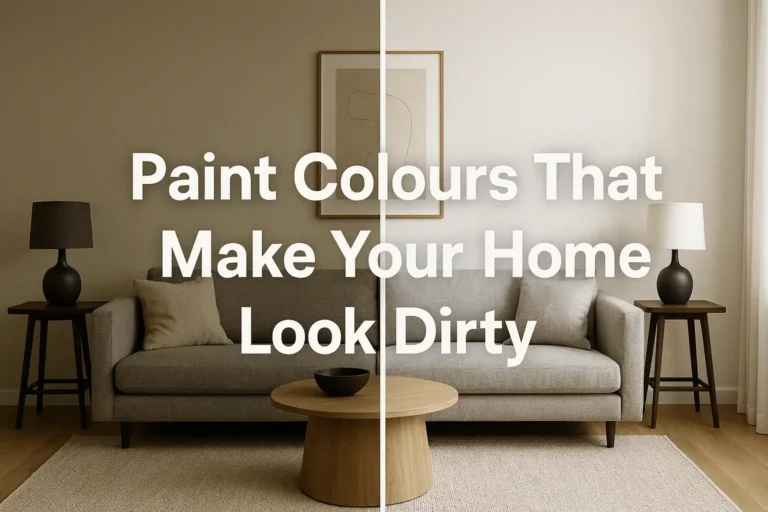
When light strikes a painted surface, it interacts with pigment particles suspended in the binder. The wavelengths reflected back to your eye determine the perceived color. Furthermore, this interaction changes depending on the light source — incandescent bulbs emit warm yellow wavelengths, while LED and natural daylight skew cooler and bluer. Consequently, a patch that looks perfect under one lighting condition can appear visibly mismatched under another. This phenomenon is called metamerism, and it is the primary reason DIY color matches fail even when the formula appears correct on paper.
In addition, the texture of your wall plays a significant optical role. Rough surfaces scatter light in multiple directions, making colors appear slightly lighter and more muted. Smooth surfaces concentrate reflection, intensifying perceived color and sheen. Before you attempt any repair, assess both your lighting environment and wall texture — these two variables will determine your approach from the start.
CLICK HERE to see How Lighting Affects Interior Paint Color
The Forensic Approach: How to Match Paint Already on a Wall Using Existing Records
The most reliable starting point is documentary evidence. Specifically, check these sources before reaching for any scanning device:
1. Paint Can Labels and Codes Original paint cans carry a formula ticket — a printed label affixed by the store’s tinting machine at the time of mixing. This ticket contains the exact colorant drops by volume added to the base. Even if the paint inside has dried out, the label alone is sufficient for any paint retailer to reproduce the formula with high accuracy.
2. Behind Outlet Covers and Switch Plates Electrical cover plates are painted during the original job and then shielded from UV exposure, humidity cycles, and physical contact. Consequently, the paint behind them represents the closest surviving sample of your wall’s original color. Use a flathead screwdriver to carefully remove the plate and examine the margin. In many cases, this small strip of protected paint is measurably closer to the original formula than the open wall surface beside it.
3. Digital Purchase Records Many major paint retailers now maintain cloud-based customer accounts that log your purchase history, including color formulas. Furthermore, if you hired a professional painter, request their project records — reputable contractors document the specific colors used in each room as standard practice.
The Spectrophotometer: The Science Behind Professional Color Scanning
A spectrophotometer is an optical instrument that measures reflected light across the visible spectrum — typically from 400 to 700 nanometers — at dozens of discrete wavelength intervals simultaneously. Unlike the human eye, which blends color perception through only three cone cell types, a spectrophotometer generates a full reflectance curve. This curve is a precise numerical fingerprint of your wall’s color at that exact moment.
In addition, most professional paint store spectrophotometers cross-reference this curve against a database of tens of thousands of existing formulas to identify the closest possible match within their product lines. The output is not a guess — it is a mathematically optimized approximation. Specifically, the device accounts for the paint’s surface finish when calculating the match, which is why bringing a clean, unscuffed sample cut from an inconspicuous area yields the most accurate results.
The human eye, by comparison, can distinguish approximately 10 million colors in ideal conditions — but is highly susceptible to simultaneous contrast effects, fatigue, and the very metamerism described earlier. Consequently, professional spectrophotometric scanning is objectively superior to visual matching in nearly every scenario.
Digital vs. Physical Matching Tools: A Technical Comparison
| Tool | Accuracy | Best Use Case | Limitation |
|---|---|---|---|
| Spectrophotometer (in-store) | Very High | Fresh or lightly faded samples | Requires physical sample |
| Portable handheld scanner | High | Scanning directly on the wall | Affected by gloss and texture |
| Smartphone color matching app | Moderate | Quick estimates | Camera white balance errors |
| Fan deck / swatch comparison | Low–Moderate | Preliminary identification | Visual metamerism risk |
Furthermore, smartphone apps process compressed JPEG image data, which discards color information at the point of capture. Even in RAW format, smartphone sensors do not measure wavelengths with the precision of a spectrophotometer. These tools are best used as a filtering mechanism — narrowing the field to a few candidates — rather than as a definitive match source.
Portable handheld scanners represent a middle ground. They measure directly on the wall surface, eliminating the need to cut a sample. However, textured surfaces and high-sheen finishes introduce scatter and specular reflection errors that can skew the reading by several Delta-E units — the standard unit used to quantify color difference.
The Sheen Factor: Why Finish Matching Is As Critical As Color Matching
Paint finish dramatically alters perceived color. A flat finish absorbs light, making colors appear slightly deeper and more muted. A semi-gloss finish reflects a significant proportion of incident light specularly, making the same pigment formula appear noticeably lighter and more saturated. Consequently, applying the correct color in the wrong sheen will produce a visually obvious mismatch — even if the spectrophotometer confirmed a perfect formula match.
Specifically, the standard sheen levels from lowest to highest reflectance are: Flat → Matte → Eggshell → Satin → Semi-Gloss → Gloss. When purchasing touch-up paint, confirm the sheen designation in addition to the color code. In addition, note that different manufacturers use inconsistent terminology — one brand’s “eggshell” may reflect at a level closer to another brand’s “satin.”
Chemical Aging: How UV Radiation and Oxidation Alter Your Wall’s Color
All organic pigments undergo photodegradation — a process in which UV radiation breaks molecular bonds within the pigment structure, shifting its light absorption profile. Furthermore, the binder component of paint — typically an acrylic or alkyd resin — undergoes oxidative crosslinking over time, which yellows the film and alters the base tone of every color it carries.
The practical consequence is this: a wall painted three or more years ago in direct sunlight may have shifted by 3–8 Delta-E units from its original formula — a difference that is clearly perceptible to the human eye. Consequently, even a formula-perfect match from the original paint code may appear noticeably lighter or cooler than the aged surrounding wall.
Professional painters address this by tinting the touch-up formula slightly warmer and darker than the scanned match — compensating empirically for the known direction of aging. This is not guesswork; it is calibrated adjustment based on paint chemistry and site conditions.
Pro Blending Techniques: Feathering, Edge-to-Edge, and Dry Brushing
Once you have a well-matched formula in the correct sheen, technique determines whether the repair is truly invisible.
Feathering: Apply the touch-up paint at full coverage in the center of the repair zone, then reduce pressure progressively as you work outward. This creates a gradual opacity transition that prevents a hard edge where old and new paint meet. Furthermore, feathering works best with a high-quality brush — natural bristle for oil-based, synthetic for latex.
Edge-to-Edge Painting: Rather than painting only the damaged spot, extend the painted area to the nearest natural boundary — a corner, door frame, or ceiling line. Specifically, this technique eliminates the visible perimeter of the repair by containing it within a defined section that the eye perceives as a complete surface.
Dry Brushing: Load a brush lightly with paint and wipe most of it off on a rag before application. The nearly-dry bristles deposit paint selectively on the high points of textured surfaces, replicating the visual pattern of aged paint rather than filling in the texture completely. In addition, this technique is particularly effective on orange-peel and knockdown textures where full-coverage application would create a visually distinct patch.
[PLACE IMAGE HERE: Painter demonstrating feathering technique on a wall touch-up repair] [ALT TEXT: Professional feathering technique for blending touch-up paint on existing wall surface]
[INSERT INTERNAL LINK HERE: Suggested topic on thepaintly.com — “How to Prep Walls for Touch-Up Paint the Right Way”]
Technical FAQ
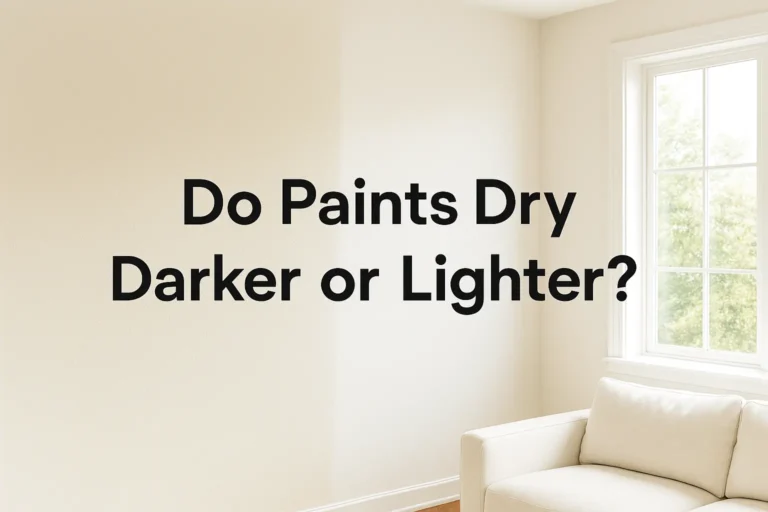
Q: Why does my matched paint look darker once it dries on the wall? Paint undergoes a process called dry-down shift — as water or solvent evaporates from the film, the pigment particles pack more densely and the binder becomes more transparent, causing the color to deepen by approximately 5–15% in value. Furthermore, touch-up areas are often applied over a primed or sanded substrate that absorbs paint differently than the surrounding sealed surface, amplifying the contrast. The solution is to apply a light sealing coat of diluted paint to the repair area first, allow it to cure fully, then apply the final match coat.
Q: Does paint brand matter when matching a color? Yes, significantly. Different manufacturers use different colorant systems — the chemical pigment formulas they add to base paint. Consequently, the same color name or code reproduced in two different brands may yield measurably different results, particularly in the mid-tone and shadow regions of complex colors. When precision is required, always reproduce the match within the same brand and product line as the original.
Conclusion: Why Precision Matching Saves Time and Money
Understanding how to match paint already on a wall is not merely an aesthetic pursuit — it is a technically informed discipline that draws on optics, chemistry, and professional technique. An imprecise match means repainting entire walls or rooms to eliminate a visible patch, multiplying material and labor costs several times over. Specifically, investing in a professional spectrophotometric scan, confirming your finish level, and applying sound blending technique at the outset eliminates the costly cycle of trial-and-error touch-ups.
Furthermore, a well-executed invisible repair preserves the value of your interior finishes and extends the life of your existing paint job by years. Whether you are a homeowner managing routine maintenance or a professional painter delivering a flawless result, precision at every step — from the formula to the final feathered stroke — is the standard that separates visible patches from truly invisible repairs.