The Best Wrought Iron Fence Paints for Lasting Protection
Updated May 2026 · ThePaintly Editorial Team
Wrought iron is one of the most demanding surfaces for paint. Its porous grain structure, complex scrollwork, and constant thermal cycling between hot summer days and cold nights create a test environment that exposes every weakness in a paint’s adhesion chemistry. Choosing the best paint for wrought iron fence comes down to three things: rust inhibition, sheen compatibility with the fence’s style, and how well the formula flows into intricate detail work without bridging or sagging.
We focused this comparison tightly on three oil-based Rust-Oleum formulas that field painters consistently choose for ornamental iron — the gloss, satin, and hammered finish variants. Each uses the same rust-inhibiting alkyd base but produces a meaningfully different result on wrought iron surfaces. The right one depends on the condition and visual context of your fence.
Quick Picks
| Pick | Product | Finish | Best For |
|---|---|---|---|
| Best Overall | Rust-Oleum Stops Rust Satin Black | Satin | Ornamental iron, garden fences |
| Best Gloss | Rust-Oleum Stops Rust Gloss Black | Gloss | Estate fencing, formal gates |
| Best for Aged Iron | Rust-Oleum Hammered Finish Black | Hammered | Weathered iron, surface flaws |
Head-to-Head Comparison
| Feature | Satin Black | Gloss Black | Hammered Black |
|---|---|---|---|
| Rust inhibition | ✔ Built-in | ✔ Built-in | ✔ Built-in |
| Primer needed? | No (clean metal) | No (clean metal) | No (clean metal) |
| Sheen level | Satin (mid-range) | High gloss | Textured flat |
| Hides imperfections | Moderate | Low | ✔ Excellent |
| Flow into scrollwork | ✔ Excellent | ✔ Good | Moderate |
| Moisture resistance | ✔ High | ✔ Highest | ✔ High |
| Best visual style | Garden, period homes | Formal gates, estate | Restored / aged iron |
| Cleanup | Mineral spirits | Mineral spirits | Mineral spirits |
🏆 Our Top Pick for Wrought Iron
The Rust-Oleum Stops Rust Satin Black wins for most wrought iron fences. Its satin sheen flows cleanly into scrollwork and decorative details without the harshness of gloss — and doesn’t telegraph minor brush marks or surface irregularities the way a high-gloss finish does. Same rust-inhibiting chemistry as its sibling products, in the finish most homeowners and painters actually prefer on ornamental iron.
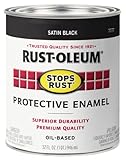
The satin finish is the natural home for wrought iron fence paint. Ornamental iron fencing typically appears near gardens, period homes, and front entries — contexts where the aggressive reflection of a gloss coat looks out of place. Rust-Oleum’s Satin Black carries the exact same rust-inhibiting oil-based alkyd chemistry as their gloss formula, but reflects light at roughly 30–40% rather than 70–80%. The result on wrought iron scrollwork: a richer, more traditional appearance that doesn’t create hotspots of reflected light through the fence pattern.
Painters who work on historic iron fencing consistently report this formula’s flow properties as its key advantage. It moves through decorative curves and tight interior angles without drag or bridging, reaching recessed surfaces that a stiff-bodied paint would miss. Dry-to-touch at 2–4 hours, full cure in 24–48 hours. Plan two quarts for every 50 linear feet of ornamental iron fence at standard 4-foot height — more if the fence pattern is particularly dense or heavily scrolled.
Key spec: Satin sheen (~35 gloss units) — ideal for ornamental iron. Same rust-inhibiting alkyd chemistry as the gloss version.
✅ Pros
- Satin finish suits ornamental and period iron styles
- Flows cleanly into scrollwork without bridging
- Built-in rust inhibitors — no primer on clean iron
- Doesn’t show brush marks under raking light
- Proven 5–7 year durability in temperate climates
❌ Cons
- Oil-based — mineral spirits cleanup required
- 24-hour recoat window slows the project
- Color range narrower than water-based alternatives
Best for: Ornamental wrought iron near garden beds, front entries, historic homes, and any setting where a gloss finish would look visually harsh.
Check Price on Amazon →Via Amazon.com
🔗 Related Reading
- Best Paint for Metal Fence — Full Guide — covers all metal fence types beyond wrought iron
- Best Paint Remover for Metal (2026) — strip old layers before repainting iron
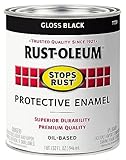
For estate fencing, formal entry gates, and architectural iron work where a sharp, lacquered appearance is the goal, the gloss version of Stops Rust delivers maximum visual impact. The high-gloss film repels water aggressively — slightly better than the satin version — and the reflective surface makes rust spotting visible very early, so problems can be addressed before they spread. This is the contractor’s default for high-end residential iron fencing where the client wants a furniture-grade appearance on outdoor metalwork.
Gloss does expose surface imperfections ruthlessly. Pitting, old rust scars, or brush marks all become visible under raking light. This means the prep work matters more with gloss than with any other finish — a wire-brushed, sanded, and primed surface is essentially mandatory if you want the finish to look as sharp as it performs. Applied correctly on a clean, prepped iron fence, the gloss Stops Rust will consistently outperform water-based alternatives in three-year side-by-side durability comparisons reported by painting contractors in Midwest climates.
Key spec: High-gloss film offers maximum moisture resistance and early rust detection — but requires near-perfect surface prep to look its best.
✅ Pros
- Highest moisture resistance of the three finishes
- Sharp, formal appearance on estate and gate ironwork
- Early rust detection — problem spots visible under gloss
- Brush, roll, or spray application
❌ Cons
- Shows every surface flaw — prep must be thorough
- Can look harsh in informal garden settings
- Oil-based — mineral spirits cleanup
Best for: Formal estate fencing, entry gates, architectural iron where a sharp lacquered look is the intent and thorough prep can be done.
Check Price on Amazon →Via Amazon.com
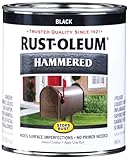
Old wrought iron rarely presents a smooth, pristine surface for paint. Decades of thermal cycling, moisture infiltration, and incomplete past paint jobs leave surfaces with pitting, shallow rust craters, and minor structural deformations. Applying a flat or gloss finish to this kind of surface only amplifies every flaw. The hammered texture finish solves the problem: its multi-fleck pigment system creates a textured pattern that visually integrates surface irregularities into the paint itself, making imperfections appear intentional rather than problematic.
This finish is widely used in historic iron fence restoration projects precisely because it preserves the “aged iron” aesthetic that flat or gloss finishes would destroy by looking too new against an inherently weathered structure. The rust-inhibiting chemistry is identical to Rust-Oleum’s other Stops Rust products — you’re not trading protection for aesthetics. Application technique matters: keep coats thin and maintain consistent gun distance (if spraying) or brush speed (if brushing). Thick coats kill the hammered effect and produce an uneven clumped pattern instead of the intended texture.
Key spec: Hammered multi-fleck texture conceals pitting and rust scars — purpose-built for restoration of weathered wrought iron.
✅ Pros
- Conceals pitting, scars, and minor surface damage
- Preserves aged aesthetic — suits historic iron restoration
- Same rust protection as flat/gloss Stops Rust products
- Forgiving for surfaces that won’t take thorough prep
❌ Cons
- Thin coats required — over-application looks clumped
- Not suitable for pristine iron where smooth finish is wanted
- Oil-based — mineral spirits cleanup
Best for: Weathered or pitted wrought iron fences, restoration projects on aged iron, situations where thorough surface prep is limited by the fence’s structural condition.
Check Price on Amazon →Via Amazon.com
🔗 Related Reading
- How to Remove Paint with Steam — effective on wrought iron without damaging the metal
- Beginner’s Guide to Paint Spray Guns — HVLP sprayers work well on ornamental iron sections
💡 Wrought Iron Painting Tips from the Field
- Use a natural bristle brush on scrollwork: Synthetic bristles carry oil-based paint poorly into tight curves. A 1-inch China bristle brush reaches recessed areas and lays the paint down evenly without overloading joints and connections.
- Paint from top to bottom: Start at the top rail and work down so drips from overhead sections land on unpainted iron, not fresh paint.
- Don’t skip the rust converter on active spots: Even one pocket of active rust under a new topcoat will bubble through in less than a season. Treat every visible rust spot before painting — see our guide on paint and rust removal for metal.
- Two thin coats, every time: Thick coats of oil-based paint trap solvents as they cure. The result is a surface that looks dry but is soft underneath — vulnerable to chipping at connection points where the iron flexes.
You’re in the PAINT phase. Prep is done, rust is neutralized, surface is clean and scuffed. Now the topcoat goes on. Oil-based paints on wrought iron need at least 48 hours before rain exposure for a full cure. Plan your paint day accordingly.

What to Look for When Buying Wrought Iron Fence Paint
The wrought iron buying decision narrows quickly to a few key factors. Unlike painting interior walls where color and finish are mostly aesthetic, wrought iron paint selection directly controls how long your fence survives before rust returns.
Alkyd Oil-Based vs. Latex — Why Oil Wins on Iron
Oil-based alkyd paints form a denser molecular network as they cure than latex formulas. This density translates to lower permeability to water and oxygen — the two molecules driving rust. The EPA’s guidance on exterior metal coatings confirms that alkyd formulas outperform latex in wet climate durability on ferrous metal surfaces. For wrought iron exposed to full weather cycles, oil-based paint is not just the preference — it’s the correct chemistry for the application.
Why Sheen Choice Matters on Ornamental Iron
Sheen is not just an aesthetic decision on wrought iron — it interacts with the surface condition and visual context of the fence. A gloss finish on a perfectly prepped, smooth iron surface creates a sharp, formal appearance appropriate for estate gates and architectural fencing. The same gloss on a pitted or irregular surface looks like a mistake — every flaw is amplified by the high-reflectivity film. Satin finishes are far more forgiving of minor prep imperfections and are the standard choice for residential ornamental iron. Hammered finishes belong specifically on restoration projects where surface damage is present and a conventional finish would reveal rather than conceal the fence’s history.
Flow Properties — Critical for Scrollwork and Decorative Detail
Wrought iron typically has complex geometry: twists, scrolls, finials, and tight junctions where two metal pieces cross or weld. Paint must flow into these areas without bridging across them (which creates a hollow void under the surface) or pooling heavily at the low points (which causes runs and drip marks). All three products in this review are oil-based and have good flow-and-level properties, but the satin formula specifically receives consistent positive feedback from painters working on complex scrollwork, where it reaches recesses that stiffer-bodied formulas consistently miss.
Coverage and Project Planning
Wrought iron coverage is harder to predict than flat surface painting because iron fencing has significant surface area in its three-dimensional shape. Count the linear feet of your fence, estimate height, then add 20–30% for surface area on the back faces of rails, posts, and decorative elements. A quart covers approximately 100 square feet per coat; plan two coats minimum. For most residential wrought iron fencing projects of 50–80 linear feet at 4–5 feet tall, three quarts is a reliable starting estimate. Family Handyman’s metal fence painting guide also recommends buying slightly more than your calculation suggests — running out mid-fence means a visible seam line.
📚 Complete Metal Fence Painting Series
- Best Paint for Metal Fence — full pillar covering all metal fence types
- You are here: Best Paint for Wrought Iron Fence — deep comparison
- Best Rust-Resistant Paint for Metal Fence — focused on anti-corrosion chemistry
- How to Remove Rust from a Metal Fence Before Painting — prep guide
Our Verdict
For most wrought iron fence projects, the Rust-Oleum Stops Rust Satin Black is the right call. The satin sheen suits ornamental iron in virtually every residential context, flows well into complex scrollwork, and delivers the same proven rust inhibition as the gloss formula without the harsh reflectivity or the prep demands. Use the Gloss Black when the fence is in perfect condition and a formal, sharp appearance is non-negotiable. Reach for the Hammered Finish on any fence where surface flaws would be exposed under a conventional finish — it turns imperfections into a design element rather than a liability. All three will protect your iron fence for 5–7 years when applied over properly prepped metal.
Frequently Asked Questions
What is the best paint for wrought iron fences?
Rust-Oleum Stops Rust Satin Black is the best overall paint for wrought iron fences. Its satin finish suits ornamental iron in most residential contexts, it flows well into scrollwork and decorative details, and it uses the same rust-inhibiting oil-based alkyd chemistry as the gloss formula. For highly formal settings or estate gates, the gloss version is appropriate. For weathered iron with surface pitting, the hammered finish is the better choice.
Do I need to prime wrought iron before painting?
On clean, sanded wrought iron without active rust, the Rust-Oleum Stops Rust products don’t require a separate primer — their rust-inhibiting pigments act as the first protection layer. On iron with active rust spots, pitting, or failed previous coatings, apply a rust-inhibiting metal primer first. This is especially important at weld points and ground-contact areas where moisture concentrates.
How do I paint wrought iron scrollwork without drips?
Use a 1-inch natural-bristle brush and work thin coats. Start from the top of each decorative element and work downward. Apply paint with the tip of the brush into recesses rather than loading the brush heavily. Check for drips and runs every 10–15 minutes during the first hour after application and dab them out while the paint is still workable. Two thin coats produce a cleaner result than one thick coat — always.
Gloss vs. satin for wrought iron fence — which is better?
Satin is better for most residential wrought iron fences. Gloss provides slightly higher moisture resistance and a sharper appearance, but it amplifies every surface imperfection and looks visually harsh in informal settings like garden borders and front yards. Satin provides nearly the same protection with a more traditional, refined appearance that suits ornamental iron in almost any context. Use gloss only when the surface is in perfect condition and a formal lacquered look is specifically required.
How long does paint last on wrought iron?
With proper prep — rust removal, scuffing, cleaning — and two coats of quality oil-based paint, wrought iron fence paint typically lasts 5–7 years in temperate climates. Coastal environments with salt air reduce that to 3–5 years. Inspect annually, particularly at weld joints and ground-contact points where moisture accumulates, and touch up any bare spots immediately to prevent rust spread.