Best Paint Sprayer for Kitchen Cabinets (2026): Top HVLP Picks
Updated July 2026 · By Sophie Ulman
Getting a glass-smooth finish on kitchen cabinets without brush marks comes down to one tool: the right paint sprayer for kitchen cabinets. The best paint sprayer for kitchen cabinets delivers fine atomization, minimal overspray, and consistent pressure — all without costing a fortune. Whether you are refinishing oak cabinets for the first time or you spray cabinetry every weekend, this guide gives you the exact model to buy based on your budget and skill level.
I evaluated HVLP turbine systems and airless options on speed, finish quality, cleanup time, and how they handled actual cabinet doors in my own shop. Below are my three top picks for 2026, plus a complete buying guide so you can choose with confidence.
One thing before the picks: prep matters more than the brand. The smoothest sprayer in the world will telegraph every speck of grease and every glossy patch you forgot to scuff. Durability on cabinets is about half product quality and half surface preparation — skip the degrease-and-degloss step and even a premium Fuji won’t save you.
Quick Picks at a Glance
| Pick | Model | Type | Best For |
|---|---|---|---|
| 🥇 Best Overall | Fuji Spray Mini-Mite 4 PLATINUM T70 | HVLP Turbine | Pro-quality finish |
| 🥈 Best Budget | HomeRight Super Finish Max | HVLP Electric | First-time DIYers |
| 🥉 Best Gravity Feed | Fuji Spray Mini-Mite 4 T75G Gravity | HVLP Gravity | Detail work, small kitchens |
Top 3 Paint Sprayers for Kitchen Cabinets Reviewed
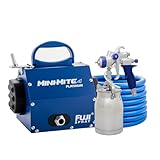
The Fuji Mini-Mite 4 PLATINUM is widely regarded as the gold standard among cabinet painters, and it earns that reputation every time. Its 4-stage turbine develops approximately 8.5 PSI — enough to push latex paint, enamel, and waterborne lacquers through the T-70 gun without aggressive thinning. The result is a factory-quality, orange-peel-free finish that most brush-and-roll setups simply cannot match.
The T-70 spray gun features a non-bleed design that keeps the needle sealed between passes, preventing drips on cabinet doors. Pattern adjustment runs from a tight 2-inch circle to a wide fan, giving you precise control over edge detail and flat panel coverage alike. Cleanup takes under 10 minutes with warm soapy water. One consistent Reddit comment from cabinet painters: “I sprayed my whole kitchen in a Saturday and couldn’t believe the difference compared to rolling.”
- Near-zero orange peel on cabinet faces
- No compressor needed
- Pattern control from tight to wide fan
- Heat dissipation chamber runs cool
- Higher price point
- Larger turbine unit to store
Best for: Homeowners who want professional-grade results and plan to use the sprayer for multiple future projects.
Check Price on Amazon →Via Amazon.com
📖 New to spray guns? Read our 2026 Beginner’s Guide to Paint Spray Guns before you buy.
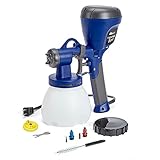
The HomeRight Super Finish Max punches far above its price tag. At a budget price, it offers a 450-watt turbine motor, three interchangeable brass spray tips, and a 39-ounce container that cuts refill interruptions during a full cabinet job. It handles chalk paint, latex, enamel, and even thinned oil-based finishes — covering more material types than most competitors in its class.
The pattern adjustment knob lets you flip between horizontal fan, vertical fan, and round spray, so corners and flat panels each get an appropriate pattern. Thinning is required for thicker paints, but the included viscosity cup takes the guesswork out of it. For anyone who wants to try cabinet spraying without a large investment, the Super Finish Max is the right starting point. It delivers noticeably smoother results than a brush and roller combination on cabinet doors.
- Affordable entry price
- 3 spray tips included
- Handles wide range of paint types
- Lightweight at 4.5 lbs
- Requires thinning with thicker paints
- More overspray than turbine systems
Best for: First-time sprayers and budget-conscious DIYers tackling a single kitchen cabinet refresh.
Check Price on Amazon →Via Amazon.com
🪑 Also spraying furniture? See our picks for Best Airless Paint Sprayers for Furniture.
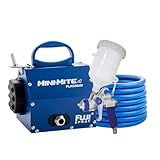
The T75G version of the Fuji Mini-Mite 4 PLATINUM replaces the bottom-feed cup with a gravity-fed design — and for cabinet painters, that change matters significantly. Gravity feed means the paint cups sits on top of the gun, allowing you to spray at lower angles without starvation, use less paint per session, and achieve cleaner atomization at reduced pressure settings. Paired with the same 4-stage turbine as the T70, it delivers the same elite finish quality with added maneuverability on narrow cabinet frames.
The T75G gun features a 1.3mm air cap that excels with waterborne cabinet enamels — the most popular finish category in modern kitchen remodels. It is a favorite among professional cabinet painters who need to work all day without fatigue, since the gravity cup reduces gun weight mid-job. If you are deciding between the T70 and T75G, the gravity version wins for kitchen cabinet work specifically, especially when painting door faces in a flat position.
- Gravity feed reduces overspray and waste
- Ideal for waterborne cabinet enamels
- Lighter gun weight reduces fatigue
- Same elite 4-stage turbine as T70
- Premium price similar to T70
- Gravity cup requires cleaning between colors
Best for: Experienced DIYers and semi-pros who want maximum control and finish quality on kitchen cabinet doors and face frames.
Check Price on Amazon →Via Amazon.com
🎯 Pro Tips for Spraying Kitchen Cabinets
- Remove all cabinet doors and spray them flat — gravity delivers a more level finish than vertical spraying.
- Always test your spray pattern on cardboard first. Adjust fan width before touching your first cabinet door.
- Apply 2–3 thin coats rather than one thick coat. Each coat should look slightly under-covered before drying.
- Keep your gun 8–12 inches from the surface and maintain consistent speed with each pass.
- Allow 4 hours between coats for waterborne enamel in normal humidity conditions.
🎨 Renovation Stage: PAINT
This article covers the PAINT stage of your cabinet renovation — the moment prep work pays off. For best results, complete thorough cleaning, deglosser application, and priming before picking up your sprayer. Need to set up a clean spray environment? See our guide on how to build a DIY spray booth.
Spray Time Estimator
⏱ How Long Will Your Cabinet Job Take?

Buying Guide: What to Look For in a Kitchen Cabinet Sprayer
HVLP vs. Airless: Which Is Right for Cabinets?
For kitchen cabinets, HVLP (High-Volume, Low-Pressure) is almost always the better choice. HVLP sprayers use a turbine to move a high volume of air at low pressure, which produces fine atomization and significantly less overspray compared to airless systems. Airless sprayers cover large surfaces quickly, but that raw power creates too much bounce-back and fog in the enclosed spaces typical of kitchen cabinet work. According to Family Handyman, HVLP systems are the preferred choice for cabinetry, furniture, and trim because of their superior finish control.
Turbine Stages and Motor Power
The turbine stage count directly determines the air pressure available at the gun. A 2-stage turbine maxes out around 4 PSI — enough for thin stains but too weak for latex cabinet paint. A 3-stage reaches 6–7 PSI, while a 4-stage like the Fuji Mini-Mite 4 produces 8.5 PSI. More pressure means less thinning and better atomization of thick enamel paints. For latex-based cabinet finishes, a 3 or 4-stage turbine is the minimum you should consider.
Spray Gun Design: Gravity vs. Siphon Feed
Gravity-feed guns hold the paint cup on top of the gun body, using gravity to deliver paint to the needle. This design reduces required pressure, minimizes waste, and allows you to spray at lower angles — all advantages when working on cabinet doors laid flat. Siphon-feed guns have the cup underneath, which can cause intermittent feed when tilting the gun during face frame work. For dedicated cabinet spraying, gravity feed is the superior choice.
Tip Size and Atomization
Tip size is measured in millimeters and determines how finely paint is broken into droplets. For waterborne cabinet enamels, a 1.3mm or 1.5mm tip produces the finest atomization. Larger tips (1.8mm+) are better suited to thicker paints like latex house paint. Always match tip size to your chosen cabinet finish for the smoothest possible results.
⚡ Spraying a large space? Read about the best cordless sprayers for large projects to compare your options.
Prep Steps Before You Spray
Spraying changes the application, not the preparation. Every step below is the same work a brush job demands, and skipping it shows up faster under a sprayed film because the coat is thinner. For the prep in full detail — degreasing, deglossing, filling oak grain, and where thirty wet doors go while they dry — see how to paint kitchen cabinets step by step.
- Remove all doors and hardware. Label each door with painter’s tape and a marker so reassembly is fast.
- Clean thoroughly. Use a degreaser to remove grease and grime, especially near the stove. Any residue will cause the paint to fish-eye.
- Sand lightly or degloss. Light 220-grit sanding or a liquid deglosser dulls the existing finish so the primer bonds correctly.
- Apply bonding primer. Use a high-quality bonding primer by brush or sprayer. This step is non-negotiable for a durable finish.
- Set up your spray area. Hang plastic sheeting to contain overspray. Good ventilation protects you and helps the finish dry evenly.
- Strain your paint. Pour cabinet paint through a mesh strainer before loading the cup. Any lumps or dried flakes will clog the tip mid-spray.
⚠️ When NOT to use an HVLP cabinet sprayer
Spraying isn’t always the right call. Skip the sprayer and reach for a fine foam roller and a good brush if you’re painting only two or three doors — the masking and cleanup time will outrun any finish advantage. Don’t spray indoors without sealing off the room and wearing a proper respirator; atomized enamel hangs in the air and settles on every surface. And don’t spray over raw wood, bare MDF, or peeling existing paint with no primer — full stop. The sprayer lays down a beautiful coat, but it bonds to whatever you put it on, and unprimed surfaces let that coat peel at the edges within months. For grease-heavy kitchen cabinets, a bonding primer isn’t optional. Read how the pros stage this work at This Old House.
Our Verdict
For most homeowners, the Fuji Spray 2904-T70 Mini-Mite 4 PLATINUM is the best paint sprayer for kitchen cabinets in 2026 — its 4-stage turbine and precision T-70 gun deliver a near-factory finish with manageable cleanup. If budget is the priority, the HomeRight Super Finish Max is a legitimate performer at a fraction of the cost. Gravity-feed enthusiasts will get the most out of the Fuji T75G when working on laid-flat door faces. Whichever model you choose, HVLP technology is the right call for the enclosed, detail-oriented work of kitchen cabinet refinishing.