
Best Exhaust Fan for Spray Paint Booth: 3 Safe Picks 2026
Updated: June 2026 | By Sophie Ulman Pick the wrong exhaust fan for spray paint booth work and the booth stops protecting you. Overspray hangs at face level, settles back onto wet paint, and solvent vapor drifts toward whatever spark source is nearest. I learned this the cheap way. My first booth was cardboard, plastic sheeting, and a $20 box fan from a big-box store. Halfway through a lacquer job, the haze stopped moving. The fan blades were caked in paint dust, the airflow had collapsed, and my garage smelled like solvent for two days. Here’s what I learned: the fan is not an accessory to the booth. The fan is the booth. Below are the three fans I’d actually bolt into a home setup, sorted by how you spray and what you spray. If you haven’t built the enclosure yet, start with my DIY spray paint booth build guide — this article covers the air-moving half of that project. Each exhaust fan for spray paint booth duty below was chosen for one specific setup: a fixed wall mount, solvent-safe work, or a portable window-vented booth. This is a classic shutter fan: aluminum blades, a 1620 RPM direct-drive motor, and gravity louvers that fall shut when the fan stops. The shutters matter more than they look. They stop wind, dust, and insects from blowing back through your clean booth wall between sessions — a failure point every open-hole box fan setup shares. Cut a 12-inch square in your booth wall or garage wall, screw the flange down, and you have a permanent extraction point. I ran this style of fan in my own plywood booth wall for two seasons of furniture spraying. With a furnace filter taped over the intake side, the blades stayed clean enough that airflow never visibly dropped. The honest limitation: the motor sits in the airstream and is not sealed against vapor. With latex, acrylic, and other water-based coatings that’s fine. With rattle-can lacquer or solvent-based enamel, it’s a risk you shouldn’t take — the next fan down exists for that. Best for: a fixed garage or shed booth where you spray latex, acrylic, or chalk paint and can dedicate a wall opening. Via Amazon.com This is the fan for the question every forum thread circles around: “do I really need explosion proof?” The motor here is sealed and ATEX-rated, which means the windings and switch are enclosed so they cannot ignite the vapor passing over them. That’s the mechanism — a standard fan motor arcs internally every time it cycles, and atomized solvent at the right concentration only needs one arc. With water-based paint that risk is negligible. With lacquer thinner, xylene, or 2K clear in an enclosed booth, it is the whole game. It’s a portable cylinder design with a handle, so you can point it out a garage door, couple it to ducting, or set it behind a booth wall opening. The limitation I’d flag from use: it’s an industrial unit, and it sounds like one. At full tilt you’ll want hearing protection in a small garage, and there’s no speed controller — it’s on or off. Best for: anyone spraying solvent-based paint, automotive lacquer, or 2K products in an enclosed home booth. Via Amazon.com The duct is what earns this kit its slot. An axial blower alone moves air; the included 25 feet of flexible PVC ducting lets you put the booth where the work is and send the exhaust where it belongs — out a window, under a garage door, around a corner. That solves the renter’s problem: no wall cutout, no permanent anything. Run the duct to a window, fill the gap with a foam board panel, and tear it all down on Sunday night. Two things to know before buying. Every foot of flex duct and every bend costs you airflow — expect the rated output to drop noticeably by the end of a fully stretched 25-foot run, so keep the duct as short and straight as your space allows. And like the iPower, the motor is not vapor-rated, so this is a water-based-coatings setup. Best for: renters and weekend sprayers running a pop-up booth that vents through a window. Via Amazon.com Filter the intake side, not just the exhaust. Tape a cheap pleated furnace filter over the fan’s intake face. Paint dust kills fans by caking the blades, not by burning the motor. A $6 filter saved my second fan from the fate of my first. Give the air a way in. An exhaust fan can only pull out what the booth lets in. Cut an intake opening on the opposite wall, filter it, and make it at least as large as the fan opening. A sealed booth with a big fan just strains the motor and moves nothing. Mount the fan low or behind the work, never above it. You want overspray pulled away from the piece and away from your face — a cross-draft, not an updraft past your nose. Ventilation is prep work — an exhaust fan for spray paint booth use gets set up, tested, and filtered before the first trigger pull. Durability is 50% product quality and 50% surface preparation, and in spray work, clean moving air is what keeps the surface clean enough to matter. Enter your booth’s face dimensions to size your exhaust fan for spray paint booth work correctly. The calculator uses the standard 100 ft/min cross-draft velocity.Quick Picks
Fan Airflow Spark safety Best for iPower 12″ Aluminum Shutter Fan 1,800 CFM Standard motor — water-based only Wall-mounted garage booths spraying latex or acrylic VEVOR 12″ Explosion Proof Utility Fan 2,500 CFM ATEX-rated motor Solvent-based paint, lacquer, and 2K clear VEVOR 12″ Utility Blower + 25 ft Duct ~1,800 CFM through duct Standard motor — water-based only Renters and portable booths venting through a window The 3 Best Exhaust Fans, Reviewed
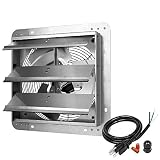
iPower 12 Inch Aluminum Shutter Exhaust Fan (1,800 CFM)
Pros
Cons
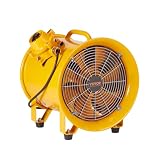
VEVOR 12 Inch Explosion Proof Utility Fan (2,500 CFM)
Pros
Cons
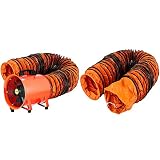
VEVOR 12 Inch Utility Blower with 25 ft Flexible Duct
Pros
Cons
Pro Tips From the Booth
Renovation Stage: PREP
Booth CFM Calculator

How to Choose an Exhaust Fan for Spray Paint Booth Ventilation
Three specs decide whether an exhaust fan for spray paint booth duty actually works: airflow, spark safety, and mounting style. Everything else on the listing page is noise. Here’s how each one plays out in a real booth, and where the marketing tends to mislead you.
CFM: size the fan to the booth face, not the room
CFM (cubic feet per minute) is how much air the fan moves. The target is a cross-draft of about 100 feet per minute across the face of your booth. Multiply the booth’s width by its height in feet, then by 100. A 6×7 ft booth face needs about 4,200 CFM in theory — but in a three-sided DIY booth with an open front, half that still produces a visible, working draft that carries overspray away from the piece. Use the calculator above, then buy the next size up. Filters and ducting will eat 20–30% of rated airflow, and a fan you can run at less than full speed lives longer and runs quieter.
Spark safety: the one spec you can’t compromise on
Atomized solvent vapor is fuel. The EPA’s guidance on volatile organic compounds covers the health side, but the fire side is simpler: a standard fan motor arcs internally, and a brushed motor arcs constantly. If you spray anything that smells like a hardware store — lacquer, enamel, 2K clear, most rattle cans — the exhaust air must pass through a sealed, explosion-proof motor or around a belt-driven motor mounted outside the airstream. If you spray only water-based coatings, a standard shutter fan is fine. That single distinction sorts every fan on this page.
Mounting: wall, window, or duct
Wall-mounted shutter fans give the best airflow per dollar and seal themselves shut when off — the right call for a permanent booth corner in a garage. Duct-coupled blowers cost you some airflow but buy you placement freedom, which is what a renter or a one-weekend-a-month sprayer actually needs. Window panels split the difference. Decide where the exhaust physically leaves the building first, then pick the fan that fits that path — not the other way around. If your booth feeds an airless rig, my airless sprayer for furniture guide covers the spraying half of the equation.
Filters: protect the fan and the neighborhood
Exhaust filters catch overspray before it hits the fan blades and before it paints your driveway. Cheap pleated furnace filters work, cost a few dollars, and should be swapped the moment you can see a paint film on them. A clogged filter is the most common reason a good fan “stops working” — airflow collapses while the motor hums along happily. Check it every session. It takes ten seconds.
When NOT to Use These Fans
Don’t use the iPower or the VEVOR duct blower with solvent-based products. Their motors sit in the airstream and are not vapor-sealed. That includes most spray cans, automotive lacquer, oil-based enamel, and anything mixed with a hardener. For those, the explosion-proof VEVOR is the minimum — full stop.
Don’t rely on any 12-inch fan for full-car refinishing in a sealed garage. A car-sized enclosed booth needs commercial airflow numbers and make-up air planning that no single consumer fan delivers. These fans are sized for furniture, cabinets, doors, panels, and hobby work.
Don’t exhaust toward a neighbor’s window, an HVAC intake, or a water heater. Pilot lights and intake vents turn your exhaust path into someone else’s problem — or an ignition source.
Setting Up Your Fan: 5 Steps Before You Spray
Prep matters more than the brand here — a mid-grade exhaust fan for spray paint booth work, installed correctly, outperforms a pricier fan hung in a hole with gaps around it.
1. Seal the mounting. Foam tape or caulk around the flange. Gaps let pressurized overspray leak back into the room.
2. Filter both sides. Pleated filter on the booth-side intake of the fan, and a filtered make-up air opening on the opposite wall.
3. Test the draft with smoke. An incense stick at the booth face shows you exactly where air enters and exits. Dead spots near the workpiece mean you need to move the fan or enlarge the intake.
4. Run the fan before, during, and after. Start it two minutes before spraying and leave it running until the booth airs clear. Vapor lingers after the visible mist settles — and if you’re forcing dry times, see my notes on making paint dry faster without wrecking the finish.
5. Check the louvers or duct path each session. Stuck louvers and kinked ducts are silent airflow killers.
The Verdict
For a permanent garage booth spraying water-based paint, the iPower 12″ shutter fan is the best exhaust fan for spray paint booth duty per dollar — strong airflow, self-sealing, done. If solvent ever passes through your gun, skip the debate and buy the VEVOR explosion-proof fan; it’s the only one of the three rated for that job. Renters and occasional sprayers should take the VEVOR blower with duct and keep the run short. Two thin coats, clean moving air, and a fresh filter beat a bigger motor every time.
Frequently Asked Questions
What kind of fan can I use for a spray paint booth?
The right exhaust fan for spray paint booth use is a shutter-mounted axial fan, an inline duct blower, or an explosion-proof utility fan — matched to your coating. Water-based paint allows a standard motor; solvent-based paint requires a sealed, explosion-proof motor or a belt-drive fan with the motor outside the airstream.
How many CFM do I need for a spray paint booth?
Multiply your booth face width by height (in feet), then by 100. A 6×7 ft face works out to about 4,200 CFM for a fully enclosed booth; an open-front DIY booth produces a working cross-draft at roughly half that. Then add 25% headroom for filters and ducting.
Do I need an explosion proof fan for spray painting?
Yes, if you spray solvent-based products — lacquer, enamel, 2K clear, most aerosol cans. Their vapors can ignite from a motor arc. No, if you spray only water-based latex, acrylic, or chalk paint, where vapor is not flammable at booth concentrations.
Can I use a box fan for a spray paint booth?
Only as a last resort for small water-based jobs, and only with a filter taped over it. Box fan motors are exposed, the blades cake with overspray fast, and airflow collapses without warning. I retired mine after one lacquer job too many — it’s the cheapest upgrade regret I ever fixed.
Where should the exhaust fan be placed in a paint booth?
Behind or beside the workpiece, level with it or lower, pulling air across the work and away from your breathing zone. Pair it with a filtered intake opening on the opposite side so the draft travels the full length of the booth.
Do paint booth exhaust fans need filters?
Yes — on the booth side. The filter catches overspray before it coats the blades and before it exits the building. Swap it as soon as a visible paint film forms; a clogged filter can quietly cut airflow by more than half.