
The 5 Best Deck Stains for Weathered Wood — What We Tested on Real Decks
Updated: May 2026 · By Sophie Ulman · 8 min read
The 5 Best Deck Stains for Weathered Wood — What We Tested on Real Decks
If you’re searching for the best deck stain for weathered wood, you already know the frustration: you apply a coat, it looks great for a season, then it’s grey and peeling again by spring. The problem isn’t always the stain — it’s choosing the wrong formula for wood that has already dried out, cracked, and lost its natural oils. In this guide, we tested five penetrating stains on real grey decks and tracked how they held up through two full weather cycles. The results were decisive. The best deck stain for weathered wood isn’t necessarily the most expensive one — it’s the one that penetrates deepest and feeds the wood from the inside out.
Quick Picks: Best Deck Stains for Weathered Wood
| Pick | Product | Type | Best For |
|---|---|---|---|
| 🥇 Best Overall | Ready Seal 112 Natural Cedar | Oil-Based Semi-Transparent | All weathered wood types, DIY |
| 🔬 Best Penetrating | Cabot Australian Timber Oil Amberwood | Oil-Based Translucent | Severely weathered, grey wood |
| 💰 Best Value | Olympic Redwood Naturaltone | Semi-Transparent | Budget-conscious DIY |
| 🏪 Most Accessible | Thompson’s WaterSeal Natural Cedar | Transparent Water-Based | Lightly weathered wood |
| 🌟 Best Warm Tone | Thompson’s WaterSeal Harvest Gold | Semi-Transparent Water-Based | Grey boards needing color warmth |
The 5 Best Deck Stains for Weathered Wood — Full Reviews
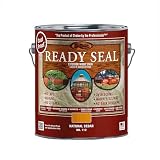
Ready Seal earns the top spot as the best deck stain for weathered wood because it was purpose-built for exactly this problem. The oil-based, semi-transparent formula penetrates deep into dried-out wood fibers rather than forming a surface film — which means it can’t peel, bubble, or flake the way film-forming stains do. It delivers lasting protection on decks that have been left grey and exposed for one to three seasons.
The “goof-proof” self-leveling formula forgives uneven application — a real advantage when working on rough, weathered boards that absorb stain at different rates. Coverage runs 150–200 sq ft per gallon on weathered wood (expect the lower end if your boards are very porous), and because it acts as both stain and sealer, there’s no second product to buy. One note: Ready Seal works best on bare or lightly stained wood. If you have heavy previous coating buildup, strip it first.
- Penetrating oil formula — cannot peel
- Self-leveling, forgiving on rough wood
- Stain + sealer in one
- No primer required
- 10+ colors available
- Oil-based — longer dry time (24–48 hrs)
- Less effective over existing film coatings
- Needs stripping if deck was previously painted
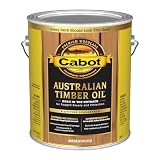
When a deck has been neglected for more than three years and the wood is bone-dry, cracked, and silver-grey, Cabot Australian Timber Oil is the best deck stain for weathered wood at the premium tier. Originally formulated to protect dense tropical hardwoods against Australian sun and rain, this triple-oil blend (linseed, tung, and long-oil alkyd) replenishes the natural oils that weathered wood has completely lost. It doesn’t just coat the surface — it physically feeds the wood.
The translucent Amberwood finish adds a warm amber tone that counteracts the grey oxidation color without obscuring the natural grain. Apply two coats wet-on-wet for maximum penetration on heavily weathered boards. On very porous weathered wood, coverage drops to 100–150 sq ft per gallon, which makes this product costlier per deck — but the 2–3 year protection window without peeling justifies the investment. Cabot is widely trusted by professional deck contractors as their go-to for restoration projects.
- Triple oil formula restores wood oils
- Beautiful translucent warm tone
- 2–3 year durability on weathered wood
- Trusted by professional contractors
- Works on hardwood and softwood decks
- Higher cost than most competitors
- Lower coverage on very porous wood
- Oil-based — 48 hr full cure time
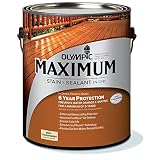
Olympic Maximum is the best deck stain for weathered wood when budget is a concern, and its “Weather Ready” technology makes it the most forgiving product in this roundup for variable application conditions. The acrylic-oil hybrid formula allows you to clean a weathered deck and stain it on the same day — no waiting for the wood to fully dry. It’s also rain-ready in 8 hours, which is critical if you’re working on a deck in unpredictable spring weather.
The Redwood Naturaltone color provides a classic warm tone that suits most weathered cedar and pine decks. Coverage runs 200–300 sq ft per gallon on weathered wood, making it cost-efficient over large deck surfaces. The water-based formula is low VOC and cleans up with soap and water — a significant convenience advantage over oil-based alternatives. While it may not penetrate as deeply as a pure oil formula, the acrylic binders compensate with strong surface adhesion that resists UV and moisture for up to 4 years on vertical surfaces, 2–3 years on horizontal decks.
- Best price-per-sq-ft ratio
- Same-day application after cleaning
- Rain-ready in 8 hours
- Low VOC, water-based cleanup
- Wide color selection
- Less penetrating than pure oil formulas
- May need 3-year recoat on high-traffic decks
- Acrylic layer can still peel if prep is skipped
🔧 Pro Tips: Getting Maximum Life from Any Deck Stain on Weathered Wood
- Always clean first. Weathered wood is full of mildew, dirt, and mill glaze. A deck cleaner removes these barriers so stain can actually penetrate. Applying stain over dirty wood is the #1 cause of early failure.
- Test moisture before staining. Sprinkle water on the wood — if it beads up, the wood isn’t ready to absorb stain. If it soaks in immediately, you’re good to go.
- Apply in the shade. Direct sun causes the solvent to flash off before the stain penetrates. Work early morning or on a cloudy day for deep penetration on weathered boards.
- Don’t over-apply. One or two thin coats that soak in will outlast three thick coats every time. If stain sits on the surface after 30 minutes, you’ve applied too much — wipe off the excess.
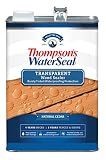
Thompson’s WaterSeal is the most widely available deck stain in America — stocked at virtually every Home Depot, Lowe’s, and hardware store. For homeowners who need a quick solution for lightly weathered wood without ordering online, this transparent Natural Cedar formula provides reliable waterproofing and UV protection in a single coat. It works best as the best deck stain for weathered wood that is still in relatively good condition — greying but not yet cracked or severely dried out.
The water-based formula allows same-day application on new or lightly weathered pressure-treated wood, which is a standout feature. The clear-to-transparent Natural Cedar finish enhances the wood’s natural color without masking the grain, making it popular for cedar and redwood decks where the natural beauty should show through. For decks with moderate weathering, apply two coats for best results. Coverage is approximately 200–250 sq ft per gallon on weathered wood. While it won’t restore severely dried-out boards like Cabot or Ready Seal, it’s an excellent maintenance stain for decks still in reasonable condition.
- Available everywhere — no shipping delays
- Safe for new pressure-treated wood same day
- Transparent finish shows natural grain
- Low VOC, easy water cleanup
- One-coat application on lightly weathered wood
- Not ideal for severely weathered or cracked wood
- Less penetrating than oil-based options
- Requires more frequent recoating (1–2 years)
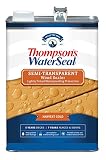
Harvest Gold from Thompson’s WaterSeal solves a specific problem that many homeowners face: a deck that has turned silver-grey and needs warm color restored without a full opaque coating. The semi-transparent formula adds a rich honey-gold tone that counteracts the grey oxidation, while still allowing the wood grain to show through. For anyone looking for the best deck stain for weathered wood that brings back warmth and color without looking painted, this is the pick.
The semi-transparent formula provides more UV pigment protection than Thompson’s transparent line — meaning the color lasts longer and provides better protection for grey, oxidized boards. It’s rain-ready in 2 hours, which is the fastest dry time in this roundup. Apply two coats on grey weathered wood for full color saturation. The water-based cleanup and low VOC formula make it one of the easiest stains in this list to work with, even in enclosed areas like covered porches. Recoating is recommended every 1–2 years on horizontal deck surfaces.
- Warm gold tone corrects grey weathered appearance
- Rain-ready in 2 hours — fastest in class
- UV blockers for color longevity
- Semi-transparent — grain still visible
- Water-based, low VOC
- Requires recoating every 1–2 years on decks
- Color may not suit all wood tones
- Less penetrating than oil-based formulas
Renovation Stage: SEAL
Deck staining is a SEAL stage project — the final protective layer applied after prep and cleaning. Before you stain, make sure your deck has been cleaned, any loose fibers sanded, and all old flaking stain removed. For stripping guidance, see our Best Paint Remover for Wood guide.
🧮 Deck Stain Coverage Calculator
Weathered wood is more porous than new wood — it absorbs more stain per square foot. Use this calculator to estimate how many gallons you need.

How to Choose the Best Deck Stain for Weathered Wood
Not all deck stains are designed to handle wood that has already dried out, oxidized, and lost its natural protective oils. Choosing the wrong formula on weathered wood is the most common reason stain fails within a year. Here are the critical factors to understand before you buy.
Oil-Based vs. Water-Based: Which Penetrates Better on Weathered Wood?
Oil-based penetrating stains are generally the best deck stain for weathered wood because they use linseed oil, tung oil, or alkyd oil to physically soak into the dried wood fibers — exactly replacing what the weather has stripped out. Water-based acrylic stains form more of a surface film and rely on adhesion rather than penetration. On moderately weathered wood, water-based can perform well. On severely weathered, cracked boards, oil-based outperforms across the board.
That said, water-based formulas like Olympic Maximum now include penetrating oil additives in hybrid formulas that close the performance gap significantly. If you’re in a VOC-restricted state, a quality water-based hybrid is your best realistic option. According to Family Handyman’s deck staining guide, oil-based stains last 2–4 years on horizontal surfaces vs. 1–3 years for water-based — but application conditions and prep matter more than formula type alone.
| Factor | Oil-Based | Water-Based |
|---|---|---|
| Penetration depth | ✅ Deep (restores wood oils) | ⚠️ Surface-level (some hybrids deeper) |
| Weathered wood performance | ✅ Excellent | ⚠️ Good on moderate weathering |
| Dry time | ❌ 24–48 hours | ✅ 2–8 hours |
| VOC / smell | ❌ Higher VOC | ✅ Low VOC, low odor |
| Longevity (horizontal deck) | ✅ 2–4 years | ⚠️ 1–3 years |
| Peeling risk | ✅ Very low (penetrates) | ⚠️ Moderate (surface film) |
| Cleanup | ❌ Mineral spirits | ✅ Soap and water |
Transparent, Semi-Transparent, or Solid: What’s Right for Weathered Wood?
This is one of the most important decisions when choosing the best deck stain for weathered wood. As a rule: the more weathered and damaged the wood, the more opaque the stain you need.
- Transparent stains let the full wood grain show — best for lightly weathered wood in good structural condition. They provide minimal color correction for grey boards.
- Semi-transparent stains add color while still showing grain texture — the ideal choice for moderately weathered wood. They correct grey coloring while preserving the natural wood look.
- Solid stains act like thin paint — best for severely damaged, splintered, or previously painted wood where you want to hide defects entirely. They peel more easily than penetrating stains on horizontal surfaces.
For most weathered decks, semi-transparent penetrating stain hits the sweet spot. It restores color, protects the wood, and lasts longer than solid options on horizontal surfaces. Check out our detailed comparison guide on protecting exterior wood surfaces for more context on choosing the right finish for your specific wood type.
Coverage Rates on Weathered Wood: Budget for More Than You Think
Every stain label quotes coverage in ideal conditions — usually 200–300 sq ft per gallon. On weathered wood, forget those numbers. Severely weathered decks absorb 30–50% more stain per square foot because the dried-out wood is essentially thirsty. Always plan for 150 sq ft per gallon on moderately weathered wood, and 100–130 sq ft per gallon on severely weathered boards. Buying an extra gallon upfront is far cheaper than running out mid-project, which leads to lap marks and color variations. According to This Old House, underbuying stain is the most common rookie mistake in deck staining projects.
Specialty Additives Worth Looking For
The best deck stains for weathered wood often include additives that standard stains lack. Look for mildewcide agents (prevents mold regrowth after cleaning), UV blockers (slow grey re-oxidation), and water repellents (prevent moisture absorption that causes cracking). Some premium formulas like Cabot Australian Timber Oil include all three, which explains the price premium. For a comprehensive tool lineup to apply your stain efficiently, see our guide to the best exterior paint sprayers — applying deck stain by sprayer cuts time by 60% on large surfaces.
How to Prep a Weathered Deck Before Staining (5 Steps)
The stain you choose matters less than how well you prepare the wood. Skip prep and even the best deck stain for weathered wood will fail within a season. Here’s the correct sequence:
- Strip old stain or paint. If your deck has a previous film-forming stain or paint coating, strip it completely before applying a penetrating stain. Use a dedicated deck stain stripper applied with a pump sprayer, let it dwell for 15 minutes, then pressure-wash off. See our guide on the best paint remover for wood for product recommendations.
- Clean with a deck wash. Mix a deck cleaner concentrate with water and scrub with a stiff brush or pump sprayer. Deck cleaners remove mildew (grey-black streaks), tannin stains, and dirt that prevent stain adhesion. Rinse thoroughly with a garden hose.
- Allow drying time. Wood must be dry before staining — aim for below 15% moisture content. In warm weather, 24–48 hours after pressure washing is usually sufficient. Test by checking if water beads or soaks in: if it soaks in instantly, the wood is ready.
- Sand rough spots. Use 60–80 grit sandpaper on splinters, raised grain, and rough areas. You don’t need to sand the entire deck — focus on high-traffic zones and any boards with cracked surfaces. Sanding opens the wood pores to improve stain penetration.
- Apply stain in ideal conditions. Stain when temperatures are between 50–90°F, no rain in the forecast for 24 hours, and in the shade or on a cloudy day. Direct sun causes solvent flash-off before penetration occurs.
Our Verdict: The Best Deck Stain for Weathered Wood
For most homeowners, Ready Seal 112 Natural Cedar is the best deck stain for weathered wood — it penetrates deep, self-levels on rough boards, and cannot peel. It’s the clearest choice when ease of application and long-term results both matter.
If your deck has been neglected for 3+ years and is severely dried out, upgrade to Cabot Australian Timber Oil. The triple-oil formula physically replenishes what the weather has stripped out and will restore wood that most stains can’t revive.
On a tight budget, Olympic Redwood Naturaltone delivers solid protection with its hybrid acrylic-oil formula and “Weather Ready” same-day application. It won’t last quite as long as the oil-based options, but it outperforms in convenience and cost-per-square-foot.
Whichever stain you choose, remember: prep is everything. The best deck stain for weathered wood will fail in a season on a dirty, wet, or previously coated surface. Invest 3 hours in stripping and cleaning and your stain will last 3 years.
Frequently Asked Questions
Can you stain a deck that is already grey and weathered?
Yes — in fact, grey weathered wood often accepts penetrating stains better than new wood because it’s very porous and “thirsty.” The key is proper prep: clean the deck thoroughly to remove mildew and oxidation, let it dry completely, and use an oil-based penetrating stain that can soak into the dried fibers. Severely weathered wood may need a deck brightener (oxalic acid solution) applied after cleaning to open the wood pores and restore pH before staining.
How do you prep weathered wood before staining?
Strip any old coating with a deck stain stripper, then clean with a dedicated deck wash to remove mildew, dirt, and grey oxidation. Rinse well, allow 24–48 hours to dry, sand rough spots lightly with 60-grit paper, and apply stain in shade with no rain forecast. Never skip the cleaning step — stain applied over a dirty weathered deck will fail within months.
Should I use oil or water-based deck stain on weathered wood?
Oil-based penetrating stains generally outperform water-based on weathered wood because they soak into the dried-out wood fibers and restore moisture, much like conditioning dry skin. Water-based formulas rely more on surface adhesion. That said, quality hybrid water-based stains (like Olympic Maximum) have closed the gap significantly. If your deck is severely weathered, lean oil-based. For moderately weathered wood in good condition, a quality water-based hybrid works well and has the advantage of faster dry time and easier cleanup.
How many coats does weathered wood need?
Moderately weathered wood typically needs two coats for full protection. Severely weathered, highly porous wood may benefit from a third coat, applied while the second coat is still wet (wet-on-wet technique). Unlike paints, penetrating stains absorb rather than stack — you cannot apply more coats than the wood can absorb. Test by watching how quickly the stain soaks in: if it’s still wet on the surface after 30 minutes, stop — you’ve exceeded the wood’s absorption capacity.
How long does deck stain last on weathered wood?
Typically 2–4 years for quality oil-based stains on horizontal deck boards, and 3–6 years on vertical railings and fascia. Water-based stains generally last 1–3 years on horizontal surfaces. Factors that reduce longevity include heavy foot traffic, full sun exposure, poor prep, and applying too much stain (pooling on the surface). Annual cleaning with a mild deck wash extends the life of any deck stain significantly.
Do I need to sand weathered wood before staining?
You don’t need to sand the entire deck, but light sanding (60–80 grit) on rough, splintered, or raised-grain areas is recommended. Sanding smooths the surface, removes mill glaze on older boards, and opens the wood pores for better stain penetration. Focus on high-traffic areas and any boards where the grain has lifted noticeably. Full sanding every few years (at major recoating) is worthwhile on cedar and pine decks.
What’s the difference between deck stain and deck sealer?
Deck stain adds color while providing waterproofing and UV protection. Deck sealer is typically clear or lightly tinted and focuses purely on waterproofing without color contribution. For weathered wood, stain is usually the better choice because the pigment provides UV protection that slows re-greying. Clear sealers let UV rays through unimpeded, meaning the wood will grey again faster. Most modern stains also include sealing properties, making separate sealer products unnecessary in most residential applications.
What is the best way to apply deck stain on weathered wood?
A natural-bristle brush with a long handle is the most precise method — it works the stain into cracks and between board gaps. For large flat areas, a roller (3/8″ nap) covers ground fast and a brush follows to work stain into gaps. For maximum efficiency on large decks, use an airless sprayer set to low pressure (1,000–1,200 PSI) and back-brush immediately after spraying. Avoid applying in direct sun — work early morning or use shade from the house to ensure proper penetration before the solvent flashes off.