The Best Primer for Plastic That Won’t Peel Off in a Month
Spray paint straight onto a plastic chair and you already know how it ends — a few weeks later it’s flaking off in sheets, peeling at every corner you touch. Plastic is slick, non-porous, and chemically resistant, which is exactly why paint refuses to grip it. The fix isn’t a better topcoat. It’s the right base layer, and the best primer for plastic is what turns a peeling mess into a finish that survives real handling. Get this step wrong and you’re stripping and redoing the whole thing within a season. The same bonding problem turns up on plastic and foam craft pumpkins, which is why we handle those separately in our guide to the best paint to use on pumpkins.
I’ve primed garden furniture, planters, automotive trim, and a pile of 3D-printed parts, and the gap between a bonding primer and a “regular” one is night and day. Below are the five I keep reaching for, what each actually grips, and the one mistake that wrecks more plastic paint jobs than any product choice.
Quick picks at a glance
| Primer | Best for | Type |
|---|---|---|
| Rust-Oleum Specialty Plastic Primer | Hard plastics (PVC, polypropylene) | Bonding spray |
| Krylon Fusion for Plastic | Color + primer in one pass | Paint & primer |
| Rust-Oleum Universal Bonding Primer | Slick, glossy, mixed surfaces | Bonding spray |
| Dupli-Color Adhesion Promoter | Automotive trim & bumpers | Clear promoter |
| SEM Plastic Adhesion Promoter | Raw, bare plastic bumpers | Pro-grade promoter |
The 5 best plastic primers, reviewed
Stage: Prime
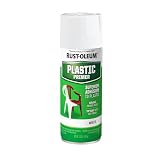
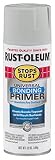
Rust-Oleum Specialty Plastic Primer Spray
This is the can I hand people first, because it’s built for the plastics most primers slide right off — polypropylene, polystyrene, and PVC. Those plastics have low surface energy, which is a technical way of saying paint beads up on them like water on a waxed hood. This primer carries a tackifier that bites into that slick surface and gives your topcoat a mechanical grip it can’t get on its own.
The first time I used it I sprayed a set of weathered PVC planter boxes that I’d already failed to paint once with regular spray paint. I primed two thin coats, let it flash off for about 20 minutes, then topcoated. A full year and a freeze-thaw cycle later, zero peeling at the rims where my hands grab them. The one limit: it goes on as a thin grip coat, not a filler — it won’t hide scratches or mold lines, so sand those out first.
- Grips notoriously slick plastics
- Fast 20-minute recoat window
- Pairs with any spray topcoat
- Thin coat — won’t fill flaws
- Light gray tints very pale topcoats
Via Amazon.com
Stage: Prime
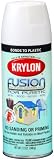
Krylon Fusion for Plastic
Fusion is the shortcut when you don’t want two products. It’s a paint and a bonding primer in the same can — the resin is engineered to chemically fuse with the plastic instead of just sitting on top, so you skip the separate primer step entirely. For lawn chairs, kids’ toys, or storage bins where you just want a fast color change, it’s the lowest-effort path that still holds.
Where it earns its place is speed: spray, recoat, done. The trade-off is control. Because color and grip come from one product, you’re locked into Krylon’s shade range, and on large flat panels it’s easier to get runs than with a dedicated thin grip coat. Two thin coats always beat one thick coat here — rush it and the fusion bond never fully forms.
- No separate primer needed
- Color and bond in one pass
- Great for casual outdoor items
- Limited to Krylon’s colors
- Runs easily if over-applied
Via Amazon.com
Stage: Prime
Rust-Oleum Universal Bonding Primer
If your project mixes materials — plastic trim next to metal, glass, or laminate — this is the one primer that grips them all. It’s formulated for “difficult to coat” surfaces, including galvanized metal and even two-part epoxies, so when you’re not sure what a surface is, it removes the guesswork. The bonding resin keys into glossy finishes that would normally reject paint.
On a recessed entry door with plastic panels and metal hardware, I primed the whole thing with one product instead of switching cans, and the topcoat held uniformly across both. The catch is that it’s a true primer, not a paint — you still need a topcoat — and on pure plastics the dedicated Specialty Plastic Primer above grips slightly harder. This is the versatile choice, not the specialist.
- Sticks to almost any surface
- Excellent over glossy finishes
- One can for mixed projects
- Needs a separate topcoat
- Slightly less grip on raw plastic vs. specialists
Via Amazon.com
Stage: Prime
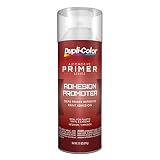
Dupli-Color Adhesion Promoter (Clear)
This one is different — it dries clear and adds almost no thickness. An adhesion promoter is a thin chemical bridge: it doesn’t build a film, it just makes the next coat want to stick. That makes it the right call for automotive trim, fiberglass bumpers, and chrome where you can’t afford to bury fine detail or change the surface profile.
I’ve used it under color on a faded plastic dashboard bezel, and because it’s invisible, there’s no risk of a primer color ghosting through a thin topcoat. The honest limitation: clear means you get no visual feedback on coverage, so it’s easy to miss a spot. Spray in deliberate, overlapping passes and keep the can moving — patchy promoter equals patchy adhesion.
- Invisible — no color ghosting
- Ideal under thin automotive topcoats
- Works on chrome and fiberglass too
- Clear coat is hard to see while spraying
- Not a filler or a topcoat
Via Amazon.com
Stage: Prime
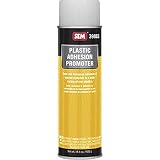
SEM Plastic Adhesion Promoter
SEM is what body shops reach for, and it shows in how it handles raw, bare plastic — the unprimed black polypropylene on bumpers and interior panels that defeats consumer-grade products. It seals the substrate and dramatically increases how aggressively the topcoat keys in, which is why it’s a staple in professional refinishing.
It’s the most demanding of the group on prep and ventilation — this is solvent-heavy, so a proper spray booth or strong cross-ventilation isn’t optional. And it’s overkill for a garden chair. But on bare automotive plastic, nothing here grips harder. If you’re doing a bumper respray, this is the best primer for plastic in that specific category, full stop.
- Strongest grip on bare plastic
- Shop-proven on bumpers
- Seals raw polypropylene
- Demands real ventilation
- Overkill for casual projects
Via Amazon.com
Pro tips for priming plastic
Prep matters more than the brand. The best primer for plastic still fails on a greasy surface, so here’s what actually moves the needle:
- Degrease first, always. Plastic carries mold-release agents and skin oils. Wipe it down with isopropyl alcohol — not just soap and water — or the primer bonds to the grease instead of the plastic.
- Scuff glossy plastic. A quick pass with 320-grit gives the primer mechanical teeth. Don’t gouge it; you just want to kill the shine.
- Two thin coats. Always. One heavy coat traps solvent underneath and stays soft. Thin coats flash off and cure hard.
- Mind the temperature. Below 50°F most of these won’t cure right. Warm the plastic and the can to room temperature first.
How many cans do you need?
Plastic primer calculator

How to choose the best primer for plastic
There's no single best primer for plastic for every job — the right pick depends on the plastic type and what you're topcoating with. Match the product to the surface and you'll skip the peeling.
Match the primer to the plastic
Hard, slick plastics like PVC and polypropylene need a dedicated bonding primer. Mixed-material projects favor a universal bonding primer. Automotive trim and bumpers do best with a clear or pro-grade adhesion promoter that won't add thickness. If you're choosing your topcoat too, our guide to the best paint for plastic pairs naturally with everything here.
Bonding primer vs. adhesion promoter
A bonding primer builds a thin film you topcoat over. An adhesion promoter is a near-invisible chemical bridge that adds almost nothing. Use a bonding primer when you want a uniform base; use a promoter when detail and thickness matter, like on trim or near a vinyl window frame. The U.S. EPA's Safer Choice program is worth checking if you want lower-solvent options.
Spray vs. brush
Almost every great plastic primer is an aerosol, because spraying lays the thin, even film bonding needs. Brushing risks thick spots that stay soft. If you're priming detailed or textured plastic, spray is the better primer for plastic delivery method nearly every time — the same logic applies when you tackle slick metal like stainless steel.
When a primer won't save you
A primer bonds paint to plastic — it does not fix damaged or contaminated plastic. Skip painting (or fix the surface first) when:
- The plastic is cracked or brittle. Sun-degraded, chalky plastic will keep shedding its surface layer, and your primer goes with it. Replace it.
- It's flexible and you're using a rigid topcoat. Bendy plastic flexes; hard paint cracks. You need a flexible topcoat, not just a primer.
- You skipped degreasing. This is the mistake I see most often. Mold-release oils are invisible — the primer bonds to the film, not the plastic, and peels in weeks.
This Old House has a solid overview of painting different surfaces if you're unsure your project is even paintable.
Prep steps that make it stick
Durability is about half product and half preparation. Do these in order:
- Wash with soap and water, then wipe with isopropyl alcohol to strip mold-release oils.
- Lightly scuff glossy areas with 320-grit and wipe off the dust.
- Mask edges and set up ventilation or a booth.
- Spray two thin coats of your chosen primer, flashing off between coats.
- Topcoat within the primer's recoat window for a chemical bond, not just a mechanical one.
The verdict
For most people, the Rust-Oleum Specialty Plastic Primer is the best primer for plastic — it grips the hard, slick plastics that defeat everything else, with no sanding. Want color and grip in one can? Go Krylon Fusion. Mixing plastic with metal or glass? The Rust-Oleum Universal Bonding Primer. And for automotive bumpers, the SEM promoter is the pro pick. Whichever you choose, degrease first — that one step decides whether your finish lasts a season or a decade.
Can you spray paint plastic without primer?
Sometimes, and the answer turns entirely on which plastic you have and how hard that part's life is going to be. Skipping the primer is not automatically a mistake — it is a bet, and it is worth knowing the odds before you place it.
You can usually skip it when the plastic is a rigid, moderately textured part that stays indoors and never gets handled: a picture frame, a lamp base, a planter that lives on a shelf. Pair it with a paint formulated to bite into plastic — the picks in our guide to the best spray paint for plastic are built for exactly this — degrease it properly, and it will hold.
You cannot skip it on anything slick, flexible, oily, or outdoors. Polypropylene and polyethylene — the milky, waxy plastics that most storage bins, watering cans and garden furniture are made from — have surface energy so low that ordinary paint has nothing to grab. It will look fine for a week and then sheet off at the first knock. Automotive trim and bumpers are the same story with added flex; if that is your project, the car interior plastic guide covers the flex-additive side that a primer alone does not solve.
The quick test I use: press a thumbnail into a hidden spot. If the plastic gives and springs back like a food container, it is almost certainly polypropylene or polyethylene and it needs a bonding primer or an adhesion promoter, full stop. If it is hard and brittle like ABS or polystyrene, a paint-and-primer-in-one will usually do.
One thing worth being blunt about: "paint and primer in one" is not the same product as a dedicated bonding primer. It is a paint with better adhesion resins. It closes the gap on easy plastics and does nothing for the hard ones. On a part you would be annoyed to redo, spend the extra ten minutes and the extra can.
Frequently asked questions
Do I really need a special primer for plastic?
Yes. Plastic is non-porous and slick, so standard paint and primer can't grip it and will peel. A dedicated bonding primer or adhesion promoter is what makes the topcoat actually stick. It's the single biggest factor in whether a plastic paint job lasts.
What is the best primer for plastic that doesn't require sanding?
Rust-Oleum Specialty Plastic Primer is designed to bond to most hard plastics without sanding. That said, scuffing glossy surfaces with 320-grit still improves grip, and degreasing first is non-negotiable regardless of the product.
Can I use regular spray paint over a plastic primer?
Yes — once a bonding primer has cured, most standard spray paints will adhere to it well. Topcoat within the primer's recoat window for the strongest bond. For color options, see our best paint for plastic guide.
What's the difference between a bonding primer and an adhesion promoter?
A bonding primer builds a thin film you paint over. An adhesion promoter is a near-invisible chemical bridge that adds almost no thickness — better for automotive trim and fine detail where you can't bury the surface.
How long should plastic primer dry before painting?
Most of these are dry to recoat in 20 minutes to an hour, but check the can. Topcoating inside the recoat window gives a chemical bond; wait too long and you only get a mechanical one, which is weaker.
Will plastic primer work on flexible plastic?
The primer will bond, but flexible plastic needs a flexible topcoat too. A rigid paint over bendy plastic cracks no matter how good the primer is. Match your topcoat to the flex of the part.