The Concrete Driveway Sealer That Actually Survives Winter
Updated: July 2026 | By Sophie Ulman
Pick the wrong concrete driveway sealer and you find out the hard way: one winter of road salt and freeze-thaw, and the film is blushing milky white and peeling along every control joint. Now you’re not sealing a driveway — you’re stripping one. A concrete driveway sealer is supposed to buy you years of protection, but the label rarely tells you which kind actually survives a full seasonal cycle in a cold, salted climate versus which one just looks good on the shelf.
I’ve sealed my own driveway three times with three different chemistries, and the gap between them is not small. Below are the four I’d actually put down again — two invisible penetrating sealers for raw structural protection, and two wet-look acrylics for when you want the concrete to darken and shine. Each one is matched to a specific situation, because the “best concrete driveway sealer” depends entirely on your climate and whether you care about looks or longevity.
Quick picks at a glance
| Sealer | Type | Look | Lasts | Best for |
|---|---|---|---|---|
| Armor SX5000 WB | Penetrating silane-siloxane | Invisible | 7–10 yrs | Freeze-thaw & road-salt climates |
| Eagle EM5 Natural Seal | Penetrating silicone | Invisible | 2–4 yrs | Large driveways on a budget |
| Armor AR350 | Acrylic (solvent) | Low-gloss wet look | 1–3 yrs | Stamped or colored concrete |
| Armor AR500 | Acrylic (solvent) | High-gloss wet look | 1–3 yrs | Showroom shine, light traffic |
The 4 concrete driveway sealers, reviewed
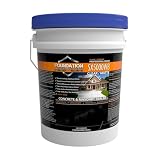
Foundation Armor SX5000 WB
This is a penetrating silane-siloxane sealer, which means the molecules are small enough to soak 2–4 mm into the concrete’s pores and chemically bond with the silica in the cement. It doesn’t form a film on top — it turns the concrete itself hydrophobic, so water beads and rolls off instead of soaking in and freezing. That mechanism is exactly why it can’t peel: there’s nothing sitting on the surface to lift.
The “WB” is the water-based version, and it delivers roughly 90% of the protection of the harsh solvent formulas with almost no odor and easy roller or pump-sprayer application. I put this on my own slab after a peeling disaster, and three winters of salt later it still beads water at the apron. The one honest limitation: it will not darken or enhance the color at all. If you’re hoping for a wet look, you’ll be disappointed — this is invisible protection, full stop.
- Cannot peel or flake — penetrates, doesn’t coat
- Excellent freeze-thaw and de-icing salt resistance
- Low odor, low VOC, breathable
- Zero color enhancement (invisible)
- Won’t bond over an existing acrylic sealer
- Needs a genuinely dry slab to penetrate
Via Amazon.com
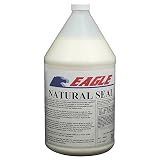
Eagle EM5 Clear Natural Seal
Eagle’s Natural Seal is also a penetrating, invisible sealer, but it’s silicone-based rather than a full silane-siloxane blend. It soaks in, lines the pores, and repels water while letting the slab breathe — no film, no sheen, no color change. The 5-gallon pail covers a big driveway for noticeably less money than the pro penetrators, which is the whole reason it earns a spot here.
Where it gives ground is longevity. In my experience a silicone penetrating sealer wants a re-coat every two to four years, where a top silane-siloxane can push seven to ten. It also shrugs off water better than it shrugs off oil, so an engine drip will still stain if you leave it. For a big residential slab where invisible protection matters more than a decade of walk-away durability, that trade is easy to live with.
- Truly invisible, breathable finish
- Best price per square foot of the penetrators
- Simple one-part application
- Reseal every 2–4 years, not 10
- Weaker against oil and grease stains
- Shallower penetration than silane-siloxane
Via Amazon.com
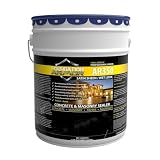
Foundation Armor AR350
This one works the opposite way from the penetrators. AR350 is a solvent-based acrylic that forms a thin film on the surface, and that film darkens and enriches the concrete color into a low-gloss “wet look.” It’s the product you reach for on stamped, stained, or exposed-aggregate concrete where you actually want the color to pop and the aggregate to read richer. It’s also re-coatable, so you refresh it rather than strip it.
The trade-off is the trade-off of every film-former: it sits on top, so it can peel or blush white if you apply it too thick or over concrete that’s even slightly damp. The first time I used a glossy acrylic on my driveway I loved the store display and hated the result one winter later — blushing at the joints. Two thin coats, on a bone-dry slab, is the only way to run these. Expect a one-to-three-year reseal, and add an anti-slip additive because a wet acrylic driveway is genuinely slippery.
- Rich, low-gloss wet look that darkens color
- Ideal for stamped and decorative concrete
- Re-coatable — no stripping to refresh
- Film can peel or blush over damp concrete
- Slippery when wet without anti-slip additive
- Shorter 1–3 year reseal cycle
Via Amazon.com
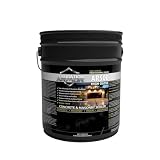
Foundation Armor AR500
AR500 is the glossier sibling of the AR350 — same solvent-acrylic, color-enhancing family, but tuned for a high-gloss, showroom shine instead of a satin finish. On the right surface it looks fantastic: deep, wet, and reflective, with the same non-yellowing, UV-resistant acrylic doing the protecting. If you want a driveway or decorative patio that stops people in the street, this is the finish.
High gloss is also unforgiving. It shows tire marks, scuffs, and every bit of dirt, and it’s even more slippery than the low-gloss version — anti-slip additive isn’t optional here, it’s required. Like any film-former it lives or dies on prep: over a poorly cleaned or damp slab, the film will peel. Keep it to lighter-traffic decorative areas and it rewards you; put it under daily tire scrubbing and you’ll be resealing sooner than you’d like.
- Dramatic showroom-gloss wet look
- Strong color enhancement on aggregate
- Re-coatable acrylic, non-yellowing
- Shows tire marks and scuffs easily
- Very slippery — anti-slip additive required
- Best kept to light-traffic areas
Via Amazon.com
Pro tips before you open the pail
Seal the driveway on a dry day with a dry forecast — you want at least 24 hours, ideally 48, of no rain after you finish. Damp concrete is the number one reason a good sealer fails.
Two thin coats always beat one thick coat. With penetrating sealers, the second coat goes on “wet-on-wet” within a few minutes so it keeps soaking in; with acrylics, let the first coat flash off first. Puddled sealer never cures right — it dries cloudy and stays soft.
Do a small test patch in a corner first, especially with the wet-look acrylics. The color shift is dramatic and you want to know you like it before you commit the whole apron. And if it’s a fresh pour, wait — new concrete needs to cure a full 28 days before any sealer goes down.
How much sealer do you need?
Penetrating sealers cover roughly 175 sq ft per gallon per coat; acrylics a bit more. This estimates two coats — the standard for a driveway.

How to choose a concrete driveway sealer
Before you compare brands, settle one question: do you want protection you can’t see, or a finish you can? That single decision splits every concrete driveway sealer into two camps, and buying across the line is how people end up disappointed.
Penetrating vs. acrylic — the only choice that really matters
Penetrating sealers (silane, siloxane, silicone) soak into the concrete and make it water-repellent from the inside. They don’t change the look, they can’t peel, and the good ones last the longest — this is what you want in freeze-thaw and road-salt country. Acrylic sealers form a film on top that darkens the concrete into a wet look. They’re beautiful on decorative concrete but they wear faster, can peel, and get slippery. Prep matters more than the brand here: durability is 50% product quality and 50% surface preparation, and no sealer survives going down over a dirty or damp slab.
Match the sealer to your climate
If your winters bring ice, snow, and de-icing salt, a penetrating silane-siloxane like the SX5000 WB is the safe long-term call — it defends the slab against the freeze-thaw cracking that destroys driveways. In mild, dry climates you have more freedom to chase the wet look, because you’re not fighting salt scaling every February.
Be honest about traffic and slip
A concrete driveway sealer with any gloss gets slippery when wet, and a high-gloss one shows every tire mark. Daily-driver driveways lean toward penetrating or low-gloss; decorative, lightly used areas can carry the high-gloss look. For adjacent projects like a garage floor or a full color change, a different product class applies — a driveway sealer isn’t a coating system.
When a concrete driveway sealer is the wrong call
Don’t seal fresh concrete. A new pour needs a full 28-day cure before anything goes on top — seal it early and you trap moisture and guarantee a cloudy, failing finish.
Don’t lay an acrylic film-former in a heavy freeze-thaw, high-salt climate unless you’ve accepted the one-to-three-year reseal cycle. In that environment a film peels; a penetrating sealer is the honest answer.
And don’t seal over a slab that still has de-icing salt residue, oil, or an old failing coating on it. The sealer bonds to whatever’s on the surface — if that’s contamination, that’s what fails. Strip and clean first; this is where a concrete stripper earns its keep. A sealer also won’t fix structural cracks — it slows water, it doesn’t rebuild a slab.
Prep steps that decide everything
The sealer you pick matters less than the surface you put it on. Here’s the sequence I follow every time, and skipping any of it is how good product ends up looking bad.
First, clean hard. Pressure-wash the whole slab and use a degreaser on any oil spots — sealer will not bond through grease. Second, let it dry completely: at least 24 hours after washing, longer if it’s humid. A slab that looks dry on top can still be damp in the pores, and that’s what causes acrylics to blush white. Third, tape and protect your edges, siding, and any adjacent surfaces, because both the penetrators and the solvent acrylics will wet out onto whatever they touch. If you’re also refreshing the color of the concrete rather than just protecting it, that’s a driveway paint job, not a sealing job — different product, different expectations. For a deeper walkthrough of concrete surface work, Family Handyman has a solid step-by-step, and This Old House covers timing and weather well.
Finally, apply thin. Whether it’s penetrating or acrylic, two thin coats beat one heavy coat every single time — thick sealer puddles, cures soft, and looks cloudy. Work in manageable sections so nothing sits and pools while you move down the driveway.
The bottom line
For most driveways in a real winter, the Armor SX5000 WB is the concrete driveway sealer I’d put down — invisible, unpeelable, and built for salt and freeze-thaw. Want to spend less on a big slab? The Eagle EM5 gives you invisible protection at the lowest cost, you just reseal sooner. And if the look is the point — stamped or colored concrete you want to make pop — go acrylic: AR350 for a satin wet look, AR500 for full showroom gloss. Match the chemistry to your climate and your goal, prep the slab honestly, and any of these four will hold.
Concrete driveway sealer FAQ
How long does a concrete driveway sealer last?
It depends entirely on type. A penetrating silane-siloxane like SX5000 WB lasts 7–10 years; a silicone penetrator like Eagle EM5 wants a reseal every 2–4 years; and acrylic wet-look sealers such as AR350 and AR500 typically need re-coating every 1–3 years, sooner under heavy tire traffic.
How many coats of concrete driveway sealer do I need?
Two. The first coat soaks in or lays down the base, and the second bonds to it and completes the protection. Always apply two thin coats rather than one thick one — puddled sealer dries cloudy and stays soft.
How long before you can drive on a sealed driveway?
Wait 24 hours for foot traffic and 48–72 hours before you park a car on it. Full cure of an acrylic can take longer in cool or humid weather, so give it margin — driving on a soft film leaves permanent tire marks.
Is a penetrating or acrylic concrete driveway sealer better?
For raw, long-term protection in cold, salted climates, penetrating wins — it can’t peel and lasts longest. For enhancing the look of stamped or colored concrete, acrylic wins because it darkens the surface into a wet look. They solve different problems; pick by your goal.
Can I apply a new sealer over an old one?
Only within the same family. Acrylic re-coats over acrylic beautifully. But you can’t put a penetrating sealer over an existing acrylic film — it can’t reach the concrete to bond. If you’re switching from acrylic to penetrating, you have to strip the old film first.
Does concrete driveway sealer stop cracks?
It prevents the water-driven damage that causes cracks — freeze-thaw scaling and salt attack — so it slows new cracking dramatically. It does not repair existing structural cracks. Fill and repair those first, then seal to protect the fix.