Can You Paint a Fiberglass Door? What Sticks and What Peels
Here is what goes wrong. Fiberglass leaves the factory with a slick gel coat, and that coat has very low surface energy. A standard exterior latex has nothing to grip. It looks perfect for about eight months, then a south-facing door bakes at 150°F, the substrate expands, and the film lets go in sheets the size of your hand. Now you are not repainting a door — you are scraping one.
I learned this on my own entry door. The first time I tried to paint a fiberglass door, I used a good exterior acrylic straight over a scuff-sand. Two coats, beautiful color, done in an afternoon. The following March I could peel a strip off with a fingernail from the bottom rail to the lockset. Here is what I learned: on fiberglass the primer is not a step you can compress. It is the entire job.
Below are the five products I reach for when I paint a fiberglass door, split by what you are actually trying to do — a bonding primer, two topcoat routes, and a gel stain if you want wood grain instead of color. Prep matters more than the brand, and I will show you exactly what that prep looks like.
What’s on this page
Quick picks at a glance
| Product | Use it for | Watch out for |
|---|---|---|
| INSL-X Stix Bonding Primer | The bond coat under everything else | Needs 4+ hours before topcoat |
| KILZ Adhesion Primer | Same job, tighter budget | Thinner film, less forgiving on chalky doors |
| Modern Masters Front Door Paint | Saturated color on a sun-hit entry door | Limited palette, no custom tinting |
| INSL-X Cabinet Coat | A hard, self-leveling finish with no brush marks | Rated for interior and protected exteriors |
| General Finishes Java Gel Stain | Faking convincing wood grain | Slow — 24 hours between coats |
The 5 products worth using
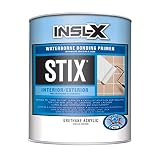
INSL-X Stix Waterborne Bonding Primer (Quart)
Stix is a urethane-modified acrylic, and that modification is the reason it works here. Ordinary latex primer dries into a film that sits on top of a slick surface; the urethane resin in Stix wets out the gel coat and cures into it mechanically. That is why it is rated for tile, PVC, glass and fiberglass — surfaces where a water- or oil-base primer just beads and lifts.
I have used it on two entry doors and a fiberglass garage side door. Eighteen months on the worst of them, a west-facing slab that gets full afternoon sun, and there is zero edge lift. The honest limitation: it stays soft for longer than you expect. I topcoated one door after three hours because rain was coming, and the roller pulled the primer right back off the panel edges. Give it four hours minimum, more if the humidity is above 60%.
- Bonds to gel coat without sanding to bare glass
- Water cleanup, low odor
- Takes latex, alkyd or urethane topcoats
- Long recoat window
- Costs more than a standard primer
- Tints only to light and mid shades
Best for: anyone repainting a factory-finish fiberglass entry door that has never been coated before.
Check Price on Amazon →Via Amazon.com
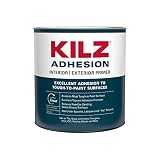
KILZ Adhesion High-Bonding Primer (Quart)
KILZ Adhesion is a modified acrylic built for the same problem — slick, non-porous surfaces that reject a normal primer. It grabs Kynar, Formica, glazed brick, glossy old enamel and fiberglass. Mechanically it is doing less work than Stix, but it is doing the right work, and on a door in reasonable shape you will not see the difference.
Where it does show up is on a door that has already failed once. On a chalky, sun-degraded slab I found the KILZ film sat thinner and needed a second pass to hide the ghosting from the old color. That is not a defect — it is a thinner build. If your door has bare patches and old paint edges, either feather-sand harder or step up to Stix.
- Fast recoat — prime and topcoat the same day
- Widely stocked, easy to replace mid-job
- Interior and exterior rated
- Thinner film build than Stix
- Weaker hide over failed or chalky coatings
- Brush drag on cold mornings
Best for: a door in sound condition when you need to prime and finish inside one weekend.
Check Price on Amazon →Via Amazon.com
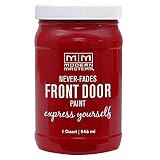
Modern Masters Front Door Paint, Satin (Quart)
This is a water-based exterior enamel formulated specifically for entry doors, and the pigment package is the point. Deep reds and blues fade fastest because organic pigments break down under UV; Modern Masters leans on more lightfast pigments so a saturated navy or claret still reads as that color three summers later. On a door you look at every single day, that matters more than the spec sheet suggests.
It levels well and dries fast, which is a mixed blessing. Working in direct sun on an 85°F afternoon, my cut-in line skinned over before I reached the bottom rail and the lap mark stayed visible. Paint the door in the shade or early morning, and pull the slab off its hinges if you can. Also worth knowing: the colors are fixed. If you need to match an existing scheme, look at a tintable exterior enamel instead — our guide to the best paint for front door projects covers those.
- Pigments hold color under direct UV
- Levels smooth with a foam mini-roller
- Soap-and-water cleanup
- Preset colors only, no custom tint
- Skins fast in heat and sun
- Needs a bonding primer underneath — it is not self-priming on fiberglass
Best for: a south or west-facing front door where you want a bold color that does not go chalky. See also our picks for the best paint for a front door that gets a lot of sun.
Check Price on Amazon →Via Amazon.com
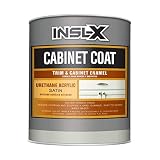
INSL-X Cabinet Coat, Satin (Quart)
Cabinet Coat is a urethane-acrylic enamel, and it behaves like an oil paint without being one. It stays open long enough to flow out, then cures hard — which is the property that matters on a door, because a door surface gets touched, kicked and slammed. That hardness is called block resistance: the cured film will not stick to the weatherstripping when you close the door on a humid August night.
The limitation is honest and worth respecting. This is a trim and cabinet enamel, best used on interior faces and on exterior doors that sit under a real porch roof. On a fully exposed slab with driving rain and no overhang, an exterior enamel will outlast it. I use it on the inside face of an entry door and a proper exterior product outside — two different films, one door, and nobody has ever noticed.
- Self-levels — brush marks disappear as it flows
- Very hard cure, high block resistance
- Tintable to almost any color
- Not rated for full weather exposure
- Full hardness takes about a week
- Overworking it while tacky leaves ropes
Best for: the interior face of an entry door, or a covered-porch door where you want a furniture-grade finish. The same logic applies to painting interior doors black.
Check Price on Amazon →Via Amazon.com
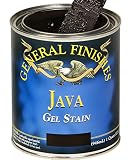
General Finishes Java Gel Stain (Pint)
If your door has a molded wood-grain texture, you have a second option: stain it instead of painting it. Gel stain is thick enough to sit on the surface rather than soak in, so it settles into the embossed grain lines and stays thin on the high spots. That contrast is what reads as real wood from the curb. A liquid stain cannot do this — it runs straight off the gel coat.
Be realistic about the time. Java is nearly opaque and one coat over a light factory oak looks flat and muddy; it takes two, sometimes three, with 24 hours between each. My first attempt I rushed the second coat at twelve hours and the fresh gel dragged the layer beneath it into streaks I had to wipe back with mineral spirits. Then it needs a clear exterior topcoat with UV inhibitors or it will fade within two seasons.
- Reads as convincing wood on textured fiberglass
- No primer needed — it grips the gel coat directly
- Very forgiving to blend and correct while wet
- 24-hour recoat, so plan on three or four days
- Requires a UV clear coat over it outdoors
- Useless on a smooth, grain-free door
Best for: a molded oak-grain fiberglass door you want to look like stained hardwood without replacing it.
Check Price on Amazon →Via Amazon.com
Pro tips from the door
Take the door off the hinges. Ten minutes with a nail set and a hammer, and the slab goes flat on two sawhorses. Painting flat means gravity works with you instead of pulling runs down every panel. This is the single change that most improves an amateur door.
Two thin coats always beat one thick coat. Always. On fiberglass a thick film is worse than useless — it traps solvent, stays soft underneath, and shears off the gel coat at the first hot day.
Use a 4-inch foam mini-roller for the flats and a good sash brush only for the panel profiles. Roll it, then immediately tip it off with a dry brush in one direction. Do not go back into it.
Do not paint the weatherstripping. Pull it out of its channel first. Paint on the seal is what glues a door shut in July, and no amount of block resistance saves you from that.
Watch the surface temperature, not the air temperature. A dark door in September sun can read 120°F while the air is a pleasant 70°F. Touch the slab before you open the can.
Renovation Stage: PRIME. Every failure on this surface traces back to the bond coat, not the color. Budget your money and your patience for the primer step — the topcoat is the easy part, and choosing it is largely a question of taste.
How much do you need?
Enter your door size and how many faces you are coating. This gives you a rough material estimate for primer and topcoat.

How to paint a fiberglass door, step by step
The sequence below is the whole job. Nothing in it is difficult, but the order is not negotiable — and the waiting is not optional. Follow these six steps and you will paint a fiberglass door that still looks intentional after a decade.
1. Strip anything that is already failing
If the door has old paint that is lifting, it all has to come off or the new film inherits the failure. Scrape the loose material, then feather-sand the edges with 180-grit so you cannot feel a ridge when you drag a fingertip across it. A visible edge under two coats of paint stays visible forever. If the previous coat is stubborn, our rundown of the best paint remover for metal covers chemical strippers that are also safe on composites.
2. Clean, then clean again
Wash the slab with a degreasing cleaner and rinse it. Then wipe the whole surface with denatured alcohol or mineral spirits and let it flash off. Handprints around the lockset carry skin oil, and oil is the second most common reason a bonding primer fails. The most common reason is skipping the bonding primer entirely.
3. Scuff-sand — lightly
A grey scuff pad or 220-grit is enough. You are dulling the gloss, not removing the gel coat. If you sand through to the glass fibers you have created a moisture path into the door core, and that is a repair, not a paint job. Wipe the dust off with a tack cloth.
4. Prime the bond coat and leave it alone
One even coat of bonding primer. Do not build it thick — thin and complete beats heavy and patchy every time. Then walk away for the full recoat window on the can. This is where impatience costs people the entire job.
5. Two thin topcoats, tipped in one direction
Roll the flats with a foam mini-roller, cut the profiles with a sash brush, and tip everything off vertically while it is still wet. Respect the recoat time between coats — usually 4 to 16 hours depending on the product and humidity. The Family Handyman guide to painting a front door walks through the same order with photos if you want a visual reference.
6. Rehang, but do not close it hard
Most enamels are dry to the touch in hours and fully cured in days. Rehang the door once the surface is dry, but keep it cracked open overnight for the first two or three nights so the fresh film does not fuse to the weatherstrip.
When you should not paint it at all
Three situations where the honest answer is that you should not paint a fiberglass door — you should deal with something else first.
The door core is delaminating. If the skin flexes independently of the frame, or you can press the panel and feel it move, water is already inside. Paint seals that water in and accelerates the rot. Replace the slab.
You have sanded through to the fibers. Visible glass strands mean the protective gel coat is gone in that spot. It needs a fiberglass repair — gel coat filler and fairing — before any coating goes on.
It is under 50°F or above 90°F. Waterborne coatings need a temperature window to coalesce. Painted too cold, the film never knits and it powders off in the spring. If the forecast is marginal, wait a week. The door has been that color for years; it can hold on a little longer.
The prep sequence that decides everything
Durability is about 50% product quality and 50% surface preparation, and when you paint a fiberglass door the split leans further toward prep than on almost any other surface I work on. A cheap topcoat over a properly bonded, properly cleaned door will outlast an expensive topcoat sprayed over a slick gel coat — every time, no exceptions.
Here is why, in plain terms. Adhesion is mechanical and chemical at once. Cleaning removes the chemical barrier (oil, wax, mold-release residue). Scuffing creates the mechanical tooth. The bonding primer bridges the two. Remove any one of the three and the chain breaks, no matter how good the paint on top is. This is the same principle behind painting other slick synthetic surfaces — the reason you cannot shortcut painting vinyl windows either.
One more thing worth flagging if your door is older than 1978: if there is any chance of lead in a previously painted frame or surround, do not dry-sand it. The EPA’s Renovation, Repair and Painting rules exist for a reason, and wet-sanding plus a HEPA vacuum costs you twenty minutes.
The verdict
You can absolutely paint a fiberglass door, and it is one of the highest-return afternoons in exterior work — a new entry door runs well over a thousand dollars, and a quart of primer plus a quart of enamel gets you most of the visual benefit for under a hundred.
My default stack: INSL-X Stix as the bond coat, then Modern Masters Front Door Paint on the weather side. If the door has molded grain and you would rather have wood than color, skip both and use Java Gel Stain with a UV clear over it.
Whatever you choose: two thin coats, and give the primer its full recoat window. That is the difference between a door that looks new in five years and a door you are scraping next spring.
Questions people actually ask
Do you have to sand a fiberglass door before painting?
Yes, but lightly. A scuff with 220-grit or a grey abrasive pad to kill the gloss is all you need. Sanding aggressively enough to expose the glass fibers damages the door and creates a moisture path into the core.
What kind of primer do you use on a fiberglass door?
A bonding primer — not a standard latex or oil primer. Look for a urethane-modified acrylic like INSL-X Stix, or an adhesion primer such as KILZ Adhesion. Both are formulated to grip low-energy surfaces that normal primers slide off.
Can you use exterior latex paint on a fiberglass door?
Yes, once a bonding primer is down. A quality 100% acrylic exterior satin or semi-gloss is a perfectly good topcoat. The failure people blame on the latex is almost always a primer failure underneath it.
How long does paint last on a fiberglass door?
Primed correctly, expect 8 to 12 years on a sheltered door and 5 to 8 on one taking full sun and rain. Unprimed, it typically starts lifting within a single seasonal cycle.
Can you paint a fiberglass door without removing it?
You can, and plenty of people do. But taking the slab off the hinges and laying it flat gives you a noticeably better finish — no sags, no runs down the panel profiles, and you can coat the top and bottom edges where water gets in.
Should you paint or stain a fiberglass door?
It depends on the surface. A smooth door takes paint well and stain badly. A door with molded wood-grain texture is a strong candidate for gel stain, because the gel settles into the grain lines and creates real depth.
Can you spray a fiberglass door instead of brushing it?
Yes, and it gives the cleanest finish — but only off the hinges, in a controlled space, with the glass masked. If you are set up for it, our guide to the best airless paint sprayer for doors covers the right tip sizes for enamel.