Best Exterior Paint for Wood Siding: Top Picks for Lasting Protection
Updated: May 2026 | PAINT
Wood siding is one of the most demanding surfaces to paint — and one of the most rewarding when done right. The best exterior paint for wood siding does more than change the color. It seals the wood grain against moisture penetration, flexes with seasonal wood movement, resists UV fading, and blocks tannin bleed from cedar and redwood that stains lighter colors within months of application.
Most homeowners repaint wood siding because the previous job failed. Cracking, peeling, and bubbling paint that looks worse than bare wood. In almost every case, the failure comes from using the wrong product or skipping proper prep. This guide cuts straight to the three products that genuinely perform on exterior wood siding — and the prep protocol that makes any of them last.
Quick Picks: Best Exterior Paint for Wood Siding
| Pick | Product | Best For | Price |
|---|---|---|---|
| Best Overall | KILZ Siding, Fence & Barn Paint | All wood types, tannin-prone wood | $$ |
| Best Stain | Ready Seal 520 Exterior Stain | Weathered wood, natural look | $$ |
| Best Oil Finish | Cabot Australian Timber Oil | Cedar and redwood you want left natural | $$ |
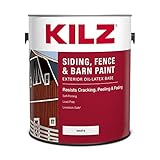
For painted wood siding where you want full color, complete hide, and long-term protection, KILZ Siding, Fence & Barn Paint is the most purposefully formulated product on the market. Unlike general exterior latex paints, this formula uses a unique water/oil base that combines the deep penetration of oil-based paint with the elasticity and easy cleanup of latex. The result is superior adhesion on bare and previously painted wood, with far less cracking over time than standard acrylic formulas on fibrous wood surfaces.
The stain-blocking base prevents tannin bleed-through from cedar, redwood, and knotty pine — the single most common complaint on wood siding repaints. Tannins are water-soluble compounds in these species that migrate through paint when moisture is present, turning white and cream finishes yellow or brown within a season. KILZ’s oil component seals these tannins at the surface before they can migrate. Coverage runs 400 sq ft per gallon on smooth lap siding, and the mildewcide inhibits mold growth on north-facing and shade-exposed elevations. Two coats are required for full protection — never attempt to get away with one on exterior bare wood.
Pros
- Water/oil formula — deep penetration + flex
- Blocks tannin bleed on cedar and redwood
- Built-in mildewcide for shaded elevations
- Superior adhesion to rough-sawn wood
- Available in multiple colors including white
Cons
- Two coats required on bare wood
- Allow 24 hours between coats on humid days
- Thicker formula — strain for sprayer tips under .017
Best for: Whole-house painted siding, cedar and redwood exteriors, repaints over previously chalked or weathered surfaces
Check Price on AmazonVia Amazon.com
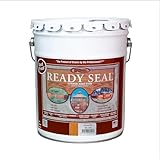
For homeowners who want to preserve and enhance the natural look of their wood siding rather than cover it with opaque paint, Ready Seal 520 is the benchmark penetrating stain. It absorbs directly into the wood grain instead of forming a surface film, which means there is no peeling, chipping, or flaking — ever. When it reaches the end of its cycle, it weathers gradually and accepts a fresh coat without scraping or stripping. This is the fundamental advantage stain holds over paint on wood siding: maintenance is a re-application, not a full repaint.
Ready Seal is particularly effective on weathered, gray wood that has lost its original color — one coat noticeably restores depth and richness. The semi-transparent formula shows the natural wood grain while delivering UV protection and moisture sealing. Application is also unusually forgiving: overlapping wet edges doesn’t create darker lap marks the way solid stain does, because the penetrating formula distributes evenly regardless of technique. Works with a brush, roller, or sprayer. According to Family Handyman, penetrating stains on wood siding consistently outperform topcoat paints over a 10-year maintenance window. Coverage is 150–200 sq ft per gallon depending on wood porosity.
Pros
- Never peels, chips, or flakes
- Re-applies without stripping
- Restores weathered and gray wood dramatically
- Foolproof application — no lap marks
- Available in a wide range of wood tones
Cons
- Re-application every 2–3 years
- Semi-transparent — doesn’t hide stains or color changes
- Not suitable over existing paint
Best for: Natural wood siding where grain should show, weathered wood restoration, cedar shakes and shingles
Check Price on AmazonVia Amazon.com
Prep Before You Coat
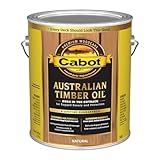
Read the label before you buy this one, because it is routinely misunderstood. Cabot Australian Timber Oil is a finish in its own right — not a primer, not a pre-treatment under paint. Cabot does not recommend topcoating it, and paint applied over a cured oil finish is a peeling job waiting to happen. What it is for is cedar, redwood and hardwood siding that you want to stay looking like wood. Its linseed and tung oil base penetrates rather than filming, so it stabilizes the grain and slows the checking and splitting that come with seasonal moisture cycling, and it leaves a warmer, richer tone than a water-based penetrating stain does.
So the decision it belongs in is not paint-versus-primer, it is oil-versus-paint. If you intend to paint the siding, skip this product entirely and go straight to an oil-based or shellac-based stain-blocking primer, which is what actually locks cedar tannins under a painted topcoat — the species section below covers that. If you intend to leave the siding natural, this is where Cabot earns its place: one thin coat, wiped back if it puddles, re-coated every two to four years depending on sun exposure. Coverage is roughly 150 sq ft per gallon on smooth new wood and less on rough-sawn boards, and it goes on best over bare or previously oiled wood rather than anything that has held a film finish.
Pros
- Deep penetration rather than a surface film
- Never peels or flakes — it wears back instead
- Prevents checking and splitting
- Warm, rich tone on cedar and redwood
- Re-coats without stripping or sanding
Cons
- Cannot be painted over — this is the finish, not a base
- Needs re-coating every 2–4 years
- Strong odor during application
Best for: Cedar, redwood or hardwood siding you want to keep natural — not for use under paint
Check Price on AmazonVia Amazon.com
Pro Tips: Painting Exterior Wood Siding
- Paint the end grain first. End grain absorbs water ten times faster than face grain. Brush it generously before painting the faces — most wood siding rot starts at the exposed end grain.
- Never paint wet wood. Moisture content above 15% prevents proper adhesion. If you have pressure-washed or it has recently rained, wait 48–72 hours before applying any coating.
- Back-brush when spraying. If using a sprayer, immediately follow with a brush to work paint into the joints between boards. Spray-only application misses the gaps and causes early moisture infiltration at those edges.
- Spot-prime all knots with shellac. Knots in pine and fir bleed resin through paint for years. Spot-prime every visible knot with Zinsser BIN shellac-based primer before your full surface coat.
- Follow the shade around the house. Direct sun heats the siding surface and causes paint to dry before it can level properly. Start on the shaded elevation and work around as the shade moves through the day.
Renovation Stage: PAINT
Where This Fits in Your Exterior Renovation
Exterior siding paint falls at the PAINT stage — after all surface washing, scraping, caulking, and priming are complete. Always paint siding before trim on the same elevation so trim overlaps can be cut cleanly against a finished field. If you’re applying with a sprayer rather than a brush or roller, our guide to paint spray guns for beginners covers tip sizing, pressure settings, and technique for exterior wood surfaces.
Wood Siding Coverage Calculator
Exterior Wood Siding Paint Calculator
Estimate how many gallons you need and your total material cost.
Your Estimates
Includes 10% overage for touch-ups. Application time assumes brush/roller at ~150 sq ft/hr. Sprayer is roughly 3× faster. Always check coverage on the specific paint label — porous wood absorbs more than rated coverage.

Buying Guide: Choosing the Right Exterior Paint for Wood Siding
Wood siding comes in more varieties than any other exterior cladding — smooth hardboard, rough-sawn cedar, redwood shingles, fiber cement with wood grain texture — and each behaves differently under paint. Matching the right product to the specific surface situation is what separates a finish that holds for a decade from one that fails in two seasons.
Paint vs. Stain: The Fundamental Decision
Paint sits on top of the wood as a film. Stain penetrates into the wood grain. These are not stylistic choices — they are structural ones, with different maintenance implications. Paint delivers full color coverage and a uniform appearance; when it fails, it peels visibly and requires mechanical removal before repainting. Stain preserves the natural wood appearance and weathers gradually without peeling — but it requires more frequent maintenance, typically every 2–3 years for semi-transparent stain and 3–5 years for solid stain.
For most older painted homes, continue with paint. Switching from paint to stain on previously painted wood requires complete paint removal first — you cannot apply penetrating stain over a surface film. For new natural wood siding where you want to preserve grain texture and appearance, stain is the better long-term choice.
Species-Specific Challenges
Cedar and redwood are the most common culprits behind early paint failure. Both species contain high concentrations of water-soluble tannins that migrate through topcoats when moisture enters the wood. These tannins turn white and off-white exterior paint brown or yellow within months — a failure that happens even with well-applied two-coat systems if the primer is insufficient. The solution is an oil-based or shellac-based stain-blocking primer applied directly to bare wood before any topcoat. Water-based primers alone are not sufficient on these species.
Pine and fir have their own problem: resinous knots that bleed yellowish resin through paint for years regardless of how many topcoats are applied. Spot-prime every knot with Zinsser BIN shellac-based primer before priming the full surface. Older painted wood in sound condition — over any species — can usually be recoated with 100% acrylic latex paint with minimal complications, assuming proper surface preparation.
Elasticity: The Most Important Spec for Wood
Wood is a living material that expands significantly in humid weather and contracts when dry. The average lap siding board can move 1–3% in width over a full seasonal cycle. Paint that cannot flex with this movement cracks at the joints and edge laps first, then progressively through the field — the classic pattern of a paint failure on wood siding. High-quality 100% acrylic latex paints have superior elasticity compared to vinyl-acrylic blends. Never use oil-based (alkyd) paint as the primary topcoat on exterior wood siding — it becomes brittle over time and cracks as the wood moves beneath it. Look for "100% acrylic" on the label when selecting any exterior paint for wood surfaces.
How to Paint Exterior Wood Siding: Step-by-Step
The prep sequence matters as much as the product choice. A premium paint applied to an unprepared surface fails. An average paint applied to a properly prepped surface outlasts expensive paint on bad prep every time.
Start by inspecting for rot. Probe any soft or discolored areas with a screwdriver — areas that compress easily indicate rot that must be addressed before painting. Painting over active rot seals in moisture and accelerates the decay beneath the surface. Replace rotted boards or treat with epoxy wood consolidant before proceeding. If you need to strip old failing paint first, our guide to the best paint removers for wood covers the most effective methods by situation.
Power-wash at 1,000–1,500 PSI maximum — higher pressure raises wood grain and drives moisture deep into the boards. Allow 48 hours minimum dry time. Then scrape all loose and peeling paint to a firm edge, feathering with 80-grit sandpaper. Spot-prime all bare wood with an exterior wood primer. On cedar and redwood, use oil-based primer. On pine and fir, hit every knot with shellac primer first. Run paintable exterior caulk along all joints, corners, and frames, and allow to cure before painting.
Apply the first coat, working one elevation at a time. Start with cut-ins around trim, then fill the field. Apply the second coat after the first is fully dry — typically 4–6 hours in good conditions. Two coats on exterior wood are not optional. They are the difference between 7-year durability and 3-year failure.
Siding is one surface on a house that usually needs three or four. If you are pricing the whole envelope rather than the clapboard alone, the trim, soffits and porch ceiling all pull from a different can, and the comparison in our guide to the best house paint covers those side by side. One thing worth checking before you commit to a colour: on a west-facing wall that bakes all afternoon, a coating engineered to bounce heat rather than hold it can drop surface temperature noticeably, and we break down what energy-saving paint actually does and where the claims stop.
Our Verdict
Bottom Line
The best exterior paint for wood siding depends entirely on what you are starting with. For a solid-color repaint on any wood siding type — especially tannin-prone cedar or redwood — KILZ Siding, Fence & Barn Paint is the most purposefully built product for the job. Its water/oil hybrid formula gives it adhesion and penetration that standard acrylic latex cannot match on fibrous wood grain.
For natural wood siding where grain appearance matters, Ready Seal 520 is the right call. It never peels, restores weathered wood better than anything in its price range, and eliminates the maintenance cycle of full mechanical removal when the finish eventually needs refreshing. And if you are leaving new cedar or redwood natural rather than painting it, Cabot Australian Timber Oil is the richer of the two oil routes — just be clear that it is the finish itself, not a base coat, and nothing goes over it.
Whatever product you choose, the outcome is decided by prep. Clean, dry, properly primed wood with a quality product lasts 7–10 years. The same product on unprepared wood lasts 2–3. Prep is not optional — it is the job.
Frequently Asked Questions
What is the best exterior paint for wood siding?
KILZ Siding, Fence & Barn Paint is the best overall exterior paint for wood siding. Its water/oil hybrid formula provides superior penetration and adhesion on fibrous wood grain, and the stain-blocking base prevents tannin bleed from cedar and redwood — the most common failure mode on wood siding repaints.
Should I use paint or stain on wood siding?
Paint for full color coverage and uniform appearance — required on previously painted wood and when you want to completely change the color. Stain for preserving the natural wood grain and texture. Paint requires mechanical removal when it fails. Stain weathers gradually and re-applies without stripping. If your siding is already painted, stick with paint. If it's natural wood and you want to show the grain, use a penetrating stain like Ready Seal.
Do I need to prime wood siding before painting?
Yes — always. Bare wood absorbs topcoat unevenly, causing poor hide and dramatically reduced durability. On cedar and redwood, use oil-based stain-blocking primer to lock tannins before they migrate to the surface. On pine and fir, spot-prime knots with shellac-based primer (Zinsser BIN) before full-surface priming. Never skip primer on bare exterior wood.
Why does paint peel off wood siding?
The five most common causes are: painting over wet or damp wood (moisture content above 15%), applying topcoat over dirty or chalking surfaces, skipping primer on bare wood, using low-elasticity paint that can't flex with wood movement, and applying paint in temperatures below 50°F. Tannin bleed on cedar and redwood without oil-based primer is also a primary failure driver.
How long does exterior paint last on wood siding?
Quality 100% acrylic exterior paint lasts 7–10 years on properly prepared wood siding. Cedar and redwood are more demanding — expect 5–7 years even with correct prep and primer. Penetrating stains require re-application every 2–5 years depending on opacity and exposure. Annual inspection for cracking and early touch-up at edges extends any finish's lifespan significantly.
What primer should I use on cedar siding?
Use an oil-based stain-blocking primer or shellac-based primer (Zinsser BIN) on cedar. Water-based primers activate tannins in cedar and drive them to the surface before the topcoat cures — which is why white siding on cedar turns brown or yellow even over freshly applied acrylic primer. The oil component blocks this migration at the source.
Can I apply exterior paint to wood siding with a sprayer?
Yes — sprayers work well on wood siding and significantly speed up large surface areas. Always back-brush immediately after spraying to work paint into the joints between boards. Spray-only application misses these gaps, allowing moisture infiltration at the board edges. Mask windows, trim, and landscaping thoroughly. For tip sizing and pressure setup, see our full guide on paint spray guns for beginners.