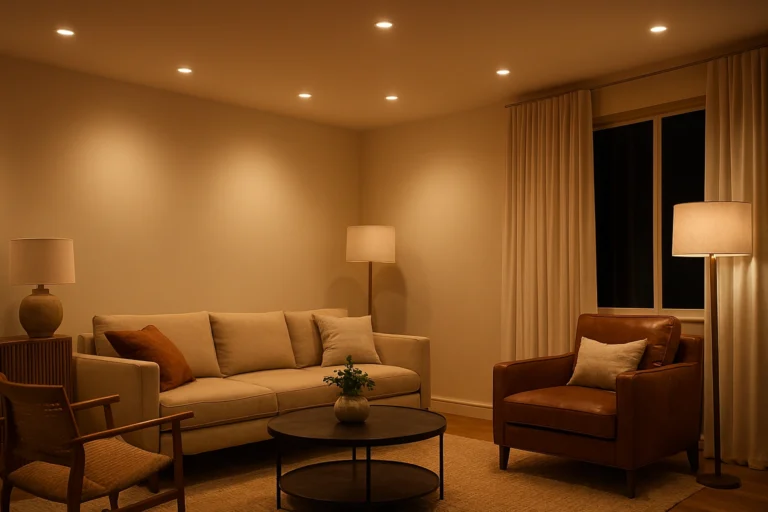
5 Best LED Ceiling Panels for Kitchen (Bright, No Glare)
Best LED Ceiling Panels for Kitchen: 5 Panels That Actually Light Your Countertops
Lighting is one of the most overlooked elements in a kitchen, yet it completely shapes how the space feels and functions. The best LED ceiling panels for kitchen spaces deliver bright, even light that makes cooking, cleaning, and gathering easier, while saving energy and looking modern. With so many options on the market, choosing the right one requires knowing what matters most: brightness, color temperature, size, installation style, and durability.
This guide explores how to choose LED ceiling panels, reviews top-rated products (including a premium high-price option), and explains how to integrate them seamlessly with your kitchen design.
The first time I swapped a dated flush-mount dome for a 2×4 LED panel in my own kitchen, I bought a fixed 5000K unit because it was the brightest thing on the page. Within a week I hated cooking dinner under it — the light was clinical, and every evening the kitchen felt like a lab. I returned it for a selectable-CCT panel set to 4000K and the difference was immediate. Here is what I learned: lumens get the attention, but color temperature decides whether you actually enjoy the room. Buy switchable, always.
Why Choose LED Ceiling Panels for Kitchen Lighting
Kitchens are high-activity areas. Unlike living rooms or bedrooms, they require functional lighting that is both bright and comfortable. LED ceiling panels are ideal because they provide:
- Even, glare-free light distribution
- Energy efficiency and long lifespan
- Slim, modern aesthetics
- Flexible mounting options (recessed, surface, or suspended)
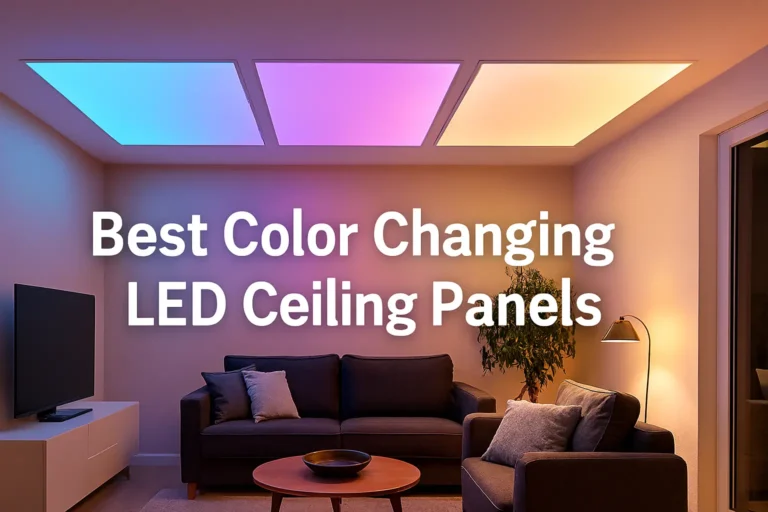
- Adjustable brightness and color temperature in many models
Compared to downlights or pendants, LED ceiling panels cover larger areas, reduce shadows, and perform better as main ambient lighting. If you have freshly painted ceilings, choosing the best ceiling paint for kitchen makes a big difference, light paint reflects light, helping panels work more effectively.
Key Factors to Consider Before Buying
Brightness and Color Temperature
Aim for panels with at least 3000 lumens for kitchens. A color temperature around 4000K gives clear, cool white light without being too harsh. Many LED panels now allow switching among 3000K, 4000K, 5000K.
Size and Shape
Popular units include square ceiling panel 60×60 cm modules and rectangular panels such as 1×4 ft or 2×4 ft. Sizes matter: too small, and you get dark spots; too large, you risk overkill and high cost.
Mounting Style
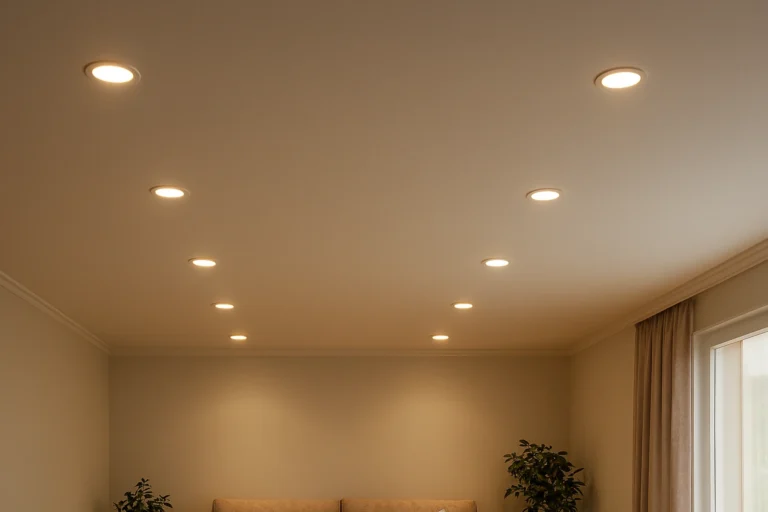
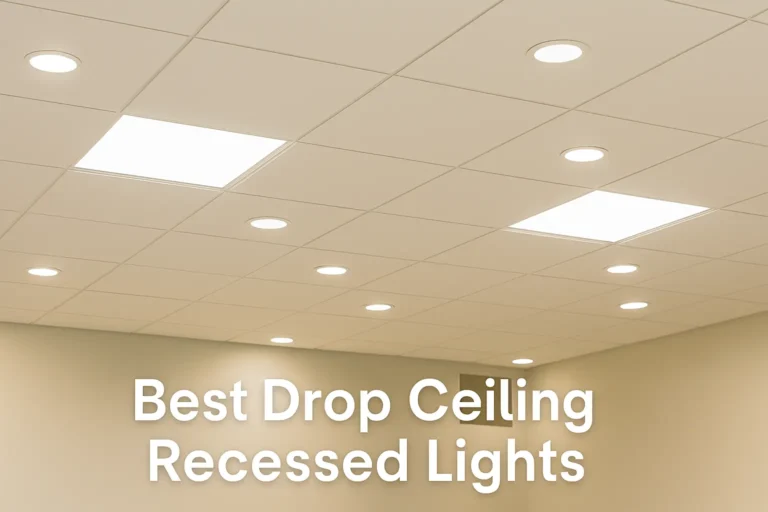
- Recessed panel lights make a clean, flush ceiling look
- Surface mount LED panel lighting fixtures are easier to install in solid ceilings
- Suspended panels offer design drama and work in high ceilings
Considering how the ceiling’s edges and trim look, knowing the best way to paint edges between wall and ceiling can help ensure those lines look sharp once installed.
Dimming, Flicker, and Control
Dimmable panels give mood control, especially for evening use. Avoid models with noticeable flicker. Remote controls or smart app integration add convenience.
Durability, Certification & Heat / Moisture Resistance
Kitchens have moisture, grease, and heat. Panels rated for damp locations, with quality diffusers (not cheap plastic that yellows), and proper certifications (ETL, UL, etc.) are wise choices.
Best LED Ceiling Panels for Kitchen: Product Reviews
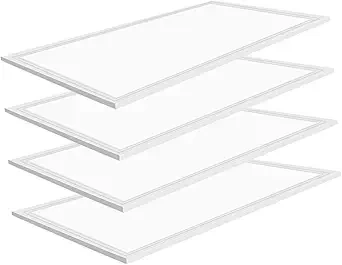
LifSunLit 2×4 LED Flat Panel Light
- Type: Large recessed or surface mount panel
- Brightness: ~7800 lumens
- Color Temp: 5000K
Pros
- Very bright; excellent for large kitchens or open-plan areas
- Edge-lit, giving uniform light
- Versatile installation options
Cons
- 5000K alone may feel harsh unless you dim or pair with warmer fixtures
- Large panel can dominate ceilings in smaller kitchens
- Installation may require more labor
Best for: Large kitchens, drop ceilings, or when aiming for very bright, uniform light.
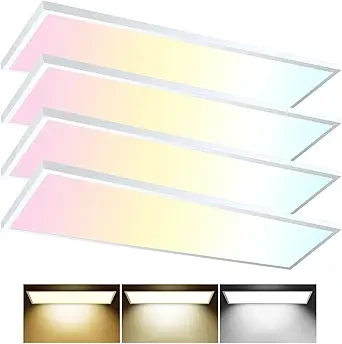
AIKVSXER 1×4 LED Flat Panel Light
- Type: Slim surface mount panel
- Brightness: ~5500 lumens
- Color Temp: Switchable among 3000K, 4000K, 5000K
Pros
- Adjustable color temperature
- Very slim, only 1 inch thick
- Surface mount simplifies installation
Cons
- Might require multiple units for full coverage
- Edges remain visible in surface mount
Best for: Medium kitchens with drywall ceilings, where flexibility and easy installation matter.
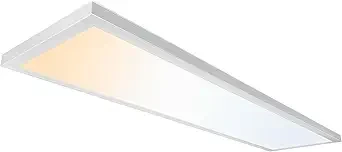
Ultralux 1×4 Slim Edge-Lit Panel
- Type: Surface mount LED ceiling tile light panel
- Brightness: ~3000 lumens
- Color Temp: 3-CCT selectable (3000K/4000K/5000K)
Pros
- Sleek, modern design with minimal visual bulk
- Edge-lit, reducing glare
- Good value
Cons
- Not enough light alone for large kitchens
- Needs correct placement to avoid shadows
Best for: Smaller kitchens, or layered lighting with under-cabinets or pendants.
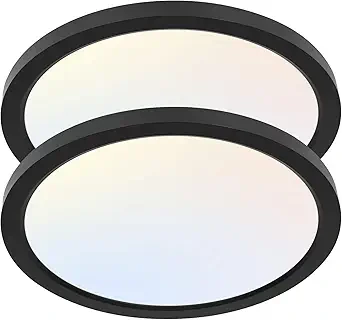
Hykolity 12-Inch Round Flat Panel
- Type: Flush mount round panel lamp ceiling light
- Brightness: Moderate (good for zones or accent lighting)
- Color Temp: Switchable (3000K/4000K/5000K)
Pros
- Unique round shape
- Slim profile for low ceilings
- Budget-friendly
Cons
- Insufficient light for big kitchens on its own
- Switch can be less convenient than smart control
Best for: Accent lighting, smaller kitchens, or over sinks and dining nooks.
SEURON 2×4 LED Flat Panel Light (4-Pack)
- Type: Premium 2×4 ft recessed edge-lit troffer (pack of 4)
- Brightness: ~7800 lumens per panel
- Color Temp: 5000K

Pros
- Professional-grade brightness and quality
- Edge-lit for uniform distribution
- Multiple installation options
- Long lifespan and excellent efficiency
Cons
- High upfront cost
- Large panels may overwhelm small kitchens
- 5000K can feel too cool without warmer lights
Best for: Premium kitchen builds, large open layouts, or homeowners wanting the very best.
Kitchen Lighting Layout Ideas and Tips
- Use led recessed panel lights centrally for ambient lighting and combine with under-cabinet lights to eliminate shadows.
- For big kitchens, arrange multiple panels in a grid pattern.
- Mix rectangular panels with smaller round ones for style contrast.
- A freshly painted surface improves light reflectance. See the best way to paint a ceiling to get it right before installing fixtures.
How Ceiling Finishes Affect Lighting
Ceiling texture, paint, and edge finish influence how light disperses. A smooth, bright ceiling reflects more light, while darker colors absorb it. To achieve crisp edges that look great under bright panels, read best way to paint edges between wall and ceiling.
LED Panels in Kitchens vs Living Rooms
The term led panel ceiling living rooms refers to panels used in lounge spaces for cozy ambient light. Kitchens, however, need brighter, task-oriented illumination. While you can use similar fixtures, combining them with task lighting ensures both comfort and functionality.
How Many Lumens Do the Best LED Ceiling Panels for Kitchen Use Need?
Work from the counter up, not from the box spec down. A working kitchen needs roughly 70–80 lumens per square foot at counter height — that means a 10×12 ft kitchen needs about 8,000–9,500 total lumens of ambient light. One 7,800-lumen 2×4 panel covers it; two 1×4 panels around 5,000 lumens each give more even coverage with fewer shadows. The U.S. Department of Energy notes LEDs use at least 75% less energy than incandescent lighting, so oversizing slightly costs pennies — undersizing costs you dark corners you will resent daily. If you run panels in a grid, size them with our best 2×4 LED ceiling panels guide, and if evening dimming matters, start with the best dimmable LED ceiling panels instead.
One more thing painters know and lighting guides skip: prep matters more than the brand. A smooth, bright-white ceiling can bounce back a meaningful share of extra usable light — a yellowed, textured one swallows it. Sort the ceiling first, then buy the panel.
When NOT to use an LED panel in your kitchen
Skip panels if your ceiling is under 8 ft and heavily textured — a surface-mount panel hanging an inch below a low popcorn ceiling looks like an office retrofit, full stop. Skip them over open flames or a range without a hood: grease film builds on the diffuser and yellows it within a season. And if your kitchen doubles as a dining space, a single high-CCT panel will flatten every dinner — pair it with warm accent light or choose a selectable model set to 3000–4000K.
Comparison Table: All 5 Panels at a Glance
| Panel | Lumens | Color Temp | Mount | Best For |
|---|---|---|---|---|
| LifSunLit 2×4 | ~7,800 | 5000K fixed | Recessed / surface | Large kitchens, max brightness |
| AIKVSXER 1×4 | ~5,500 | 3000/4000/5000K | Surface | Medium kitchens, drywall ceilings |
| Ultralux 1×4 Slim | ~3,000 | 3000/4000/5000K | Surface | Small kitchens, layered lighting |
| Hykolity 12″ Round | Moderate | 3000/4000/5000K | Flush | Sinks, nooks, accent zones |
| SEURON 2×4 (4-Pack) | ~7,800 each | 5000K fixed | Recessed / surface | Premium builds, open layouts |
Final Recommendations
- For professional-grade lighting in large kitchens: SEURON 2×4 LED Flat Panel 4-Pack
- For balanced performance and versatility: AIKVSXER 1×4 LED Flat Panel
- For value in smaller kitchens: Ultralux 1×4 Slim Edge-Lit Panel
- For accents or dining zones: Hykolity 12-Inch Round Panel
- For strong all-round brightness: LifSunLit 2×4 LED Flat Panel
Choose based on your kitchen size, ceiling type, and whether you want flexibility in color temperature. In most cases, combining one or two large panels with smaller accent lights works best.
FAQ: Best LED Ceiling Panels for Kitchen
How many lumens should a kitchen ceiling panel have?
At least 3,000 lumens for a small kitchen, and around 70–80 lumens per square foot overall. A 10×12 ft kitchen needs 8,000+ total lumens — one large 2×4 panel or two 1×4 panels.
Is 4000K or 5000K better for a kitchen?
4000K for most homes. It is bright enough for chopping and cleaning without the clinical feel 5000K gives in the evening. If in doubt, buy a selectable-CCT panel and decide after living with it a week.
Can LED panels be surface mounted on a drywall ceiling?
Yes — most 1×4 and 2×2 panels ship with surface-mount frames. You need a junction box and about an inch of visible edge. Recessed mounting needs a drop ceiling or framed opening.
Do LED ceiling panels work with dimmers?
Only if the driver is dimmable — check for 0–10V or TRIAC dimming in the spec. Pairing a non-dimmable panel with a wall dimmer causes flicker and shortens the driver life.
How long do LED ceiling panels last?
Quality panels are rated 30,000–50,000 hours — 15+ years of kitchen use. The diffuser usually degrades before the diodes do, which is why a grease-resistant, non-yellowing diffuser matters more than the hour rating. ENERGY STAR certified fixtures are tested for lumen maintenance over time.
Are LED panels cheaper to run than recessed cans?
Per lumen, yes. One 40W panel replaces four to six 9W can lights while spreading light more evenly — fewer fixtures, fewer shadows, one switch.
About the author: Sophie Ulman has renovated and painted more rooms than she can count — and made every mistake in the book so you don’t have to. She focuses on real-world durability: not how products perform on day one, but whether the repair holds through a full seasonal cycle.