Respirators for Paint: Choosing the Right Protection for Every Project
If you are spraying or brushing anything solvent-based, the respirator you want is a reusable half-face mask fitted with organic vapor cartridges, plus a particulate prefilter whenever paint is being atomized. A paper dust mask stops sanding dust and nothing else. The mask I keep in my garage is the 3M 6200 half facepiece, because it takes the common 3M cartridges and filters that every hardware store stocks.
I learned the difference the slow way. The first time I sprayed oil enamel on a set of shutters in a closed garage, I wore a pleated dust mask because it was what I had. By the second coat I had a headache that lasted the evening, and the mask itself smelled of thinner. Vapor goes straight through a particulate filter. Below I break down which mask handles which job, which cartridge to buy, and how to tell when it is spent.
Why Use Respirators for Paint?
Paint gives off two different kinds of hazard, and they need two different kinds of filter. The first is vapor: the solvents in oil paint, lacquer, enamel and most spray cans evaporate as the coat dries, and those volatile organic compounds are what cause the headache, the dizziness and the sore throat. The second is particles: the fine mist that comes off a spray tip, and the dust you make when you sand old coatings. A filter built for one does very little for the other.
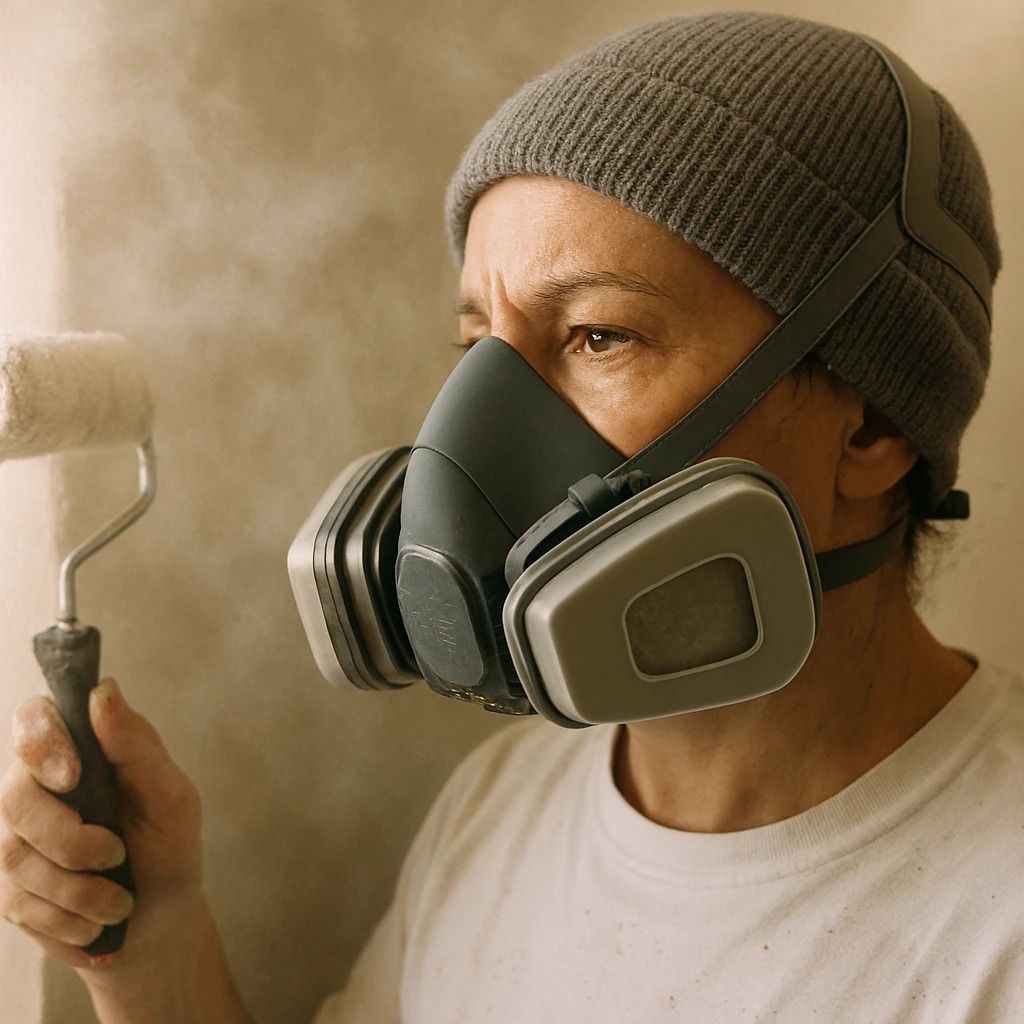
Brushing or rolling water-based wall paint in a ventilated room is the one common job where most people can skip the respirator, because the vapor load is low and nothing is being atomized. Prep is a different story. Sugar soap and degreasers are easy on the lungs, but scraping and sanding old trim is not, so read how to clean walls before painting and decide on your mask before you pick up the sanding block, not after.
One warning that belongs at the top: if your house was built before 1978, test before you sand. Lead dust is a particle, so an organic vapor cartridge does nothing against it. My guide to identifying lead paint covers the test kits and the P100 setup that job actually needs.
Types of Respirators for Paint
Four setups actually stop solvent vapor. The disposable mask is on the list only so you know where it stops.
| Setup | Stops vapor? | Stops spray mist and dust? | Where I use it |
|---|---|---|---|
| Disposable N95 dust mask | No | Yes | Sanding latex-painted walls, sweeping up |
| Half-face mask, organic vapor cartridges + prefilters | Yes | Yes, with the prefilter | Spray cans, oil enamel, stain, small sprayer jobs |
| Full-face mask, same cartridges | Yes | Yes, and covers the eyes | Ceilings, overhead spraying, long sessions |
| Powered air-purifying respirator (PAPR) | Yes, with vapor cartridges | Yes | All-day work, anyone with a beard |
| Supplied-air respirator | Yes | Yes | 2K clear coats and other isocyanate paints |
Disposable Paint Masks
A pleated N95 is a particle filter. It is the right tool for sanding dried latex and the wrong tool for anything you can smell. The other limit people miss is fit: a disposable mask only works if it seals, and most of us pinch the nose clip once and never check again. If you can feel your breath escaping past your cheeks, so can the dust.
Best for:
- Sanding water-based paint and drywall patches
- Brushing a water-based primer in a ventilated room
- Quick cleanup jobs, never solvent work
Half-Face Respirators for Paint Spraying
This is the mask most DIY painters should own. A silicone or elastomer facepiece seals around your nose and mouth, and two replaceable cartridges on the sides do the filtering. Swap the cartridges and the same mask covers sanding, spray cans and oil-based trim paint. I use the 3M 6200, which is the medium in 3M’s line; the 6100 is the small and the 6300 the large, and getting the size right matters more than the brand.
Benefits:
- Reusable for years; you only replace cartridges and filters
- One facepiece, different cartridges for vapor, dust or both
- Right for spray cans, solvent stains, oil enamel and small HVLP or airless jobs
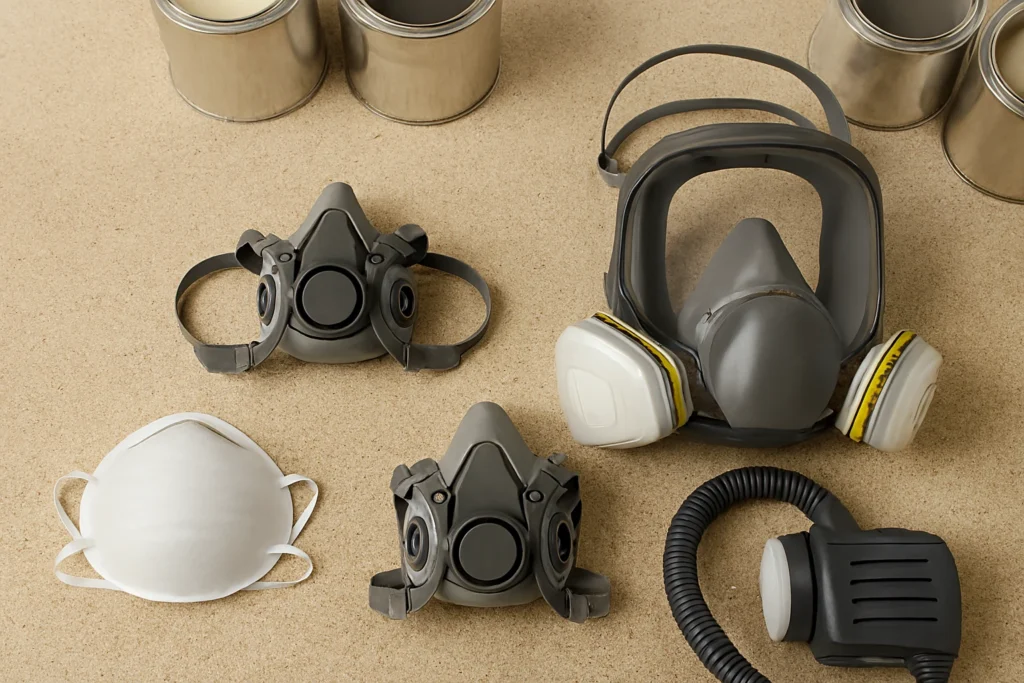
What a half mask is not right for is 2K paint. Two-part clear coats and many automotive primers contain isocyanates, which have poor warning properties: you get no reliable smell when a cartridge is spent, and repeated exposure can sensitize you so that later exposures trigger asthma. That is why body shops spraying 2K run supplied air. If the can or the kit says 2K, read the safety data sheet before you trust a cartridge mask with it.
Full-Face Paint Respirators for Auto Painting
A full-face mask uses the same cartridges as a half mask but adds a lens that seals around your eyes. Two things make it worth the extra bulk. Spray mist stings, and you cannot paint well while blinking. And because the seal runs around the outside of the face, it fits more reliably: OSHA assigns a tight-fitting full facepiece a protection factor of 50, against 10 for a half mask.
Best for:
- Overhead spraying, where mist falls back toward your face
- Single-stage enamels and solvent primers on car parts
- Long sessions inside a booth or a garage
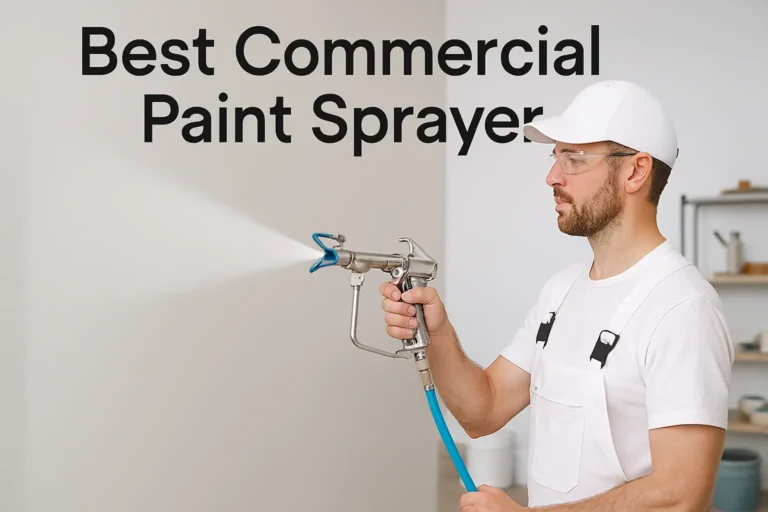
If you are spraying ceilings, a full face is the setup I would pick. The guide to the best ceiling paint sprayer covers the gun side, and the mask matters as much there because everything you spray overhead drifts back down.
Powered Air Purifying Respirators (PAPR)
A PAPR uses a battery fan to push air through the filters and into a hood or facepiece, so you are never pulling air through the cartridges with your own lungs. It is far less tiring over a full day. Loose-fitting hoods also do not rely on a face seal, which makes them the practical answer for anyone with a beard. The catch is cost and maintenance, which is why I only see them on people who spray for a living.
What Respirator Cartridge for Painting?
Cartridges are colour coded, which makes the shelf easier to read than it looks. Black means organic vapor. Magenta means P100, the highest class of particle filter. For painting you almost always want black, with a particulate layer in front of it the moment a spray gun or spray can is involved.
- Organic vapor cartridges for oil paint, enamel, varnish, lacquer and solvent-based stain. The 3M 6001 is the standard one for 3M masks. It handles vapor only; it does nothing against dust or mist on its own.
- P100 particulate filters for sanding, scraping and lead-safe work. The 3M 2091 pads clip straight onto a 3M facepiece. They do nothing against vapor.
- Combination cartridges that filter vapor and particles together, which is what you want for spraying. Honeywell’s 7583P100L is one; note that it is made for Honeywell North masks and will not lock into a 3M facepiece. On a 3M mask, the usual route is 6001 cartridges with 5N11 prefilters held on by a 501 retainer.

The rule that saves the most money: cartridges are not interchangeable between brands. Buy the mask first, then buy cartridges made for that mask.
How to Use a Face Mask Respirator for Painting Effectively
- Do both seal checks every time you put it on. Cover the cartridges with your palms and breathe in gently; the mask should pull slightly toward your face and stay there. Then cover the exhalation valve and breathe out; the mask should bulge a little without air leaking at the edges. If either check fails, adjust the straps and try again before you open a can.
- Shave, or change the plan. Stubble and beards stop a tight-fitting mask from sealing. A loose-fitting PAPR hood is the honest alternative.
- Treat any smell as the end of the cartridge. If you can smell or taste paint through the mask, walk out, fresh air first, then fit new cartridges. With isocyanate paints you get no such warning, which is the reason a cartridge mask is the wrong tool there.
- Bag the cartridges between sessions. Activated carbon keeps soaking up vapor from the room air even when the mask is hanging on a hook. Store it in a sealed zip bag and the cartridges last noticeably longer.
- Keep the mask on while the coat flashes off. The vapor load in a room peaks while the paint is drying, not only while you spray. Leave the fan running and the mask on until the surface is tack free; how to make paint dry fast has the airflow and temperature tricks that shorten that window.
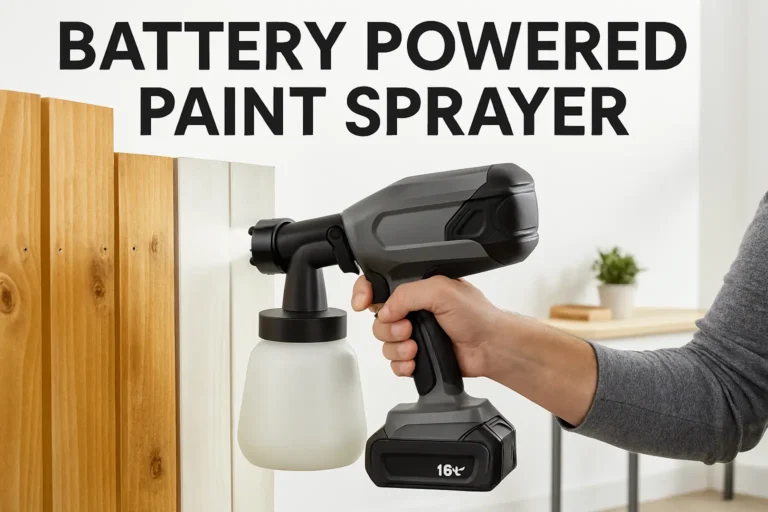
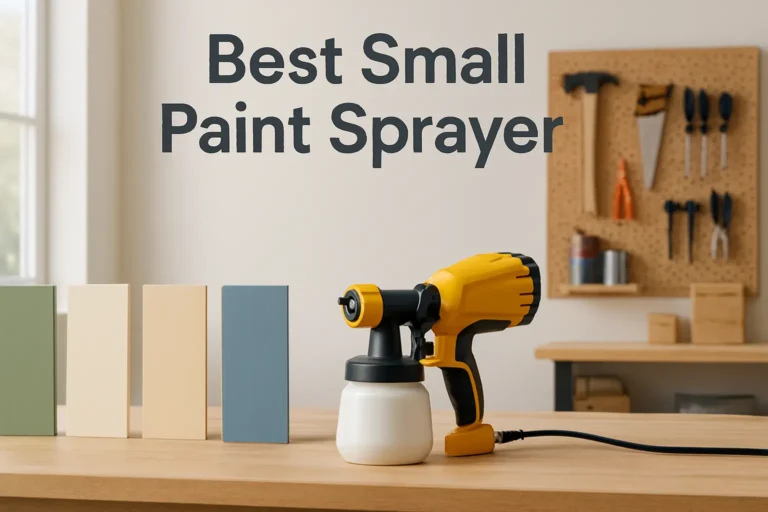
Ventilation and the mask work together, not instead of each other. If you spray in a garage regularly, building a simple extraction setup does more for your lungs than any cartridge upgrade. My DIY spray paint booth build shows the fan and filter layout I use, the best exhaust fan for a spray paint booth covers which fans should be moving solvent-laden air, and for furniture and trim the best small paint sprayers roundup covers guns that put less mist in the air to begin with.
When NOT to Rely on a Cartridge Respirator
- 2K clear coats and other isocyanate paints. No smell warning when the cartridge is spent. This is supplied-air territory.
- You have facial hair where the mask seals. The mask will leak no matter how tight the straps are. Use a loose-fitting PAPR hood or do not spray.
- Stripping old paint with methylene chloride or similar strippers. Organic vapor cartridges are not the protection those products call for. Read the label and choose a different stripper if you cannot meet it.
- Sanding paint that might contain lead. Vapor cartridges do nothing for lead dust. You need P100 filters, containment and cleanup, so test first.
- Small closed rooms with no airflow. A cartridge filters what passes through it; it does not add oxygen or clear a room. Open it up or move the work outside.
Where to Buy Respirators for Paint
Hardware stores, auto body suppliers and Amazon all carry the same core 3M and Honeywell North ranges. Wherever you buy, check three things before paying:
- A NIOSH approval on the packaging, with a TC number. Unbranded masks with no approval number are not worth wearing.
- The size. Half masks come in small, medium and large, and a mask that is too big will not pass the seal check.
- Cartridges and filters from the same maker as the facepiece, bought at the same time so you are not tempted to spray with whatever is left in the drawer.
Frequently Asked Questions
Does an N95 mask protect against paint fumes?
No. An N95 filters particles such as sanding dust and spray mist. Paint fumes are solvent vapor, which passes straight through it. For fumes you need a respirator with organic vapor cartridges.
What respirator do I need for spray painting?
A half-face or full-face respirator with organic vapor cartridges and a particulate prefilter, or a combination cartridge that does both. The vapor cartridge handles the solvent, and the prefilter catches the atomized paint before it clogs the carbon.
Do I need a respirator for latex paint?
For brushing or rolling latex in a ventilated room, most people do not. Spraying latex is different, because the airless tip turns it into a fine mist you can inhale, so wear at least a particulate filter when you spray it.
How do I know when to change respirator cartridges?
Change vapor cartridges as soon as you can smell or taste paint through the mask, and change particulate filters when breathing gets noticeably harder. Store cartridges in a sealed bag between jobs, because the carbon keeps absorbing vapor from room air.
Can I use an organic vapor respirator for 2K paint?
It is not the setup to rely on. 2K paints contain isocyanates, which give no reliable smell warning when a cartridge is spent and can cause lasting sensitization. Professional shops use supplied-air respirators for them. Check the product safety data sheet before you spray.
Can you wear a respirator with a beard?
Not a tight-fitting one. Facial hair under the sealing edge lets unfiltered air leak in. A loose-fitting powered air-purifying respirator hood is the option that works with a beard.
Final Thoughts
Match the filter to the hazard. Dust and mist need a particulate filter, solvent needs organic vapor cartridges, spraying needs both, and 2K needs fresh air from a hose. For most home painters that means one good half mask, a pack of vapor cartridges, prefilters for spray days, and the habit of doing the seal check every single time.
And if you are lining up a bigger refresh, the benefits of painting your home is a good place to plan which rooms are worth it, and the best ladder for painting guide covers the other piece of safety gear people skimp on.
About the author — Sophie Ulman
Sophie Ulman has renovated and painted more rooms than she can count — and made every mistake in the book so you don’t have to. She focuses on real-world durability: not how products perform on day one, but whether the repair holds through a full seasonal cycle.