How to Clean Walls Before Painting So the Paint Sticks
Updated: August 2026 | By Sophie Ulman
The first room I ever painted properly was my mother’s kitchen, and I skipped the washing. The walls looked clean. I ran a hand over them, saw nothing on my palm, and started cutting in. Fourteen months later the paint above the stove was lifting in soft sheets you could peel off with a fingernail — not flaking, not blistering, just letting go. That is what invisible grease does.
Learning to clean walls before painting is the least glamorous part of a repaint and the part that decides how long it lasts. It is also the part where most guides tell you to “wash with soapy water” and leave it there, which is useless if your wall is a smoker’s living room or a hallway with ten years of hands on it.
So this is the version I use now: what has to come off, what to use on each kind of dirt, and — the part almost nobody writes down — the three situations where washing the wall is the wrong move entirely. If you only want the short version: dry-dust first, then wash greasy or grimy walls with a weak powdered TSP solution and rinse with clean water before any primer goes on.
- The short answer: what actually has to come off
- How to TSP wash walls before painting
- Grease walls and smoke walls
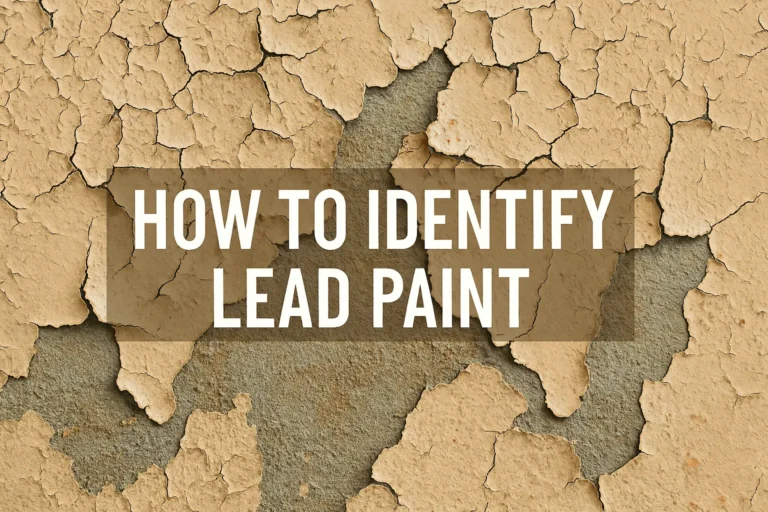
- Peeling paint: don’t wash first
- Cracks and chips without replastering
- Different walls, different rules
- Sanding, mold and the bleach question
- When not to wash
- FAQ
The Short Answer: What Actually Has to Come Off
Paint sticks by two mechanisms at once. It grips the surface texture mechanically, and it bonds to the surface chemically. Anything sitting between the paint and the wall breaks both. Painters call that layer a release layer, and it is the reason most repaints fail early.
Four things make up that layer, and they need different treatment:
- Dust and sanding debris — dry-removed first, always. Wash a dusty wall and you turn the dust into a slurry that dries as a film.
- Body oils and general grime — the lower four feet of every hallway. Needs an alkaline cleaner, not soap.
- Cooking grease — non-polar, so water-based paint cannot bond across it at all. Needs degreasing, twice.
- Smoke and nicotine tar — partly water-soluble, which is why it bleeds up through fresh paint. Needs cleaning and a shellac primer.
How to TSP Wash Walls Before Painting
Trisodium phosphate is the old professional standard, and it is still the thing I reach for when a wall is properly dirty. It is strongly alkaline, around pH 11 to 12, which means it saponifies grease — it chemically converts the oil into something water can carry away, rather than just pushing it around.
The powder version is what I keep on the shelf, because you mix only what you need and it stores forever.
Savogran 10621 Trisodium Phosphate (TSP), 1 lb — the plain powdered original, one pound, single container. A pound mixes a lot of solution; for a single room you will use a fraction of it.
As an Amazon Associate we earn from qualifying purchases.
The method, in the order that matters
- Dry first. Vacuum with a soft brush head or go over the wall with a dry microfibre. Ceiling down, always, so you are not re-dirtying what you finished.
- Mix weak, not strong. Roughly 30 grams to four litres of warm water. Stronger is not better — it just leaves more residue to rinse off.
- Work in small sections. A metre square at a time, bottom of the wall upward. Washing top-down lets dirty solution run onto dry wall and leave streaks that are hard to shift.
- Rinse with clean water. This step is not optional. Unrinsed TSP keeps the surface pH high, and high pH is exactly what stops primer bonding.
- Change your water often. The moment the bucket goes grey you are painting dirt back on.
Gloves and eye protection, genuinely — this is a caustic solution and it will sting for a while if it gets in your eye.
TSP or a no-rinse substitute?
Phosphate cleaners are restricted in some areas for environmental reasons, and the rinse step is the part people skip. If you know you will skip it, use a no-rinse formula instead and skip it honestly.
Krud Kutter PC326 No-Rinse Prepaint Cleaner / TSP Substitute, 32 fl oz spray — a single 32-ounce trigger bottle. Wipe on, wipe off, no rinse bucket. It is weaker than real TSP on baked-on grease, but for the average living room it does the job and removes the step most people get wrong.
| Situation | Use | Why |
|---|---|---|
| Bedroom, light dust | Dry dust + damp microfibre | Nothing chemical to remove |
| Hallway, body oils, scuffs | No-rinse TSP substitute | Alkaline enough, no rinse step to botch |
| Kitchen, cooking grease | Powdered TSP, two passes | Only saponification shifts polymerised grease |
| Smoker’s room | Powdered TSP + shellac primer | Cleaning alone will not stop tar bleeding through |
| New drywall | Dry dust only | Water raises the paper face |
Grease Walls and Smoke Walls: The Two That Beat Ordinary Cleaning
These are the two jobs where a single wash is not enough, and where I see the most repaint failures.
Kitchen grease
Cooking grease that has been heated and cooled repeatedly polymerises — it cross-links into something closer to a varnish than an oil. Detergent slides straight over it. TSP will shift it, but not in one pass: the first pass softens and lifts the top layer, the second actually takes it off. Use fresh solution for the second pass. Same bucket, same rag, and you are just relocating grease.
The band above and beside the hob is the worst of it, and it is worth doing that section a third time.
Smoke and nicotine
Tar is the one contaminant that will defeat you even after the wall is clean, because the residue soaks into the substrate itself. Wash it, prime it with a standard latex primer, and within days you get yellow-brown blooms coming up through the finish as the tar dissolves into the wet coating and migrates to the surface.
Wash it properly with TSP, then seal it with a shellac-based primer. Shellac is the one primer chemistry that reliably blocks tar and the smell that comes with it.
Zinsser 00904 B-I-N Pigmented Shellac Primer-Sealer & Stain Killer, White, 1 quart — single quart. It is the standard answer for smoke, water stains and odour. It smells strong going on and wants ventilation, and brushes need denatured alcohol rather than water.
If it is a ceiling rather than a wall you are fighting, the product choice shifts a little — I go through it in the best ceiling paint for nicotine-stained ceilings. And for the wider question of which surfaces genuinely need priming at all, see how to use primer on the six surfaces that fail without it.
Walls With Peeling Paint: Don’t Wash First
This is the correction I most often have to make for people. If paint is already lifting, washing is the wrong first move — you drive water behind the loose film, it wicks along under the sound paint, and the failed patch gets bigger while you work.
Order it the other way round:
- Scrape first. A flexible knife, working from the middle of the failure outwards, until you reach paint that will not lift. If it keeps coming, keep going. The edge of the failure is not where the failure ends.
- Feather the edges. 120 grit to take the shoulder off the remaining paint, or you will see a ridge through the new coat forever.
- Now wash, and lightly. You are cleaning, not soaking.
- Dry fully, then spot-prime the bare patches before the whole wall gets its coat. Bare substrate and old paint absorb differently, and unprimed patches flash through as dull spots.
And ask why it peeled. Paint that lets go in a bathroom or on an exterior wall is usually reporting a moisture problem, not a paint problem. Repainting without fixing that just resets the clock.
Cracks and Chips Without Replastering
Not every damaged wall needs a plasterer. The honest dividing line is whether the substrate is still sound behind the damage.
- Hairline cracks that do not move — open them slightly with the corner of a scraper so the filler has something to key into, fill, sand flush. A crack filled without opening it will reappear.
- Chips and dents — flexible filler, slightly proud, sanded back flat when dry. Two thin applications beat one thick one, which sinks as it dries.
- Cracks that keep coming back in the same place — that is structural movement, and filler will not hold it. This one does need a professional look.
- Wide areas of crazing on old plaster — a heavy-bodied or textured coating can carry it, which is a genuine alternative to skimming the whole wall. I compare the options in the best crack-covering paints for interior walls.
Fill before you wash where you can. Sanding filler makes dust, and dust is the thing you just cleaned off.
Different Walls, Different Rules
New or unprimed drywall. Porous, and the paper face swells the moment it gets wet. Dry dust it, and if you must go damp, barely. Over-wetting raises the fibres and you will be sanding a fuzzy wall flat.
Plaster. Denser and more forgiving of water than drywall. Older plaster sometimes shows powdery white deposits — that is efflorescence, salt carried to the surface by moisture moving through the wall. Brush it off dry rather than washing it in, and treat the damp that is causing it. Acid washes get recommended for this online; on an interior wall they are more risk than they are worth.
Masonry and concrete. Strongly alkaline, often with release agents left from the original pour. If the alkalinity is not dealt with you get saponification — the alkali attacks the paint binder and turns it soapy, and adhesion goes completely. Masonry wants degreasing, thorough rinsing, and a masonry-rated primer.
Anything already glossy. Gloss and semi-gloss give new paint nothing to grip. Degloss chemically or sand with 120 to 180 grit before you clean, then clean off the sanding dust. Doing it in the other order means washing a wall and then covering it in dust.
Bathrooms have their own sequence, because you are dealing with soap residue, humidity cycling and biological growth all at once — I have written that up separately in how to prep bathroom walls before painting.
Sanding: Making a Key the Paint Can Grip
Sanding before painting is not about smoothness for its own sake. It is about creating microscopic texture for the paint to lock into — a mechanical key. On a sound previously painted wall, 150 to 180 grit is right. Where there is filler or texture to level, start at 100 and finish at 150 to 180.
Then get the dust off with a tack cloth or damp microfibre. Sanding dust is the single most overlooked contaminant in amateur painting, and it is self-inflicted.
For one room, a sanding block and a pole sander are fine. For a whole house, or for ceilings, a powered sander with dust extraction stops being a luxury and starts being the reason you finish the job.
WEN 6369 Variable Speed 5-Amp Drywall Sander with 15-foot hose — variable speed, pivoting head, telescoping handle, and a dust hose that takes most of the mess out of the air before it lands on your floor. It is the tool that makes ceiling work survivable.
Mold: What the EPA Actually Says About Bleach
Most wall-prep guides, including an earlier version of this one, tell you to hit mold with diluted bleach. That advice does not match current guidance and I have corrected it here.
The US Environmental Protection Agency’s position is that using a biocide such as chlorine bleach is not recommended as a routine practice during mold cleanup. The reasoning is straightforward: on a porous surface like drywall or plaster, the chlorine reacts at the surface and stays there, while the water in the bleach soaks in — and that moisture feeds the growth underneath that the chlorine never reached. You get a wall that looks clean and regrows.
What is recommended instead is mechanical removal: detergent and water, scrubbed. On non-porous surfaces — tile, glass, metal — bleach does work, so it still has a place in a bathroom, just not on the plasterboard.
Drying and pH: The Last Gate Before Primer
Two things have to be true before primer goes on.
The wall has to be dry all the way through, not just dry to the touch. Moisture trapped under a paint film has to go somewhere eventually, and what it does is push the film off from behind — blistering, then delamination. Drywall usually needs two to four hours in normal room conditions. Plaster and masonry want a full day.
The surface pH has to be back near neutral, roughly 6.5 to 8, for standard latex and alkyd primers to bond. This is the step that catches people who used TSP and rushed the rinse. Indicator strips cost almost nothing and take ten seconds against a damp patch of wall.
When Not to Wash Your Walls
Skip the wash — or you will make things worse — when:
- The drywall is new or the joint compound is fresh. Nothing contaminating is on it, and water raises the paper face and softens the compound. Dry dust only.
- The paint is actively peeling. Scrape and feather first. Washing drives water behind the loose film and spreads the failure.
- You are about to sand or fill. Do the dusty work first. Otherwise you clean the wall, then cover it in sanding dust, then have to clean it again.
- The wall is damp for a reason you have not identified. Adding water to a wall with a moisture problem tells you nothing and delays the actual repair.
- It is bare, sound, unpainted plaster in a clean room. Dust it and prime it. There is nothing there to remove.
Frequently Asked Questions
Do I really have to wash walls before painting if they look clean?
Looking clean and being clean are different things. Grease, body oils and nicotine are invisible at the densities that block adhesion. That said, this is not all-or-nothing: a lightly used bedroom needs dry dusting and a damp wipe, not a chemical wash. Match the effort to the room. Kitchens, hallways, bathrooms and any room that has been smoked in get the full treatment.
What is the best way to TSP wash walls before painting?
Dry dust first, mix roughly 30 grams of TSP into four litres of warm water, work bottom-up in small sections with a sponge, rinse each section with clean water, and change your water as soon as it discolours. Weak solution and a proper rinse beat a strong solution every time — leftover TSP keeps the surface pH high, which is precisely what stops primer bonding.
Can I skip the rinse if I use a TSP substitute?
Only if the product is specifically labelled no-rinse, as the Krud Kutter prepaint cleaner is. Powdered TSP and most generic phosphate-free powders still need rinsing. If you know yourself well enough to know you will not rinse, buy the no-rinse formula rather than pretending.
Should I use bleach on mold before painting?
Not as a first resort on drywall or plaster. The EPA does not recommend chlorine bleach as routine practice in mold cleanup, because it cannot penetrate porous material — the chlorine stays on the surface while the water soaks in. Detergent, water and scrubbing is the baseline. Bleach is still reasonable on non-porous surfaces like tile and glass.
How long should I wait after washing before I prime?
Drywall, two to four hours at normal room temperature and humidity. Plaster and masonry, at least twenty-four. If you have a moisture meter, under about 12 percent is the number to look for. Dry to the touch is not the same as dry.
Does the type of paint I am using change how much cleaning I need?
Barely. Oil-based enamels tolerate slight grease contamination a little better than water-based latex, but that is a margin, not a licence to skip prep. The failure mode just arrives later.
Do I wash or sand first?
Sand first, then wash — with one exception. If the wall is heavily greasy, degrease it first, because sanding grease just smears it into the surface profile you are trying to create. Everywhere else: fill, sand, then clean off the dust.
The Bottom Line
Ninety percent of early paint failure is decided before the lid comes off the can. Dry-dust everything. Match the cleaner to the dirt — damp cloth for a bedroom, no-rinse substitute for a hallway, powdered TSP in two passes for a kitchen. Seal smoke with shellac primer rather than hoping. And if the paint is already peeling or the drywall is new, put the bucket down — those are the walls that washing damages.