Stripping it Back: The Best Paint Remover for Metal and Wood in 2026
Introduction: Why Stripping Back Is the First Step to a Perfect Finish
Whether you are breathing new life into a Victorian iron radiator or rescuing a solid oak door from decades of DIY abuse, the restoration journey almost always begins the same way — you have to strip it back. Consequently, choosing the right product is one of the most important decisions you will make in any refinishing project. Use the wrong formula and you risk damaging the substrate beneath, wasting hours of labour, or — worse — exposing yourself to harmful chemicals.
Fortunately, in 2026, the market offers a genuinely impressive range of paint strippers. Some are water-based and biodegradable. Others are solvent-powered workhorses built for industrial-grade coatings. Therefore, this guide cuts through the noise and helps you find the best paint remover for metal and wood, whatever the scale of your project.
We will cover the science behind chemical stripping, review three standout products in detail, explain the critical differences between stripping metal versus wood, walk you through rust prevention after stripping, and finish with a handy side-by-side comparison table.
check our complete guide to wood finishing here
The Science of Chemical Stripping: How Paint Removers Actually Work
Before reaching for a product, it is worth understanding what is actually happening when a paint stripper does its job. At a fundamental level, chemical paint removers work by breaking the bond between a coating and its substrate. However, the mechanism varies considerably depending on the formula.
Solvent-based strippers — traditionally the most aggressive — penetrate paint layers by dissolving the binder resins that hold pigment particles together. Methylene chloride (now largely phased out in consumer products across the EU and UK) was the gold standard for decades due to its speed, but it carries serious health risks.
Caustic or alkaline strippers use a high-pH solution — typically sodium hydroxide — to saponify oil-based paints, effectively turning them into a soap-like substance that wipes away. These work especially well on wood but can darken grain and raise fibres if left too long.
Biochemical or citrus-based strippers represent the most significant innovation of the past decade. Products in this category use naturally derived solvents — notably N-Methyl-2-pyrrolidone (NMP) replacements and dibasic esters — to swell and lift coatings gently over a longer dwell time. While they require more patience, they are considerably safer for users, surfaces, and the environment.
Understanding these mechanisms, therefore, helps you match the product to the job — and to the surface beneath the paint.
Safety First: Protecting Yourself When Using Paint Strippers
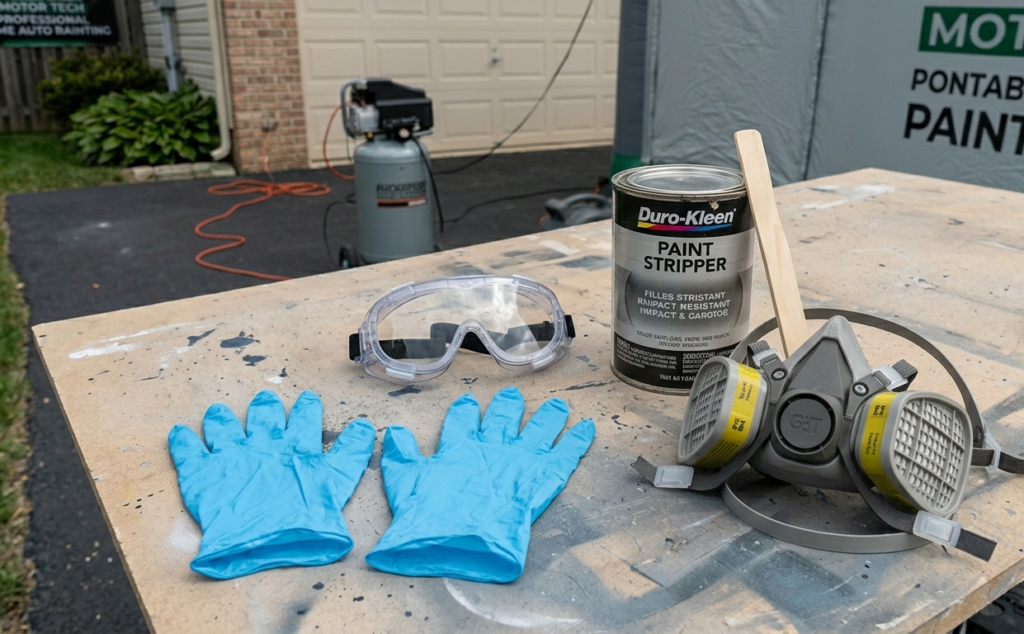
No matter which formula you choose, safety must come first. Indeed, even the mildest biodegradable gel can irritate skin and eyes on prolonged contact. Before you begin any stripping project, follow these essential precautions:
- Wear nitrile gloves (not latex, which solvent-based products can permeate) and chemical-splash goggles.
- Ensure adequate ventilation. Even low-VOC products release vapours that accumulate in enclosed spaces. Work outdoors where possible, or open windows and run a fan.
- Lay down protective sheeting. Drips from paint strippers can damage flooring, concrete, and surrounding paintwork.
- Keep children and pets away from the work area until the project is complete and surfaces are fully neutralised.
- Neutralise after stripping. Wood surfaces benefit from a wipe-down with white vinegar (to neutralise alkaline strippers) or clean water (for solvent types) before repainting.
Additionally, always read the full Safety Data Sheet (SDS) for any product before use. These are freely available from the manufacturer’s website.
Metal vs. Wood: Choosing the Right Paint Remover for Each Surface
This is where many DIYers go wrong. Metal and wood respond very differently to chemical strippers, and consequently, a one-size-fits-all approach rarely delivers good results.
For wood, the primary concern is grain damage. Alkaline strippers can darken and raise wood fibres, particularly on softwoods like pine. Moreover, prolonged chemical contact can weaken the surface layer. Water-based or citrus gel strippers — with controlled dwell times — are generally the safer choice for timber.
For metal, the challenge shifts. Firstly, many metals oxidise rapidly once a protective coating is removed. Secondly, the paint remover itself can react with certain metals — alkaline products, for instance, can corrode aluminium. As a result, the best paint remover for metal projects is typically a neutral-pH solvent or biochemical gel, combined with immediate rust prevention after stripping.
Top Product Reviews: The Best Paint Remover for Metal and Wood in 2026
1. Dumond Smart Strip Advanced Paint Remover
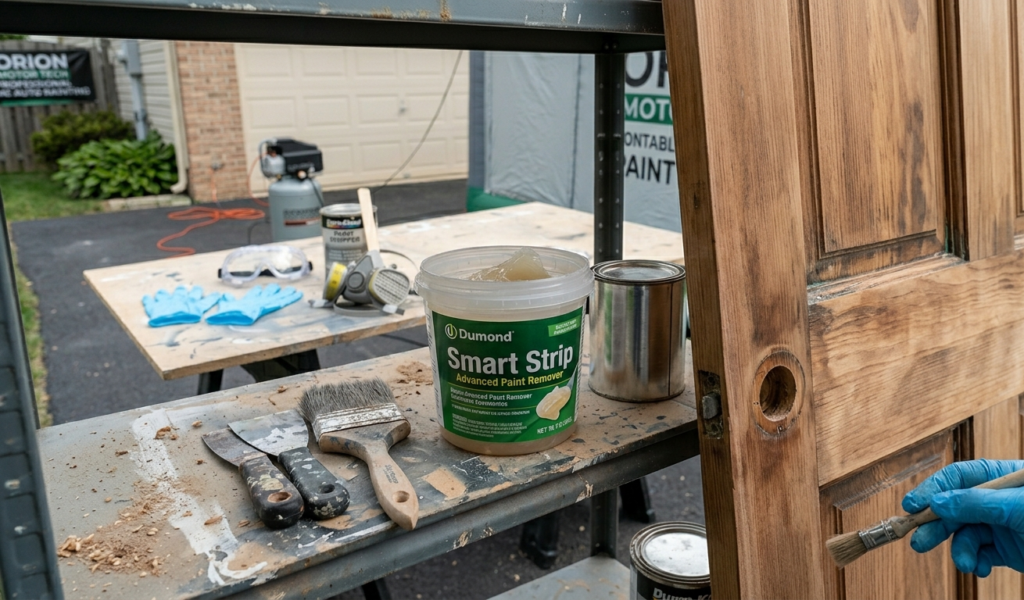
Best for: Multi-layer paint removal on wood and masonry | Dwell time: 4–24 hours
Smart Strip remains one of the most respected names in professional restoration, and for good reason. This water-based, low-odour gel clings to vertical surfaces without sagging, making it ideal for doors, architraves, and panelling. Furthermore, it is fully biodegradable, solvent-free, and safe for use around lead paint — a significant advantage when working on pre-1980s properties.
In testing, Smart Strip lifts up to 15 layers of paint in a single application when left overnight. It performs best on porous surfaces and is therefore particularly recommended for wood and masonry. On metal, it works reliably on mild steel and cast iron, though dwell time may need extending for heavily coated surfaces.
The verdict: Exceptionally safe, genuinely effective, and versatile enough for most domestic restoration projects.
CLICK HERE TO CHECK PRICES FOR: Dumond Smart Strip Advanced Paint Remover
2. Citristrip Paint & Varnish Stripping Gel
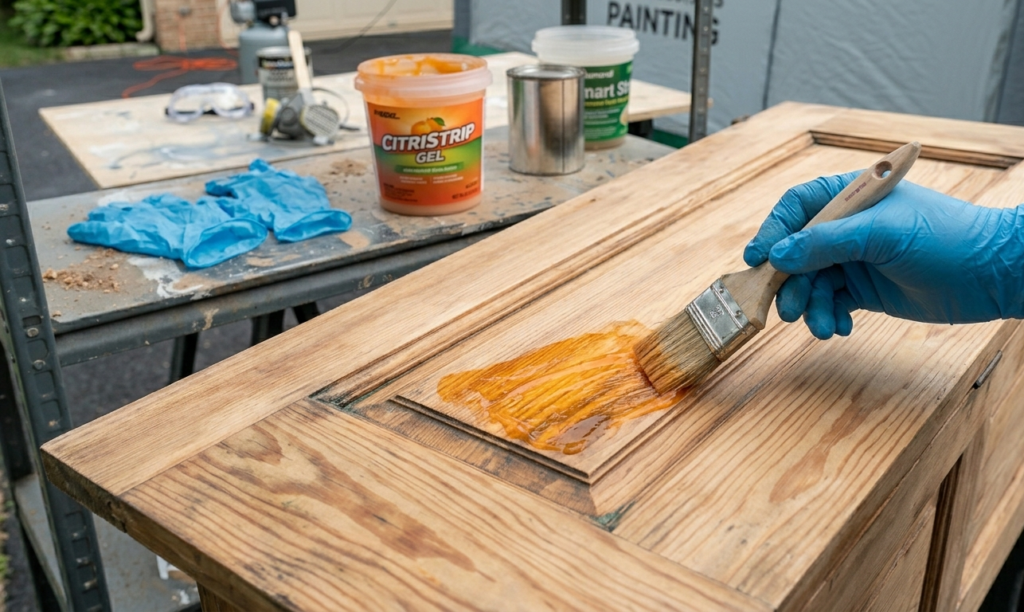
Best for: Indoor use on wood furniture and trim | Dwell time: 30 minutes–24 hours
Citristrip has built a loyal following among furniture restorers, and it is not hard to see why. The pleasant citrus scent (derived from orange oil) makes it one of the few strippers genuinely suitable for indoor use without heavy-duty respiratory protection. Moreover, it stays wet and active for up to 24 hours, giving you flexibility if a project runs longer than expected.
However, it is important to note that Citristrip is formulated primarily for wood, varnish, lacquer, and shellac. While it will tackle oil-based paints on metal surfaces in a pinch, it is not the first-choice paint remover for metal substrates with heavy rust-bonded coatings. Nevertheless, for indoor furniture stripping projects, it is hard to beat.
The verdict: The most user-friendly stripper on this list — ideal for beginners tackling indoor furniture.
CLICK HERE TO CHECK PRICES FOR: Citristrip Paint & Varnish Stripping Gel
3. Rust-Oleum Stops Rust Reformer
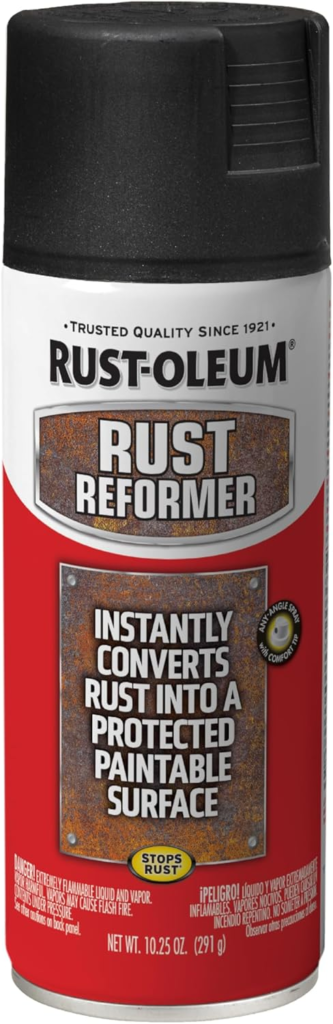
Best for: Rust conversion and paint removal on metal | Dwell time: 24 hours (converts rust, ready to topcoat)
Strictly speaking, Rust-Oleum Stops Rust Reformer is a rust converter rather than a traditional paint stripper — but in the context of metal restoration, it earns its place in this guide decisively. After you have stripped old paint from metal (using Smart Strip or a solvent stripper), bare metal begins oxidising within hours. This is where the Reformer steps in.
Its active ingredient — tannic acid — chemically reacts with iron oxide (rust), converting it into iron tannate: a stable, dark compound that provides an excellent base for topcoats. In addition, the water-based formula goes on with a brush and dries to a flat black finish that is ready to paint over within 24 hours.
The verdict: An essential follow-up product for any paint remover for metal project — do not strip bare metal without it.
CLICK HERE TO CHECK PRICES FOR: Rust-Oleum Stops Rust Reformer
Preventing Rust After Stripping Metal: Your Step-by-Step Guide
Once you have stripped bare metal, the clock is ticking. Consequently, rust prevention must begin immediately. Follow these steps for best results:
- Neutralise and dry the surface completely. Any moisture left behind accelerates oxidation, so wipe down with a dry cloth and, if possible, use a heat gun on low to ensure the surface is bone-dry.
- Apply a rust converter (such as Rust-Oleum Reformer) within two hours of stripping to neutralise any micro-oxidation already forming.
- Prime immediately after the converter has cured. A zinc phosphate or etching primer provides the best adhesion and corrosion resistance on bare metal.
- Topcoat with a rust-inhibiting paint. Oil-based alkyd enamels or two-part epoxy coatings offer the longest-term protection outdoors.
SOEE OUR GUIDE FOR Best Paint fo Rusty Metal
Comparison Table: Best Paint Remover for Metal and Wood at a Glance
| Product | Best For | Surface | Dwell Time | VOC Level | Eco-Friendly | Price Range |
|---|---|---|---|---|---|---|
| Dumond Smart Strip | Multi-layer stripping | Wood, masonry, mild metal | 4–24 hrs | Very Low | ✅ Yes | $$ |
| Citristrip Gel | Indoor furniture & trim | Wood, varnish, shellac | 30 min–24 hrs | Low | ✅ Yes | $ |
| Rust-Oleum Reformer | Rust conversion post-strip | Metal only | 24 hrs (cure) | Low | ✅ Yes | $ |
Conclusion: Strip Smart, Finish Strong
Restoration is ultimately about respect — for the material, for the craft, and for the finished result. Choosing the right paint remover for metal or wood at the outset saves hours of remediation work later and protects the substrate you are trying to revive.
To summarise: reach for Dumond Smart Strip when tackling multi-layer coatings on wood or mixed surfaces. Choose Citristrip Gel for indoor furniture projects where low odour matters. And always, without exception, follow any bare-metal strip with Rust-Oleum Stops Rust Reformer to lock in your work before rust takes hold.
Above all, strip with patience — good results come to those who wait for the dwell time.
Published by thepaintly.com | Last updated: April 2026 | Always follow manufacturer safety guidelines before use.