Best Patterned Paint Roller: Turn Your Walls Into Art
When plain painted drywall just doesn’t cut it, decorative art rollers come to the rescue. Whether you want a subtle texture, an ornate motif, or something totally bold, the right patterned roller can transform a room without the cost or hassle of wallpaper.
This article dives into decorative rollers for painting, the pros and cons, what to look for, and real reviews of specialty rollers with patterns you can actually buy today. By the end, you’ll know how to painting with decorative art roller, whether it’s worth it, and which paint rollers with design textures will suit your project best.
What Are Decorative Art Rollers & Why Use Them?
A decorative art roller is a type of paint tool that has raised patterns, rubber, sponge, or flexible plastic, that imprint designs onto fresh paint, textured medium, or plaster. They are sometimes called embossed paint rollers for walls or specialty paint rollers with patterns.
Advantages:
- You can get custom or repeatable patterns without doing stencil work repeatedly.
- They come in many styles: geometric, floral, brick, abstract, stripes, etc.
- They save time compared to individual stencils, especially for large surfaces.
- They add depth and interest: a room painted with plain color can feel flat; with texture or pattern, it feels designer-done.
Challenges / Things to Watch Out For:
- Alignment & matching: If pattern sections are not perfectly aligned, seams or mismatches will show.
- Paint thickness & drying: The medium needs to be just right, not so thin that the pattern smears, not so thick that roller drags.
- Surface preparation: Any bumps or irregularity in wall will distort the pattern.
- Clean-up can be harder: especially with rubber or deep-carved rollers.
How to Choose the Best Patterned Paint Roller
Here are criteria to guide your decision when selecting decorative rollers for painting:
| Feature | Why It Matters |
|---|---|
| Pattern Depth & Style | Deeper engravings show up more boldly; shallow ones are more subtle. Choose based on how dramatic or soft you want the effect. |
| Material | Rubber is durable; sponge can give more softness; plastic rollers are cheaper but may degrade faster or show seams more. |
| Size | 7- to 10-inch rollers are common. Wider gives faster coverage but is harder to control in corners. Narrower for trims, tight spaces. |
| Handle / Roller Frame | Comfortable grip, good shafts, possibly extension poles (if doing ceilings or large walls). Handles should be sturdy. |
| What You Paint On | Flat drywall, plaster, textured walls, wood. Also whether you will use special media or glazes. Some patterns only show well with thicker paints or texture compounds. |
| Ease of Cleaning / Reuse | Rubber/plastic rollers often easier to clean than sponge, but all need cleaning if you want to reuse. |
Best Practices for Painting with Decorative Art Roller
Using decorative rollers well takes more than just rolling paint on. Here’s how to get professional results:
- Prime and level your surface: Patch holes, sand, clean. If walls are dirty or uneven, even the best decorative rollers will look messy.
- Use a base coat. Paint the wall first with a solid base color. Once dry, you apply the pattern; this makes the pattern pop.
- Choose the right medium: For subtle texture, use regular matte or eggshell paint slightly thickened. For more relief, use plaster, joint compound, or texture medium. The textured medium or plaster allows the embossed paint rollers for walls to leave deeper impressions.
- Test on a sample board or inconspicuous wall section. Practice pattern alignment, how much pressure to use, how fast to roll.
- Roll carefully: Load the roller evenly, roll off excess, then apply gently without over-pressing. Over-pressing flattens the pattern; under-pressing might not imprint well.
- Maintain pattern continuity: For large walls, divide into panels; mark where last roll ended so next roll picks up pattern exactly aligned.
- Seal or glaze if desired: After pattern dried, some people apply glaze or another coat—lightly—so the pattern gets highlighted without being too contrasty.
Real Product Reviews: Good & Not So Good Decorative Art Rollers
Here are several products (available via Amazon) with genuine strengths and drawbacks. I present both positives and negatives so you can judge what suits you.
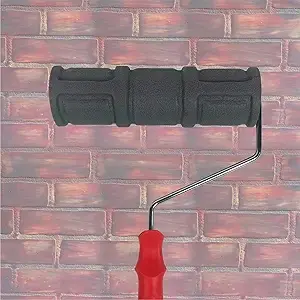
1. Nichiyo 10″ Patterned Paint Roller EG724T (Brick Embossing Texture Rubber Roller)
- What’s great: Big size (10″) gives wide coverage; the brick-embossed motif is bold and uniform. Rubber material holds up well, resists wear. Good for medium to large walls or feature walls.
- What to watch out for: Because the pattern depth is significant, if your paint or texture base isn’t thick enough, pattern may be weak or look patchy. Also harder to use around trim or edges because of width. Cost might be higher for shipping outside big markets.
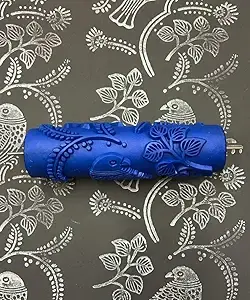
2. Patterned Paint Roller, Bird of Paradise Pattern, 7″
- What’s great: Artistic, decorative art rollers of this type give tropical motif (Bird of Paradise) that’s great for accents, smaller walls, or as a focal point. The 7″ size is manageable, especially if doing furniture or smaller walls.
- What’s not perfect: Such patterned rollers may show imperfections easily. If your wall isn’t perfectly flat or has shadows or lighting, the texture can highlight flaws. Also, designs might look less sharp on uneven surfaces or with paint spreading too easily.
3. Bueer 7″ DIY Patterned Paint Roller Decorative Plastic / Rubber
- Pros: Affordable plastic/rubber mix, good for craft-DIY; lightweight. Good at repeating pattern over textured surfaces.
- Cons: Plastic portions can bend or wear; pattern may degrade after several uses; cleaning plastic/rubber with dried paint/plaster can be fiddly. Also plastic edges may leave slight lines if the pattern ends or begins poorly aligned.
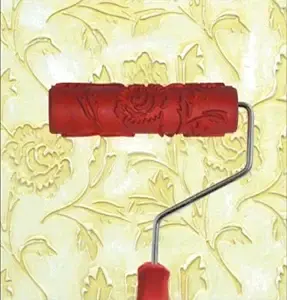
4. Faddare Crocodile 7-inch 3D Embossing Wall Roller
- Pros: Very dramatic texture; “3D” embossing gives real depth; the crocodile skin style is unusual and eye-catching. Great for feature walls.
- Cons: Can be overbearing if used on large walls or small rooms, pattern may dominate. Also pattern repeat is large, meaning more cutting in/edging work. And cleaning deep grooves is tougher.
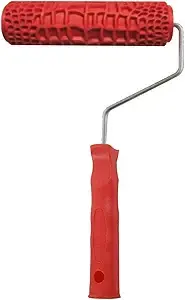
5. Decorative Art Texture Roller – Simplicity Pattern, 7″
- What works: “Simplicity” pattern is more subtle and forgiving; easier to align; less obvious mistakes if wall isn’t perfect. Good entry-level decorative roller.
- What doesn’t: Pattern may be too mild if you want high visual impact; might get lost under strong lighting or in large rooms; also subtle patterns likely show wear over time more easily.
Common Complaints / Problems
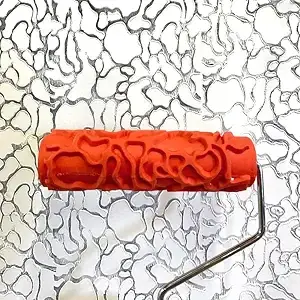
- Pattern misalignment: Around windows, doors, corners. If not careful, seams show.
- Paint bleed: If roller is overloaded, paint can smear outside the pattern edges, losing definition.
- Wear & tear: Rubber with very fine patterns can wear and lose sharpness after repeated use, especially if used with abrasive media or cleaned harshly.
- Cost vs payoff: Decorative rollers cost more than simple rollers; if you don’t get the finish you want, you may end up repainting.
Comparing Decorative Rollers vs Traditional Tools
Before buying, consider whether a decorative roller is really right for your project. Alternatives include hand-painting, stencils, wallpaper, or textured plaster finishes. Each method has trade-offs.
Decorative rollers are quicker than stencils, often cheaper than wallpaper, and more flexible than full plaster work. But they lack the color richness of wallpaper, the uniqueness of hand-painting, and may be more limited in pattern depth.
Also, if you’re already concerned about ceilings, edges, or getting straight lines (for example, painting edges between wall and ceiling), you’ll need tidy prep work. For more on painting edges cleanly between wall and ceiling, see this guide on the best way to paint edges between wall and ceiling.
How Best Patterned Paint Roller Fits Into Whole Room Painting
Using decorative rollers often goes hand-in-hand with a full room painting plan. Here’s how they integrate:
- Time your patterned: Wall after basic coats have dried; doing pattern too soon can smear base coat.
- Consider color impact: lighter color for base, deeper or complementary shade for pattern tends to look more designer.
- Use them on feature: Walls or accent areas to avoid overdoing texture. Pattern everywhere can overwhelm.
- For ceilings: usually you don’t pattern ceilings, but if you do, tools like larger rollers or specialty ceiling rollers may help. If you’re also doing ceilings, check tips in best paint rollers special effect articles or guides.
Also, before you paint, make sure your walls are clean and smooth: see how to clean walls before painting. Sometimes buildup of dust or residue causes pattern errors or inconsistencies.
Final Verdict: Which Decorative Rollers Are Best?
If I had to pick “the best patterned paint roller” for most DIYers (balance of cost, ease, look), it would be one like the Nichiyo 10″ brick embossing rubber roller, you get wide coverage, strong pattern, durability. For smaller spaces or accent use, something like the Bird of Paradise 7″ roller or the Simplicity pattern version is excellent. If you want maximal drama, go for deeper 3D embossing like the Crocodile effect.
If you’re new, start mild: subtle pattern, small roller; test first. Better to underdo than overdo and regret it.
Quick Tips & Extras
- Always roll sample patch and let dry fully, light changes how pattern appears.
- Use matte or low sheen top coat, if you want the pattern to show; glossy will reflect light and reduce visibility of the design.
- For clean edges near ceiling, mask appropriately; check guides like how to paint the ceiling or best ceiling paint if doing overhead surface next to walls.
- Clean tools immediately after use. Rubber/plastic needs gentle scrubbing; don’t let media dry in pattern grooves.
Suggested Products (Affiliate-Links)
Here are the products reviewed above, with live links. (If you buy through them, I may earn a small affiliate commission at no extra cost to you.)
| Product | What It Offers | Rough Price* |
|---|---|---|
| Nichiyo 10″ Patterned Paint Roller Classic Brick Embossing (EG724T) | Bold brick effect, large coverage, durable rubber | ~$25-35 |
| Bird of Paradise 7″ Patterned Paint Roller | Decorative tropical motif; good sized 7″ roller | ~$20-30 |
| Bueer 7″ DIY Patterned Roller (Plastic/Rubber) | Affordable entry level; good for experimenting or accent pieces | ~$15-25 |
| Faddare Crocodile 7″ 3D Embossing Wall Roller | Very dramatic; deep texture; great for feature wall | ~$25-35 |
| Decorative Art Texture Roller – Simplicity Pattern, 7″ | Subtle pattern; easy to align; good for beginners | ~$20-30 |
*Prices fluctuate; check Amazon for shipping, taxes, etc.
Conclusion
If you’re looking to go beyond flat walls and want something more artistic, the best patterned paint roller is one that balances design, durability, manageability, and your own tolerance for effort. Decorative rollers with patterns can offer high visual return, but only if used correctly.
If I were you: pick a modest but interesting pattern; do a test wall; get the base coat right; clean tools well; and enjoy the process. Once you’ve tried one, you’ll likely want more.