How to Paint Garage Cabinets: 8 Steps That Actually Last
Updated: August 2026 · By Sophie Ulman
If you want to know how to paint garage cabinets, you’re not alone. Garage cabinets take a beating — grease, dust, temperature swings, and years of neglect leave most looking dull, peeling, or outright ugly. The good news? A fresh coat of the right paint transforms them completely, and the job is well within DIY reach. This guide covers every step, from stripping old finish to choosing between a brush, roller, and sprayer — plus the three products that deliver the most durable results in a real garage environment.
Most people underestimate how much prep matters. Skip it and your new paint flakes off within months. Get it right and you end up with cabinets that look factory-fresh for five-plus years. Let’s break it down the right way.
Quick Picks: Best Paints for Garage Cabinets
| Pick | Product | Best For | Check Price |
|---|---|---|---|
| Best Primer | KILZ Adhesion Interior/Exterior Primer | Slick surfaces, metal, laminate | Amazon → |
| Best White | Rust-Oleum Cabinet White Enamel | Bright, hard finish on wood cabinets | Amazon → |
| Best Black | Rust-Oleum Cabinet Black Enamel | Modern garage look, high durability | Amazon → |
Product Reviews: Best Paints for Garage Cabinets
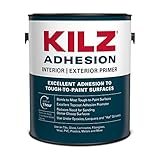
KILZ Adhesion Interior/Exterior Primer
Adhesion primer is the single most important product in a cabinet repaint — and KILZ Adhesion is the one professionals reach for first. It bonds to slick surfaces that regular primers skip right over: laminate doors, powder-coated metal shelves, glossy factory finishes. One thin coat dries in 30 minutes and gives topcoats something real to grip.
The water-based formula cleans up with soap and water, which matters when you’re painting in an enclosed garage. It’s compatible with both oil and latex topcoats, so it doesn’t lock you into a specific paint system. One quart covers around 200 sq ft — typically enough for a full set of garage cabinet fronts. The downside is the smell, which is stronger than most water-based products. Open the garage door and use a fan.
Key Fact: Bonds to surfaces with 0–90° sheen without sanding, including glossy factory finishes.
✔ Pros
- Sticks to laminate and metal
- Water-based, easy cleanup
- Dries in 30 minutes
- Works under oil or latex paint
✘ Cons
- Stronger odor than standard primer
- Needs a separate topcoat
Best for: Anyone painting metal or laminate garage cabinets who wants the topcoat to actually stay put.
Check Price on Amazon →Via Amazon.com
Planning to spray your cabinets? Check our guide to the best airless paint sprayers for furniture and cabinets — a good sprayer cuts your painting time in half.
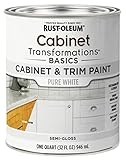
Rust-Oleum Cabinet White Enamel
Rust-Oleum’s cabinet-specific enamel cures to a hard, semi-gloss finish that wipes clean — exactly what you need in a garage where cabinets collect dust, grease, and tool oil. The white is a clean, neutral tone that works with virtually any garage floor or wall color. It levels extremely well when rolled with a 4-inch foam roller, leaving minimal texture on flat door surfaces.
Two coats over KILZ Adhesion Primer delivers results that genuinely look professional. Each coat dries to touch in 2 hours and reaches full hardness in 7 days — so don’t load the shelves back up the same day. Coverage is around 120–130 sq ft per quart, which tends to cover 4–6 cabinet doors per quart depending on size. Recoat time of 4 hours means you can do both coats in a single day if you start early.
Key Fact: Reaches full hardness in 7 days — let cabinets cure before stacking heavy tools on shelves.
✔ Pros
- Hard, scrub-able enamel finish
- Levels well with foam roller
- Semi-gloss looks clean and modern
- Fast recoat — 4 hours
✘ Cons
- Only available in white
- Full cure takes 7 days
Best for: Wood or MDF garage cabinet doors where you want a bright, durable white finish.
Check Price on Amazon →Via Amazon.com
Before painting, remove old failing paint properly. See our guide to the best paint removers for metal and wood — the right stripper saves hours of sanding.
Rust-Oleum Cabinet Black Enamel
Black garage cabinets have become the go-to look for anyone building a serious workshop or showroom-style garage — and Rust-Oleum’s Cabinet Black delivers that look with a film hardness to match. The deep black tone hides oil stains and minor scratches far better than white, making it the practical choice for a working garage where aesthetics meet real use. The formula is the same proven enamel as the white version.
Coverage runs about 110–120 sq ft per quart on previously painted surfaces. On raw wood, you’ll need two primer coats before topcoating in black to avoid patchiness — dark colors amplify any missed spots. Foam rolling produces the smoothest result; a brush works but leaves more visible stroke marks. Many users on Reddit report this as the single best upgrade to their garage — “the black cabinets made the whole place feel like a real shop, not just a storage room.”
Key Fact: Black hides grease marks and minor scratches better than any light color — ideal for working garages.
✔ Pros
- Deep, rich black tone
- Hides stains and minor damage
- Hard enamel — same formula as white
- Pairs with any garage floor color
✘ Cons
- Shows dust more than light colors
- Needs 2 primer coats on raw wood
Best for: Workshop garages, man caves, and anyone wanting a modern, high-contrast cabinet look.
Check Price on Amazon →Via Amazon.com
🔧 Pro Tips: Painting Garage Cabinets
- Remove doors and hardware before painting — it’s faster and produces cleaner lines every time.
- Degrease first with TSP substitute or Dawn dish soap. Grease is invisible but kills adhesion.
- Sand between coats with 220-grit for a silky finish — skip this and you’ll feel the texture forever.
- Thin coats beat thick coats: two thin layers cure harder and look better than one heavy application.
- Foam rollers (4-inch) leave virtually no texture on flat cabinet faces — don’t use a standard nap roller.
🎨 PAINT Stage — Where This Fits in Your Renovation
Painting garage cabinets is a PAINT stage task — it comes after all prep, cleaning, and priming is complete. If your cabinets have old peeling paint, strip or sand them before priming. Check our guide to paint spray guns if you want to spray rather than roll — a sprayer produces a more uniform finish on cabinet boxes and frames.
🧮 Cabinet Coverage Calculator
Estimate how much paint you need for your garage cabinets.

How to Paint Garage Cabinets: Step-by-Step
Garage cabinets are more forgiving than kitchen ones — nobody inspects them in raking light, and a brush mark on a garage door front is not a problem. If you are applying what you learn here to the kitchen afterwards, the standard is higher and the method tightens up: the kitchen cabinet guide covers the sheen decision, grain filling, and cure time that garage work lets you skip.
- Empty and disassemble: Remove all items from shelves. Take doors off hinges. Remove handles, knobs, and hinges — bag the hardware so nothing gets lost.
- Clean thoroughly: Wipe all surfaces with TSP substitute or a strong degreaser solution. Garage cabinets collect invisible grease films that destroy adhesion. Let dry completely before proceeding.
- Sand lightly: Use 150-grit sandpaper on wood surfaces to scuff the existing finish. Switch to 220-grit for final smoothing. On metal, use a gray Scotch-Brite pad instead of sandpaper. Wipe away all dust with a tack cloth.
- Apply adhesion primer: Roll or brush one coat of KILZ Adhesion Primer on all surfaces, including cabinet boxes, doors, and face frames. Let dry for the time specified on the label (typically 30–60 minutes).
- Sand again: Lightly sand the dried primer coat with 220-grit. This eliminates any raised grain and creates an ultra-smooth base. Wipe clean with a tack cloth.
- Apply first topcoat: Use a 4-inch foam roller for flat faces and a 2-inch angled brush for edges and frames. Apply thin, even coats. Avoid heavy application — it causes runs and extended drying times.
- Allow full dry time, then recoat: Wait the recommended recoat window (typically 2–4 hours for water-based enamel). Apply the second coat the same way. Most cabinets need two coats; if the substrate was dark, apply a third.
- Reinstall after curing: Allow 24–48 hours before rehanging doors. Wait the full 7-day cure period before placing heavy items on shelves or scrubbing the surface.
Our Verdict
Learning how to paint garage cabinets comes down to three things: proper prep, the right primer, and a hard-drying topcoat. The KILZ Adhesion Primer is the non-negotiable starting point — without it, paint on metal or laminate won’t last a season. Follow it with Rust-Oleum Cabinet White for a clean bright finish, or Rust-Oleum Cabinet Black for a bold modern look. Done right, this project takes one weekend and produces cabinets that look new for years.
Frequently Asked Questions
Do I need to prime garage cabinets before painting?
Yes — especially if the cabinets are metal, laminate, or have a glossy factory finish. Use an adhesion primer like KILZ Adhesion. Without primer, paint on these surfaces peels within months.
What kind of paint is best for garage cabinets?
A hard-drying water-based enamel or alkyd enamel is best for garage cabinets. Cabinet-specific enamels from Rust-Oleum cure harder than standard wall paint and are formulated to resist scrubbing, grease, and impact.
Can I paint metal garage cabinets without sanding?
You can skip sanding if you use an adhesion primer — products like KILZ Adhesion bond to metal without mechanical abrasion. However, cleaning the surface first with a degreaser is still essential.
How long does it take to paint garage cabinets?
Most garage cabinet paint projects take one full day to paint (cleaning, priming, two topcoats) plus 24–48 hours before rehanging doors and 7 days for the paint to reach full hardness.
Should I use a brush or roller to paint garage cabinets?
A 4-inch foam roller is the best tool for flat cabinet faces — it leaves a smooth, nearly brush-mark-free finish. Use a 2-inch angled brush for edges and frames. A paint sprayer gives the most professional result but requires more setup and masking.
How many coats of paint do garage cabinets need?
Two coats of topcoat over one coat of primer is standard. Dark-colored cabinets being painted white may need three coats. Always apply thin coats — thick coats run and take longer to cure.
What sheen should I use for garage cabinets?
Semi-gloss is the minimum recommended sheen for garage cabinets — it resists stains and cleans easily. High-gloss is also an option for a showroom look. Avoid matte or eggshell finishes in a garage; they absorb grease and cannot be scrubbed clean.
What I Learned Painting Garage Cabinets Three Times
The first time I painted garage cabinets I treated them like kitchen cabinets. Degreaser, light scuff, good acrylic enamel, two thin coats — textbook. By the following August the doors on the south wall had hairline cracks along every panel joint, and the shelf edges where tool boxes slide in and out were worn back to primer. Kitchen cabinets live at 20°C year round. A garage swings 40 degrees between a January morning and an August afternoon, and the panels move with it.
The fix was not a better topcoat, it was a bonding primer with enough flexibility to move with the substrate, plus a harder enamel over it. I redid the same doors with a shellac-based bonding primer and an alkyd-modified enamel and they have been through three summers with no cracking. The third set I did, in a detached garage with no heating at all, I sprayed instead of rolling — and the thinner, more even film has held up better than either brushed set.
Prep matters more than the brand here, and more than in almost any other painting job. Garage cabinets carry decades of atomised oil, brake dust, and sawdust bound into a film you cannot see. If the degreaser rinse water beads instead of sheeting, you are not clean yet. Wash again. A cheap paint on a properly degreased and scuffed door will outlast a premium paint on a greasy one, every time. If your cabinets are metal rather than wood, the same logic applies but the primer changes — see our notes on spray primers for wood and metal before you buy anything.
One more thing worth planning for: if you are painting the cabinets you are probably going to look at the walls behind them next. Doing both in one weekend saves a full masking session — our garage wall paint guide covers what pairs well with a cabinet enamel.
When NOT to Paint Garage Cabinets
Do not paint particleboard or MDF cabinets that have already swollen at the base. Water has been in them, the fibres have expanded permanently, and paint will not pull them back together — the swollen edge telegraphs straight through the finish and keeps wicking moisture. Replace those carcasses instead of coating them.
Do not paint below about 10°C, and do not paint on a humid day in an unheated garage. Latex and acrylic films need warmth to coalesce properly; applied cold, the coating dries to the touch but never reaches full hardness, and the first tool box you slide across the shelf takes it off. If your garage is unheated, this is a spring or early-autumn job, not a January one.
And skip painting galvanised steel cabinets without an etching or self-etching primer. Paint applied straight to galvanising peels off in sheets once the zinc starts to weather — a scuff sand alone is not enough.