Painting Concrete Pavers: What Holds Up and What Flakes Off
A failed coating on pavers doesn’t fade politely. It lifts in sheets after the first freeze, traps water underneath, and leaves you on your knees with a scraper and a rented grinder. So can you paint concrete pavers without ending up there? Yes — but only if you stop treating it as a paint job and start treating it as a three-coat system: bonding primer, two thin coats of masonry-grade paint, then a sealer over the top.
Here’s the part most guides skip. Pavers are porous, they sit loose on a sand bed, and they move independently every time the ground freezes and thaws. A film that can’t breathe or flex will fail — not maybe, definitely. That’s why the answer to “can you paint concrete pavers” depends far more on what goes under and over the color than on which color you buy.
I learned that the expensive way. The first patio I painted, I used a decent exterior porch enamel straight onto clean, dry pavers — no primer, because the can said self-priming. It looked showroom-perfect through September. By April the joints were lifting like sunburned skin and about a third of the surface came off with a stiff broom. Here’s what I learned: on pavers, the primer isn’t an optional step that improves adhesion. It’s the only thing holding the whole system to a surface that drinks water from below.
What’s in this guide
Quick picks at a glance
Five products, each doing one job in the system. When people ask can you paint concrete pavers, this is the shortlist I give them — and you don’t need all five. You need the primer, one color coat, and the sealer.
| Product | Role in the system | Best for |
|---|---|---|
| INSL-X Sure Step Acrylic Anti-Slip | Color coat | Walkways, patios and pool surrounds that get wet |
| KILZ Adhesion High-Bonding Primer | Primer | Old pavers with a slick, weathered or previously sealed face |
| KILZ Self-Priming Masonry, Stucco & Brick | Color coat | Large bare-concrete areas on a tight budget |
| Armor AR350 Wet Look Sealer | Sealer (or paint replacement) | Pavers with good color you want richer, not different |
| KILZ 1-Part Epoxy Concrete & Garage Floor Paint | Color coat | Driveway pavers that carry vehicle weight |
The five products I’d actually buy
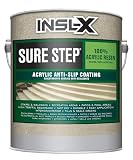
INSL-X Sure Step Acrylic Anti-Slip Paint
Sure Step is a water-reduced acrylic with fine aggregate suspended in the film. That aggregate is the whole point: it gives the cured surface texture you can feel through a bare foot, so a painted paver doesn’t turn into a skating rink the moment it rains. Ordinary porch enamel goes slick when wet, and pavers are almost always outdoors, sloped, and wet at some point.
I put this on a set of stepping-stone pavers running down a shaded side yard — the spot that grows algae every spring. Two thin coats over primer, and it’s held two full seasonal cycles with no lifting at the edges. The honest limitation: the aggregate makes the surface genuinely hard to sweep clean. Leaf debris and grit lodge in the texture, and a leaf blower won’t clear it — you need a stiff brush.
Pros
- Real slip resistance when wet
- Water clean-up, fast recoat
- Holds color in direct sun
Cons
- Textured surface traps debris
- Color range is limited
- Still needs primer on old pavers
Best for: paver patios, pool surrounds and garden paths that people walk on barefoot or in wet weather.
Via Amazon.com
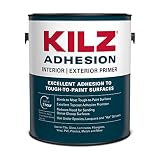
KILZ Adhesion High-Bonding Interior/Exterior Primer
This is a bonding primer, not a standard primer, and the difference matters here. A standard primer soaks in and seals porosity. A bonding primer contains a modified acrylic resin that grips surfaces the paint itself can’t hold — including the glazed, polished face that older pavers develop after years of weather and foot traffic. On a paver that has been sealed at any point in its life, standard primer sits on top of that sealer and takes the topcoat with it when it lets go.
Where it disappoints: it is thin, and it looks like it isn’t doing anything. Resist the urge to lay it on heavy to feel better about coverage. The honest limitation is temperature — below about 50°F it doesn’t coalesce properly and you get a chalky film that fails adhesion testing with a fingernail. On pavers, I’ve had to abandon an October afternoon because the slab was colder than the air.
Pros
- Grips previously sealed pavers
- Recoat in about an hour
- Works under acrylic and epoxy topcoats
Cons
- Thin — easy to over-apply
- Needs 50°F+ surface temperature
- No color, so coverage is hard to see
Best for: pavers that are more than five years old, or any paver you suspect was sealed by a previous owner.
Via Amazon.com
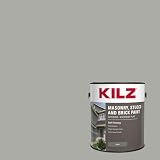
KILZ Self-Priming Masonry, Stucco & Brick Paint
This is an elastomeric-leaning masonry coating, which means the cured film stretches instead of cracking when the substrate moves. That property is worth more on pavers than it is on a wall, because individual pavers shift against each other with every freeze cycle. A brittle film splits along those joints first; a flexible one bridges them.
The “self-priming” claim is where I’d push back. On genuinely bare, never-sealed, freshly etched concrete it holds fine on its own. On a weathered paver patio it does not, and that is exactly the shortcut that cost me a patio. Treat the self-priming label as valid for new masonry only. The other limitation is texture: it builds thick, so it softens the crisp chamfered edge that makes pavers look like pavers.
Pros
- Flexible film bridges hairline movement
- Cheapest cost per covered square foot
- Good hide over blotchy, stained pavers
Cons
- Self-priming claim doesn’t hold on old pavers
- Thick build blurs paver edges
- Not slip-rated
Best for: large paver or block areas where cost per square foot decides the project, over a proper bonding primer.
Via Amazon.com
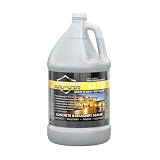
Armor AR350 Low Gloss Wet Look Concrete & Paver Sealer
AR350 is a solvent-based acrylic that penetrates slightly and then cures as a thin film on the surface. It doesn’t change the color of your pavers — it deepens what’s already there, the way rain does. Because the film is thin and breathable, it wears down evenly instead of lifting in flakes, and reapplying restores the look without any scraping.
I keep recommending this to people who came to me asking about paint, because roughly half of them don’t actually want a different color. They want their faded pavers to look like they did when they were new. If that’s you, sealer gets you there with a fraction of the failure risk. Limitation: it darkens everything, permanently for the life of the coat, and it does add gloss — on a full-sun south-facing patio the glare is real.
Pros
- Wears evenly, never flakes
- Reapply straight over the old coat
- Deepens color without hiding texture
Cons
- Can’t change color, only enrich it
- Solvent fumes — needs real ventilation
- Gloss can glare in full sun
Best for: pavers whose color you like but which have gone chalky and pale, and for the final coat over painted pavers.
Via Amazon.com
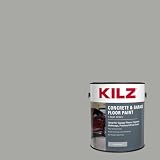
KILZ 1-Part Epoxy Concrete & Garage Floor Paint
Vehicle traffic is a different problem from foot traffic. Hot tires soften an ordinary acrylic film and then pull it up on the turn — that’s hot tire pickup, and it takes coating off in perfect tire-shaped patches. This one-part epoxy-modified acrylic cures harder than a standard porch paint, which is why it survives a turning car where a patio paint won’t.
Be clear-eyed about the compromise: one-part epoxy is not two-part epoxy. It’s easier to apply, has no pot life to race, and costs far less, but it will not match a true two-component system for abrasion life. On a paver driveway I’d expect to refresh it in three to four years, not ten. If your driveway is poured concrete rather than pavers, our guide to the best driveway paint compares heavier options.
Pros
- Resists hot tire pickup
- Single component — no mixing window
- Cleans up with soap and water
Cons
- Shorter life than two-part epoxy
- Long full-cure before vehicle use
- Limited color choice
Best for: paver driveways and parking aprons that carry a car daily.
Via Amazon.com
Pro tips from the driveway
Answer the question before you buy anything. The real answer to can you paint concrete pavers is decided by your substrate, not by the product — so run the test below before a single can leaves the store.
Do the plastic-sheet test first. Tape a 12-inch square of clear plastic flat to a paver, leave it 24 hours in the sun, and lift it. Condensation underneath means moisture is moving up through the paver from the sand bed. Paint over that and it will push your film off within a year. Fix the drainage before you fix the color.
Two thin coats always beat one thick coat. Always. On pavers a thick coat skins over while the underside stays soft, and the soft layer is where the failure starts. If a coat looks patchy, that’s what the second coat is for.
Paint the joints or don’t — but decide before you start. Rolling straight across bridges the joint sand with a continuous film. It looks cleaner, and it cracks first at every joint. Cutting each paver individually looks better for longer but roughly triples your labour.
Work in the shade, not the sun. A paver in August afternoon sun can sit at 130°F. Paint hitting that surface flashes off before it can wet out and bond. Start on the shaded side and follow the shade around.
Skip the pressure washer’s turbo tip. It etches soft aggregate out of the paver face and leaves swirl marks that telegraph straight through two coats of color. A 25-degree fan tip at moderate pressure gets you clean without scarring.
Renovation Stage: PAINT
This project sits in the PAINT stage — the surface is already installed and structurally sound, and you’re changing its appearance and protection, not rebuilding it. If your pavers are sinking, rocking, or the joint sand has washed out, that’s a base-layer problem. Fix it first; no coating survives a paver that moves under your foot.
How much will you actually need?
Paver faces are rough and drink more than smooth concrete. This calculator uses real-world paver coverage rates, not the optimistic numbers on the can.

Can you paint concrete pavers and have it last? Four things decide it
Every question I get about this eventually reduces to the same handful of variables. Get these right and the color you pick barely matters. Get them wrong and the best paint on the shelf fails on schedule.
Moisture has to have somewhere to go
Pavers sit on sand or gravel, and that bed holds water. Water moves up through the paver by capillary action and evaporates off the top face. Put a non-breathable film over that face and the water still arrives — it just has nowhere to leave. Pressure builds under the film and pushes it off, which is why paint on pavers so often fails from underneath rather than from wear on top. Breathable acrylic and masonry coatings tolerate this. Solvent-heavy sealed films and thick epoxies tolerate it much less well. The EPA’s guidance on permeable pavement is worth reading if your pavers were installed specifically to drain — coating them can defeat the reason they’re there.
The prep matters more than the brand
I’d rather use a mid-tier masonry paint over correctly cleaned, etched and primed pavers than the most expensive coating on the shelf over a surface I rinsed with a hose. Durability on a paver is roughly half product and half surface preparation, and the preparation half is the one you control completely. Efflorescence — that white powdery bloom — has to come off with an acidic masonry cleaner, not a brush. Old sealer has to be ground or stripped; our guide to the best paint remover for concrete covers what actually cuts it.
Movement decides the failure point
Ask yourself whether the coating will be asked to span a joint. Pavers move against each other; a poured slab doesn’t. That single difference is why technique that works on a poured concrete floor transfers only partly here. Elastomeric and flexible acrylic films handle joint movement. Hard, brittle, high-build films crack along every joint in the first winter. If you want a rigid finish, cut the pavers individually and let the joints stay unpainted.
Slip resistance isn’t optional outdoors
Paint fills the micro-texture of a paver face. That’s how it hides stains, and it’s also how it turns a grippy surface slick. Any coated paver that gets wet — patio, path, pool surround, step — should either use a paint with aggregate in it or have a slip additive stirred into the final coat. This is the mistake I see most often on otherwise well-executed jobs.
When you should NOT paint your pavers
If they’re permeable pavers. They were installed to let water through. Coating them turns an engineered drainage surface into a hard one, and in some municipalities that quietly puts you out of compliance with your own stormwater plan.
If the plastic-sheet test comes back wet. Active moisture rising from the bed will lift any film. Fix the grading or drainage first, or use a breathable sealer instead of paint.
If the pavers rock, sink or have lost their joint sand. Paint is not a structural repair, and a coating across a moving joint cracks at exactly the place you’ll notice it.
If you only want the color to look richer. Don’t paint at all — seal. A wet-look sealer gets you deeper, warmer color with almost none of the failure risk, and it never needs stripping.
If you can’t commit to maintenance. Painted pavers need touch-up every two to four years. Bare pavers need nothing. That’s a real trade you’re making, not a detail.
Prep steps, in order
Once you’ve settled the question of can you paint concrete pavers on your particular patio, this is the sequence. Do not reorder it. Every step exists because skipping it causes a specific, predictable failure.
- Clear and inspect. Lift furniture, pull weeds from joints, and note any paver that rocks. Reset those before anything else.
- Clean properly. Pressure wash at a 25-degree fan tip. For efflorescence or old stains, follow with an acidic masonry cleaner and rinse thoroughly — residual acid kills adhesion.
- Strip old coatings. Anything glossy, patchy or peeling has to come off completely. Feathered edges telegraph through new paint.
- Dry fully. Minimum 48 hours after washing, longer in humidity. Then run the plastic-sheet test.
- Refill joint sand. Sweep polymeric sand into the joints and set it before you coat, not after.
- Prime. One even coat of bonding primer. Scratch-test it when dry before opening the color.
- Two thin coats of color. Respect the recoat window on the can, work in shade, and keep a wet edge across each row.
- Seal. Two coats of breathable acrylic sealer once the color has cured — usually 72 hours, not 24.
If you want the mechanics of the priming step in more depth, the same logic applies here as it does on the vertical masonry covered in our stucco paint guide. And if you’re weighing coating a synthetic outdoor surface generally, painting Trex decking runs into a near-identical adhesion problem from the opposite direction. Family Handyman’s paver cleaning walkthrough is a solid reference for the washing stage.
The verdict
So — can you paint concrete pavers? Yes, and it holds up well when you build it as a system: bonding primer, two thin coats of a flexible masonry or anti-slip acrylic, then a breathable sealer. For a patio or path, I’d start with INSL-X Sure Step over KILZ Adhesion primer. For a driveway carrying a car, swap the color coat for the KILZ 1-part epoxy and give it the full seven-day cure.
But be honest about what you want. If the answer is “I want my pavers to look new again,” skip the paint entirely and put two coats of AR350 down. It’s cheaper, it’s a Saturday instead of a long weekend, and it can’t peel. Paint is the right call when you need a different color — not when you need the old one back.
Frequently asked questions
How long does paint last on concrete pavers?
Three to five years on a patio with foot traffic, two to four on a driveway, if the system was built correctly with primer and sealer. Without a bonding primer, expect visible failure inside a single freeze-thaw season.
Can you paint concrete pavers that have already been sealed?
Not directly. The sealer has to come off first — a bonding primer grips the sealer, and the sealer lets go of the paver, taking everything with it. Grind or chemically strip until water soaks into the paver instead of beading on it.
Is sealing better than painting pavers?
For most people, yes. A sealer wears evenly, never flakes, and reapplies straight over itself with no stripping. Painting is the better answer only when you actually need a different color, not a richer version of the existing one.
Can you paint concrete pavers in cold weather?
Only above 50°F surface temperature, and remember the paver runs colder than the air. Below that, acrylic films don’t coalesce and you get a chalky coat that fails a fingernail scratch test. Spring and early autumn are the reliable windows.
Will painted pavers get slippery when wet?
Yes, unless you plan for it. Paint fills the micro-texture that provides grip. Use a coating with aggregate already in the film, such as an anti-slip acrylic, or stir a slip additive into your final coat.
What kind of paint sticks best to concrete pavers?
A flexible acrylic or elastomeric masonry paint over a bonding primer. Flexibility matters because pavers move independently at every joint, and brittle high-build films crack there first.
Do you need to prime before painting pavers?
On anything other than brand-new, never-sealed pavers, yes. This is the step people skip and the reason most paver paint jobs fail. A bonding primer is the only part of the system gripping a porous surface that breathes moisture from below.
How do you fix paint that’s peeling off pavers?
Scrape and grind back to bare paver across the whole failed area — spot-patching leaves a hard edge that lifts again. Then diagnose why it failed, usually rising moisture or a missed primer, before recoating.
ThePaintly is reader-supported. We only recommend products we’ve personally evaluated. When you buy through links on this site, we may earn an affiliate commission at no extra cost to you.