Can You Paint Aluminum Siding? Here’s What Actually Holds Up
Updated: July 2026 | By Sophie Ulman
Get this one wrong and you will be scraping curled, flaking paint off your walls before the second winter is out. So can you paint aluminum siding? Yes, you absolutely can — and it is one of the cheapest ways to make a tired house look new. But aluminum is slick, it oxidizes into a chalky powder, and it expands and contracts more than wood does. Skip the right primer and your topcoat has nothing to grab. The question is never really “can you paint aluminum siding” — it is whether your paint will still be there in five years.
I learned this the hard way. The first time I painted aluminum siding on a 1970s ranch, I pressure-washed it, let it dry, and rolled on exterior latex the same afternoon. It looked flawless for about eight months. Then the south-facing wall started shedding paint in sheets the size of my hand. The problem was chalk — oxidized aluminum I never sealed. Here is what I learned: on aluminum, the primer is the whole job. The topcoat is almost an afterthought.
What this guide covers
Quick picks at a glance
| Product | Best for | Type |
|---|---|---|
| KILZ Adhesion High-Bonding Primer | Chalky, slick, previously painted siding | Bonding primer |
| Rust-Oleum Self-Etching Primer | Bare metal scratches and dents | Etching primer (spot use) |
| KILZ Siding, Fence & Barn Paint | The exterior topcoat itself | Acrylic/oil hybrid paint |
| Zinsser Bulls Eye 1-2-3 | Stain-blocking all-surface backup | Water-based primer |
The 4 products that actually stick to aluminum
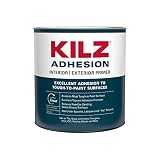
KILZ Adhesion High-Bonding Interior/Exterior Primer
This is the primer I reach for first on aluminum. It is a modified acrylic that stays slightly flexible after it cures — that flexibility matters because aluminum moves a lot as it heats and cools, and a brittle primer film cracks along with the expansion. The label lists slick surfaces like PVC, glass, tile, glossy finishes, chalky paints, and metals, which is exactly the range you hit on old siding.
I used it on a lightly chalked aluminum garage wall that had been painted twice before. Two thin coats of topcoat over it, and after 18 months through a full freeze-thaw cycle there is zero lifting at the seams. The honest limitation: it will not save you from heavy chalk. If you can rub off white powder with your palm, you still have to wash that off first — no primer bonds to loose oxidation.
- Stays flexible — moves with the metal
- Bonds to glossy and lightly chalked paint
- Fast recoat window
- Will not stick to loose chalk — wash first
- Coverage is modest; buy for two coats
Rust-Oleum Automotive Self-Etching Primer
When siding gets dented or scratched down to raw aluminum, you have exposed bright metal that no ordinary primer grips well. A self-etching primer solves that with a mild acid in the formula that micro-roughens the surface chemically — it literally bites into the bare aluminum so the coating locks on. This is the automotive trick for bumpers and trim, and it works the same on siding.
Use it as a spot primer, not a whole-wall product. I keep a can on the ladder and hit every gouge and scrape before the bonding primer goes on. One honest caveat: it is a solvent spray with strong fumes, so mask it and work upwind — and it comes in dark green or gray, so it must be topcoated, never left exposed.
- Chemically bonds to bright bare aluminum
- Fast-drying aerosol — easy spot work
- Adds corrosion resistance
- Strong solvent fumes — ventilation required
- Tinted; must be topcoated
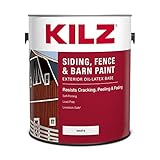
KILZ Siding, Fence & Barn Paint (Exterior)
Once the metal is primed, the topcoat needs one quality above all others: flexibility. This hybrid combines an oil-based penetrating carrier with a latex film, so it soaks in and grips while staying elastic enough to ride the metal’s expansion without cracking. That elongation — the film’s ability to stretch instead of split — is what keeps aluminum paint jobs alive through a decade of summers.
I have used it on both wood and metal outbuildings, and the fade resistance is the part that surprised me — a barn-red wall held its color far better than a cheaper latex I ran alongside it. The limitation worth naming: it is a flat-to-low-sheen finish, so if you want a crisp satin look on your siding, this is not it. For durability over looks, though, it is hard to beat at the price.
- Flexible film resists cracking on metal
- Strong fade and weather resistance
- One product for siding, fences, and outbuildings
- Flat/low sheen only
- Oil component means longer dry times
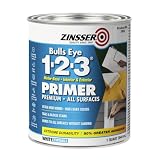
Zinsser Bulls Eye 1-2-3 Water-Based Primer
If your siding is sound, clean, and only lightly weathered — no heavy chalk, no bare metal — this water-based all-surface primer is the simpler, low-odor path. It grips glossy surfaces without sanding and seals in old stains and streaks so they do not bleed through your new color. Cleanup is soap and water, which matters when you are priming a whole house in a weekend.
I keep it on the shelf as my everyday exterior primer, and it has never let me down on stable painted aluminum. Here is the honest line, though: it is not as aggressive a bonder as the KILZ Adhesion on slick or chalky metal. If you are unsure how oxidized your siding is, spend up on the dedicated bonding primer — the extra few dollars is cheaper than repainting.
- Low odor, water cleanup
- Blocks stains and bonds to gloss
- Great value for whole-house priming
- Weaker grip on heavy chalk than a bonding primer
- Not for bare metal — etch those spots first
Pro tips from the ladder
Test for chalk before you buy anything: rub a dark cloth hard across the siding. If it comes away white and powdery, you have oxidation, and you must scrub it off with a stiff brush and a cleaner until the cloth stays clean. Prime the same day you wash — aluminum re-oxidizes fast, and a fresh clean surface bonds far better than one that has sat a week. And do not spray on a windy afternoon; overspray on a car two houses down is a conversation you do not want to have. Two thin coats always beat one thick coat. Always.
How much paint and primer will you need?
Enter your siding dimensions for a rough estimate. Aluminum siding is smooth, so coverage runs a little better than rough wood — but always buy for two thin coats.

Can you paint aluminum siding the right way?
So can you paint aluminum siding so it actually lasts? It comes down to three decisions. Get these right and the rest is just rolling paint. This is where most weekend jobs go sideways, and it is worth slowing down for.
1. Match the primer to the surface, not the price tag
Chalky or glossy metal needs a flexible bonding primer. Bare, scratched aluminum needs an etching primer on those spots. Clean, stable siding can take a straightforward all-surface primer. Diagnose your walls first, then buy — because the primer is doing 80% of the work here. Prep beats product every time: durability is 50% the coating and 50% the surface underneath it. If you are weighing metal coatings generally, our guide to the best paint for aluminum breaks the formulas down further.
2. Pick a topcoat built to flex
Aluminum expands and contracts more than wood, so your paint must stretch with it. Water-based acrylic latex is the standard answer — it has the elongation to move without cracking. Avoid straight oil-based topcoats on siding; they cure hard and brittle and split at the seams. Family Handyman and This Old House both land on flexible acrylic for exactly this reason. For color and sheen options, compare against a general exterior house paint lineup before you commit.
3. Respect the weather window
Paint aluminum siding when it is dry, mild, and out of direct blazing sun — 50 to 85°F is the sweet spot. Hot metal flashes the paint before it can level, and cold slows curing to a crawl. If you are spraying, a good exterior paint sprayer lays a more even film on smooth aluminum than a roller ever will. The same “will it stick” logic applies to other tricky surfaces — see whether you can paint stainless steel or handle vinyl siding if your house is a mix.
When NOT to paint your aluminum siding
Painting is not always the right call. If the siding is heavily corroded — pitted, bubbling, or flaking down to rough oxidized metal across whole panels — no primer will give you a lasting bond, and replacement or professional refinishing is the honest answer. Skip painting too if the current coat is actively peeling in large sheets; you have to strip that failure back to a sound surface first, or your new paint just peels along with the old. And never paint over active chalk without washing it off — that white powder is a release layer, and paint on top of it is guaranteed to fail. If your metal is more rust than aluminum in spots, our paint for rusty metal guide covers that different problem.
The prep that makes or breaks it
Once you decide to paint aluminum siding, prep is where the durability is won. Here is the sequence I follow on every aluminum job, in order. Do not skip steps to save an afternoon — the afternoon you save now is a full repaint you pay for later.
Wash and de-chalk. Scrub the siding with a stiff brush and a mild detergent made for aluminum, working top to bottom, until a rubbed cloth comes away clean. Rinse and let it dry fully. Scuff the slick spots. Knock down any glossy or rough areas with fine steel wool or a scuff pad so the primer has tooth. Spot-etch bare metal. Hit every scratch and dent with self-etching primer. Prime the whole surface. One even coat of bonding primer, brushed or sprayed, edge to edge — no bare gaps. Topcoat in two thin coats. Let the first cure to the recoat time, then lay the second. Thin and even beats thick and fast, every single time.
The verdict
Can you paint aluminum siding and have it last? Yes — if you treat the primer as the main event. For most homes, prime with KILZ Adhesion, spot-etch any bare metal with Rust-Oleum Self-Etching Primer, then top it with a flexible exterior coat like KILZ Siding, Fence & Barn Paint. Do the prep, respect the weather window, and lay two thin coats — that is a paint job that holds through a decade of seasonal cycles, not one that peels by spring.
Frequently asked questions
Can you paint aluminum siding without priming it first?
No — not if you want it to last. Aluminum is slick and oxidizes into chalk, and topcoat alone has nothing to grip. A bonding or etching primer is the step that makes the whole job durable.
What is the best paint for aluminum siding?
A quality exterior acrylic latex, because it stays flexible and stretches with the metal instead of cracking. Avoid straight oil-based topcoats, which cure brittle and split at the seams over time.
Do I need to remove old paint before repainting aluminum siding?
Only where it is failing. Sound, well-adhered old paint can be cleaned, scuffed, and painted over. Actively peeling or flaking areas must be scraped back to a solid surface first.
How do I know if my aluminum siding is chalking?
Rub a dark cloth firmly across it. If the cloth comes away white and powdery, you have oxidation. Wash and scrub it off completely before priming — paint will not bond over loose chalk.
How long does painted aluminum siding last?
With proper prep, the right primer, and two thin topcoats, a good job lasts 8 to 15 years. Skipped prep or the wrong primer can drop that to a single season.
Can you spray paint aluminum siding instead of rolling it?
Yes, and spraying lays a more even film on smooth aluminum. Just prime first, mask nearby surfaces and vehicles, and avoid windy days — overspray travels farther than you think.
Sources and further reading: This Old House — How to Paint Aluminum Siding and Family Handyman — How to Paint Aluminum Siding.
ThePaintly is reader-supported. We only recommend products we’ve personally evaluated. When you buy through links on this site, we may earn an affiliate commission at no extra cost to you.
