Best Airless Paint Sprayer for Beginners: 5 Easy 2026 Picks
Easy Airless Paint Sprayers: Start Smooth as a First-Timer
Updated July 2026 · By Sophie Ulman
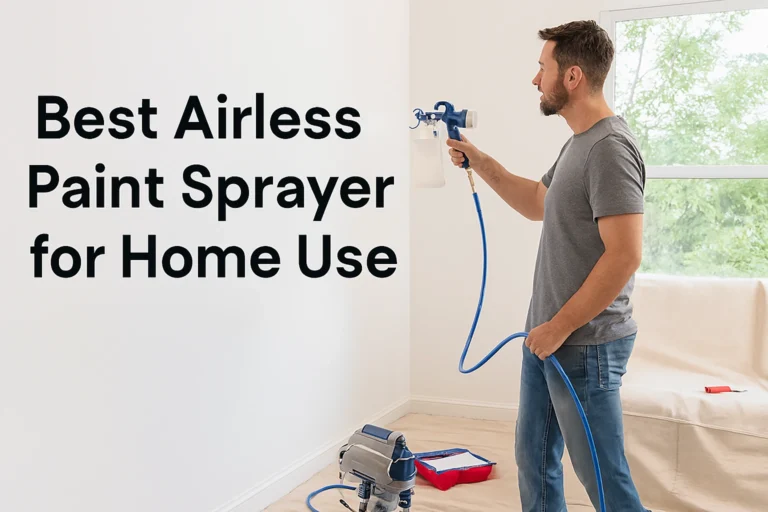
The best airless paint sprayer for beginners is not the most powerful one — it’s the one that controls overspray for you so your first project doesn’t end with paint on the ceiling, the floor, and your forearms. Get this choice wrong and you’ll fight the tool the whole way through; get it right and you’ll lay down a finish that looks like a pro stood behind it. This guide gives you five beginner-friendly 2026 models and the one spec that actually separates an easy sprayer from a frustrating one.
Prep matters more than the brand. A beginner with a $200 sprayer and clean, primed surfaces will beat an expert spraying over grease and dust every time. Durability is roughly half product quality and half surface preparation — so before you spend a dollar, plan to clean, sand, and prime.
Quick Picks at a Glance
| Pick | Model | Why Beginners Like It |
|---|---|---|
| 🥇 Best Overall | Titan ControlMax 1700 | Low-pressure tech cuts overspray ~55% |
| 🥈 Best Budget | Graco TrueCoat 360 DSP | Ready out of the box, no thinning |
| 🥉 Best for Big Jobs | Graco Magnum X5 | Sprays straight from the bucket |
| Best Value | Wagner Control Pro 130 | High Efficiency Airless = less mess |
| Best Light-Duty | HomeRight Super Finish Max | Forgiving HVLP feel for small projects |
5 Best Airless Paint Sprayers for Beginners, Reviewed
Titan ControlMax 1700
The Titan ControlMax 1700 is the sprayer I hand to anyone running airless for the first time. Its High Efficiency Airless (HEA) tip technology drops the operating pressure dramatically, which reduces overspray by up to 55 percent compared with a conventional airless gun. In plain terms: less paint fog in the air means less wasted paint, less cleanup, and a far smaller margin for beginner error. It pulls paint straight from a 1- or 5-gallon can, so you’re not babysitting a tiny cup.
- Up to 55% less overspray
- Sprays unthinned latex
- Sprays from the can directly
- Annual-use motor, not throwaway
- Heavier hose to manage
- Full airless cleanup still required
Best for: First-timers who want one tool that grows with them from walls to fences to doors.
Check Price on Amazon →If you’re still deciding whether airless is even the right family of sprayer for you, read our plain-English 2026 beginner’s guide to paint spray guns first — it walks through airless versus HVLP before you spend anything.
Graco TrueCoat 360 DSP
The TrueCoat 360 DSP is the most truly “out of the box” beginner sprayer here. There’s no air canister, no compressor, and no paint thinner required — you fill it, prime it, and spray. Its VacuValve technology lets you spray at any angle, even upside down, which matters more than you’d think the first time you try to hit the underside of a railing or the top edge of a door. For touch-ups and small-to-medium projects, it removes nearly every step where a beginner usually gets stuck.
- No thinning, ready immediately
- Sprays at any angle
- Compact and light
- Reversible tip clears clogs fast
- Cup capacity limits big jobs
- Refills interrupt long sessions
Best for: Furniture, doors, trim, and weekend touch-ups where a full airless rig is overkill.
Check Price on Amazon →Graco Magnum X5
When your “first project” is actually a whole exterior or a fence line, the Magnum X5 is the beginner-accessible workhorse. It draws paint straight from a 1- or 5-gallon bucket and pushes it through up to 75 feet of hose, so you can reach a second story without dragging the whole unit around. It is more sprayer than a single small room needs, but for anyone whose introduction to spraying is a big surface, it saves hours over rolling.
- Sprays from the bucket
- Long hose reaches high work
- Handles unthinned latex
- Fast on large surfaces
- More overspray than HEA models
- Overkill for one small room
Best for: Beginners whose first job is a fence, deck, or full house exterior.
Check Price on Amazon →Wagner Control Pro 130
Wagner’s Control Pro line uses High Efficiency Airless, the same low-pressure principle as the Titan — it claims up to 55 percent less overspray than traditional airless. The 130 model is the sweet spot for a beginner who wants near-pro results without a pro price. It sprays unthinned paint and stain, and the 25-foot hose is enough for most interior and small-exterior work. Of the value picks, this is the one I’d point a careful beginner toward.
- ~55% less overspray (HEA)
- Sprays unthinned coatings
- Strong price-to-performance
- Good for interiors
- Shorter hose than the Magnum
- Cleanup still takes patience
Best for: Beginners who want the lowest-mess airless experience at a mid-tier price.
Check Price on Amazon →HomeRight Super Finish Max
Technically an HVLP rather than a true airless, the Super Finish Max earns a spot here because it’s the gentlest possible on-ramp for a nervous first-timer. Under $100, with three brass tips and a simple pattern knob, it teaches you trigger control and pass speed on small projects before you graduate to a true airless rig. If a fence and a house exterior aren’t in your near future, this is the lowest-risk way to learn the motion.
- Under $100 entry point
- 3 tips included
- Very low overspray indoors
- Lightweight and simple
- Requires thinning thick paint
- Cup capacity limits large jobs
Best for: Furniture, cabinets, and small indoor projects where airless is more than you need.
Check Price on Amazon →🎯 Beginner Spray Technique That Actually Works
- Test every setup on cardboard first. Adjust pressure until the pattern is even with no heavy edges before you touch the real surface.
- Keep the gun 10–12 inches from the surface and move your whole arm, not your wrist — wrist movement arcs the gun and thins the edges.
- Two thin coats always beat one thick coat. Always. A coat that looks slightly under-covered before it dries is correct.
- Start your pass before you pull the trigger and release after the pass ends. This “feathering” prevents heavy blobs at the start and stop.
- Clean immediately. A clogged tip from yesterday’s paint is the number-one reason beginners think their sprayer “broke.”
Paint Volume Estimator
🪣 How Much Paint Will Your Job Need?
Buying Guide: What Beginners Should Actually Look For
Lower max pressure, with adjustability
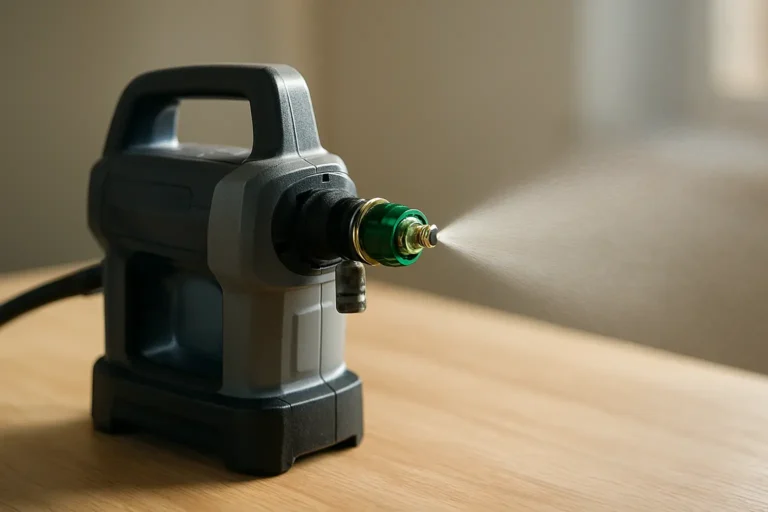
The instinct is to buy the most powerful sprayer you can afford. For a beginner, that’s backwards. High pressure atomizes paint into a fine mist that bounces off the surface and drifts everywhere — that’s overspray, and it’s both wasteful and intimidating. Models using High Efficiency Airless (HEA) deliberately lower the pressure and claim up to 55 percent less overspray. Look for an adjustable pressure dial so you can start low and learn.
Sprays unthinned, or sprays from the can
Thinning paint to the right viscosity is a skill, and it’s one more place a first project can go sideways. A sprayer that handles unthinned latex straight from the can removes that variable entirely. If your chosen model needs thinning, use the included viscosity cup and follow the paint maker’s spec exactly.
Reversible (self-clearing) tip
Tip clogs are inevitable. A reversible tip lets you flip it, blast the clog clear, and flip back — no disassembly. For a beginner, this single feature prevents most mid-job panic. According to Family Handyman, the reversible tip is one of the most beginner-friendly features on modern sprayers.
Cleanup you’ll actually do
The best sprayer is the one you’ll clean properly every time. Airless units need the hose, pump, and tip flushed thoroughly, and skipping it ruins the tool. If a long cleanup will tempt you to cut corners, a smaller cup-fed model may serve you better. When you’re ready to compare the whole field, see our roundup of the best airless paint sprayers and our picks for the best airless sprayers for DIY projects.
When NOT to Use an Airless Sprayer
⚠️ Skip the sprayer in these cases
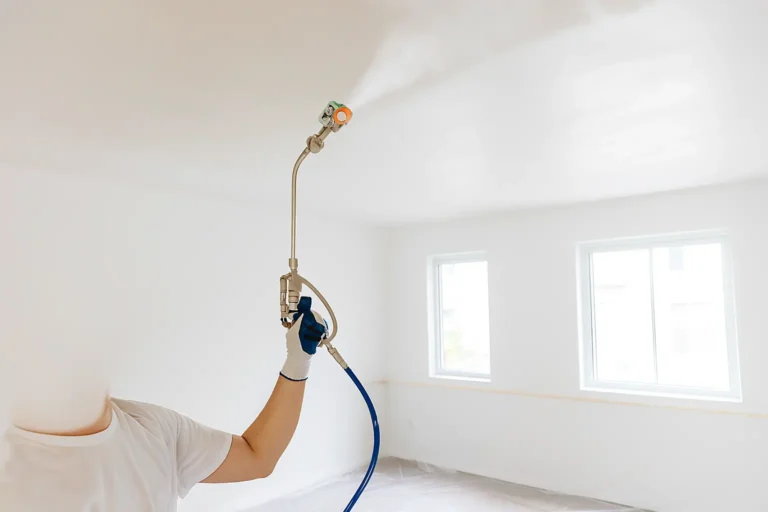
Airless isn’t the right answer for every job, and pretending otherwise is how beginners waste paint. Don’t reach for it on a tiny project — repainting one bookshelf or a single door means more time masking and cleaning than you’ll ever save spraying. Don’t spray on a windy day outdoors; even low-overspray models will carry mist onto your neighbor’s car. Don’t spray indoors without sealing the room with plastic and wearing a proper respirator, because atomized paint settles on every uncovered surface. And don’t spray over a dirty or glossy surface with no prep — full stop. The sprayer bonds paint to whatever is underneath, so unprimed gloss or grease will let the new coat peel within months. If you want a contained, mess-free space to learn in, build one first with our DIY spray booth guide.
My Verdict
For most beginners, the Titan ControlMax 1700 is the best airless paint sprayer to start with in 2026 — its low-pressure HEA technology does the overspray control for you, which is exactly the help a first-timer needs. If your first job is small, the Graco TrueCoat 360 DSP sprays out of the box with no thinning; if it’s big, the Graco Magnum X5 draws straight from the bucket. Whichever you pick, remember the rule that matters more than the brand: clean, sand, and prime first, then practice on cardboard before the wall.