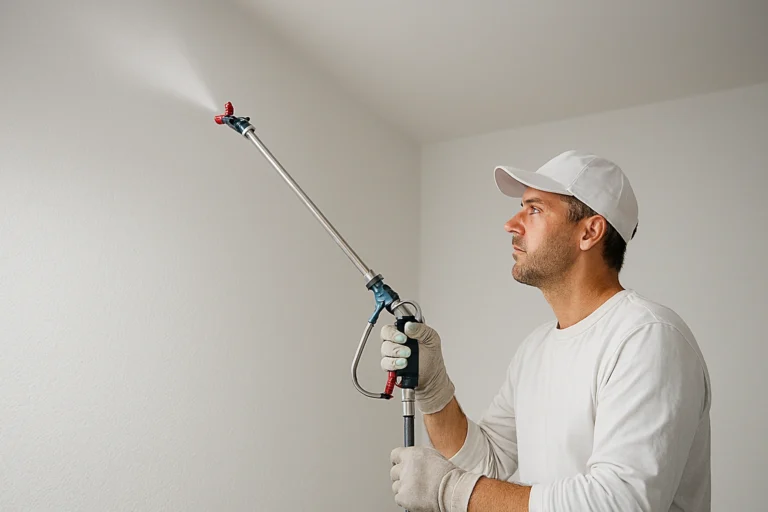
Best Airless Paint Sprayer for Home Use 2026: 3 Picks
Updated: July 2026 · By Sophie Ulman
Buy the Wrong Airless Sprayer for Home Use and You’ll Either Overpay for Power You Never Use, or Refill the Cup Every Five Minutes
Choosing the best airless paint sprayer for home use comes down to three things: consistent pressure for smooth coverage, easy cleanup, and a size that fits the average homeowner’s projects without overkill. You don’t need a contractor-grade machine to paint your living room, deck, or fence — but you do need one that won’t clog on thick latex, run out of pressure mid-wall, or take 45 minutes to clean. I’ve used all three sprayers below on real jobs — fences, an interior repaint, and a set of cabinet doors — to find out which one actually earns a spot in a home garage.
The first time I used a true airless sprayer, I skipped straining the paint because the can looked fine straight out of the box. Twenty minutes in, the tip clogged on a dried paint chunk I never saw coming, and I lost another fifteen minutes soaking and clearing it. Now I strain every gallon through a mesh paint strainer before it goes anywhere near the sprayer, no exceptions. It takes two minutes and it’s the difference between a smooth afternoon and a frustrating one.
Whether you’re tackling interior walls, exterior siding, or furniture, the best airless paint sprayer for home use is the one that matches your project scale and handles your preferred paint without thinning. Here’s what I found.
In This Guide
| Pick | Model | Max PSI | Hose | Best For |
|---|---|---|---|---|
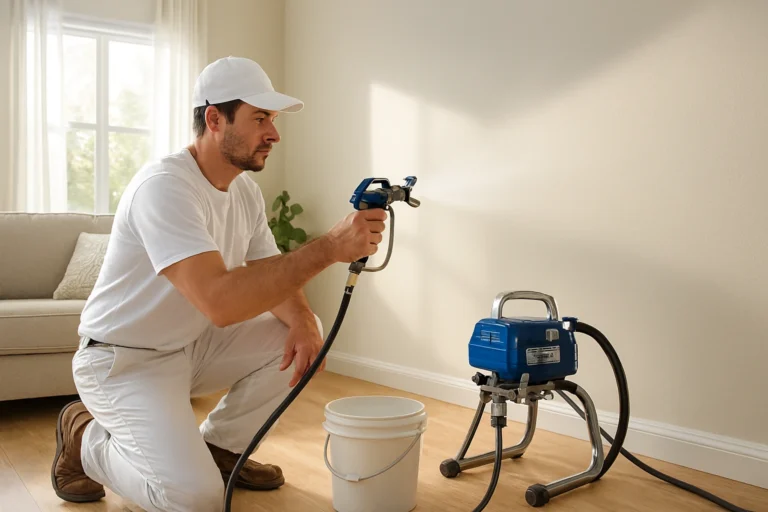
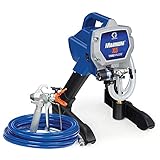
| Best Overall | Graco Magnum X5 | 3,000 PSI | 25 ft | Interior walls, single rooms |
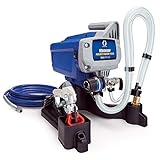
| Large Projects | Graco Magnum X7 | 3,300 PSI | 50 ft | Whole-house, fences, decks |
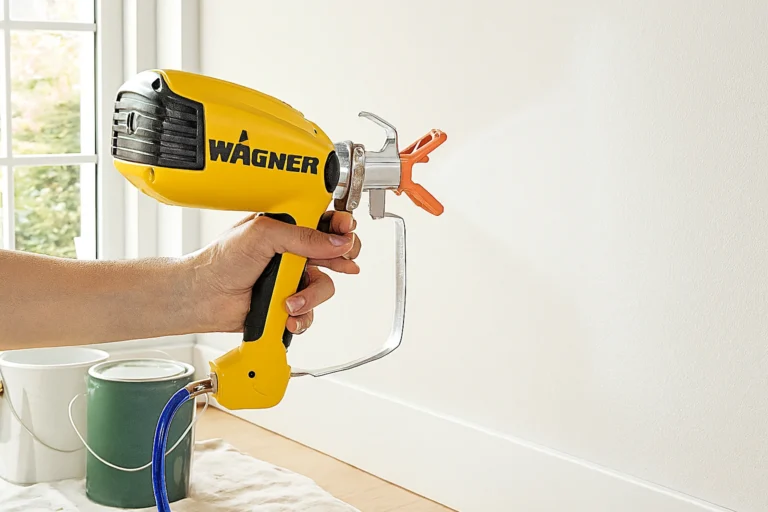
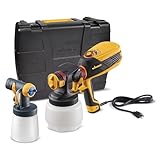
| Budget Pick | Wagner Flexio 590 | HVLP | Cup-fed | Small rooms, cabinets, trim |
Pros
- Sprays unthinned latex paint
- PowerFlush cleanup — easy garden hose rinse
- Durable stainless steel piston pump
- Adjustable pressure for different surfaces
Cons
- 25 ft hose limits reach on multi-story exteriors
- Louder than HVLP alternatives
- Tip clogs on paint with chunks/debris — always strain paint first
🎯 Best for: Homeowners painting 1–3 interior rooms per year, single-story exterior projects, fences, and decks.
Check Price on AmazonVia Amazon.com
For smaller detail work like furniture and cabinets, see our roundup of the best airless paint sprayers for furniture — a different set of needs than wall coverage.
Pros
- 50 ft hose — reach two stories without moving the unit
- Higher pressure and flow rate than X5
- Cart design for easy mobility
- Accepts standard Graco tips
Cons
- Heavier and larger than X5 — less convenient for small jobs
- Higher price point
- Overkill for single-room projects
🎯 Best for: Large exterior projects, whole-house painting, long fence and deck runs, and homeowners who paint multiple times per year.
Check Price on AmazonVia Amazon.com
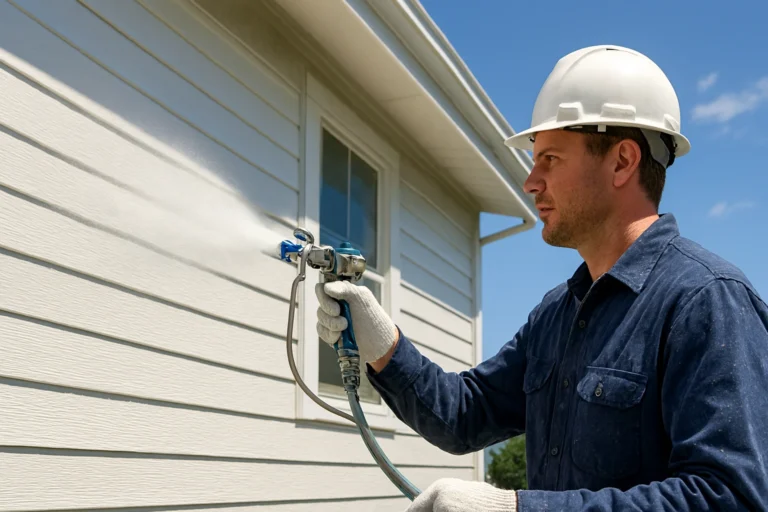
Using your sprayer outside? Our best exterior paint sprayer guide covers tips for working in wind and sun conditions that affect finish quality.
Pros
- Much lower price than true airless models
- Less overspray — better for indoor use near furniture
- Two nozzles for walls and detail work
- Lightweight and easy to store
Cons
- Not a true airless sprayer — limited on thick paints
- Cup-fed design requires frequent refilling on large walls
- Slower coverage rate than Graco models
- Not ideal for exterior siding or large surfaces
🎯 Best for: Small interior rooms, cabinets, trim, furniture refinishing, and first-time sprayer users on a budget.
Check Price on AmazonVia Amazon.com
More From ThePaintly
- Sprayers for Furniture
- Best Exterior Sprayer
- DIY Spray Booth
- Beginner’s Spray Gun Guide
⚠ When NOT to Use an Airless Sprayer for Home Use
Skip the sprayer entirely on a single door, a small touch-up patch, or any job under about 20 square feet — by the time you mask the area, mix or strain the paint, and clean the unit afterward, a brush would have finished faster. I also wouldn’t reach for a true airless unit like the X5 or X7 in a garage or room without real cross-ventilation; the fine mist these machines produce travels farther than people expect, and I’ve had overspray drift onto a parked car from well across a driveway. If your project is mostly fine detail work — cabinet doors, trim, small furniture — the Wagner Flexio’s lower overspray will save you more cleanup time than the raw speed of a true airless unit ever will.
⚡ Pro Tips for Spraying Walls at Home
- Always strain your paint. Pour paint through a mesh paint strainer into your bucket before feeding it to any sprayer. Particles in the paint are the #1 cause of tip clogs on the best airless paint sprayer for home use models.
- Test on cardboard first. Before spraying a wall, spray onto a piece of cardboard to dial in the fan width and pressure. You want an even, oval pattern — if it tails or has a heavy center, adjust the tip or pressure.
- Overlap each pass by 50%. Keep the gun moving at a steady pace and overlap each stroke by half the fan width. This prevents banding and uneven coverage that’s hard to fix once dried.
Where This Fits in the Renovation Protocol
The best airless paint sprayer for home use belongs at the PAINT stage — after surface prep, patching, and priming are complete. Sprayers reward good prep: any imperfections show clearly under sprayed finish coats. See our guides on how to paint garage walls and fast-drying cordless sprayers for large projects for full workflow guides.
🎨 Sprayer Coverage Calculator
Estimate how long your project will take with each sprayer model.

How to Choose the Best Airless Paint Sprayer for Home Use
Before buying, consider these four factors to narrow down the right model for your situation. The best airless paint sprayer for home use isn’t necessarily the most powerful — it’s the one that matches your project scale, your skill level, and the paints you’ll actually use.
True Airless vs. HVLP: What’s the Actual Difference?
True airless sprayers (Graco X5, X7) use a high-pressure pump to force paint through a small tip at up to 3,000+ PSI. This atomizes paint into a fine mist without air, allowing thick, undiluted paints to spray smoothly. HVLP sprayers (Wagner Flexio 590) use a turbine fan to push large volumes of low-pressure air through the paint. The result is less overspray and quieter operation, but HVLP struggles with thicker paints and covers large areas more slowly.
For walls, ceilings, and exterior siding, true airless wins on speed and versatility. For furniture, cabinets, and detailed woodwork, HVLP wins on finish quality and control. According to This Old House, most serious DIY renovators own one of each over time.
Tip Size and Paint Compatibility
The spray tip is the most critical component for the best airless paint sprayer for home use. Tip size is described with a 3-digit number (e.g., 515): the first digit × 2 = fan width in inches, the last two = orifice diameter in thousandths. A 515 tip produces a 10-inch fan and a 15-thou orifice — suitable for latex wall paint. A 411 tip (8-inch fan, 11-thou orifice) suits thin stains and lacquers. Match your tip to your paint — wrong tip size is the most common cause of poor results from an otherwise capable machine.
Hose Length and Project Size
For a single room, a 25-foot hose is adequate. For multi-room projects or exteriors, a 50-foot hose lets you place the unit in one location and cover the entire surface area without stopping to move the machine. The time saved on a large project is significant — this single spec is the main practical difference between the X5 and X7.
Cleanup System
Cleanup is where homeowners lose time with paint sprayers. Both Graco models support the PowerFlush adapter, which attaches a garden hose directly to the pump and flushes paint through the system in minutes. Without this, you’re manually disassembling the gun, tip, and guard for soaking and brushing. If you’re evaluating the best airless paint sprayer for home use on total effort per project, the cleanup system matters as much as the spray quality. See also our DIY spray paint booth guide for setting up a clean work environment that makes cleanup faster.
Our Verdict
For most homeowners, the Graco Magnum X5 is the best airless paint sprayer for home use — it handles real paints without thinning, cleans up in minutes, and costs less than the X7 while covering everything a typical house renovation demands. Step up to the X7 if your projects routinely exceed 1,500 square feet or you need the 50-foot hose for exterior reach. Choose the Wagner Flexio 590 only if your projects are small-scale and mostly indoors on detail surfaces.
Frequently Asked Questions
What is the best airless paint sprayer for home use?
The Graco Magnum X5 is the best airless paint sprayer for home use for most homeowners — 3,000 PSI, sprays unthinned latex, 25-foot hose, and PowerFlush cleanup. Step up to the X7 for projects over 1,500 sq ft.
Do I need to thin paint for an airless sprayer?
For true airless sprayers (Graco X5/X7), generally no — they generate enough pressure for undiluted latex. For HVLP sprayers like the Wagner Flexio 590, thin heavier paints 10–15% with water.
How far should an airless sprayer be from the wall?
10–12 inches for most standard tips. Too close causes runs; too far wastes paint in overspray. Always test on cardboard first to verify your distance and pattern before hitting the wall.
How long does it take to paint a room with an airless sprayer?
A 12×12 ft room takes roughly 1–1.5 hours of spray time for two coats, plus dry time between coats. Setup, masking, and cleanup add 30–60 minutes. Even with prep, spraying is 3–4× faster than rolling for large surfaces.
Is an airless sprayer worth it for a homeowner?
Yes, for any project beyond one small room. The Graco X5 cuts project time by 50–70% versus rolling and pays for itself after 1–2 large jobs. It also handles fences, decks, and furniture.
What is the difference between the Graco X5 and X7?
Hose (25 ft vs. 50 ft), pressure (3,000 vs. 3,300 PSI), and flow rate (0.27 vs. 0.31 GPM). For projects under 1,500 sq ft, the X5 is sufficient. For larger projects, the X7’s extra reach is worth the added cost.