5 Best Airless Paint Sprayer for Exteriors (2026 Tested)
Updated July 2026 · By Sophie Ulman
Spraying Your House Exterior: 5 Machines That Earn the Mess
Pick the wrong machine and your exterior repaint turns into a two-weekend apology — lap marks on the siding, overspray on the neighbor’s hedge, and a finish that starts peeling at the south wall within two summers. The best airless paint sprayer for exteriors has to do three things at once: keep pace across hundreds of square feet of siding, atomize thick exterior latex without thinning, and give you enough hose to work a ladder without dragging the pump behind you. These five do that. Most machines in this price range do not.
In This Guide
Quick Picks: Best Airless Paint Sprayer for Exteriors
| Pick | Model | Type | Hose | Best Exterior Job |
|---|---|---|---|---|
| Best Overall | Graco Magnum X5 | Airless, 3,000 PSI | 25 ft (75 max) | Whole-house siding, 1–2 story |
| Low Overspray | Titan ControlMax 1700 | HEA airless | 30 ft | Houses with close neighbors |
| Big Jobs | Titan ControlMax 1900 Pro | HEA airless, cart | 50 ft | Large homes, outbuildings |
| Fences & Decks | Wagner Control Pro 190 | HEA airless | 25 ft | Fences, decks, sheds |
| Small Scopes | Wagner Flexio 590 | HVLP (not airless) | Handheld | Shutters, doors, trim |
Sophie’s Field Note
The first time I sprayed a full house exterior, I set the rig up on a calm morning, got beautiful coverage on two walls — and then the afternoon wind picked up while I was on the ladder doing the gable end. I came down to find a fine red mist across my own car, thirty feet away. Here is what I learned: exterior spraying is a weather decision before it is an equipment decision. Now I check wind forecasts the way I used to check paint prices, and I never spray above 8 mph, no matter which machine is on the hose.
The 5 Sprayers, Reviewed
Pros
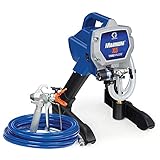
- Sprays unthinned exterior latex
- 75 ft max hose — real ladder reach
- PowerFlush garden-hose cleanup
Cons
- Stock 25 ft hose too short for exteriors
- One tip in the box — buy a 517 for siding
🎯 Best for: Whole-house siding repaints on 1–2 story homes — the default answer for most homeowners.
Check Price on Amazon →Via Amazon.com
Pros
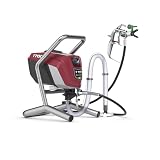
- Dramatically less drift near neighbors
- Quieter than conventional airless
- Softer fan is forgiving for first-timers
Cons
- Slower coverage than full-pressure rigs
- HEA tips are a recurring cost
🎯 Best for: Suburban lots with close neighbors, parked cars, and landscaping you cannot fully mask.
Check Price on Amazon →Via Amazon.com
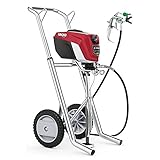
Pros
- 50 ft hose out of the box
- Higher output than the 1700
- Cart rolls over lawns and gravel
Cons
- Bulkier to store and transport
- Overkill for a fence or shed
🎯 Best for: Large homes, detached garages, and barns — anywhere wall count is the enemy.
Check Price on Amazon →Via Amazon.com
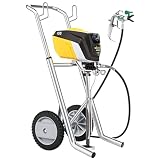
Pros
- Great with stains and semi-transparents
- Light enough to walk a fence line
- Lowest-cost true airless here
Cons
- Falls behind on whole-house scale
- Small filter — strain everything first
🎯 Best for: Fence lines, decks, and outbuildings — exterior projects measured in boards, not stories.
Check Price on Amazon →Via Amazon.com
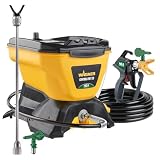
Pros
- Zero setup — spray within minutes
- Fine finish on doors and shutters
- Cheapest entry point here
Cons
- Not airless — requires thinning latex
- Hopeless on whole-house siding
🎯 Best for: Shutters, front doors, railings, and trim — exterior detail work, not exterior walls.
Check Price on Amazon →Via Amazon.com
What Actually Matters on Exterior Work
Hose length beats horsepower
Exterior spraying is a reach problem. Every ladder move with a short hose means climbing down, dragging the pump, and climbing back up — dozens of times per wall. A 50-foot hose lets the machine sit still while you work. This single spec predicts how tired you are at 4 p.m. better than PSI does.
Unthinned paint is a durability feature
Exterior latex carries high solids — that is the resin and pigment load that survives sun and rain. Thinning it to satisfy a weak sprayer waters down that protection on your wall. Every true airless model above sprays exterior latex straight from the bucket; the Flexio is the deliberate exception for small scopes.
Prep matters more than the brand
I will keep repeating this because it decides more exterior outcomes than any machine: durability is 50% product quality and 50% surface preparation. Chalky old paint, mildew, and dust break the bond no matter what you spray with. Wash the walls, scrape what is loose, prime bare spots — then spray. If you have interior painting experience, the logic from how to clean walls before painting applies double outdoors. And when you spray: two thin coats always beat one thick coat. Always — thick single coats on exteriors sag in the sun and crack in the first freeze.
Weather is part of the equipment list
Spray between 50–85°F, on a day under 8 mph of wind, and never onto sun-hot siding — the paint skins before it levels. This Old House has a solid exterior-painting weather primer, and the EPA covers the lead-safe work practices that are legally required if your home predates 1978 and you are disturbing old paint.
A fresh coat done right is one of the highest-return projects a homeowner can take on — see the benefits of painting your home for the value math. If you are still deciding between machine classes, my best exterior paint sprayer overview covers the wider field, and deck-first projects should start with the best airless paint sprayer for decks guide.
⚠ When NOT to Spray Your Exterior
Do not spray if you cannot control the drift zone — full stop. That means: sustained wind over 8 mph, a neighbor’s car within 30 feet that you cannot get moved, or a house older than 1978 with untested, possibly lead-based paint underneath (sanding and spraying over lead requires certified containment — check the EPA link above). In those cases, a roller costs you a weekend; overspray on three parked cars costs you considerably more. This method also will not fix failing substrate — if the old paint is peeling in sheets, spraying over it just gives the peeling a new color.
My Verdict
The Graco Magnum X5 is the best airless paint sprayer for exteriors for most homeowners — add the 50-foot hose and it will repaint your house and then your next house. Tight lot with close neighbors? Take the Titan ControlMax 1700 and its 55% overspray reduction. And if your “exterior project” is really a fence and a shed, save real money with the Wagner Control Pro 190.
Two things are worth settling before the sprayer arrives, because both change what goes in the hopper. First, on a wall that takes full afternoon sun, the coating matters more than the machine — a heat-reflective formula measurably lowers surface temperature, and we cover what energy-saving paint does and does not deliver. Second, the front door is the one part of an exterior almost nobody sprays; it gets masked off and brushed later, and if it faces west it needs a UV-stable paint of its own. Our picks for a front door that gets a lot of sun cover that gap.
Frequently Asked Questions
What is the best airless paint sprayer for exteriors?
The Graco Magnum X5 for most homeowners — unthinned latex at 3,000 PSI, up to 75 ft of hose. The Titan ControlMax 1700 wins on tight lots where drift matters most.
Do I need to thin exterior paint?
Not with true airless — X5 and ControlMax spray straight from the bucket. Only the HVLP Flexio needs 10–15% thinning.
What wind speed is too much?
Stop above 8 mph sustained. Overspray drifts 20–30 feet. Early mornings are your friend.
What tip size for siding?
A 517 for exterior latex on siding; a 413–415 for stains on fences and decks.
How much hose for a two-story house?
Fifty feet minimum — pump stays grounded while you ladder. The X5 supports up to 75 ft.
Spray or roll a house exterior?
Spraying is 3–4× faster and more uniform; rolling is drift-free. Pros often spray then back-roll coat one on porous siding.