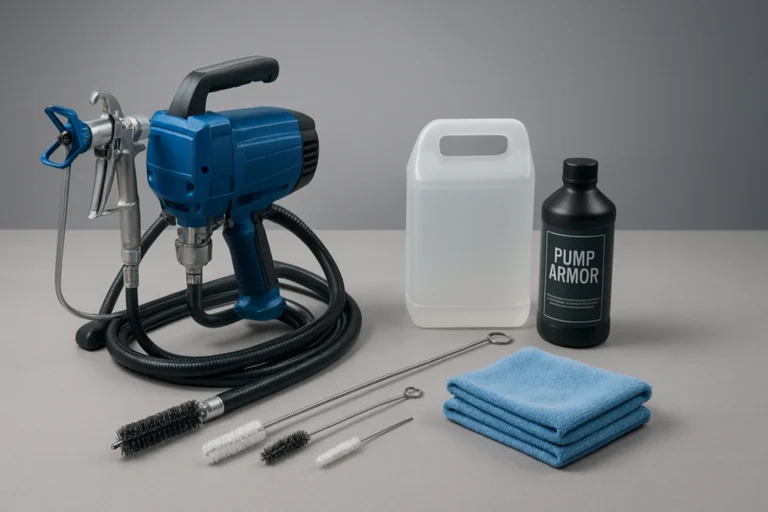
3 Best Airless Paint Sprayer for Garage Walls That Last
Updated July 2026 · By Sophie Ulman
Which Airless Paint Sprayer Works Best for Garage Walls?
Garage walls are one of the most demanding surfaces a homeowner can spray. They’re often unpainted concrete block or bare drywall, large in surface area, and frequently coated with thick masonry or latex paint that can choke lower-end sprayers. Choosing the best airless paint sprayer for garage walls means finding a machine that delivers consistent pressure across 400–800 square feet of wall surface, handles viscous paint without thinning, and cleans up before the door closes on the project. These three models do exactly that.
In this guide we compare the Graco Magnum X5, Graco Magnum X7, and HomeRight Finish Max — covering specs, how each one handled masonry and latex in my own garage, and which one makes sense for your garage size and budget.
Sophie’s Field Note
The first time I sprayed a garage, I skipped the masonry primer on one bare block wall to save a day. The topcoat drank into the block unevenly, and by the time I noticed, that wall had eaten almost a full extra gallon and still looked blotchy in raking light. Here is what I learned: on porous block, the primer coat is not optional prep — it is half the paint job. Prime the day before, then spray two thin coats. Always two thin coats — a single heavy pass on cold block sags before it levels.
In This Guide
| Pick | Model | Max PSI | Hose | Best Garage Size |
|---|---|---|---|---|
| Best Overall | Graco Magnum X5 | 3,000 PSI | 25 ft | 1–2 car garage |
| Large Garages | Graco Magnum X7 | 3,300 PSI | 50 ft | 3-car garage or workshop |
| Budget | HomeRight Finish Max | HVLP | Cup-fed | Small single garage |
Pros
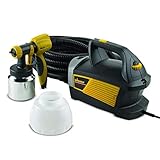
- Sprays undiluted masonry and latex paint
- PowerFlush adapter — 5-minute garden hose cleanup
- 25 ft hose covers a standard 2-car garage from center
- Adjustable pressure for varying wall textures
Cons
- 25 ft hose limits reach in 3-car or deep workshop garages
- Motor is loud — use hearing protection in enclosed garage
- Always strain paint first to prevent tip clogs
🎯 Best for: 1–2 car garages, weekend DIY projects, masonry block or drywall walls, homeowners who want professional results without contractor cost.
Check Price on Amazon →Via Amazon.com
Before you spray, proper surface preparation is essential. Read our full guide on how to paint garage walls — from cleaning and etching to primer selection for concrete block.
Pros
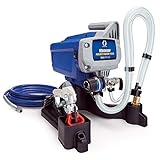
- 50 ft hose — machine can stay outside while you spray inside
- Higher pressure handles rough masonry block better
- Faster flow rate cuts time on large surfaces
- Cart keeps unit mobile on garage floors
Cons
- Higher price than X5
- Bulkier — more to store when not in use
- Overkill for a single-car garage under 400 sq ft
🎯 Best for: 3-car garages, deep workshops, homeowners also doing exterior walls and fences in the same project.
Check Price on Amazon →Via Amazon.com
Picking the right paint color for your newly sprayed garage? See our best garage paint colors guide for options that hide dirt, resist staining, and brighten the space.
Pros
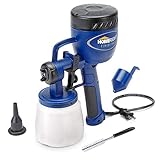
- Very affordable — lowest price of the three
- Quieter than true airless models
- Adjustable spray pattern (horizontal/vertical/round)
- Light and easy to maneuver
Cons
- Not true airless — struggles with thick masonry paint
- Cup-fed means constant refilling on large walls
- Slower coverage than Graco models
- Not suitable for rough concrete block surfaces
🎯 Best for: Single-car garages with smooth drywall, budget-conscious homeowners, first-time sprayer users on small projects.
Check Price on Amazon →Via Amazon.com
More From ThePaintly
⚡ Pro Tips for Spraying Garage Walls
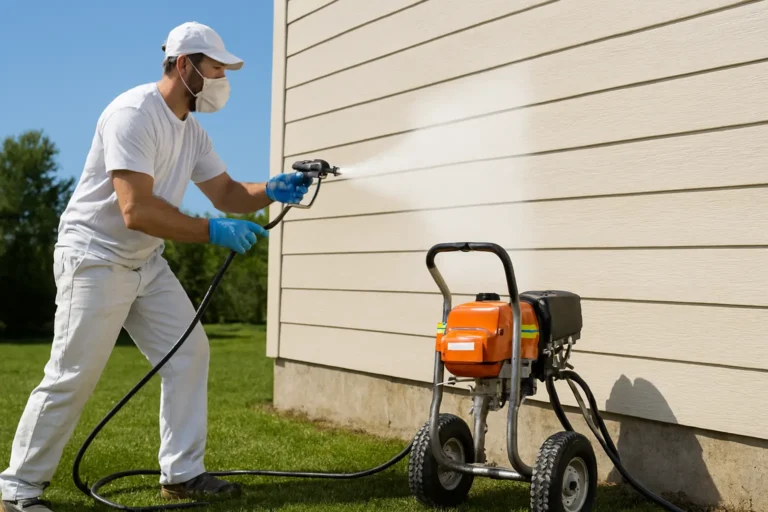
- Ventilate aggressively. Garages trap fumes more than any indoor space. Open the garage door fully, use a box fan in the corner blowing out, and wear a respirator rated for paint fumes (N95 minimum, P100 preferred). With the Graco X7’s 50-foot hose, you can keep the machine outside and only carry the gun and hose inside.
- Mask the floor first. Paint overspray on a garage floor is harder to remove than wall paint. Lay plastic sheeting or drop cloths across the entire floor before you start. Even the best airless paint sprayer for garage walls produces fine mist that settles far from the gun.
- Prime concrete block before spraying. Bare masonry is highly porous and absorbs paint unevenly. A masonry primer applied the day before cuts topcoat consumption by 30–40% and dramatically improves coverage uniformity from the sprayer.
Where This Fits in the Renovation Protocol
The best airless paint sprayer for garage walls belongs at the PAINT stage — after the floor is sealed (if applicable), walls are patched and primed, and the space is fully prepped. For a complete garage renovation workflow, see how to paint garage walls and fast-drying cordless sprayers for large projects.
🏗️ Garage Wall Coverage Calculator
Estimate paint volume and spray time for your garage.

Best Airless Paint Sprayer for Garage Walls: What Actually Matters
Garage walls present specific challenges that separate this use case from general interior painting. Before selecting the best airless paint sprayer for garage walls for your situation, understand these four factors.
Wall Surface Type Determines Tip and Pressure
Concrete masonry unit (CMU) block walls — the most common garage wall material in attached garages — are rough, porous, and absorbent. They require a larger tip orifice (519 or 521 instead of the standard 515) to push thick masonry paint deep into the texture, and higher pressure to maintain consistent atomization. The Graco X5 and X7 both handle this. The HomeRight Finish Max struggles with masonry paint at any tip setting.
Drywall garage walls (common in newer construction and insulated garages) work with any of the three models. Standard 515 tip at moderate pressure produces excellent results on primed drywall.
Ventilation and Safety
Garages are enclosed spaces with limited natural ventilation. Paint fumes from latex paint can reach uncomfortable concentrations even with the garage door open. Running the machine outside with a long hose (the X7’s 50-foot advantage) keeps the compressor/motor noise and any oil vapor outside. According to Family Handyman, and echoed in This Old House guidance on enclosed-space painting, always wear a respirator rated P100 for paint fumes and keep a box fan running while spraying any enclosed space.
Cleanup in a Garage Environment
Garage paint projects often involve large volumes of thick paint — more cleanup burden than interior wall work. The PowerFlush adapter on both Graco models is particularly valuable here: attach a garden hose, run it through the system, and the pump, hose, and gun are clean in minutes. Without it, cleanup on thick masonry paint requires soaking and manual scrubbing of the tip and filter assembly. For the best airless paint sprayer for garage walls experience, cleanup speed is nearly as important as spray performance.
Project Scale Drives Model Choice
Single-car garage (300–400 sq ft walls): Graco X5 or HomeRight Finish Max. Two-car garage (500–700 sq ft walls): Graco X5. Three-car garage or shop (700+ sq ft): Graco X7. The math is simple — don’t pay for the X7’s extra hose and pressure if the X5 covers your walls without repositioning. Conversely, don’t cripple your output on a 3-car garage by using a cup-fed HVLP and refilling every 10 minutes. For more on complete project planning see our sprayer selection guide by project type.
⚠ When NOT to Spray Your Garage Walls
Skip the sprayer entirely if your garage doubles as storage you cannot fully clear or cover — airless mist settles on everything within 20 feet, and paint fog on a car hood or a workbench full of tools costs more to fix than rolling ever would. This method also will not rescue damp or efflorescence-streaked block: if you see white mineral crust on the walls, you have a moisture problem, and paint of any kind — sprayed or rolled — will peel until the moisture source is fixed. Prep matters more than the brand: durability is 50% product quality and 50% surface preparation, full stop.
My Verdict
The Graco Magnum X5 is the best airless paint sprayer for garage walls for most homeowners — it handles masonry paint without thinning, cleans up in 5 minutes, and covers a standard 2-car garage in a single session. Step up to the X7 if your garage exceeds 600 sq ft of wall surface or you want the 50-foot hose to keep the machine outside. The HomeRight Finish Max is a reasonable budget entry point only for smooth-walled single-car garages with thin latex paint.
Frequently Asked Questions
What is the best airless paint sprayer for garage walls?
The Graco Magnum X5 is the best airless paint sprayer for garage walls for most homeowners — 3,000 PSI, sprays undiluted masonry paint, 25-foot hose covers a 2-car garage, PowerFlush cleanup in minutes.
Can I use an airless sprayer on concrete block garage walls?
Yes, with a true airless sprayer and a larger tip (519 or 521). The Graco X5 and X7 handle rough masonry block. HVLP sprayers like the HomeRight Finish Max are not suitable for rough concrete block surfaces.
Do I need to thin paint for garage wall spraying?
Not with a true airless sprayer (Graco X5/X7) — they handle undiluted latex and masonry paint. Strain the paint first through a mesh strainer regardless to prevent tip clogs.
How many gallons of paint for a 2-car garage?
Roughly 4 gallons for two coats on a standard 20×22 ft garage with 9 ft ceilings (about 738 sq ft of wall). Add 20% for masonry block surfaces that absorb more paint than smooth drywall.
How do I ventilate a garage when spray painting?
Open the door fully, place a box fan blowing outward. With the Graco X7’s 50-foot hose, keep the machine outside the door entirely. Wear a P100-rated respirator regardless of airflow.
Should I prime garage walls before spraying?
Yes — masonry primer reduces topcoat absorption by 30–40% on concrete block and ensures uniform coverage. Apply the day before and fully cure before spraying your topcoat.