How to Pick a Clear Coat for Plastic That Will Not Peel
Updated: July 2026 | By Sophie Ulman
Skip the topcoat and your freshly painted plastic starts chalking, yellowing, and lifting at the edges within a single season. The wrong clear coat for plastic is almost worse — it beads up, blushes cloudy white, or peels off in sheets because it never bonded to the slick surface underneath. I have watched a good paint job die under a bad topcoat, and it stings every time. After sealing everything from patio chairs to painted miniatures, I ran five sprays through real use. This guide covers the best clear coat for plastic for three jobs that break most products: outdoor UV, bare-plastic adhesion, and a deep glass-like shine.
Here is the part nobody tells you: prep matters more than the brand. A cheap topcoat over a clean, deglossed surface beats a premium one sprayed over grease every time. Get the surface right and almost any of these will hold. Get it wrong and even the best clear coat for plastic peels.
What this guide covers
Best clear coat for plastic at a glance
| Pick | Best for | Finish | UV rated |
|---|---|---|---|
| Krylon UV-Resistant Clear Gloss | Sun-exposed plastic | Gloss | Yes |
| Krylon Fusion All-In-One Clear | Bare, slick plastic | Gloss | Moderate |
| Rust-Oleum Triple Thick Glaze | Glass-like depth | High gloss | No |
| Rust-Oleum Universal Clear | Indoor wet-look shine | High gloss | Moderate |
| Krylon UV-Resistant Matte | Models and props | Matte | Yes |
Best Overall — UV Protection
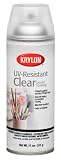
Krylon UV-Resistant Clear Gloss
This is the one I reach for when a painted plastic piece lives in sunlight. The acrylic film carries UV inhibitors — they absorb the sun before it reaches the color pigment underneath and bleaches it. That is the mechanism that keeps a red planter red instead of fading to chalky pink by August.
I sealed a set of painted resin planters with it and left them on a south-facing balcony. After a full summer, the color still read true while an unsealed control piece next to them had visibly faded. The one honest limitation: on dead-slick ABS it can bead if you flood the first pass, so keep it to two thin coats and let each flash off.
- True non-yellowing acrylic
- Real UV inhibitors
- Fast recoat window
- Gloss can look plasticky on models
- Beads if applied too thick
- Sun-exposed painted plastic: planters, outdoor decor, mailboxes
Via Amazon.com
Best for Bare, Slick Plastic
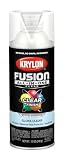
Krylon Fusion All-In-One Gloss Clear
Slick plastic is where most topcoats fail — they sit on top and flake off. Fusion works because the solvent slightly softens the plastic surface so the coating keys into it mechanically instead of just resting on it. On bare patio chairs and PVC, that bond is the difference between a finish that lasts and one that sheds in a week.
If you want to seal raw plastic without priming first, this is the clear coat I trust. The catch: it needs about seven days to reach full cure before heavy handling. I stacked chairs too soon once and left a faint print in the finish. Spray it, then leave it alone.
- No primer needed on bare plastic
- Strong mechanical bond
- Indoor and outdoor rated
- Long full-cure window
- Smudges if rushed
- Bare, unpainted plastic: patio chairs, PVC trim, storage bins
Via Amazon.com
A quick word on finish before you buy
Two thin coats always beat one thick coat here — that is not a slogan, it is the whole game with clear over plastic. A thick pass traps solvent, and on a humid day that trapped moisture turns the film cloudy white. Thin coats flash off before that happens. If you take one thing from this guide, take that.
Best for Glass-Like Depth
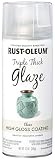
Rust-Oleum Triple Thick Glaze
When you want a poured-resin, glass-under-water look on a flat plastic piece, this earns its name. One coat lays down roughly what three normal coats would, because the high-solids formula packs more resin into every pass. On a painted plastic sign, one careful coat gave me a depth I could not get from three passes of a standard clear.
That thickness is also the limitation: it runs and sags fast on anything vertical. Lay the piece flat, spray it flat, and let it cure flat. The first time I tried it upright on a tumbler, I got a drip curtain down one side and had to sand it back.
- Deep, glassy single-coat finish
- Fills fine texture
- Fewer passes needed
- Runs on vertical surfaces
- Not UV rated
- Flat plastic: signs, tabletops, coasters, tumblers laid flat
Via Amazon.com
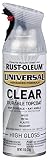
Best High-Gloss for Indoor Pieces
Rust-Oleum Universal All Surface Clear
This is the easy-to-shoot option. The comfort-grip trigger sprays at any angle, even upside down, so getting under the lip of a plastic piece is painless. It goes over most existing paints without lifting them, which makes it a safe topcoat when you are not sure what the underlying finish is.
It gives a genuine wet-look shine indoors. The honest limitation: it is not built for constant sun the way the Krylon UV pick is, so outdoors it will dull faster. I keep this one for indoor plastic — lamp bases, shelf brackets, decor — where the shine matters and UV does not.
- Sprays at any angle
- Works over most paints
- High wet-look gloss
- Dulls faster in direct sun
- Gloss shows dust while wet
- Indoor painted plastic where shine beats UV protection
Via Amazon.com
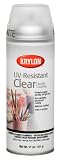
Best for Models and Matte Finishes
Krylon UV-Resistant Matte
Gloss ruins a painted miniature — it makes cheap plastic read as cheap plastic. This is the same UV-resistant acrylic as my top pick, but the flatting agents scatter light so the surface reads dead matte. It is my go-to seal over painted 3D prints too. It kills the plastic shine without dulling the paint colors under it.
I use it as the final seal on painted props and models. One limitation to respect: matte films telegraph fingerprints and skin oil, and if you overcoat a matte clear it can cloud. Spray it clean, then stop. Two light passes is plenty.
- Kills plastic shine
- UV inhibitors included
- Preserves paint color depth
- Shows fingerprints
- Clouds if overcoated
- Painted miniatures, models, cosplay props
Via Amazon.com
A clear coat is the last step, not the first. It goes on after your color is fully cured — sealing over wet or soft paint traps solvent and ruins both layers. If you are earlier in the process, start with the right paint for plastic or the best spray paint for plastic, let it cure, then come back to seal.
How many cans of clear coat for plastic do you need?
One aerosol can covers roughly 20 to 25 square feet at two thin coats. Enter your project size and I will estimate the cans — always round up, because running out mid-coat leaves a visible lap line.

How to choose a clear coat for plastic
Match the finish to the object, not the other way around
Gloss deepens color and reads premium on decor, but it screams plastic on a model. Matte hides molding lines and looks realistic on props but shows every fingerprint. Decide the look first, then the can. A clear coat in the wrong sheen is a redo, not a fix.
UV rating is only worth paying for outdoors
If the piece lives inside, UV inhibitors do nothing for you — save the money and buy for gloss instead. If it sees direct sun, UV rating is the whole point, because it is what stops the color underneath from bleaching. Ask one question: will the sun hit this? That answer picks your can.
Adhesion beats everything on bare plastic
On raw, slick plastic, a topcoat that cannot bond will peel no matter how good it looks. Either choose a self-bonding clear like Fusion, or scuff and use a bonding primer first. Family Handyman has a solid primer on spray-finishing technique if you want the mechanics, and This Old House covers surface prep for painting in depth. Both reinforce the same point: the bond is made before you spray, in the prep.
Thin coats over thick, every time
Every failure mode here — beading, blushing, running, clouding — traces back to laying it on too thick. The clear coat that lasts is the one applied in two patient passes, not one heavy one.
When a clear coat for plastic will NOT save your project
A topcoat seals and protects — it does not fix what is underneath. Do not reach for one if:
- The paint is already peeling. Clear over lifting paint just seals the failure in place. Strip and repaint first.
- The plastic is greasy or unwashed. No clear coat bonds to a fingerprint. Degrease first, full stop.
- The color is still soft. Sealing paint that has not cured traps solvent and wrinkles both layers. Wait the full cure time.
- The plastic flexes hard. On something that bends constantly — thin lids, flexible tubing — a rigid clear will crack. Skip it.
Can you clear coat over spray paint on plastic?
Yes, and on plastic it is usually the step that decides whether the color survives a season. But the answer comes with a timing rule that catches most people out, and getting it wrong is how you end up with a wrinkled, crazed finish over a color coat that was perfectly fine.
Spray paint keeps releasing solvent for days after it stops feeling tacky. If you clear coat inside that window, the solvent in the topcoat softens a film that has not finished hardening, and the surface lifts into fine wrinkles. There are only two safe windows: within about one hour of the color coat, while the film is still soft enough to fuse with the clear, or after a full 48 to 72 hours, once the color has cured hard enough to resist the new solvent. The gap between those two is where projects die.
Match the chemistry as well as the timing. A lacquer clear over an enamel color is the classic mismatch – lacquer is the hotter solvent and it attacks the enamel underneath. Staying inside one brand family is the simple way to avoid the problem. If your color coat came from a can of spray paint for plastic, the matching clear from that same line is the safe choice, not the cheapest clear on the shelf.
Two surfaces where I would skip the clear coat entirely. Interior car trim is one: cabin plastics get constant hand contact and heat cycling, and a gloss clear over textured dash plastic shows every fingerprint while adding almost nothing to durability – a purpose-made car interior plastic paint already carries its own protection. The other is any high-shine metallic like chrome spray paint, where a clear topcoat physically kills the mirror effect it is supposed to protect.
Whichever way you go: two thin coats always beat one thick coat. A single heavy pass of clear traps solvent under a skinned surface and that is what blushes cloudy white on a humid day.
The 4-step prep that decides whether it lasts
Durability is about half product and half preparation. Do these four things and almost any clear coat on this list will hold.
- Wash and degrease. Warm water, dish soap, then a wipe of isopropyl alcohol. This removes the mold-release oils that make plastic reject coatings.
- Scuff slick surfaces. A quick pass with fine sandpaper gives the clear something to grip. Skip this only if you are using a self-bonding Fusion clear.
- Confirm the paint is fully cured. Touch-dry is not cured. Give color the full time on the can before sealing.
- Spray thin, in a warm dry spot. Two light passes, ten minutes apart, out of direct sun and away from humidity.
The verdict
For most people sealing painted plastic that sees sun, the Krylon UV-Resistant Clear Gloss is the pick — real UV inhibitors, non-yellowing, and it holds color through a full season. Sealing bare, slick plastic with no primer? The Krylon Fusion Clear bonds where others peel. Want a deep glassy look on flat pieces, go Triple Thick. But remember the real lever is prep — the best clear coat for plastic still fails over a dirty surface.
Clear coat for plastic FAQ
Do you need a clear coat over painted plastic?
Not always, but it helps. A clear coat adds abrasion resistance and, if UV-rated, stops the color from fading outdoors. For a high-touch or sun-exposed piece, sealing roughly doubles how long the finish looks new.
Will clear coat stick to bare plastic without primer?
Only a self-bonding formula like Krylon Fusion will. Standard clears need the plastic scuffed and ideally a bonding primer first, or they peel off the slick surface within weeks.
Why did my clear coat turn cloudy or white?
That is blush — trapped moisture or solvent under a coat applied too thick or in humid air. Spray thin coats in dry, warm conditions and let each flash off before the next.
How long should paint cure before clear coating plastic?
Follow the paint can, but give it more time than touch-dry. Most spray paints need 24 to 48 hours before a clear coat goes over them safely. Sealing too early wrinkles both layers.
Gloss or matte clear coat for plastic models?
Matte, in almost every case. Gloss makes plastic read as cheap plastic, while a matte UV-resistant clear hides molding lines and keeps the paint looking realistic.
Is clear coat UV protection worth it indoors?
No. UV inhibitors only earn their cost on pieces that see direct sun. Indoors, buy for the finish you want instead.
ThePaintly is reader-supported. Our picks are based on manufacturer specifications and what users report. When you buy through links on this site, we may earn an affiliate commission at no extra cost to you.
