Can You Paint Composite Decking? What Holds and What Peels
Updated: July 2026 | By Sophie Ulman
Choose the wrong paint for composite decking and you get the worst of both worlds: a slick, peeling surface within one season and a stripping job that costs more than the boards did. Composite is engineered not to be painted, so anything you put on top is fighting the material. That’s exactly why picking the right coating matters more here than on any wood deck. Below are four products I trust on composite and Trex-style boards, plus the honest truth about when you should skip paint entirely.
The first time I coated a client’s composite deck, I grabbed a standard exterior porch paint and rolled it straight on. It looked perfect for about four months. Then the first freeze-thaw cycle lifted it at every board seam, because the paint never actually bonded to the capped surface. Here’s what I learned: on composite, the coating and the prep do all the work — the board gives you nothing to grab. Get that wrong and you’re stripping, not painting.
Can you paint composite decking at all?
Short answer: yes on old, uncapped, out-of-warranty boards, and no on anything capped and still under guarantee. That single distinction decides the whole project. Composite made before roughly 2014 is a wood-flour and plastic blend straight through, and its slightly porous, chalky surface gives an acrylic coating something to bite into. Boards made after that are capped — a co-extruded plastic shell bonded over the core, engineered specifically so that nothing sticks to it. Stains do not soak in, and neither does paint.
The way to tell in thirty seconds: press a drop of water onto a shaded board. If it beads and sits there, you have a cap and the answer is no. If it darkens the surface and soaks in within a minute, the board is uncapped and paint for composite decking is on the table. The same test is what I use before quoting any composite job, and it is the same logic behind painting Trex decking specifically — Trex has been capped for over a decade, so the honest answer there is narrower still.
There is a second question buried inside the first one: should you, not just can you. Painting composite ends the maintenance-free part of owning composite. You trade a board you wash once a year for a surface you recoat every two to four years, and on most manufacturers you trade the warranty along with it. If your boards are simply dirty or faded but structurally fine, cleaning and sealing gets you most of the look for none of the commitment. If they are chalking, splintering at the edges, or past warranty anyway, painting is the cheaper end of the two options — the other one is replacing the deck surface.
Quick picks at a glance
| Coating | Best for | Type | Fills cracks? |
|---|---|---|---|
| Rust-Oleum RockSolid 20X | Overall — worn, faded composite | Resurfacer | Yes, up to 1/4″ |
| KILZ Porch & Patio | Smooth acrylic finish on older boards | Acrylic latex | No |
| INSL-X Sure Step | Slip resistance around pools/stairs | Anti-slip acrylic | No |
| Olympic RESCUE IT Max | Heavily weathered, splintering decks | Resurfacer + sealant | Yes, up to 1/4″ |
The 4 best paint options for composite decking
Every coating below is one I’d put on my own composite boards. Each entry names who it’s for, the mechanism that makes it stick, and the one real limitation I’d want you to know before you buy.
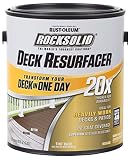
Rust-Oleum RockSolid 20X Deck Resurfacer
RockSolid 20X isn’t paint in the thin sense — it’s a resurfacer roughly 20 times thicker than ordinary deck paint. That thickness is the point on composite: instead of relying on a paper-thin film to grip a slick capped board, it builds a durable, textured shell that mechanically locks into the surface and fills hairline cracks up to a quarter inch. On faded, chalky composite that’s lost its color, it gives you a uniform, low-slip finish in a single coat.
It is made for older composite decks that have gone gray and blotchy, and the seams are where to watch for lifting — the usual failure point on composite. The honest limitation: coverage is low at around 40 sq ft per gallon, so budget nearly double the product you’d expect, and it needs 24 hours before you walk on it.
- Bonds to most composite and wood
- Fills cracks and hides fading
- Textured, slip-resistant finish
- Low coverage per gallon
- Thick — needs a proper roller
Best for: weathered, faded composite decks that need color and crack-filling in one product.
Check Price on Amazon → Via Amazon.com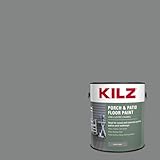
KILZ Low-Lustre Enamel Porch & Patio Latex Floor Paint
This is a 100% acrylic latex floor enamel, and the “100% acrylic” part is what earns it a place on composite. Acrylic binders stay flexible as the boards expand and contract with temperature — the movement that cracks cheaper vinyl-blend paints. The low-lustre enamel also resists scuffing, fading, and moisture, which is the trifecta that destroys most deck coatings by year two.
Where the RockSolid gives you texture, KILZ gives you a smooth, painted look — the right call if your composite is a smooth-board profile and you want a clean, uniform color rather than a grippy shell. The real limitation: it’s a film-forming paint with no crack-filling body, so it only belongs on composite that’s still structurally sound and, ideally, pre-2014 uncapped boards. Two thin coats. Always — one thick coat traps moisture underneath and lifts.
- Smooth, even enamel finish
- Good coverage per gallon
- Interior/exterior rated
- No crack-filling body
- Needs sound, well-prepped boards
Best for: smooth older composite boards where you want a clean painted color, not a textured coating.
Check Price on Amazon → Via Amazon.com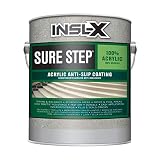
INSL-X Sure Step Acrylic Anti-Slip Paint
Sure Step is an acrylic paint with a fine aggregate blended into it, so the cured film dries to a gritty, skid-resistant texture instead of a slick sheet. On composite that gets wet — pool surrounds, stair treads, shaded north-facing decks — that texture is a safety feature, not a cosmetic one. The water-reduced formula also dries fast and cleans up with water.
This is the one for composite pool-deck steps that turn into a slip hazard every time the sprinklers run, because the grit gives wet feet something to hold. The limitation worth knowing: the anti-slip grit is harder to clean than a smooth finish, so it’s a deliberate trade — traction over easy sweeping. Don’t use it where you want a glassy, decorative look.
- Genuine wet-surface traction
- Fast dry, water cleanup
- Interior/exterior rated
- Textured grit holds dirt
- Not a decorative finish
Best for: composite stairs, pool decks, and shaded areas where wet-slip safety matters most.
Check Price on Amazon → Via Amazon.com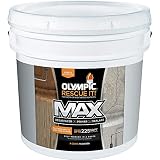
Olympic RESCUE IT Max Resurfacer + Primer + Sealant
RESCUE IT Max is a 100% acrylic, high-build resurfacer that bundles primer and sealant into one product. On a composite deck that’s genuinely rough — splintering trim, gaps, a surface too far gone for regular paint — it fills cracks up to a quarter inch, locks down loose fibers, and seals the whole thing under one thick, mildew-resistant coat. It’s the rescue option when the alternative is replacing boards.
The mechanism that matters: because it carries its own primer and sealant, you’re not stacking three products and hoping they’re compatible on a non-porous surface. The limitation is honesty about scope — this is a heavy restoration coating, not a thin refresh. On composite that’s still in decent shape, it’s overkill, and its thickness means slower drying and careful two-coat application in warm, dry weather.
- All-in-one restoration coat
- Fills cracks, seals, resists mildew
- Great on badly weathered decks
- Overkill on sound decks
- Thick — slower to dry and cure
Best for: heavily weathered or splintering composite decks that need a full restoration, not a refresh.
Check Price on Amazon → Via Amazon.comPro tips from the deck
A few things I’ve learned the hard way on composite: First, deglossing is non-negotiable. Capped composite is slick by design, so scuff the whole surface with a stiff brush and a deck cleaner before anything goes on — skip it and the best coating on this list will still peel. Second, two thin coats always beat one thick coat, especially with resurfacers; a thick single pass skins over on top while staying wet underneath and lifts at the seams. Third, coat when you have two dry days in a row and temps between 50°F and 90°F. Composite holds surface heat, and a board baking in afternoon sun will flash-dry the film before it can bond.
How much paint for composite decking will you need?

How to choose paint for composite decking
Choosing paint for composite decking comes down to three questions, in order. Answer them honestly before you look at a single color chip.
1. How old and how weathered is the board?
This is the whole game. Early-generation, uncapped composite (roughly pre-2014) is porous enough to accept paint reasonably well. Modern capped composite has a plastic shell that blocks bonding, which is why manufacturers advise against painting it. If your boards are faded and chalky, a resurfacer like RockSolid or RESCUE IT gives you the mechanical grip a thin paint can’t. If they’re smooth and sound, an acrylic enamel is enough. My rule: the more weathered the board, the thicker the coating should be.
2. Do you need texture, or a smooth look?
Resurfacers dry to a grippy, textured shell — better traction, better crack-hiding, harder to clean. Acrylic paints dry smooth — cleaner look, easier upkeep, zero crack-filling. There’s no universally “best” paint for composite decking here; there’s the right one for your surface and your foot traffic. Wet, shaded, or stair-heavy decks lean toward anti-slip. Flat, sunny, decorative decks lean toward smooth enamel.
3. Are you willing to maintain it?
This is the trade nobody mentions. The day you paint composite, it stops being maintenance-free and starts behaving like a wood deck — you’ll be recoating every few years as the film wears. Composite’s whole selling point was not doing that. If low maintenance is why you bought composite, painting it works against you. That’s not a reason never to paint; it’s a reason to be sure before you start.
When you should NOT paint composite decking
Skip paint entirely if any of these is true. Your boards are under warranty: most composite warranties are voided the moment you coat the surface, so you’d be trading a decades-long guarantee for a few painted years. Your deck is modern capped composite in good shape: the cap blocks bonding, and even the best coating on this list is fighting a slick, non-porous shell. You want a maintenance-free deck: once painted, composite needs recoating like wood — full stop. In all three cases, a deep clean and a composite-safe brightener will do more for the deck than any paint, and it keeps your warranty intact. Paint composite when the boards are old, faded, out of warranty, and you’ve accepted the upkeep — not before.
Prep that makes paint for composite decking actually stick
Prep beats product on composite, and it’s not close. Durability here is maybe 30% coating and 70% surface prep, because the board itself offers almost nothing to grab. Do this in order:
Clean deep. Scrub the whole deck with a composite-safe deck cleaner to strip off the mildew, pollen, and oxidized film that block adhesion. Rinse and let it dry completely — at least 24 to 48 hours.
Deglass the surface. Scuff capped boards with a stiff synthetic brush or a light sanding pad so the coating has a mechanical tooth to bite into. This single step is what separated my failed first job from every one since.
Prime if the product calls for it. Resurfacers like RESCUE IT self-prime; thin acrylics benefit from a bonding primer on slick boards. When in doubt, a bonding primer is cheap insurance. The Family Handyman deck-prep guidance is a solid sanity check on cleaning steps.
Coat in the right window. Two thin coats, two dry days, moderate temps. Rushing the dry time between coats is the mistake I see most often. For broader exterior technique, This Old House walks through refinishing sequence well.
Coating composite is close cousin to a few other jobs worth reading: our take on the best paint for old wood decks, the right stain for pressure-treated wood, and, if your railings are metal, the exterior metal coating guide. For a full exterior job, start with the best exterior house paint.
The verdict
For most people painting composite decking, Rust-Oleum RockSolid 20X is the safest overall pick — its thick, crack-filling body gives you the mechanical grip that thin paints can’t manage on slick composite. Choose KILZ Porch & Patio for a smooth finish on sound older boards, INSL-X Sure Step where wet-slip safety matters, and Olympic RESCUE IT Max when the deck is badly weathered. But the honest bottom line: if your boards are capped, warrantied, and in good shape, the best paint for composite decking is no paint at all — clean and seal instead.
Frequently asked questions
Can you paint composite or Trex decking?
Yes, but only some of it. Older uncapped composite (roughly pre-2014) accepts paint reasonably well with proper prep. Modern capped composite has a plastic shell that resists bonding, and painting it usually voids the warranty. Paint for composite decking works best on old, faded, out-of-warranty boards.
What kind of paint works on composite decking?
Use a 100% acrylic latex floor paint or an acrylic deck resurfacer. Acrylic binders stay flexible as the boards expand and contract, so they resist the cracking that ruins rigid or vinyl-blend paints. Resurfacers add crack-filling body for weathered boards.
Will painting composite decking void the warranty?
Usually, yes. Most composite manufacturers void their warranty once you coat the surface. If your deck is still under a multi-year guarantee, weigh that carefully — cleaning and sealing keeps the warranty intact, while paint trades it away.
How long does paint last on composite decking?
Expect two to four years per recoat with good prep, similar to a painted wood deck. Once you paint composite, it needs periodic maintenance it didn’t before — so the “maintenance-free” benefit of composite ends the day you coat it.
Do I need to prime composite before painting?
On slick capped boards, a bonding primer is cheap insurance for thin acrylic paints. High-build resurfacers like Olympic RESCUE IT self-prime, so you can skip a separate primer. Either way, scuffing and deep cleaning matter more than the primer itself.
What’s the best paint for composite decking overall?
For most weathered composite decks, Rust-Oleum RockSolid 20X is the strongest all-around choice because its thick, crack-filling body grips slick boards better than thin paint. For a smooth look on sound boards, KILZ Porch & Patio is the pick.