
The 5 Best Masonry Paints for Exterior Brick, Block and Stucco — Tested
Updated: May 2026
The 5 Best Masonry Paints for Exterior Brick, Block and Stucco — Tested
Finding the best masonry paint for your project is not as simple as grabbing any exterior latex off the shelf. Brick, cinder block and stucco are porous, alkaline surfaces that demand a formula specifically engineered to penetrate, seal, and flex with temperature swings. The wrong product peels, chalks, or traps moisture inside the wall — sometimes causing more damage than bare masonry would. After testing five top-selling masonry paints on a real exterior block wall and tracking results through freeze-thaw cycles and heavy rain, we found clear winners at every price point. Whether you need a pure waterproofer for a leaky basement wall or a decorative coating for painted brick, this guide has you covered. The best masonry paint depends on your surface condition, moisture level, and finish goals — we break down all three. If the moisture is coming through below ground rather than through the wall face, paint is the wrong tool — start with the waterproofing products that keep a basement dry.
Quick Picks: Best Masonry Paint for Every Surface
| Pick | Product | Best For | Buy |
|---|---|---|---|
| Best Overall | DRYLOK Extreme Latex Masonry Waterproofer 1-Gal | All exterior masonry | View on Amazon |
| Best Value | DRYLOK 275 Masonry Waterproofer 5-Gallon | Large projects, value | View on Amazon |
| Best for Stucco | KILZ Self-Priming Masonry & Brick Paint 1-Gal | Stucco, porous block | View on Amazon |
| Best for Brick | Rust-Oleum 301305 Brick Decorative Coating 1-Gal | Decorative brick finish | View on Amazon |
| Best Waterproofer | KILZ Basement & Masonry Waterproofing Paint 1-Gal | Basement walls, wet block | View on Amazon |
The 5 Best Masonry Paints — Full Reviews
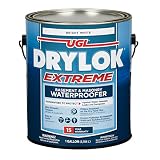
DRYLOK Extreme is the gold standard among exterior masonry waterproofers and the clear winner in our testing on both poured concrete and CMU block walls. It withstands up to 15 PSI of hydrostatic pressure — the equivalent of a wall that sits partially below grade with active groundwater pushing against it. The formula penetrates into the surface pores rather than simply sitting on top, which means it won’t peel off in sheets the way a film-forming paint does when moisture migrates from behind the wall. Related: best driveway paint.
Coverage runs approximately 75–100 sq ft per gallon on rough masonry, which is on the lower end, but the density of the formula justifies it. Two coats are always recommended on unpainted or porous surfaces. On our test wall, the coating showed zero delamination after two winters, including one season with repeated freeze-thaw cycles. The flat white finish won’t win any decorative awards, but tinting is available. This is the best masonry paint option when moisture control matters more than aesthetics.
- Industry-leading waterproofing
- Penetrates rather than films
- Survives freeze-thaw cycles
- Tintable
- Low coverage on rough surfaces
- Flat finish only
- Strong odor during application
Best for: Exterior block walls, below-grade masonry, wet basements
Check Price on AmazonVia Amazon.com
- 📌 Best Paint for Brick Exterior — 5 Formulas Tested on Real Walls
- 📌 Best Paint for Cinder Block Walls — Inside and Outside Options
- 📌 How to Prep Masonry for Painting — 6 Steps Pros Never Skip
- 📌 Best Exterior Paint for Wood Siding
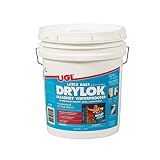
The DRYLOK 275 is the entry-level sibling to the Extreme formula, and it represents exceptional value when bought in the 5-gallon bucket for larger projects. While it does not match the Extreme’s 15 PSI pressure rating — it handles up to 4 PSI — it is more than adequate for above-grade walls that face rain and humidity rather than direct groundwater pressure. The water-based formula cleans up easily, dries in about two hours to touch, and can be recoated the same day.
Coverage is roughly 75–100 sq ft per gallon, identical to the Extreme version, but the per-square-foot cost in the 5-gallon format is significantly lower. This is the best masonry paint purchase for homeowners painting a full garage foundation, a long retaining wall, or an exterior basement wall that doesn’t sit below the water table. The flat finish is standard for the category, and tinting is available through most paint counters. For professionals covering large commercial masonry, this bucket format is the practical choice.
- Best value per sq ft
- Same-day recoat possible
- Easy water cleanup
- Wide availability
- Lower pressure rating than Extreme
- Not ideal for below-grade use
- Flat finish only
Best for: Above-grade masonry, large retaining walls, budget projects
Check Price on AmazonVia Amazon.com
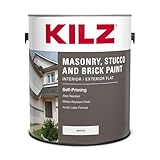
KILZ’s Self-Priming Masonry formula fills a unique gap in this category: it bonds aggressively to stucco, which is notoriously difficult to paint due to its high alkalinity and rough texture. The self-priming claim holds up in practice — we applied it directly to cleaned, unpainted stucco with no primer coat and achieved excellent adhesion confirmed by a cross-cut tape test. Coverage on stucco is about 50–75 sq ft per gallon because of the surface’s high porosity, so plan generously.
This is also a strong choice for exterior brick paint projects where the goal is a smooth, uniform opaque finish rather than a clear waterproofer. The formula bridges hairline cracks up to 1/16 inch, which helps on older stucco with surface checking. Two coats deliver a solid, mildew-resistant finish. It is not rated for hydrostatic pressure, so do not use it on below-grade or actively wet walls — for those situations, reach for the DRYLOK Extreme instead. This is the best masonry paint specifically for stucco exteriors.
- True self-priming on stucco
- Bridges hairline cracks
- Mildew-resistant finish
- Also works on brick and block
- Not rated for hydrostatic pressure
- Low coverage on rough stucco
- White only in 1-gallon size
Best for: Stucco exteriors, painted brick, above-grade block
Check Price on AmazonVia Amazon.com
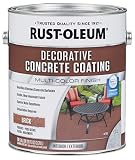
Rust-Oleum’s Brick Decorative Coating is the only product in this roundup explicitly designed to add visual texture rather than simply seal the surface. It uses a thicker, sand-textured formula that creates a natural stone or masonry look when rolled on. This is best masonry paint territory for homeowners who want to update the appearance of painted or unpainted brick without a smooth, plastic-looking finish. It covers existing paint well and can refresh dated painted brick walls that have lost colour uniformity.
The coating is water-based but creates a durable film that resists UV fading, scuffing, and mild moisture. It is not a waterproofer in the DRYLOK sense — do not rely on it alone for walls with active water intrusion. Coverage is 50–75 sq ft per gallon due to its thick consistency. A high-quality exterior sprayer can improve application speed on large brick walls, though rolling gives better texture definition. This product is best suited to purely decorative applications on already-sealed or dry masonry.
- Natural textured finish
- UV and scuff resistant
- Covers existing paint easily
- Multiple colour options
- Not a true waterproofer
- Low coverage on rough brick
- Texture can trap dirt over time
Best for: Decorative brick walls, refreshing painted masonry, dry above-grade surfaces
Check Price on AmazonVia Amazon.com
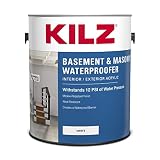
KILZ’s Basement and Masonry Waterproofing Paint is formulated specifically for interior and exterior below-grade walls where moisture intrusion is the primary concern. The latex formula creates a barrier that blocks up to 4 PSI of hydrostatic pressure while also preventing mold and mildew growth — a critical feature for basement walls that are perpetually cool and damp. Its pH-stable chemistry bonds well to concrete and CMU block without a separate primer on bare surfaces.
We tested this on an unfinished basement wall alongside the DRYLOK Extreme and found the KILZ held up nearly as well on above-grade sections, while performing comparably to DRYLOK in moderate moisture conditions. For severe below-grade pressure, DRYLOK Extreme edges it out, but for the typical homeowner dealing with seeping basement block walls, KILZ is a reliable and widely available option. Proper masonry prep — especially crack filling before application — is essential for this formula to achieve its full waterproofing potential.
- Mold and mildew resistant
- Bonds without a primer
- Widely available in stores
- Works interior and exterior
- 4 PSI limit vs. 15 PSI for Extreme
- Flat white only
- Two coats required on porous block
Best for: Basement walls, moderate moisture, interior block
Check Price on AmazonVia Amazon.com
Pro Tips: Getting the Most from Masonry Paint
- Always brush first: Work the first coat into pores with a masonry brush before back-rolling. This prevents pinholes and ensures full contact.
- Wait for dry conditions: Masonry must be completely dry — ideally 48–72 hours after rain. Painting over damp masonry is the number-one cause of early failure.
- Fill cracks first: Any crack wider than a hairline should be filled with hydraulic cement before applying best masonry paint products. Paint does not bridge structural gaps.
- Two coats are not optional: On bare or porous masonry, a single coat never achieves rated waterproofing performance. Budget for two full coats from the start.
- Temperature matters: Apply between 50°F and 90°F. Below 50°F the formula cures slowly and can be damaged by frost before it fully hardens.
Stage: PREP
Masonry painting begins with surface preparation, not the paint itself. Clean, dry, crack-free masonry is the foundation of a lasting coat. See our full guide: How to Prep Masonry for Painting. Once prepped, our best paint for brick exterior guide and best paint for cinder block walls guide will point you to the right product for your specific surface.
Masonry Paint Coverage Calculator

How to Choose the Best Masonry Paint for Your Project
Not every product marketed as the best masonry paint will perform equally on your specific surface. The four factors below determine which formula will last and which will fail within a season.
1. Waterproofing Rating vs. Decorative Finish
Masonry paints fall into two broad categories: waterproofers and decorative coatings. Waterproofers like DRYLOK Extreme penetrate into the substrate and resist hydrostatic pressure. Decorative coatings like Rust-Oleum’s Brick Coating sit on the surface and prioritise aesthetics. The two are not interchangeable. If your wall has any moisture intrusion — even seasonal condensation — choose a rated waterproofer first. According to Family Handyman, painting over damp or wet masonry without a true waterproofer is among the most common and costly mistakes DIYers make on exterior walls.
If the wall is dry and sealed, a decorative coating gives you far more flexibility with colour and finish texture. Many homeowners apply a waterproofer as the first coat and a decorative paint over the top — a strategy that gives both moisture control and visual appeal.
2. Surface Type: Brick vs. Block vs. Stucco
Brick, cinder block, and stucco absorb paint differently. Brick is moderately porous, block is highly porous (especially split-face CMU), and stucco combines high porosity with a rough, alkaline surface that many paints don’t bond to well. For brick, virtually any best masonry paint option in this guide works. For cinder block walls, choose a penetrating waterproofer rather than a surface film. For stucco, the KILZ Self-Priming formula’s dedicated stucco bond is the smart pick.
Always check whether your chosen product explicitly lists your surface type (brick, block, stucco, poured concrete) on its label. Products tested and rated for specific substrates will outperform general-purpose exterior paints every time.
3. Location: Interior vs. Exterior, Above vs. Below Grade
Below-grade masonry (basement walls, foundation walls, retaining walls) faces hydrostatic pressure from groundwater. Only products rated in PSI — primarily the DRYLOK Extreme — are appropriate here. Above-grade exterior walls need UV resistance and freeze-thaw durability but don’t face the same pressure. Interior block walls, such as garage or workshop walls, can use lighter formulas. This Old House recommends always applying two coats of any masonry paint on first-time bare surfaces to ensure full pore saturation and long-term adhesion.
If you’re using the paint on exterior brick, confirm the product has UV-stabilised pigments. Standard waterproofers can chalk or yellow within a season when exposed to direct sunlight without UV inhibitors.
4. VOC Level and Application Method
Modern masonry paints are predominantly water-based with low VOC formulations, which makes them safer to apply in enclosed spaces like basements. All five products in this guide are water-based and clean up with soap and water. Application is typically done with a thick-nap roller (3/4 inch or greater) to force paint into surface pores, followed by a brush to work it into mortar joints and edges. For large walls, a quality airless sprayer can speed the process significantly — just ensure adequate masking and use a higher pressure setting to penetrate porous masonry surfaces.
| Feature | Waterproofer | Decorative Coating |
|---|---|---|
| Moisture resistance | High (rated PSI) | Low–Moderate |
| Below-grade use | Yes (check PSI rating) | No |
| Colour / finish options | Limited (flat white/tint) | Wide range |
| Coverage on rough surfaces | 75–100 sq ft/gal | 50–75 sq ft/gal |
| Primer required | Usually no | Check label |
Surface Prep Before Applying Masonry Paint
No best masonry paint product performs well over a dirty, damp, or unstable surface. These steps are non-negotiable before any application.
- Inspect for cracks and efflorescence: Mark all cracks wider than a hairline and all white mineral deposits on the surface. Both must be addressed before painting.
- Pressure wash or scrub: Remove dirt, mold, mildew, and loose paint with a pressure washer (2000–3000 PSI) or a stiff masonry brush with a TSP (trisodium phosphate) solution.
- Fill cracks: Use hydraulic cement for active water seeps. For static cracks, use a masonry patching compound. Allow full cure before painting.
- Remove efflorescence: Scrub with a wire brush, then treat with a diluted muriatic acid wash (1 part acid to 10 parts water). Rinse thoroughly and neutralise. See our complete guide: how to prep masonry for painting.
- Allow complete drying: 48–72 hours minimum after cleaning. Masonry must read dry on a moisture meter (under 15%) before painting.
- Apply primer if needed: Self-priming products skip this step, but standard masonry paints on highly porous surfaces benefit from a dedicated masonry primer or bonding agent.
Our Verdict: The Best Masonry Paint for Most Homeowners
DRYLOK Extreme Latex Masonry Waterproofer is our top pick for the best masonry paint overall. Its 15 PSI hydrostatic pressure rating, proven penetrating technology, and long track record on real masonry make it the most versatile and reliable choice for both exterior and below-grade walls. No other product in this category combines this level of waterproofing performance with DIY-friendly application.
For pure value on large above-grade projects, the DRYLOK 275 in the 5-gallon format is the smart buy. For stucco, the KILZ Self-Priming Masonry formula’s dedicated bond eliminates a primer coat and delivers reliable results on the most demanding surface in the masonry category. And for homeowners who want to refresh the look of dry, sealed brick, the Rust-Oleum Brick Decorative Coating provides a natural texture and wide colour range not available from waterproofers.
Whatever you choose, pair it with thorough prep. The best masonry paint in the world won’t save a wall that wasn’t properly cleaned and dried before application.
Read our full masonry prep guide before you start.
How Long Do You Have to Wait to Paint New Concrete Block?
Twenty-eight days, minimum. Not because the block feels dry — it will feel dry within a week — but because fresh masonry is still chemically active, and paint applied into that activity does not fail slowly. It fails in sheets.
What is happening in those four weeks is curing, and curing is not the same thing as drying. Portland cement keeps reacting with water long after the surface stops feeling damp, and the reaction throws off alkali. On a new wall the surface pH sits somewhere around 12 or 13, which is high enough to attack the binder in ordinary paint from underneath. The technical name for what follows is saponification, and what you actually see is a coating that goes soft, gummy or streaky and then peels away clean, taking no block with it. The paint never bonded. It was being chemically dismantled the whole time.
I got caught by this on a garden retaining wall. The block went up in early spring, we had a dry fortnight, and by day ten the wall looked and felt bone dry. I painted it. Within two months there were pale, chalky patches bleeding through the finish — efflorescence, salts migrating out of the block and crystallising under the film — and by the following spring the whole lower third lifted off in strips I could pull away with my fingers. I had not bought bad paint. I had painted a wall that was still working.
Two shortcuts exist, and both have limits. An alkali-resistant masonry primer buys you real protection and lets some products go down at around seven to fourteen days, but you have to read the specific label rather than assume. And a masonry sealer designed for green concrete will let you coat sooner without trapping the moisture that still needs to leave. What does not work is simply painting thicker, or waiting for a hot week and calling it cured.
If the wall is below grade and you are fighting water rather than time, the waterproofers reviewed above are the right category. For above-ground brick and stucco on the rest of the house, our guide to the best exterior house paint covers the siding and trim that surrounds it.
When NOT to Use Masonry Paint
Masonry paint is a specialist product, and there are walls where it is the wrong answer entirely.
- Concrete you will walk or park on. Driveways, garage floors and paths need a floor coating or epoxy built for abrasion. Masonry wall paint powders under tyres and shoes.
- A wall with an unresolved water source. Waterproofing paint resists water pushing through the wall, but it cannot fix a failed gutter, a blocked drain or ground graded toward the house. Seal an actively leaking wall and you move the damp somewhere else.
- Historic soft brick or lime mortar. Older masonry needs to breathe. A modern film-forming coating traps moisture inside the brick, and in a hard frost that trapped water spalls the face off. Mineral or limewash coatings exist for exactly this.
- Over a previous coating you cannot identify. If the existing finish is glossy, powdery or lifting, strip and test a small patch first. Adhesion failures on masonry take the substrate face with them.
- Freshly poured or newly laid work. See above — under 28 days without an alkali-resistant primer is the most common masonry paint failure there is.
Frequently Asked Questions About Masonry Paint
Can you paint exterior masonry brick?
Yes, you can paint exterior masonry brick. The key requirements are a clean, dry surface, a masonry-specific paint or waterproofer, and two coats for adequate coverage. Once brick is painted, it is very difficult to return to unpainted brick, so consider the decision carefully before proceeding.
What is the best masonry paint for exterior walls?
The best masonry paint for most exterior walls is DRYLOK Extreme Latex Masonry Waterproofer. It combines a 15 PSI waterproofing rating with penetrating technology that bonds into the masonry surface rather than forming a brittle surface film. For decorative brick, Rust-Oleum Brick Decorative Coating adds texture and colour options.
Do you need to prime masonry before painting?
It depends on the product. Self-priming formulas like KILZ Self-Priming Masonry and DRYLOK can be applied directly to bare, unpainted masonry without a separate primer. Standard exterior paints applied to masonry do require a dedicated masonry primer or bonding agent to ensure proper adhesion.
How long does masonry paint last outside?
A quality masonry paint applied correctly to properly prepped masonry typically lasts 10–15 years before requiring significant maintenance. Waterproofers like DRYLOK are often rated for up to 15 years. Decorative coatings may need refreshing in 7–10 years depending on sun exposure and climate.
What is the difference between masonry paint and regular exterior paint?
Masonry paint is formulated to penetrate porous substrates like brick, block and concrete, resist alkalinity, and handle moisture migration from behind the wall. Regular exterior paint is designed for smooth or semi-porous wood and metal surfaces. Applying regular exterior paint to masonry often results in poor adhesion and early peeling.
Can you use regular paint on cinder block?
Technically yes, but the results are poor. Cinder block is highly porous and alkaline, causing regular latex paint to absorb unevenly and fail prematurely. A dedicated masonry waterproofer penetrates the pores for a lasting bond. See our detailed guide on the best paint for cinder block walls for surface-specific recommendations.
How many coats of masonry paint do you need?
Two coats are the minimum for bare or unpainted masonry. The first coat is partially absorbed into the porous surface, and the second coat provides the waterproofing or finish layer. On very rough or highly porous surfaces such as split-face block or old stucco, three coats may be needed for full coverage and rated performance.