Homemade Chalk Paint: The 4-Ingredient Recipe That Works
By Sophie Ulman · Updated August 2026
Homemade chalk paint costs about five dollars a batch and does the same job as a forty-dollar tin, with one condition that nobody tells you: you have to use it the same day. It has no preservative system, so a jar you mix on Saturday is a jar you throw out on Monday. Mix what the piece needs and no more.
Four ingredients get you there — a latex base, a mineral powder, warm water, and tint. Most recipes online treat those four as interchangeable and spend their time on the tinting. They have it backwards. The powder is the decision that changes the working time, the texture and the colour, and it is the one nobody explains. So start there.
The Batch I Wasted Learning the Pot-Life Rule
My first go was Plaster of Paris, mixed in a big yoghurt tub because I was doing a whole dresser and did not want to stop mid-job. I got the drawer fronts done, took a break, and came back to something with the consistency of cottage cheese. Plaster is a hydraulic material — once it meets water it starts setting on a clock, and no amount of stirring reverses it.
So the rule I work to now: Plaster of Paris gets mixed in small batches you will use within the hour. Calcium carbonate does not have that problem — it is an inert filler, it just sits in suspension, and a jar stays workable through a whole afternoon. If you are painting anything bigger than a chair, that difference alone should decide your powder.
Which Powder: Calcium Carbonate, Plaster of Paris, or Baking Soda
Calcium carbonate (whiting powder) — the one to use
Chemically inert, so it does not react with the latex binder, does not shorten your working time, and does not shift your colour. It disperses into a genuinely smooth, velvety matte with no grit — which matters enormously on a flat tabletop where every particle catches the light. This is the same mineral commercial chalk paints are built on.
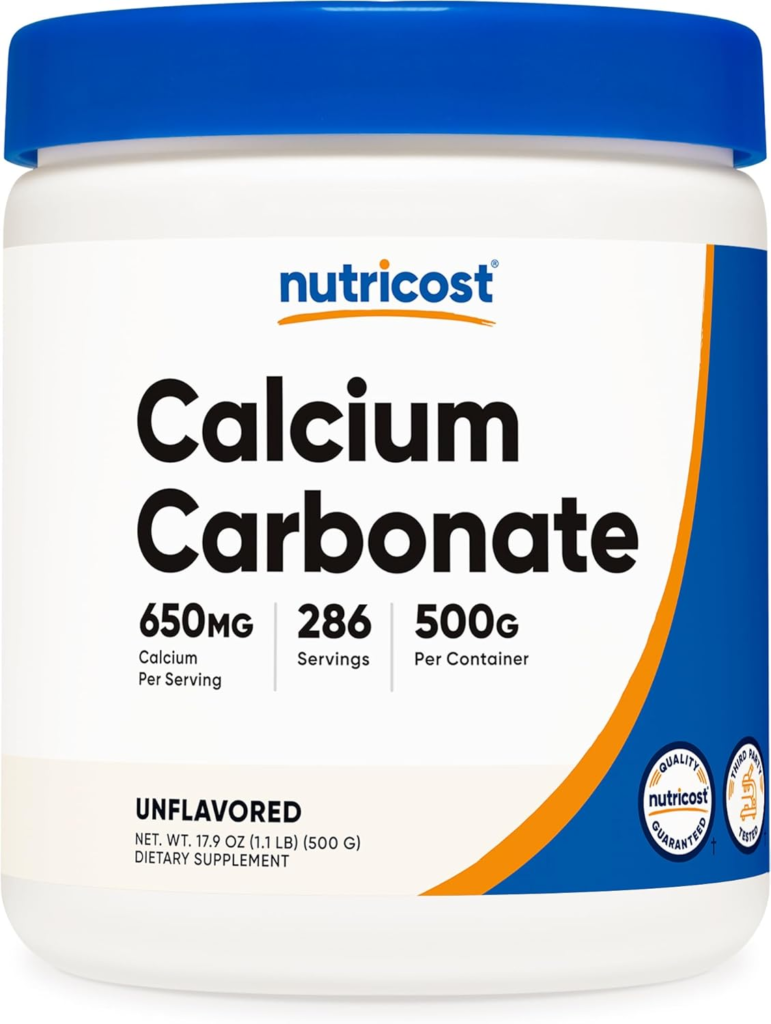
Best for: smooth pieces, larger projects, and anyone who wants the finish to look bought rather than improvised. Where it disappoints: you will not find it in a supermarket — it is an order-ahead item, and the bags are big enough that you are committing to more chalk paint than one dresser needs.
Plaster of Paris — texture and speed, on a timer
Heavier body, more tooth, and it dries noticeably faster, which is useful in a humid room or when you want back-to-back coats. It is the right pick if you are distressing the piece and want visible brushwork and a rustic edge. The cost is pot life, as above, and a finish that goes chalky and friable if you push the ratio too high.
One thing to plan around: plaster lightens the base colour. It is a white powder going in at roughly one part to three, so the tint you mixed in the jar is not the tint that ends up on the wood. If you are matching an existing piece, mix a test batch, let a card dry fully, and choose your tint against that — not against the paint chip.
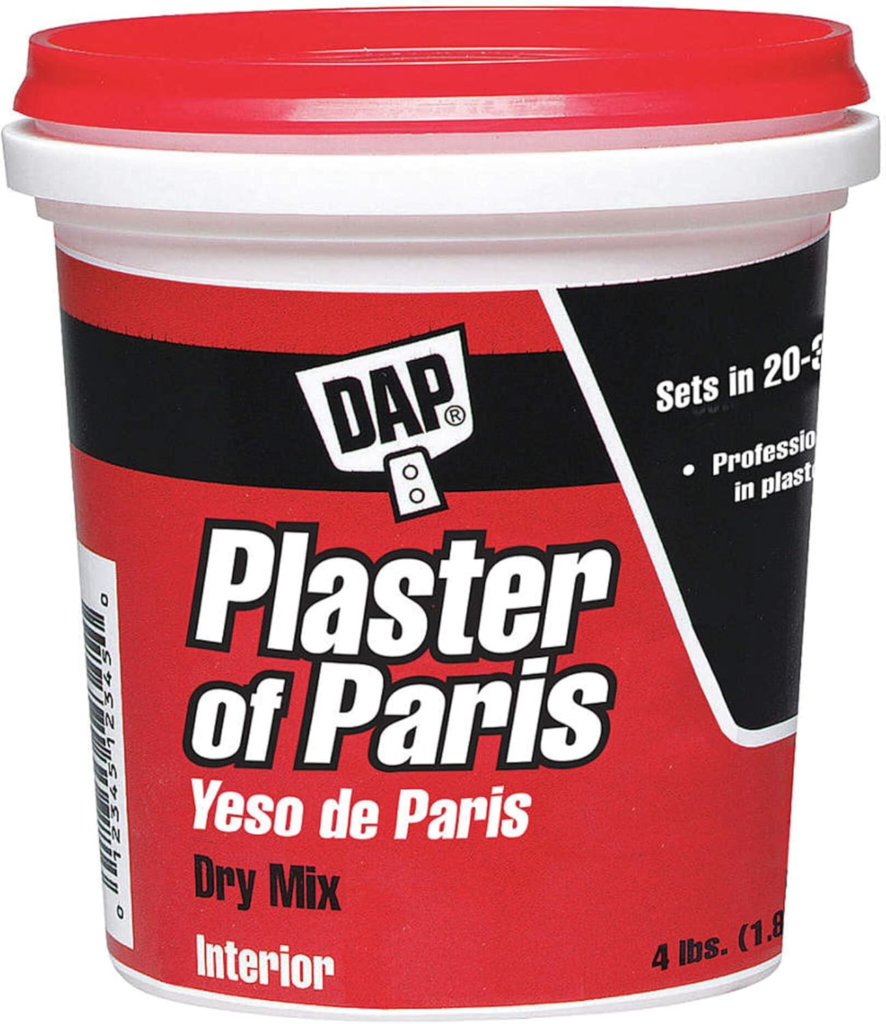
Best for: distressed and farmhouse finishes, small pieces, and anyone who wants to start tonight with something from the hardware store. Where it disappoints: the working time. Mix a cup at a time and accept that you will mix several.
Baking soda — the one I would skip
It is in every recipe online because it is in every kitchen. It gives a gritty rather than velvety texture, the coverage comes out patchy on smooth surfaces, and it can foam if you over-mix. On a rustic bench nobody will notice. On a dresser front in daylight, you will.
The 4-Ingredient Recipe
Four things: latex paint, calcium carbonate powder, warm water, and universal tint for the custom colour. Everything else is optional.
| Ingredient | Calcium carbonate version | Plaster of Paris version |
|---|---|---|
| Latex paint (flat or eggshell) | 4 tbsp (60 ml) | 4 tbsp (60 ml) |
| Powder | 1 tbsp (15 ml) | 1 tbsp + 1 tsp (20 ml) |
| Warm water | 1–2 tsp (5–10 ml) | 1 tbsp + 1 tsp (20 ml) |
| Universal tint | To colour, added last | To colour, added last |
Mixing, in order
- Powder into warm water first. Never powder into paint — it clumps and the lumps never fully break down. Stir about a minute until it is a smooth, lump-free slurry.
- Pour the paint over the slurry, not the other way round. It gives you control over the final consistency.
- Stir slowly for two minutes in a figure-eight. Whipping it introduces air, and air bubbles pop into pinholes as the film dries.
- Tint last, a few drops at a time, stirring fully between each. Universal tints are strong and you cannot take colour back out.
- Test on card. It should coat without running and flash off matte in five to ten minutes. Too thick, add water by the teaspoon; too thin, add powder by the pinch.
Mix more than you think you need
Colour-matching a second batch of homemade chalk paint is close to impossible — you are matching a hand-measured powder ratio and a drop count of tint at the same time. Whatever you calculate, mix half again on top. And judge the colour dry, not wet: the mineral filler scatters light, so chalk paint reads lighter and flatter once the water is gone than it does in the jar. Our guide on whether paint dries darker or lighter covers why.
Mixing Custom Colours
Start from a white or near-white flat latex if you want the colour to land where you intend. A tinted base works too, but every tint you add is now mixing with whatever is already in there, and you lose predictability fast.
Universal tinting colourants from the hardware store blend in cleanly and are the sensible choice. Artist’s acrylics work for small batches — just make sure they are fully incorporated, because a poorly stirred acrylic leaves streaks that only appear once the coat dries.
Palettes worth stealing: warm terracotta with raw linen for a Mediterranean console; sage green with stone white for cottage kitchen chairs; dusty French blue with aged cream on an armoire; deep charcoal against soft black for something contemporary. If you would rather buy than mix, our roundup of furniture paints covers the ready-made options.
Prep: The Part That Decides Whether It Peels
Chalk paint’s reputation for sticking to anything is earned — the mineral load creates a rough, porous film that grips varnish, old paint and glossy surfaces without sanding. What it will not grip is contamination. Prep matters more than the recipe, and this is the whole of it:
- Wipe down for dust, then wash with a degreaser or diluted dish soap. Kitchen furniture is always greasier than it looks.
- If the piece has ever been waxed, remove the wax with mineral spirits or a wax remover. Wax is the one thing chalk paint genuinely cannot stick to, and it is the mistake I see most often behind a finish that lifts weeks later.
- Let it dry fully — an hour, not ten minutes. Trapped moisture under a porous film causes blistering.
- Knock back any flaking paint or rough patches with 120-grit and wipe clean. Paint does not stabilise loose paint.
Brushwork: The Cross-Hatch
An oval or round natural-blend brush holds thick paint without dragging and gets into legs, spindles and carving that a flat wall brush skips over. A Purdy oval chalk brush is the standard choice.
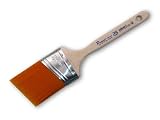
- Load a third of the bristle length. Chalk paint is thicker than wall paint and an overloaded brush drops ridges you cannot sand out later without going through the colour.
- Horizontal pass — long even strokes across the surface.
- Vertical pass while it is still wet — straight back over the top at ninety degrees. This is what creates the woven, handmade texture rather than a flat sprayed look.
- Final light pass with a nearly dry brush to break up any hard edges where sections meet.
- Wait 45–60 minutes before the second coat, and do not speed it up with a heat gun — forcing the surface dry over a wet underlayer is how you get cracking.
- Second coat, same method. Two thin coats always beat one thick coat.
Homemade vs. Store-Bought: An Honest Comparison
| Factor | Homemade | Store-bought |
|---|---|---|
| Cost per litre | $3–$8 | $30–$55 |
| Colour range | Any latex colour, tintable | Fixed brand palette |
| Batch consistency | Variable — hand-measured | Identical every tin |
| Working time | Hours (calcium carbonate) / under an hour (plaster) | Hours |
| Shelf life | 24–48 hours | 1–2 years sealed |
| Durability once sealed | Comparable | Comparable |
The practical read: mix your own for a whole-piece job you will finish in a weekend. Buy a tin when the project is small, when consistency matters, or when you know you will want to touch up a chip next year and will never reproduce the colour. If you land on buying, This Old House tests the commercial brands against each other, which is a comparison a homemade batch cannot give you.
Sealing: Wax Is Not the Default You Think It Is
Unsealed chalk paint is porous and soft. It will take on every spill and wear through at edges within months on anything in real use. Sealing is not optional; the only question is with what. Most guides, Family Handyman included, reach for wax first because it is the traditional finish. I have stopped doing that on anything that gets used, and here is why.
Wax gives the authentic soft, period sheen and is lovely on decorative pieces, picture frames and side tables that get looked at more than used. It is not heat resistant, it marks with water rings, it dissolves under grease, and it needs redoing every twelve to eighteen months. On a kitchen cabinet or a dining table it is the wrong choice, and the fact that it is the traditional one does not change that.
Water-based polycrylic is what to use on anything functional. It dries clear rather than ambering the way oil-based polyurethane does over a white or pale colour, and it builds a genuinely protective film instead of a sacrificial one.
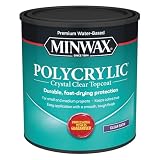
Applying it
- Let the chalk paint sit at least 24 hours after the last coat.
- Scuff with 220-grit — only enough to knock off dust nibs — and wipe clean.
- Apply thin with a synthetic brush or foam roller. Do not over-brush.
- Two hours between coats.
- Two coats minimum; three or four on cabinets and tabletops.
- 72 hours before heavy use, and treat it gently for the first couple of weeks.
When NOT to Use Homemade Chalk Paint
- You need to touch it up later. You will not reproduce the colour. For a piece you expect to nick, buy a tin and keep the rest.
- The surface is waxed or oiled and you are not stripping it. Nothing in this recipe defeats wax.
- It is laminate, melamine or thermofoil. Chalk paint’s grip does not extend to slick plastic faces — those need a bonding primer, covered in our guide to painting laminate cabinets.
- You are painting a floor or a stair tread. Even sealed, this is not a floor-grade system.
- You want it done today. Between two coats, a 24-hour wait, three coats of sealer and 72 hours of cure, this is a week-long job on a cabinet.
Homemade Chalk Paint FAQ
How long does homemade chalk paint last once mixed?
Use it within 24 to 48 hours. There is no preservative in it, the powder settles out, and plaster-based batches start setting within the hour. Mix per session rather than per project.
What is the best additive for homemade chalk paint?
Calcium carbonate, also sold as whiting powder. It is inert, so it does not react with the latex binder, shorten your working time, or shift the colour, and it gives a smooth velvety matte rather than a gritty one. Plaster of Paris is the alternative if you want heavier texture and faster drying.
Do I really not need to sand or prime?
You do not need to sand for adhesion on most sound painted or varnished surfaces. You absolutely do need to clean. Grease, polish and especially old wax will defeat it, and the finish lifts weeks later rather than immediately, which is what makes it so frustrating.
Can I use any latex paint as the base?
Yes, though flat or eggshell mixes in most predictably. A high-gloss base fights the matte you are trying to create and needs more powder to get there. Start with white or near-white if you plan to tint it.
Why does my chalk paint look gritty?
Either you used baking soda, or the powder went into the paint instead of into water first. Undissolved powder never fully breaks down once it is in the paint. Make the slurry first, every time.
Wax or polycrylic over chalk paint?
Wax for decorative pieces that get looked at; polycrylic for anything used. Wax is not heat resistant, marks with water rings and needs reapplying every year or so. Polycrylic builds a real protective film and stays clear over pale colours.
Is homemade chalk paint as durable as store-bought?
Once sealed, comparably so — both are soft films protected by a topcoat, and the topcoat does most of the work. The difference is consistency between batches and shelf life, not durability on the piece.
If you are still deciding whether chalk paint is right for the piece at all, our guide to what paint to use on wood furniture compares it against latex, acrylic, milk paint and alkyd by how hard the piece gets used.
About the author
Sophie Ulman has renovated and painted more rooms than she can count — and made every mistake in the book so you don’t have to. She focuses on real-world durability: not how products perform on day one, but whether the repair holds through a full seasonal cycle.
ThePaintly is reader-supported. Our picks are based on manufacturer specifications and what users report. When you buy through links on this site, we may earn an affiliate commission at no extra cost to you.