How to Clean a Paint Roller So the Nap Springs Back
If you’ve ever been halfway through painting a wall or ceiling, stopped to wash out your roller only to find paint still trapped deep in the fibers, you know the frustration. A good paint roller cleaner can save you time, money, and a lot of wasted effort. In this article, we’ll look at how to pick the best paint roller cleaner, explore different types like paint roller cleaner spinner, paint roller cleaner machine, and paint roller cleaning tool, and review the top products on the market. We’ll also share how to make a homemade paint roller cleaner that actually works.
The first time I tried to rescue a roller sleeve, I left it in the tray overnight under a damp rag and told myself I would deal with it in the morning. The outside still rolled fine. But the paint that had set deep in the nap turned the core into a stiff sponge, and the next day that sleeve dragged a fine grit across a freshly finished hallway wall. Here is what I learned: a roller sleeve is either cleaned within the hour or it is scrap. There is no third option, and no tool on this page changes that.
Which cleaner you buy matters far less than when you use it. Prep matters more than the brand here in exactly the way it does with paint itself – the cheapest comb used at the right moment beats the most expensive spinner used two hours late.
Why Cleaning Your Paint Rollers Matters
Before diving into tools and products, it helps to understand why roller cleaning is important.
- Better paint finish: Old, partially dried paint left in the nap causes streaks, uneven texture, or visible clumps
- Cost savings: Good rollers aren’t cheap. Reusing them multiple times by cleaning them well is more economical than replacing
- Environmental benefits: Less waste of roller sleeves, less paint going down the drain
- Prepping for your next project: Clean rollers ensure consistent performance whether you’re painting walls, ceilings, or trim
Tip: If you’re prepping a room for painting, see our guide on how to clean walls before painting for better paint adhesion.
What to Look for in the Best Paint Roller Cleaner
Before buying, consider these key factors.
| Feature | Why It Matters |
|---|---|
| Roller size compatibility | Some cleaners only fit small rollers, while others fit up to 18-inch rollers |
| Cleaning speed and effort | Manual scrapers are cheap but time-consuming. Spinners and machines save time |
| Water usage and mess | Some tools spin rollers dry, others use running water and can be messy |
| Durability | Look for stainless steel, ABS plastic, or strong parts that won’t rust or break |
| Drying capability | Tools that also spin the roller dry help prevent mildew and speed up reuse |
Types of Paint Roller Cleaning Tools
There are several types of paint roller cleaning tools available. Each has its strengths and weaknesses depending on how often you paint and how much effort you want to spend cleaning.
Manual Scrapers and Combs
These are simple hand tools used to scrape off paint from rollers and brushes. A popular example is the ROLLINGDOG 4-in-1 Paint Brush Comb.
Pros:
- Very affordable
- Portable and easy to store
- Great for quick cleanup
Cons:
- Requires more effort
- May not remove deeply embedded paint
- Doesn’t spin or dry rollers
Paint Roller Cleaner Spinner Tools
Paint roller spinner tools use centrifugal force to fling paint and water out of the roller. Some attach to a drill, while others are manual pump-style spinners. The Project Select Professional Brush & Roller Spinner is a great option.
Pros:
- Fast and effective
- Spins water out for quicker drying
- Good for multiple rollers
Cons:
- Requires setup and space
- Can splatter water and paint
- May struggle with thick paints
Spin Out Paint Roller Cleaner Tools
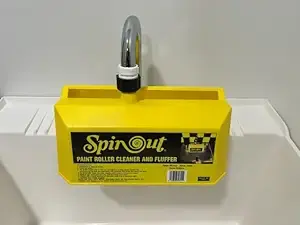
A spin out paint roller cleaner connects to a garden hose or faucet. Water pressure spins the roller, flushing paint out while cleaning it thoroughly. The SpinOut Paint Roller Cleaner with Adapter is highly rated.
Pros:
- Hands-free cleaning
- Very fast (under a minute)
- Compatible with most roller sizes
Cons:
- Needs a hose or faucet
- Can use a lot of water
- Not ideal indoors
Paint Roller Cleaner Machine
A paint roller cleaner machine is a larger, often automated tool designed for pros. It can wash and spin rollers clean and nearly dry in minutes. Some use water jets, others use high-speed spinning enclosed inside a container.
Pros:
- Cleans quickly and thoroughly
- Often dries rollers too
- Ideal for professional painters
Cons:
- Expensive
- Bulky and not portable
- Overkill for occasional use
How to Make a Homemade Paint Roller Cleaner
If you only paint occasionally, you can make a homemade paint roller cleaner using basic items.
You’ll need:
- Bucket or sink
- Warm water and dish soap
- Wire brush or old comb
- Rags or paper towels
Steps:
- Scrape off excess paint with a putty knife or comb
- Soak the roller in warm soapy water for 10 minutes
- Scrub with a wire brush to remove paint from fibers
- Rinse thoroughly under running water
- Spin the roller between your hands to remove excess water
- Let it air dry standing upright
This method takes longer than using a roller ready paint roller cleaner, but it works well if you only paint occasionally.
Best Paint Roller Cleaner: Product Reviews
Here are some top-rated products worth considering, along with their pros and cons.
SpinOut Paint Roller Cleaner with Adapter
Pros:
- Cleans rollers in under 60 seconds
- Works with most roller sizes
- Hands-free operation
- Durable ABS construction
Cons:
- Needs a hose and decent water pressure
- Can splash water
Verdict: Ideal for frequent painters who want speed and convenience.
ROLLINGDOG 4-in-1 Paint Brush Comb
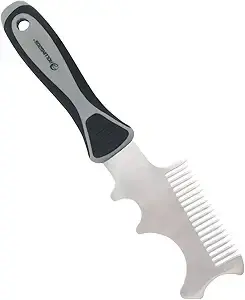
Pros:
- Very affordable
- Compact and portable
- Cleans brushes and rollers
Cons:
- Requires manual effort
- Doesn’t dry rollers
Verdict: Perfect for occasional DIYers.
Project Select Professional Brush & Roller Spinner

Pros:
- Cleans and dries rollers fast
- Professional build quality
- Reusable and durable
Cons:
- Can be messy
- Needs space to use
Verdict: Great for pros or large projects.
Roller EZ-Kleen Paint Roller Cleaner

Pros:
- Faster than hand washing
- Removes paint effectively
- Compact design
Cons:
- May need multiple passes
- Uses a fair amount of water
Verdict: Good balance between cost and performance.
Spinner vs Cleaner: Which One Do You Actually Need?
Short answer: a cleaner removes the paint, and a spinner gets the water out afterward, so for latex paint you only strictly need the cleaner and a spinner is the upgrade. If you have a hose outside, a hose-driven tool like the SpinOut does both jobs in one step. If you work indoors or in an apartment, a comb like the ROLLINGDOG 4-in-1 plus a hand-pump or drill spinner such as the Project Select spinner covers it without a garden hose.
Where people go wrong is buying a spinner and expecting it to clean a sleeve that has been sitting for an hour. A spinner flings out what is still wet. Paint that has started to set stays in the nap, which is the same lesson as the overnight sleeve at the top of this page. Comb or flush first, spin second, and stand the sleeve on its end to finish drying.
Which Paint Roller Cleaning Tool Should You Choose
Ask yourself these questions:
- How often do you paint
- Do you have outdoor space with a hose
- Do you want fast drying or just cleaning
- How much storage space do you have
For frequent painting projects like ceilings or entire rooms, a paint roller cleaner spinner or paint roller cleaner machine will save you hours. For smaller touch-ups, a simple comb is enough.
If you’re painting ceilings, check our detailed guide on the best way to paint a ceiling and consider using a best ceiling paint roller to improve coverage and reduce fatigue.
Is it worth cleaning a paint roller, or should you just buy a new one?
This is the question most people are actually asking when they search for a paint roller cleaner, so here is the direct answer: it depends entirely on what the sleeve cost and what is in it.
A basic three dollar polyester sleeve loaded with latex wall paint is not worth twenty minutes at a utility sink. Scrape it, bag it, move on. But a good woven or microfiber roller runs eight to fifteen dollars, and a quality sleeve holds its nap through six or seven cleanings if you treat it right. That is the break-even point I use: if the sleeve cost more than a takeaway coffee, clean it.
The paint matters just as much as the sleeve. Latex and acrylic come out with warm water and pressure, and a spinner finishes the job in seconds. Oil-based and alkyd paints need mineral spirits, which means solvent handling, a sealed container, and a disposal problem afterwards. For a single oil-based job on a cheap sleeve, replacement is genuinely the cheaper and safer answer. The EPA guidance on household hazardous waste is worth reading before you pour solvent down any drain, because in most municipalities that is illegal as well as bad practice.
One more variable people miss: sleeve size. An 18-inch sleeve on a large paint roller costs real money and will not fit most consumer spinners, so check the capacity before you buy a cleaner. If your whole kit is 9-inch sleeves and standard roller covers, almost anything on this list fits.
When a roller sleeve is not worth saving
Cleaning is the wrong call in four situations, and no tool fixes any of them:
- The paint has fully cured in the nap. Once it is hard rather than tacky, the fibers are locked. You can flush the surface clean and it will still shed grit on your next wall.
- You used oil-based paint on a budget sleeve. The solvent costs more than the sleeve and leaves you with hazardous waste to dispose of.
- The nap is matted flat on one side. A sleeve that has been stored lying down or squeezed in a bag has lost its loft permanently. It will lay paint unevenly no matter how clean it is.
- You are switching from oil to latex, or from a dark color to white. Trace contamination shows. Start with a fresh sleeve.
Honest limitation on the tools themselves: a spinner removes water and loose paint. It does not dissolve anything. If you expect it to rescue a sleeve you neglected, it will disappoint you.
Two roller types change the cleaning maths. A patterned roller carries paint inside a raised relief, so a spinner alone will not clear it — that one needs solvent and a brush in the grooves, or the pattern blurs on the next job. A power roller is the other extreme: the sleeve is the easy part and the feed tube is what actually holds the paint, which is why the flush cycle matters more than anything you do to the cover.
Pro Tips for Cleaning Rollers Faster
- Always clean before paint dries completely
- Scrape off excess paint first to save water
- Use warm water for latex paint, mineral spirits for oil-based paint
- Spin out excess water with a spinner for faster drying
- Store rollers upright to avoid flattening the nap
Paint roller cleaner FAQ
How do you clean a paint roller without a special tool?
Scrape the loose paint back into the can with the curved edge of a 5-in-1 tool or a putty knife, then run warm water through the nap while squeezing from the core outward until the water runs clear. Finish by rolling the sleeve hard across a dry towel. It works. It just takes about four times longer than a spinner and uses considerably more water.
Can you leave a paint roller overnight instead of cleaning it?
For a few hours, yes, if you wrap it airtight in plastic wrap or seal it in a zip bag with the air pressed out and put it in the fridge. Overnight in open air is where sleeves die. The surface stays workable while the paint at the core sets hard, and that hidden cured paint is what ruins your next coat.
Does a paint roller cleaner spinner actually work?
Yes, for what it is designed to do. A spinner uses centrifugal force to throw water and suspended paint out of the nap, which is the step that takes longest by hand and the step that decides whether the sleeve dries soft or stiff. It does not replace the rinse. Rinse first, spin second, and do it inside a five gallon bucket unless you want the wall behind you repainted for free.
How do you clean a roller used with oil-based paint?
Work the sleeve in a container of mineral spirits, squeeze it out, then repeat in fresh spirits until it comes out clean. Wash with warm soapy water afterwards and spin dry. Let the used spirits sit until the pigment settles, pour off the clear liquid to reuse, and take the sludge to a household hazardous waste facility. Never down the drain.
How many times can you reuse a paint roller sleeve?
A quality woven or microfiber sleeve cleaned promptly gives me six or seven jobs before the nap loses its loft. Cheap polyester sleeves are usually done after two. The failure sign is not dirt – it is a nap that no longer springs back when you press it with your thumb.
Should you clean a roller between coats?
No, and this is the mistake I see most often. If your recoat window is two to four hours, wrap the loaded sleeve airtight and leave it. A washed sleeve holds water in the core, and that water thins your second coat unevenly. Two thin coats always beat one thick coat, but only if the second one goes on at full strength.
What is the fastest way to dry a roller after cleaning?
Spin it. Thirty seconds in a spinner inside a bucket removes more water than an hour of air drying, and it fluffs the nap back up at the same time. Then stand the sleeve on end rather than laying it flat, so the fibers do not compress on one side while they finish drying.
Final Verdict
If you want the best paint roller cleaner, go with the SpinOut Paint Roller Cleaner with Adapter for its speed and ease of use. If you’re on a budget, the ROLLINGDOG 4-in-1 Comb is great for quick cleanups. Professionals should consider a paint roller spinner like the Project Select model to clean and dry rollers quickly between coats.
Investing in the right paint roller cleaning tool can extend the life of your rollers, save time, and improve your painting results dramatically.
About the author
Sophie Ulman has renovated and painted more rooms than she can count – and made every mistake in the book so you don’t have to. She focuses on real-world durability: not how products perform on day one, but whether the repair holds through a full seasonal cycle.