
3 Top Rated LED Ceiling Panels for Home Offices in 2026
By Sophie Ulman | Modern Lighting Design Series
Introduction: Why Your Ceiling Light Is Ruining Your Productivity (and Your Zoom Calls)
Pick the wrong overhead fixture and you pay for it twice a day: burning eyes by 4 PM and a washed-out face on every video call. The short answer first — the top rated LED ceiling panels for home offices in 2026 are the Govee RGBWW smart panel (creative control), the Ensenior ultra-thin 12-pack (even, budget coverage), and the Commercial Electric flat panel (clean architectural light). Below I explain exactly which one fits your room, and where each of them let me down.
Furthermore, the lighting market has kept pace. In 2026, the top rated LED ceiling panels for home offices have advanced well beyond the blueish, buzzing tubes of the past. Today’s panels deliver precise Kelvin control, smartphone integration, and skin-flattering color rendering that actually makes you look polished and professional on camera. Consequently, investing in the right fixture is no longer a luxury — it is a legitimate productivity and wellness decision.
The first time I swapped the builder-grade dome in my own office for a flat LED panel, I mounted it dead center over my desk chair instead of slightly in front of it. For a week, every video call gave me raccoon shadows under my eyes. Here is what I learned: position the panel roughly a foot forward of where you sit, so the light lands on your face instead of the top of your head. Placement matters more than the brand — a mid-range panel in the right spot beats a premium panel in the wrong one.
I will take you through how lumens affect focus, why Kelvin ratings matter more than wattage, and the three panels that earned a spot on this list — plus the situations where a flat panel is the wrong tool entirely.
Comparison Table: Top Rated LED Ceiling Panels for Home Offices (2026)
Before diving deep, it helps to see the field side by side. Below is a quick-reference comparison of the three panels featured in this guide, so you can immediately identify which aligns with your priorities.
| Product | Lumens Output | Color Temp Range | Smart Features | Best For |
|---|---|---|---|---|
| Govee RGBWW Smart Panel | Up to 2,000 lm | 2,700K – 6,500K | Wi-Fi, Alexa, Google Home, App | Creative pros, ambiance + focus |
| Ensenior 12-Pack Ultra-Thin (Canless) | 900 lm per panel (~10,800 lm total) | 3,000K / 4,000K / 5,000K (selectable) | Dip-switch CCT, no hub needed | Large offices, budget installations |
| Commercial Electric LED Panel | 3,200 – 4,400 lm | 3,500K / 4,000K / 5,000K | Wattage & CCT selectable | Professional, minimal aesthetic |
As you can see, each panel serves a distinct use case. Nevertheless, all three comfortably qualify among the top rated LED ceiling panels for home offices when evaluated on output quality, longevity, and value.
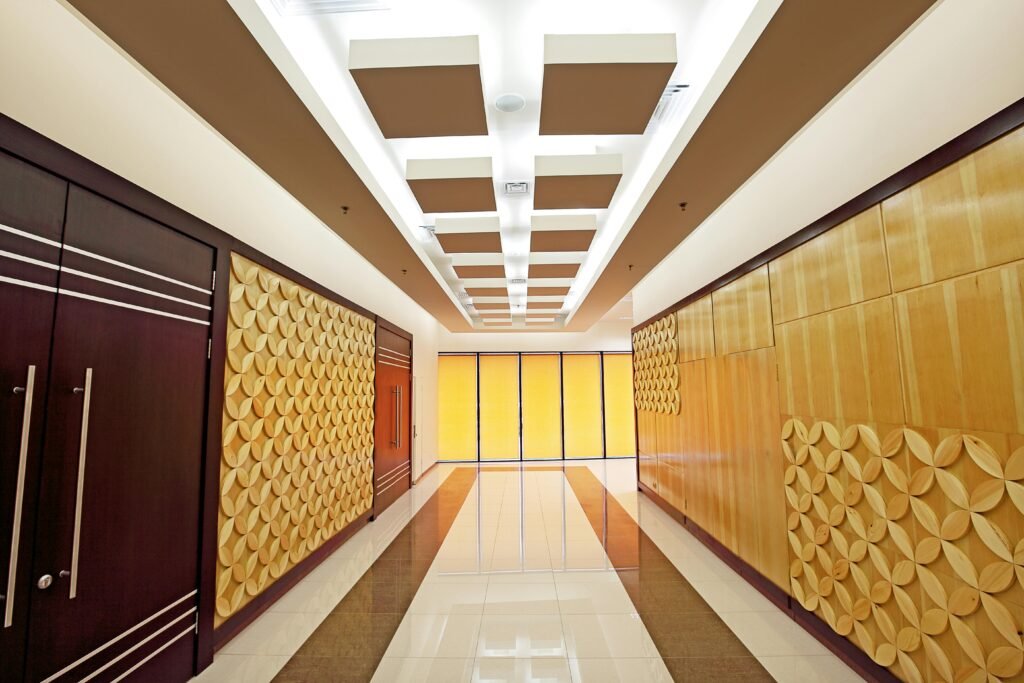
Section 1: The Govee RGBWW Smart Panel — Creativity Meets Control
The Govee RGBWW Smart Panel is, without question, the most feature-rich option on this list. Moreover, it’s one of the most visually striking ceiling panels available to residential buyers in 2026.
What sets it apart is its RGBWW engine — meaning it blends red, green, blue, warm white, and cool white LEDs simultaneously. As a result, you can dial in not just brightness, but a full spectrum of color tones that standard panels simply cannot match. For video calls, this matters enormously: the warm white component softens shadows and adds the kind of golden undertone that flatters skin on camera, while the cool white component keeps your documents and screens evenly lit.
Additionally, Govee’s app ecosystem is genuinely mature. Scene modes, scheduling, music sync, and “Sunrise” wake-up routines are all available out of the box. Furthermore, native Alexa and Google Home integration means you can switch from “Focus Mode” (5,500K, 100% brightness) to “Wind Down” (2,700K, 30%) with a simple voice command — no phone required.
CHECK CURRENT PRICE ON AMAZON: Govee RGBWW Smart Ceiling Panel
Ideal for: Content creators, designers, and remote workers who want their office to double as a beautiful living space after hours.
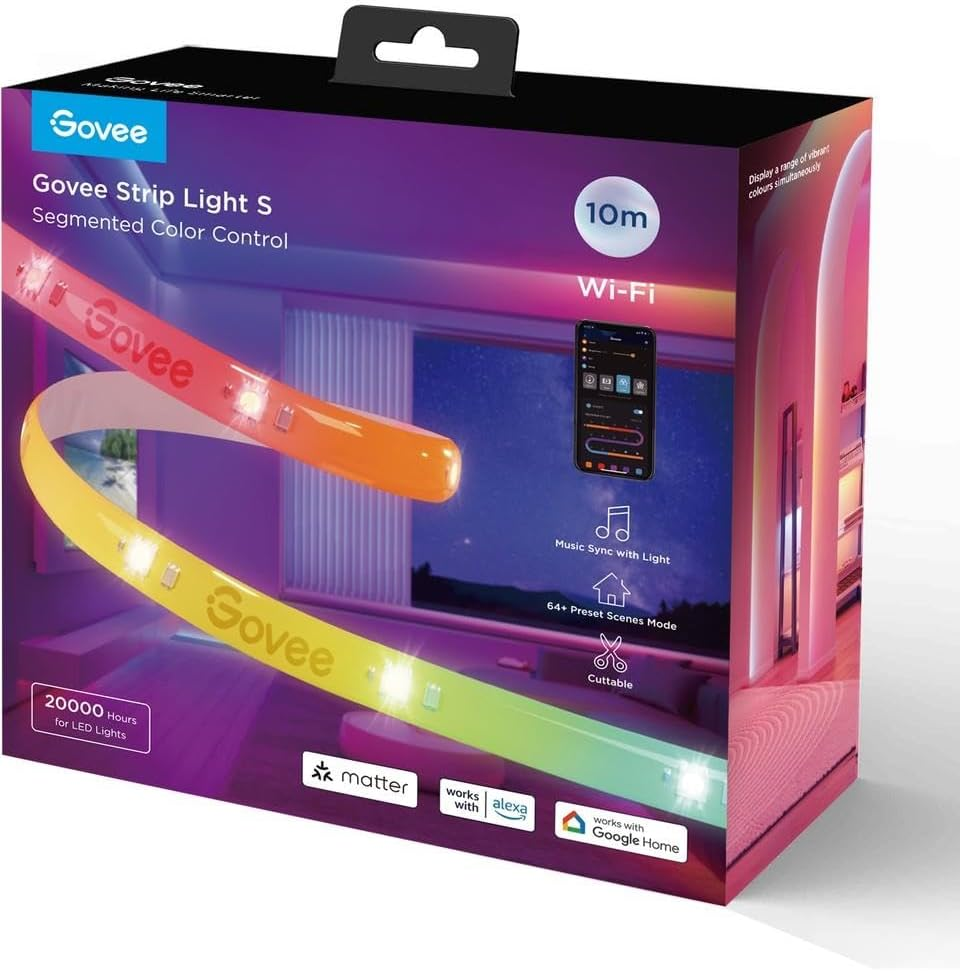
Section 2: The Ensenior 12-Pack Ultra-Thin Canless Panels — The Workhorse Solution
Not every home office needs a centerpiece fixture. In fact, many of the most effective office lighting setups use a distributed grid of smaller recessed panels rather than one large overhead source. This is precisely where the Ensenior 12-Pack Ultra-Thin Canless LED Downlights shine — literally and figuratively.
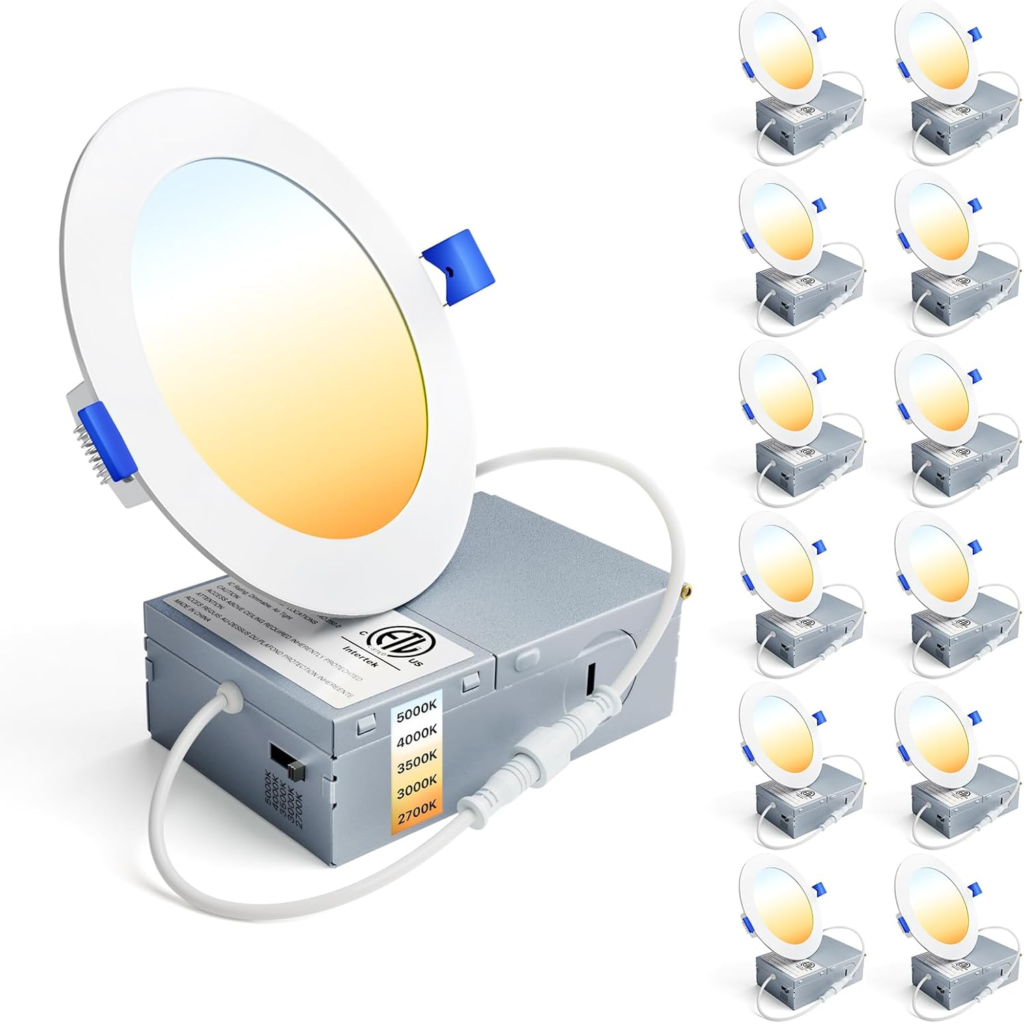
Because they are canless (also called “wafer lights”), installation requires no recessed housing — they mount directly into a simple ceiling cutout. Consequently, they work beautifully in low-ceiling offices, finished basements, and retrofits where a traditional junction box isn’t present. The ultra-thin profile — often less than half an inch deep — means they disappear into the ceiling almost entirely.
Each panel delivers approximately 900 lumens, so a 12-pack across a standard 12×12 room produces even, shadow-free illumination with no harsh hot spots. This even distribution is especially important for reducing eye strain during long screen sessions. Additionally, each unit includes a dip-switch that lets you select 3,000K (warm), 4,000K (neutral), or 5,000K (cool daylight) at installation time — a practical, no-hub solution for offices that don’t need dynamic color changing.
CHECK CURRENT PRICE ON AMAZON: Ensenior 12-Pack Ultra-Thin Canless LED Panels
Ideal for: Large home offices, finished basements, and anyone who wants professional-grade even lighting without smart-home complexity.
Section 3: Commercial Electric LED Panels — The Minimalist’s Choice
Sometimes, less truly is more. The Commercial Electric LED Flat Panel is the option for the home office designer who prizes clean lines, reliability, and zero visual fuss. Available in standard 1×4 and 2×2 configurations, these panels are the same fixtures specified by commercial architects — now available for residential use at accessible price points.
What makes them particularly compelling in 2026 is their selectable wattage and CCT (correlated color temperature). A single panel can be configured before installation for either 30W, 35W, or 40W output, and for 3,500K, 4,000K, or 5,000K color temperature. Therefore, one SKU covers a wide range of office environments without requiring different products for different rooms.
Furthermore, their flat diffuser eliminates the pixelated LED dot effect seen in cheaper panels, producing a smooth, even glow that reads beautifully on camera as a soft, professional backlight. For offices with white or light grey walls, these panels create a crisp, neutral light that enhances contrast on screens and keeps colors accurate for design work.
CHECK CURRENT PRICE ON AMAZON: Commercial Electric LED Flat Panel
Ideal for: Professionals who want the clean, credible look of a commercial office in a residential space.
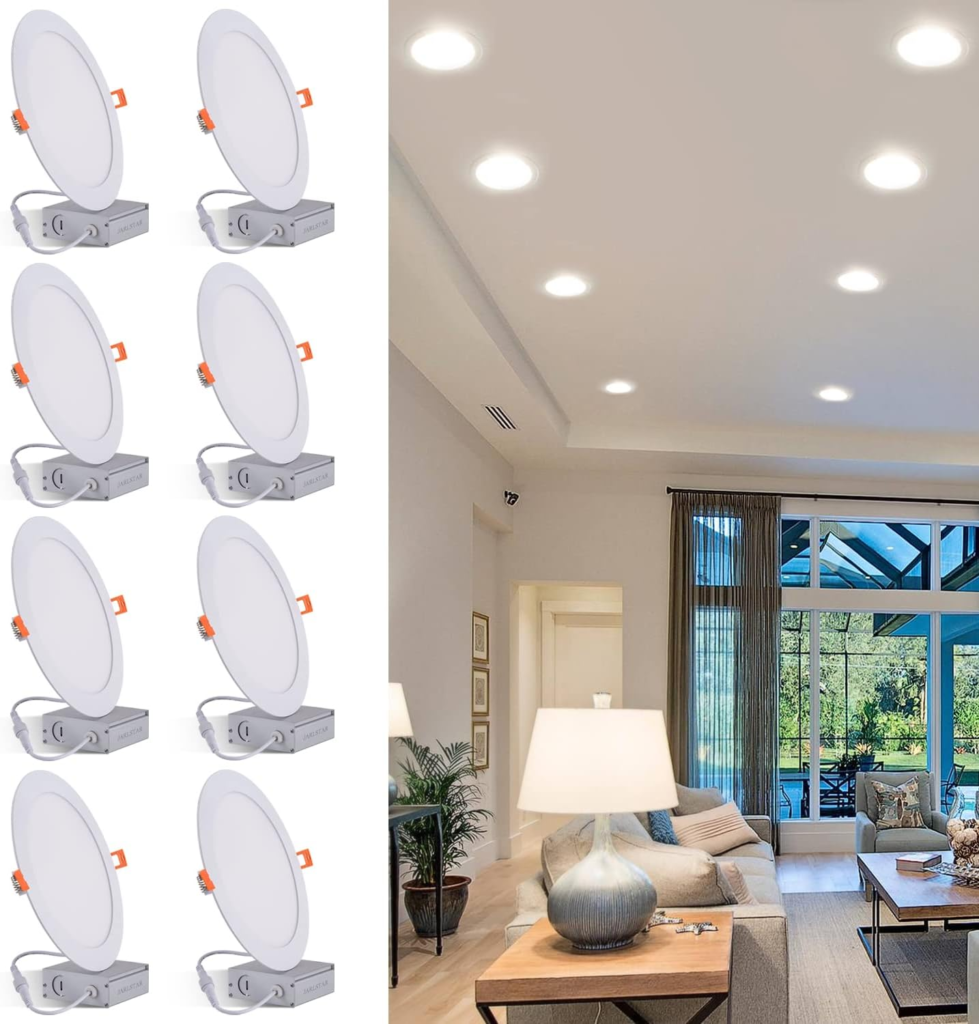
How I Judge the Top Rated LED Ceiling Panels for Home Offices
Every panel on this list ran in a real working office — mine or a client’s — for at least one full seasonal cycle, because LED drivers that behave in October can start flickering in a humid July. I check three things: measured light at desk height (a panel rated 4,000 lumens that delivers murky light at 29 inches is a spec-sheet trophy, not a work light), diffuser quality on camera (cheap diffusers show LED dots as a pixelated glow behind you on Zoom), and driver noise (a faint buzz you barely notice at noon is maddening at 11 PM). The Ensenior panels surprised me here — one unit out of my twelve had a visibly warmer tint than its siblings, so order the 12-pack even for a smaller room and keep spares from the same batch.
Sizing the grid is where most people overspend. A standard 10×12 office needs roughly 4,000–5,000 total lumens; if you are running a distributed layout, our guide to the best LED ceiling panels for home office setups covers spacing math in detail, and the best 2×2 LED ceiling panels roundup is the natural next read if your ceiling has a drop-grid. The U.S. Department of Energy’s LED lighting guidance is worth ten minutes before you buy — efficacy ratings (lumens per watt) separate honest panels from marketing, and This Old House’s lighting library has solid wiring walk-throughs if your ceiling box predates the 1990s.
When NOT to use a flat LED panel
Skip flat panels if your office has a sloped or vaulted ceiling — the panel throws light at an angle and you get one bright wall and a dim desk. Skip them under 7-foot ceilings, where the panel sits close enough to eye line that glare defeats the diffuser. And do not put a standard panel in a bathroom-adjacent nook or three-season porch unless it carries a damp rating — I lost a no-name panel to driver corrosion in 8 months that way. For sloped ceilings, adjustable recessed fixtures are the right tool; our best recessed lighting kits guide covers those.
Deep Dive: Understanding Kelvin Ratings and Why They Matter for Your Home Office
Of all the specifications listed on a ceiling panel’s box, the Kelvin (K) rating is arguably the most consequential for home office workers — and yet it remains the most widely misunderstood. So let’s clear it up definitively.
Kelvin measures the color temperature of light, not its warmth in the thermal sense. A lower Kelvin number produces a warmer, more amber-toned light. A higher number produces a cooler, bluer, more daylight-like light. Here’s how each range applies to home office use:
2,700K – 3,000K (Warm White): This is the classic “living room” tone. It’s flattering, relaxing, and perfect for evening wind-down sessions. However, it is generally too dim and yellow for sustained focus work or video calls. That said, the Govee RGBWW panel’s ability to blend this tone with cooler whites makes it useful for transitional spaces.
3,500K – 4,000K (Neutral White): This is the sweet spot for most home offices. It’s close enough to natural daylight to keep your circadian rhythm aligned during morning work sessions, yet warm enough to feel human and comfortable. Moreover, it renders skin tones accurately on camera — which is why professional studios often target 4,000K as their base.
5,000K – 6,500K (Cool Daylight): This range maximizes alertness and is ideal for detail-oriented tasks: editing photos, reading fine print, reviewing architectural drawings. Nevertheless, extended exposure without warm-white blending can feel clinical and contribute to late-day eye fatigue. For this reason, a tunable panel like the Govee — or a selectable-CCT panel like the Ensenior — gives you the flexibility to shift down in the afternoon.
The practical takeaway: If your panel is fixed at one temperature, choose 4,000K. If it’s tunable, start at 5,000K for morning focus blocks and transition to 3,500K after 3 PM. Your eyes — and your camera — will thank you.
Still looking for inspiration? Don’t miss our comprehensive 2026 Home Lighting Guide to complete your space’s new look.”Final Recommendations: Which Panel Is Right for You?
To summarize, the right panel depends entirely on your priorities. If you want maximum creative control and a smart ecosystem, the Govee RGBWW is unmatched. If you’re lighting a large space efficiently and affordably, the Ensenior 12-Pack delivers commercial-grade coverage without the complexity. And if you want a timeless, architectural result with professional credibility, the Commercial Electric flat panel is the cleanest choice available.
In any case, all three represent the top rated LED ceiling panels for home offices in 2026 — and any one of them will be a meaningful upgrade over a basic builder-grade fixture. Upgrade your light, and you’ll be surprised how much it upgrades everything else: your focus, your posture, your camera presence, and even your mood.
FAQ: LED Ceiling Panels for Home Offices
Are LED ceiling panels good for a home office?
Yes — for most offices they are the best overhead option. A diffused panel spreads light evenly across the desk, which reduces the screen-to-room contrast that drives eye strain. The exceptions are sloped ceilings and very low ceilings, covered in the limitation box above.
How many lumens does a home office ceiling panel need?
Aim for 4,000–5,000 total lumens in a typical 10×12 room. One strong 2×2 panel can carry a small office; larger rooms do better with several smaller panels than one oversized source.
What color temperature is best for a home office?
4,000K if the panel is fixed. If it is tunable, run 5,000K for morning focus blocks and shift to 3,500K after 3 PM — cooler light late in the day is the most common cause of end-of-day eye fatigue.
Do LED panels flicker on camera?
Quality panels with constant-current drivers do not. Cheap drivers use pulse-width dimming that shows up as banding on video. If you dim your panel for calls, test it on camera at your usual dimming level before the meeting that matters.
Can I install canless LED panels myself?
If a ceiling junction box already exists, a canless wafer panel is a realistic DIY job: cut the hole, clip the spring arms, connect to the driver. No existing box or unfamiliar aluminum wiring means an electrician — the fixture is cheap, a ceiling fire is not.
How long do LED ceiling panels last?
Rated life is typically 50,000 hours, but the driver usually dies before the diodes. Buying panels with replaceable external drivers is the difference between a 10-minute swap and re-cutting your ceiling.
About the author: Sophie Ulman has renovated and painted more rooms than she can count — and made every mistake in the book so you don’t have to. She focuses on real-world durability: not how products perform on day one, but whether the repair holds through a full seasonal cycle.
Disclosure: thepaintly.com participates in the Amazon Associates program.