
What Actually Holds Up on a Truck Frame Through a Salted Winter?
Updated: August 2026 | By Sophie Ulman
A frame doesn’t rust evenly. It rots from the seams, the crossmember pockets and the boxed sections where brine collects and never dries out — and by the time you can see it from the driveway, the metal behind it is already thin. That is why truck frame paint is a different job from painting a fender. You are not covering steel to make it look right. You are sealing a structural part that spends five months a year soaked in salt solution.
Get it wrong and you don’t get a peeling paint job. You get a coating that traps moisture against bare steel and accelerates the exact corrosion you were trying to stop.
What’s on this page
What truck frame paint actually has to survive
Salt is not just corrosive on contact. Dissolved in meltwater it becomes an electrolyte, which means it carries current between anodic and cathodic spots on the same piece of steel. That is the mechanism: the brine turns the frame into a low-grade battery, and the metal gives up electrons at the pits. It keeps working at temperatures where plain water would have frozen and stopped. Family Handyman’s breakdown of road salt and vehicles covers how far into a chassis that spray travels.
So a frame coating has three jobs, in this order: block liquid water, stay flexible through freeze-thaw cycles without cracking, and survive gravel impact without chipping down to bare steel. Most rattle-can enamel fails the third one in a single winter. One stone chip on a boxed frame rail is a funnel — water goes in behind the film, and now the paint is holding it there.
The first time I coated a trailer frame I used ordinary gloss enamel because it was what I had on the shelf. It looked excellent in October. By March there were blisters the size of a thumbnail along the bottom rail, and when I picked one open the steel underneath was wet and orange. The enamel hadn’t failed by wearing off. It had failed by sealing water in. Here’s what I learned: on a frame, film thickness and adhesion matter more than gloss, and any coating you can dent with a fingernail will not last a salted winter.
Quick picks
Five coatings, and they are not interchangeable. Two of them are the main truck frame paint for the exposed rails, one is a rust step that comes first, and two are for the pockets and repairs that the big containers can’t reach.
| Coating | Best for | How it goes on |
|---|---|---|
| Herculiner HCL1B8 Kit | A full frame you can reach with a roller | Brush and roller, kit includes both |
| U-POL Raptor 0820 Kit | A stripped frame, sprayed properly | Schutz-type gun, sold separately |
| DecorRom Rust Converter & Primer | A frame that’s already surface-rusted | Brush or roller, then topcoat |
| Rust-Oleum 248915 Truck Bed Coating | Spot repairs and small sections | Aerosol |
| AGS Rust Solutions Matte Black | Brackets, tight corners, weld seams | Aerosol |
The 5 coatings
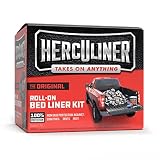
Herculiner is a polyurethane loaded with rubber granules, and that filler is the whole point on a chassis. The granules give the cured film body, so it builds to a thickness a rolled enamel never reaches, and a stone that would chip thin paint gets absorbed instead. The kit ships with the roller, tray and abrasive pad, which matters because the nap on a standard roller cover dissolves in this stuff.
The honest limitation is reach. Rolling a frame means getting a roller into boxed sections and around brake and fuel lines, and there are pockets on a body-on-frame truck you simply cannot get a roller into without dropping the bed. On the outer rails, crossmembers and spring hangers it’s excellent. Behind the cab mounts, plan on a brush and some patience.
Pros
- Builds real film thickness in two coats
- Kit includes the correct roller and prep pad
- Texture hides existing pitting
Cons
- Can’t reach boxed sections with a roller
- Strong solvent smell, needs airflow
- Repairs are visible
Check Price on Amazon →
Via Amazon.com
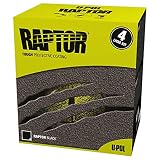
Raptor is a two-component urethane — you add the hardener to the bottle and it cures by chemical reaction rather than by solvent flashing off. That is the difference that shows up in year three. A one-part coating stays permanently soluble in the solvent it was thinned with, so fuel and hydraulic fluid soften it. A cured 2K film doesn’t re-dissolve, which on a frame means diesel drips and brake fluid weeps don’t lift it.
The catch is that you need a Schutz-style gun and it isn’t in the box. It’s also unforgiving on timing — once the hardener goes in you have a working window, and if you stop to move the truck halfway through you will be throwing away what’s left in the cup. I’d only reach for this on a frame that’s already stripped and hanging on stands, not on a Saturday-afternoon touch-up.
Pros
- 2K urethane resists fuel and solvent
- Sprays into pockets a roller can’t reach
- Tintable if you want anything but black
Cons
- Gun sold separately
- Fixed pot life once mixed
- Needs respirator and real ventilation
Check Price on Amazon →
Via Amazon.com

A converter is not a paint and shouldn’t be judged as one. It reacts with iron oxide and turns loose red rust into a stable dark compound that a topcoat can grip, which is the only sensible way to deal with a frame that’s pitted but structurally fine. Wire-brushing pitted steel back to shine is a fantasy — the rust lives at the bottom of the pits, where no brush reaches. A converter goes down into them.
The limitation people run into: it needs damp-cure conditions and it needs the surface to be actually rusty. Brush it over sound painted steel and it just sits there as a weak film with nothing to react with. On my own trailer I did the whole rail in one pass and the sections that still had good factory coating stayed tacky for days while the rusted sections turned properly black overnight.
Pros
- Reaches rust inside pits a brush can’t
- Water-based, so cleanup is simple
- Large bottle covers a full frame
Cons
- Useless on clean or painted steel
- Must be topcoated
- Slow to cure in cold weather
Check Price on Amazon →
Via Amazon.com
Same textured-coating idea as the roll-on kits, delivered from an aerosol. The value here is specific: after a salted winter you will find two or three places where a stone took the coating off, and those spots need sealing before spring rain gets into them. Opening a gallon kit for a palm-sized repair wastes most of the gallon.
Where it disappoints is coverage. An aerosol lays down a thin film compared to a roller, so anyone trying to do a whole frame with cans is going to burn through a lot of them and still not reach the thickness that stops chips. Treat it as the repair can, not the main coating.
Pros
- Right size for chip repairs
- Textured finish blends with roll-on coatings
- Gets behind brackets a roller misses
Cons
- Thin film per coat
- Expensive way to cover a whole frame
- Overspray travels — mask lines and hoses
Check Price on Amazon →
Via Amazon.com
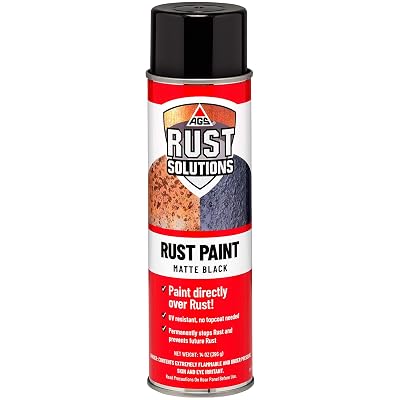
This is a direct-to-rust enamel in a can, and its job on a frame is the geometry no roller reaches: spring hangers, shackle brackets, the inside faces of crossmembers, the welded seams where two plates meet. Those are the exact places brine sits longest, and they are the places most frame jobs skip because they’re awkward.
Be clear about what it isn’t. It’s a thin film — nothing like the build of a bed liner kit — so it doesn’t resist gravel impact. Where I use it is in the shadowed areas that never see a stone anyway, and I let the thick coating handle the exposed rails. Used that way it’s genuinely useful. Used as a whole-frame coating it’s just black paint on a truck frame.
Pros
- Goes over prepared rust without separate primer
- Reaches pockets a roller can’t
- Matte finish hides blind-spray overlap
Cons
- No impact resistance
- Thin build — needs multiple passes
- Not a whole-frame solution
Check Price on Amazon →
Via Amazon.com
Pro tips
Mask the brake and fuel lines before you open anything. Not for looks. A coating bridging a hard line to the frame hides the line from inspection, and a corroded brake line is the failure that actually hurts you.
Two thin coats always beat one thick coat. On a frame this is doubly true — a heavy coat skins over and stays soft underneath for days, and the first stone that hits it takes a sheet off.
Do it in late summer, not November. Every one of these coatings wants dry steel and moderate temperature. Coating a frame that’s been damp for a week seals the moisture in.
Don’t coat over grease. Degrease, then abrade, then coat. A frame carries road film, oil mist and differential weep. Nothing sticks through that, and prep matters more than which brand you pick.
Hit the top of the rails too. Salt spray lands on top of the frame from the tires and sits there under the bed where nothing rinses it.
How much coating will your frame take?
Rough estimator based on wheelbase and how much of the frame you can actually reach. It assumes two coats, which is what you should be planning.

How to choose truck frame paint
Match the film to the impact you’ll actually get
The single question that sorts these products is whether the surface takes stone strikes. Outer rails behind the front tires get hammered; the inside face of a crossmember does not. Thick textured liner belongs on the first, and a thinner direct-to-rust enamel is fine on the second. Buying one truck frame paint for the whole job is how people end up with a gallon of liner they couldn’t reach half the frame with.
One-part or two-part changes the failure mode
One-part coatings dry as the solvent leaves. That means the cured film can be softened again by the same class of solvent — so diesel, brake fluid and gear oil all attack it slowly. A two-component urethane cures by reaction and doesn’t re-dissolve. If your frame lives under leaking seals, that difference decides whether the coating is still there in three years.
Decide the rust question before you buy the topcoat
If there’s active flaking rust, a converter step comes first and the topcoat has to be compatible with it. If the frame is clean steel, skip the converter — it has nothing to react with. Getting this backwards is the mistake I see most often on frame jobs: people buy the finish coating first, discover the rust, and then try to make one product do both.
Colour is not a neutral choice
Matte black hides a lot, which is genuinely useful when you’re spraying blind into a pocket. It also hides new rust bleed for a lot longer than you’d want. If you plan to actually inspect this frame every spring, a coating you can read is worth something. The same logic applies to wheel finishes and engine paint, where matte hides both flaws and warnings.
When frame coating is the wrong call
If the frame is perforated, stop. A coating over holed or flaking-through steel is cosmetic. Rust that has gone through a rail is a structural repair — welding or replacement — and painting it makes the damage harder for the next person to see, including an inspector.
Don’t coat over a frame you haven’t degreased. Every one of these products fails on oil film, regardless of price.
Don’t bridge a coating across brake or fuel lines. Mask them. Federal highway safety officials have flagged salt-corroded brake lines on older vehicles specifically because the corrosion is hard to see, and a coating spanning line to frame makes it invisible.
Don’t do this in the cold. Below the product’s stated minimum, a 2K urethane can stay soft and a converter never finishes reacting. You will not know it failed until spring.
Prep, step by step
No truck frame paint survives a winter on a surface that wasn’t ready for it. This is the sequence, and step three is the one people skip.
- Get it up and get access. Stands, not a jack. You need both hands and a line of sight along the rail.
- Pressure-rinse the underside and let it dry fully — a full day if it’s been wet. Trapped water is the whole failure mode here.
- Degrease everything with a dedicated cleaner and rinse it off. Road film is not dirt; it’s oil-bound.
- Knock down loose rust with a wire wheel or abrasive pad. You’re removing what’s flaking, not chasing shine.
- Converter on the pitted areas if there’s rust, and let it cure per the label before anything goes on top. Our guide to coatings for rusted metal covers how far converters can go. For heavily built-up old coatings, stripping first is faster than fighting it.
- Mask brake lines, fuel lines, driveshaft, exhaust and any labels.
- Two thin coats, respecting recoat windows. Then leave it alone for the full cure time before driving it.
Frame coatings behave much like bed liner products because in most cases they are the same chemistry doing a harder job — and like all direct-to-metal work, adhesion is decided at step three, not step seven. Family Handyman’s guidance on painting over rusted metal makes the same point about surface state.
The verdict
For most people coating a frame that’s still on the truck, the roll-on Herculiner kit plus an aerosol for the pockets is the combination that actually gets finished in a weekend. If the frame is off the truck and you own or can borrow a Schutz gun, Raptor is the more durable film and the better long-term answer. Add the converter only if there is real rust to convert, and keep a can of the aerosol on the shelf for spring repairs — that yearly touch-up does more for a frame than any single choice of truck frame paint.
FAQ
Can I paint a truck frame without removing the bed?
Yes, and most people do. You’ll reach roughly 60% of the surface, which is worth doing. Expect to use an aerosol for the areas above and behind the rails where a roller won’t fit.
Is bed liner good for a truck frame?
It is one of the better choices, because the same properties that make it survive a cargo bed — film thickness and impact resistance — are what a frame needs against gravel. The main caveat is application: it has to reach the whole surface to be worth it.
Do I need to remove all the rust first?
No, and on a pitted frame you can’t. Remove what’s loose and flaking, then use a converter on what remains. Rust that’s flaking will take your coating off with it; stabilised rust in a pit will not.
How long does truck frame paint last?
Through several winters if the film is thick and the prep was right, but the honest answer is that the chip repairs decide it. A frame that gets inspected and touched up each spring outlasts one that got a better coating and was never looked at again.
Can I use regular enamel spray paint on a frame?
You can, but it’s the option most likely to fail in a way that makes things worse. Thin enamel chips down to bare steel on the first stone, and then holds water at the chip edge. If enamel is what you have, use it on the sheltered brackets and put something thicker on the rails.
Should I undercoat or paint the frame?
They solve different problems. A soft, waxy undercoat creeps into seams and stays permanently soft, which is good for hidden cavities and bad anywhere you want a hard surface. A coating like these cures hard and takes impact. Plenty of people do both — coating on the rails, wax-type product inside the boxed sections.
What temperature do I need to coat a frame?
Follow the label minimum for the specific product, and give yourself margin — steel holds cold longer than the air around it. Coating in marginal weather is how a two-part urethane ends up permanently soft.
ThePaintly is reader-supported. Our picks are based on manufacturer specifications and what users report. When you buy through links on this site, we may earn an affiliate commission at no extra cost to you.