Best Paint for Aluminum Boat: A Complete Guide for Protection and Performance
Painting an Aluminum Boat: Which Coating Survives the Water You Actually Fish
The first aluminum hull I helped repaint failed in one season, and it failed for a boring reason. We scuffed it, we washed it, and we went straight to topcoat because the can said it bonded to metal. Aluminum grows an oxide skin within minutes of being sanded, and a topcoat laid over that skin is sitting on a layer that is already letting go. The paint did not peel in sheets — it lifted in dull patches along the waterline, which is worse, because you cannot spot-fix it. — Sophie Ulman
Everything below assumes you will use a self-etching or aluminum-specific primer, because that single step decides whether the rest of the job lasts one summer or several. The second decision is the water. Freshwater, saltwater and a trailered boat that sits dry between trips are three different problems, and the coating that is right for one is money wasted on another.
| How you use the boat | Coating family | Why |
|---|---|---|
| Freshwater, trailered, stored dry | Marine enamel or polyurethane over etching primer | No fouling pressure, so pay for abrasion and UV resistance instead |
| Left in saltwater for the season | Aluminum-safe antifouling | Growth is the real enemy; must be copper-free and rated for aluminum |
| Duck hunting and marsh work | Flat camouflage marine paint | Non-reflective finish matters more than gloss retention |
| Interior floors, decks and benches | Non-skid or interior marine coating | Traction and cleanability beat appearance underfoot |
Aluminum boats are lightweight, tough, and versatile. But without the right coating, they can suffer from corrosion, oxidation, or wear. Choosing the best paint for aluminum boat ensures protection, durability, and even style. Whether you use your boat in freshwater, saltwater, or for hunting, the right paint makes all the difference.
This guide covers the types of aluminum boat paints, when to use them, product reviews, and common mistakes to avoid.
Why Painting Aluminum Boats Is Different
Aluminum is non-ferrous, which means traditional paints don’t always adhere well. Proper surface prep and using paints formulated for aluminum are crucial. The paint must do more than look good, it should:
- Resist corrosion in both fresh and saltwater
- Stick to the slick surface of aluminum
- Handle UV rays, scratches, and chemicals
- Provide waterproofing for exposed areas
- Offer antifouling protection when submerged
Types of Aluminum Boat Paints
Polyurethane Paints
Best for topsides and areas above the waterline. Polyurethane paints provide glossy finishes, strong UV protection, and chemical resistance. They are durable but more expensive and require careful application.
Marine Enamel Paints
Affordable and easy to apply. Enamels are widely available and great for DIY projects, but they don’t last as long as polyurethane paints. They may require frequent touch-ups. For comparison, see how durability affects the best paint for laminate cabinets—similar principles apply when protecting high-use surfaces.
Antifouling Paints
If your boat stays in the water, aluminum antifouling marine paint is essential. These coatings resist algae, barnacles, and other marine growth. Always choose copper-free formulas safe for aluminum hulls.
Camouflage Paint
Hunters often choose camouflage paint for aluminum boats. These matte finishes reduce glare and make the boat blend into natural environments. Ideal for duck boats and other waterfowl hunting vessels.
Waterproof Paint
For interiors, bilges, or flooring, waterproof paint for aluminum boats prevents corrosion from standing water. Epoxy and polyurethane-based waterproof coatings are especially effective.
Saltwater vs Freshwater Considerations
- Aluminum boat paint for saltwater must fight both corrosion and fouling. Use antifouling paints designed for aluminum.
- Freshwater boats can rely on marine enamels or polyurethane paints without antifouling if they are stored on trailers.
If you’ve ever timed a house project, you know that painting conditions matter. Our guide on how long does it take to paint a room shows how environment affects drying—and the same applies to boat painting outdoors.
Preparing the Aluminum Surface
The most important step in painting an aluminum boat is preparation. Skipping prep often leads to peeling paint within months.
- Clean the hull to remove grease, dirt, and oxidation.
- Etch the surface with an acid wash or use a self-etching primer for aluminum.
- Sand lightly to create a bonding surface.
- Dry completely before applying primer or paint.
- Prime if required, especially under antifouling coatings.
Preparation techniques are just as crucial as in home painting. See our step-by-step guide on how to clean walls before painting to understand why surface prep is the key to long-lasting results.
Best Paint for Aluminum Boat: Top Products
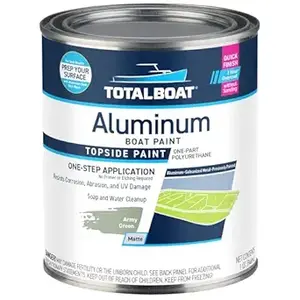
TotalBoat Aluminum Boat Paint
- Designed specifically for aluminum and galvanized metal
- No primer required in many cases
- Dries quickly for faster recoating
- Available in camo-friendly colors like Olive Drab and Earth Brown
Pros: Excellent adhesion, low sheen, good for hunting boats.
Cons: Not antifouling, so not suitable for long-term underwater use.
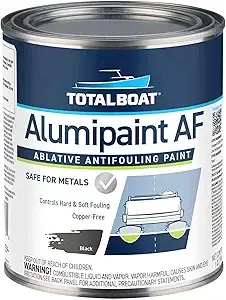
TotalBoat Alumipaint AF (Antifouling)
- Copper-free antifouling paint safe for aluminum hulls
- Works well in saltwater and brackish water
- Protects against barnacles and algae
Pros: Essential for saltwater boats kept in the water.
Cons: Requires good prep and seasonal reapplication.
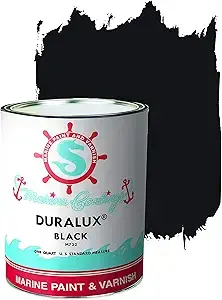
Duralux Marine Enamel
- Available at aluminum boat paint Home Depot locations
- Enamel-based marine paint with resistance to oil, gasoline, and saltwater
- Wide range of colors for topsides and interiors
Pros: Affordable, easy to find, good for DIYers.
Cons: Less durable than polyurethane, fades faster under UV.
Interior Paint Option
For decks, floors, and interior spaces, aluminum boat interior paint should be durable, waterproof, and non-slip if possible. Epoxy-based interior coatings are excellent here. They protect against standing water, impact, and scratches. If you’re interested in how paint resists water in other scenarios, check our article on best paint for fiberglass.
How to Pick Based on Usage
Fishing Boats in Freshwater
Use marine enamels or polyurethane paints. Easy to touch up and affordable.
Duck Hunting or Camo Boats
Go with camouflage paint for aluminum boats in matte tones like Olive Drab or Brown.
Saltwater Use
Choose aluminum boat paint for saltwater that includes antifouling protection. TotalBoat Alumipaint AF is a good option.
Interior Surfaces
Opt for waterproof paint for aluminum boats or epoxy coatings that resist corrosion.
Mistakes to Avoid
- Using regular house paint or hardware-store enamel
- Skipping primers on bare aluminum
- Applying copper-based antifouling paints not safe for aluminum
- Painting in damp or cold conditions
- Ignoring surface prep like sanding or degreasing
For faster curing and smoother application, you can apply the same techniques from our guide on how to make paint dry fast.
Best Overall Choice
If you want a simple, reliable solution:
- For topsides: TotalBoat Aluminum Boat Paint
- For hull bottoms in saltwater: TotalBoat Alumipaint AF
This combination ensures both aesthetics and long-term protection.
Product Recommendations
| Product | Best For | Pros | Cons |
|---|---|---|---|
| TotalBoat Aluminum Boat Paint | Topsides, camo boats | Easy application, camo colors | No antifouling |
| TotalBoat Alumipaint AF | Saltwater bottoms | Copper-free antifouling | Needs reapplication |
| Duralux Marine Enamel | DIY freshwater use | Affordable, accessible | Fades faster |
Conclusion
Choosing the best paint for aluminum boat depends on where and how you use it. For freshwater or trailer-stored boats, enamel or polyurethane paints are sufficient. For saltwater exposure, use antifouling paints that are aluminum-safe. For hunting, camouflage coatings keep your boat concealed. And for interiors, waterproof and epoxy-based paints extend the life of your craft.
With proper prep, the right paint will protect your aluminum boat from corrosion, improve performance, and keep it looking sharp for years.
Will Paint Actually Stick to an Aluminum Boat?
It will, but only if you respect the oxide layer. Aluminum is not difficult because it is slick — it is difficult because it re-oxidizes almost immediately after you expose fresh metal. That is why the sequence matters more than the brand on the can. Clean off wax, oil and old antifouling first. Abrade to dull the surface. Then get an etching or aluminum-rated primer on within the same working session, not the following weekend.
Two other details cause most of the failures I see. Never use a copper-based antifouling on an aluminum hull; the galvanic reaction between copper and aluminum will pit the metal, and the damage is not cosmetic. And do not paint over an unrepaired weld or a corroded rivet in the hope that the coating will seal it. Paint hides moisture, it does not stop it. If you are moving between materials on the same project, our notes on the best paint for fiberglass cover why the prep for a fiberglass hull is a different job entirely, and if humidity keeps stretching your schedule, the tips in how to make paint dry faster apply to marine coatings too.
When NOT to Paint an Aluminum Boat
- When there is active corrosion or a suspect weld. Fix the metal first. Coating over pitting traps moisture against the damage and buys you nothing but a tidier-looking problem.
- In high humidity or below the coating’s minimum temperature. Marine coatings have a stated application window and they mean it. A cure that goes wrong on day one does not recover later.
- With copper-based antifouling. On aluminum this is a galvanic problem, not a preference. Only use antifouling explicitly rated as aluminum-safe.
- On a trailered freshwater boat that never sits in the water. Antifouling is designed to release slowly while submerged. On a boat that lives on a trailer you are paying for a feature that cannot work.
- Over an unknown existing coating. If you cannot identify what is on the hull, test a small area for compatibility before committing. Incompatible layers lift together and take your new work with them.
Frequently Asked Questions
Do I need a primer on an aluminum boat?
Yes, and it needs to be an etching or aluminum-specific primer rather than a general metal primer. Aluminum forms an oxide layer within minutes of sanding, and a topcoat applied over that layer bonds to the oxide instead of the metal. This is the single most common reason an otherwise careful paint job fails within a season.
Can I use regular spray paint on an aluminum boat?
For a hull that goes in the water, no. Standard spray enamel has neither the adhesion system for aluminum nor the water and UV resistance a hull needs, and it will chalk and lift at the waterline. For a trailer frame, an interior bench or a non-submerged accessory, an aluminum-rated spray paint over etching primer is reasonable.
Is antifouling paint necessary on a freshwater boat?
Usually not. Antifouling exists to stop marine growth on a hull that stays submerged, so a trailered freshwater boat gets no benefit from it. If your boat sits in a slip all season, even in fresh water, then an aluminum-safe antifouling starts to make sense.
Why can’t I use copper antifouling on aluminum?
Copper and aluminum in contact with water form a galvanic couple, and the aluminum is the metal that gives way. The result is pitting in the hull rather than a paint problem. Aluminum-safe antifouling formulations exist precisely to avoid this, and the label will state it plainly.
How do I prep an aluminum hull that has old paint on it?
Remove anything loose or flaking, then decide whether the remaining coating is sound and compatible. If you cannot identify it, strip back to bare metal in a test patch and see how your new primer behaves before doing the whole hull. Degrease before sanding rather than after, otherwise you drive contamination into the scratches you just made.
How long does paint last on an aluminum boat?
It depends far more on preparation and on how the boat is stored than on which can you bought. A properly etched and primed hull that gets rinsed after saltwater use and is stored out of constant UV will hold its finish for years. The same coating over rushed prep can look tired after one season.