Best Engine Paint: What Works, What Doesn’t, and What You Should Choose
Your engine isn’t just about performance, it’s also a visual centerpiece under the hood. The right paint protects metal surfaces, resists grime, oil, and heat, and gives your engine a professional finish. But with so many options on the market, finding the best engine paint can be tricky. In this guide, we’ll cover what makes a good paint, the top-rated products you can buy, and practical tips for application. Related: vht vs rust oleum engine paint.
Quick pick: for most engine bays, VHT SP123 550° Engine Enamel is my best-overall pick. If the block is aluminum, the aluminum-specific option further down is the better fit.
What Defines the Best Engine Paint
Engine paint is not house paint with a different label. A block runs hot enough to soften an ordinary enamel, and the parts bolted to it run hotter still — a manifold or downpipe is a job for high heat exhaust paint, not for anything on this page. What you want on a block is:
- Heat resistance: Engines often exceed 500°F, so the paint must resist blistering.
- Chemical resistance: Oil, coolant, and fuel will contact the surface, paint must not dissolve.
- Adhesion: Proper bonding is critical, especially for aluminum and cast iron.
- Durability: It should handle vibration and thermal expansion.
- Appearance: Gloss, matte, or OEM-specific colors should retain vibrancy.
- Ease of application: Spray cans are simple, but brush-on enamels offer thicker coverage.
Preparation decides the outcome more than the can does. An engine has to be degreased to bare, squeaky metal — the same standard that makes or breaks brake caliper paint, and for the same reason: oil film is invisible and paint will not stick to it.
Best Engine Spray Paint Options
VHT SP123 550° Engine Enamel Spray Paint
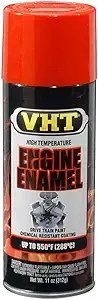
This high heat enamel handles up to 550°F. It comes in OEM-style colors like Chevy Orange and provides a glossy finish.
Pros: Strong heat resistance, glossy finish, widely available.
Cons: Requires multiple coats, color can fade under extreme heat.
Dupli-Color DE1653 Ceramic Engine Enamel Spray
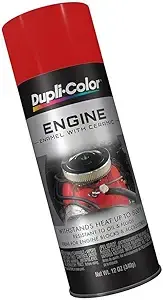
Enhanced with ceramic resins, this paint resists chemicals and delivers smooth coverage with an easy-to-use nozzle.
Pros: Fast drying, bright colors, oil-resistant.
Cons: May bubble if prep work is skipped.
It flashes off quickly, but dry is not cured. Give it the same patience you would give wheel paint before the car goes back on the road — heat-cycling a coating that has not hardened is how you get blisters.
Rust-Oleum 366428 Engine Enamel Spray Paint
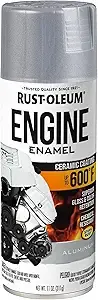
Budget-friendly and durable enough for everyday use. Rated for intermittent temperatures up to 500°F, this enamel resists fuel and grease.
Pros: Affordable multipack, easy coverage.
Cons: Not as heat-resistant as ceramic formulations.
Best Engine Paint for Aluminum
KBS Coatings Aluminum Motor Coater
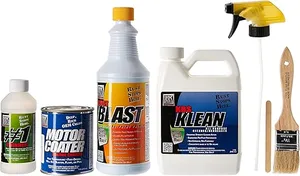
Aluminum needs paint that bonds well, and this coating delivers with a metallic, factory-like finish.
Pros: Excellent for aluminum blocks and motorcycle engines.
Cons: Longer curing time and requires careful prep.
Bare aluminum is its own problem: it grows an oxide skin within minutes of being cleaned, which is exactly why painting car rims goes wrong so often. Etch it, then coat it the same day.
Best High Heat Engine Paint
For extreme conditions, look for paints rated above 550°F.
- VHT FlameProof High Heat Paints: Rated for intermittent temperatures of 1300°F to 2000°F, ideal for exhaust parts.
- KBS High Temp Colors: Strong adhesion and chemical resistance for performance engines.
These are the best high temp engine paint options if you push your vehicle hard.
Best Automotive Engine Enamels
Seymour EN-50 Hi-Tech Engine Enamel
A smooth, factory-like finish that resists oil and gasoline.
Pros: Rich pigment, durable.
Cons: Slower drying, pricier than others.
Rust-Oleum 248941 Chevy Orange Enamel
Perfect for Chevy restorations with a classic orange matte finish.
Pros: Authentic OEM match.
Cons: Matte holds dirt more easily.
Best Paint for Motorcycle Engines
Motorcycles often use aluminum, and fuel splashes are common, so you need a tough enamel.
- KBS Aluminum Motor Coater: Strong adhesion to aluminum.
- Dupli-Color Ceramic Spray: Good for fast touch-ups.
- KBS Gloss Black Motor Coater: Great for blacked-out looks.
Best Engine Paint Spray Cans
Spray cans are convenient and popular for DIY.
- VHT Engine Enamel: Strong heat resistance.
- Dupli-Color Ceramic Spray: Smooth nozzle and color range.
- Rust-Oleum Engine Enamel: Budget-friendly and widely sold.
If You Are Painting More Than One Engine, Stop Buying Rattle Cans
Every product above is an aerosol or a small kit, and for one block that is the right call. But the second time I stripped and repainted an engine bay I counted the cans afterwards: nine. Nine cans of engine enamel, most of them half-empty and gummed up at the nozzle, plus the two I threw out because the tip clogged mid-coat and left a run I had to sand back. Aerosols are cheap per can and expensive per job.
The fix is a gravity-feed gun and a quart of the same enamel you were already buying. A 1.3 mm fluid tip is the size you want for engine enamel — it is the standard tip for light-to-medium viscosity material, which is exactly what a thinned engine enamel or a two-part ceramic is. It lays a thin, even coat into the awkward pockets around the water pump and the bellhousing without flooding the flat faces, which is where rattle cans fail.
TCP Global Professional HVLP Spray Gun, 1.3 mm Gravity Feed with 1-Litre Cup and Air Regulator
This is the full-size gun, not a touch-up gun: a 1.3 mm stainless needle and nozzle set, a one-litre aluminium cup, and — the part that actually matters — a micrometer air regulator with a gauge that mounts at the gun inlet. Engine paint blisters on the first heat cycle mostly because it went on too heavy, and it goes on too heavy when pressure drifts as the compressor cycles. A regulator at the gun is how you stop guessing. Because you control the trigger you can put down two light passes instead of one flooded one.
Pros: One quart covers what six or seven cans would, the one-litre cup means you shoot a whole bay without stopping to refill, the finish is noticeably flatter, and the tip cleans instead of clogging. Stainless needle and nozzle, so solvent will not pit it.
Cons: It wants roughly 4.2 to 7.1 CFM, which is more air than a small pancake compressor will hold, and you have to thin and strain the paint yourself.
When not to buy it: if this is a one-off block on a car you are selling, skip it. Two cans of VHT and an afternoon will get you there for a fraction of the cost, and you will never open the gun box again. This is a tool for the second engine, not the first. And check your compressor before you check the gun: this one wants real air, so if all you own is a small pancake unit the compressor is the expensive half of this purchase, not the gun.
Common Mistakes When Painting Engines
Even the best paint fails if applied wrong.
- Skipping degreasing or sanding.
- Not priming aluminum.
- Spraying heavy coats that don’t cure properly.
- Running the engine before full cure.
Every one of these is a prep failure wearing a paint failure’s clothes. It is the same trap people fall into with bed liner paint — the coating gets blamed for a surface that was never ready.
Tips for Longer-Lasting Engine Paint
- Degrease thoroughly before painting.
- Apply thin coats and allow proper cure.
- Touch up chips early to prevent rust.
- Clean the painted engine regularly to extend life.
A repainted bay is also the cheapest way to make an older car look cared for, which is the same logic behind refreshing automotive body paint: the finish is what people read as condition, long before they look at anything mechanical.
Final Verdict: Which Engine Paint Should You Choose?
Best Overall: VHT SP123 550° Engine Enamel Spray Paint
Best for Aluminum: KBS Aluminum Motor Coater
Best Budget Option: Rust-Oleum Engine Enamel Spray Paint
Best for Extreme Heat:VHT FlameProof or KBS High Temp Colors
Your choice depends on whether you value color accuracy, heat resistance, or cost.
About the author: Sophie Ulman has renovated and painted more rooms than she can count — and made every mistake in the book so you don’t have to. She focuses on real-world durability: not how products perform on day one, but whether the repair holds through a full seasonal cycle.