Do This Before Using Epoxy Floor Paint in Your Garage
Garage Floor Epoxy Prep: The Five Checks That Decide Whether It Peels
Almost every failed garage floor I have been asked to look at failed for the same reason, and it is never the epoxy. It is moisture. The floor looked dry, the owner rolled the coating on a warm weekend, and four months later it lifted in sheets that peeled up like wallpaper with a clean, powdery underside. That clean underside is the giveaway: the epoxy never bonded to the concrete at all, because water vapour was moving up through the slab the whole time. — Sophie Ulman
A garage slab sits on soil, and unless there is an intact vapour barrier beneath it, that soil sends moisture upward continuously. You cannot see it and you cannot feel it. The plastic sheet test below takes fifteen minutes and it is the single step that separates a floor that lasts from an expensive weekend you will repeat. Work through the checks in order — each one assumes the previous one passed.
| Check | What you are looking for | If it fails |
|---|---|---|
| Moisture | No condensation under taped plastic after 24 hours | Stop. Address the moisture source before coating anything |
| Contamination | Water beads or soaks in evenly across the slab | Degrease oil-stained areas until water absorbs |
| Profile | Surface feels like medium sandpaper after etch or grind | Re-etch or grind; a smooth slab gives epoxy nothing to grip |
| Cracks | No open cracks, spalling or loose edges | Repair and cure fully before coating |
| Existing coating | Bare concrete, or a sound coating you can identify | Strip or grind off anything unknown or flaking |
If you’re planning to transform your garage floor with a glossy, durable epoxy coating, preparation is the key to success. Before you grab the roller, there are important steps you must take. Skipping them could mean peeling, bubbling, or poor adhesion. This guide covers exactly what to do before using epoxy floor paint in your garage so your results last for years.
Why Preparation Matters for Epoxy Floors
Epoxy doesn’t behave like regular paint. It bonds with the concrete surface, and if the floor isn’t clean or properly prepared, the coating won’t stick. Good preparation ensures a stronger finish that resists stains, chemicals, and wear.
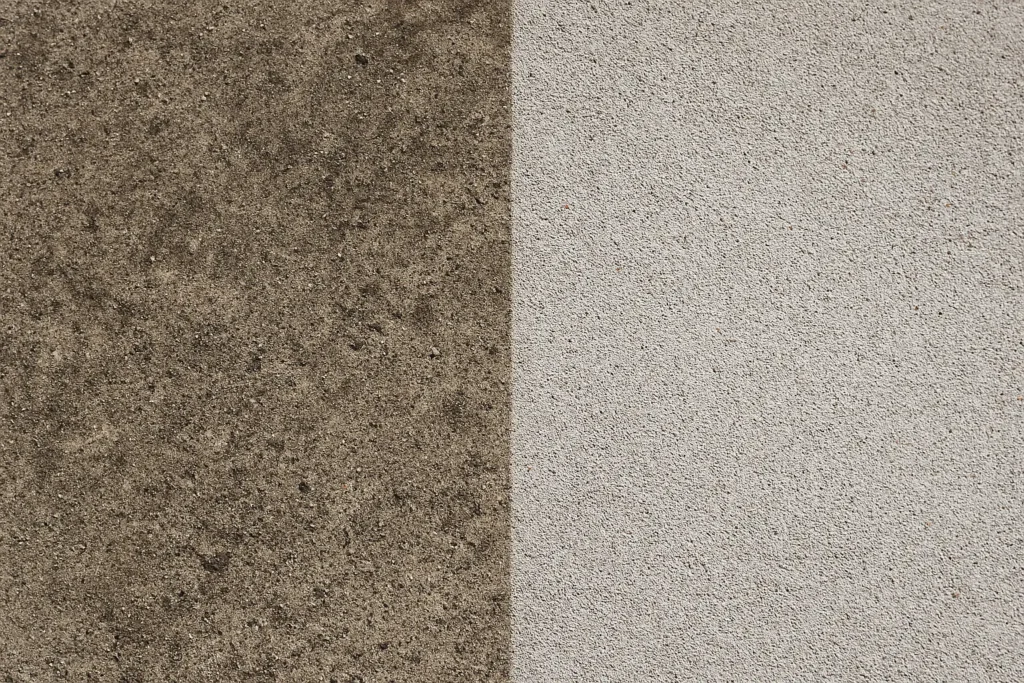
Similar to cleaning walls before painting, epoxy requires a spotless surface to adhere correctly.
Step 1: Clear and Clean the Garage Floor
Remove everything from the garage and sweep thoroughly. Scrub the surface with a degreaser to remove oil and grease. If moisture or dirt remains, epoxy adhesion will fail.
For tips on faster drying, see how to make paint dry fast.
Step 2: Repair Cracks and Imperfections
Examine the concrete for chips or cracks and repair them with an epoxy patching compound. Many ask, can you epoxy over existing cracks? While possible, the cracks will show through, so patching is the smarter option.
Step 3: Etch or Grind the Surface
Epoxy adheres best to a roughened surface. Use acid etching or a grinder to open up the concrete pores. If you skip this step, you may wonder later, will paint adhere to epoxy? The answer is no without proper surface prep.
Step 4: Moisture Test the Floor
Perform a moisture test by taping down a piece of plastic overnight. If condensation forms underneath, your slab may not be ready for epoxy unless you add a vapor barrier.
Spraying Epoxy Over Existing Paint
A frequent question is whether spraying epoxy over existing paint works. The truth is epoxy bonds best to bare concrete. If paint is present, strip or grind it away first. Otherwise, peeling is inevitable.
To learn more about removing old paint, check out how to remove paint with steam.
Can I Paint Over Epoxy or Recoat an Old Floor?
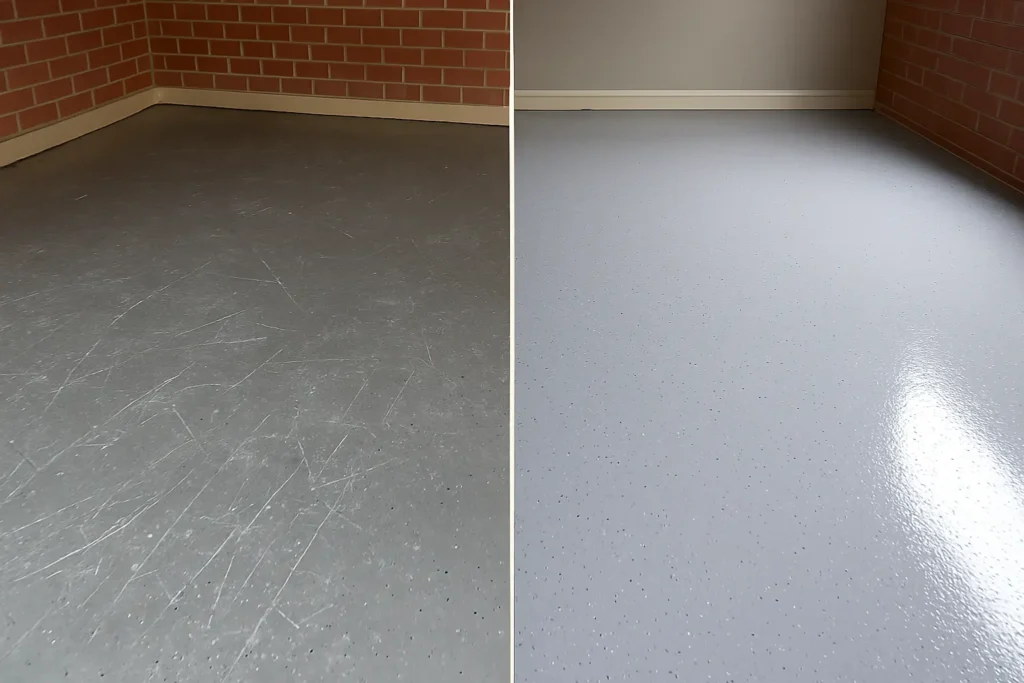
Yes, you can recoat an epoxy floor, but only if the old surface is in good shape. Light sanding or grinding creates a rough texture for the new coat. If the old coating is peeling, it’s best to resurface the garage floor with epoxy.
How to Paint Epoxy Floor Properly
Mix the epoxy resin and hardener carefully and apply with a roller. Work in small areas, starting from the farthest corner. Always use tools designed for epoxy.
A good option is a paint roller for textured surfaces to achieve a smooth, professional finish.
Paint or Epoxy Garage Floor, Which One Is Better?
When deciding between paint or epoxy garage floor, consider the differences:
- Regular concrete paint is cheaper but wears quickly.
- Epoxy lasts longer, resists chemicals, and provides a polished look.
For wall finishes to pair with epoxy floors, see best paint for garage walls.
Garage Floor Staining vs Epoxy
If you are weighing garage floor staining vs epoxy, here’s the comparison:
- Stains penetrate the concrete, offering a natural finish but less protection.
- Epoxy forms a strong layer that resists spills, scratches, and heavy use.
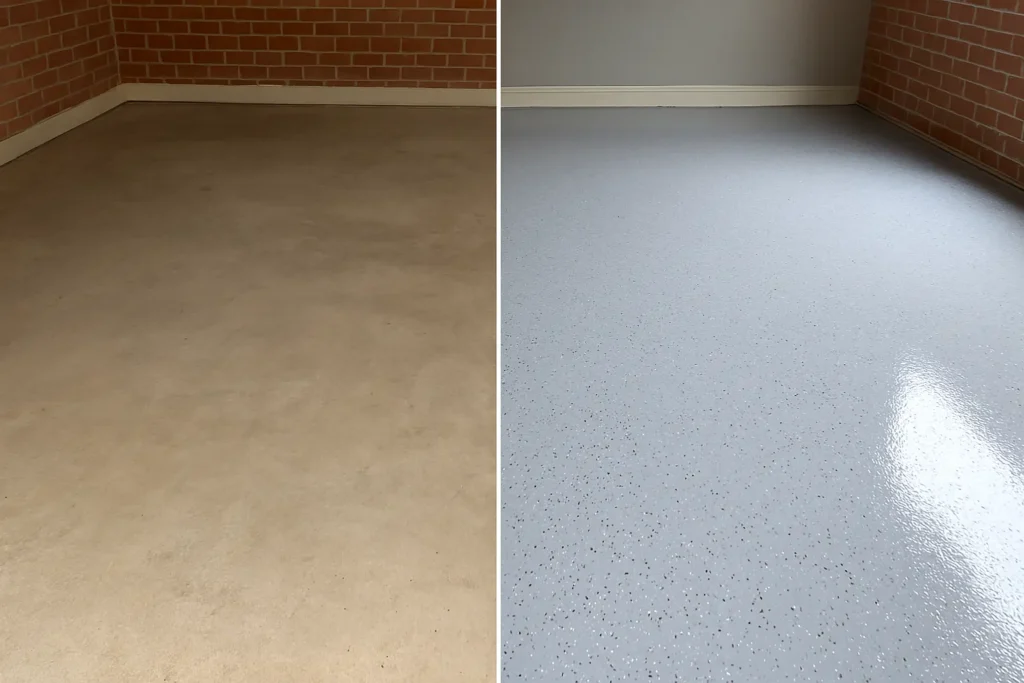
For durability, epoxy remains the preferred choice.
Final Thoughts: The Must-Do Prep
Here’s a quick recap of what you should do before using epoxy floor paint in your garage:
- Clear and clean the floor thoroughly.
- Repair all cracks and imperfections.
- Etch or grind the surface.
- Test for moisture.
- Remove any existing paint or coating.
A well-prepared floor ensures epoxy bonds properly, giving your garage a polished look that will last for years.
How Do You Know if Your Garage Floor Is Too Damp for Epoxy?
Tape a square of clear plastic sheet, roughly two feet by two feet, flat to the concrete and seal all four edges with tape so no air moves under it. Leave it for a full day, then lift a corner. If there is condensation on the underside of the plastic, or the concrete beneath it has darkened, the slab is passing moisture and epoxy will fail on it no matter how well you clean and etch. Test in more than one spot, because slabs are rarely uniform — the area near a garage door often reads differently from the back wall.
A failed test is not automatically the end of the project. It means you need to find the source first, which is usually drainage against the outside wall, a downspout discharging next to the slab, or a slab poured without a vapour barrier. The first two you can fix. The third one limits you to breathable coatings rather than a full epoxy build, and that is a decision worth making before you buy materials rather than after. If the answer turns out to be a different surface entirely, our comparison of driveway paint options covers coatings made for exterior concrete, and our guide to masonry paint deals with the walls that same moisture usually reaches.
When NOT to Epoxy a Garage Floor
- When the plastic sheet test shows moisture. This is the one non-negotiable item on the list. Fix the source or choose a coating that tolerates vapour transmission.
- On new concrete that has not cured. Fresh slabs need to release moisture for a long time before they can be coated. Coating early traps that water under the film.
- Below the product’s minimum temperature. Epoxy cures by chemical reaction and cold stalls it. A cold garage in winter is the wrong place for this job regardless of how the surface looks.
- Over an unidentified existing coating. If you do not know what is on the floor, you cannot know whether epoxy will bond to it. Grind a test patch and check, or strip it.
- On a slab with active cracking or heaving. A rigid coating will not bridge a moving crack. It will telegraph it, then split along it.
One more thing that catches people out: prep the walls before you coat the floor, not after. Dust from grinding and splatter from cutting in will land on a new epoxy surface and stick to it. Our notes on the best paint for garage walls cover that side of the room.
Frequently Asked Questions
Do I have to etch a garage floor before epoxy?
You have to create a profile, and etching is one way to do it. Mechanical grinding is the more reliable method and is what professional installers generally use, because acid etching is inconsistent on dense or previously sealed concrete. Whichever route you take, the finished surface should feel like medium-grit sandpaper. Smooth concrete gives epoxy nothing to key into.
How long should concrete dry before applying epoxy?
New concrete needs a long cure before coating, and the manufacturer’s stated minimum is the figure to follow rather than a general rule. After washing or etching an existing floor, the slab needs to return to genuinely dry throughout, not just dry to the touch. The plastic sheet test is how you confirm that rather than guessing.
Can you put epoxy over existing garage floor paint?
Only if the existing coating is sound, well bonded and you know what it is. Anything flaking, peeling or unidentified should come off. The safe test is to grind a small area and apply your epoxy there; if it lifts or wrinkles within a day, the layers are incompatible and the whole floor needs stripping.
Why did my garage floor epoxy peel?
In order of likelihood: moisture coming up through the slab, an inadequate surface profile, oil or grease that was never fully removed, or application outside the product’s temperature window. A peeled sheet with a clean, powdery underside points to moisture. A peeled sheet with concrete still stuck to it points to weak concrete rather than a coating failure.
Is a two-part epoxy better than a one-part garage floor paint?
Two-part epoxy cures into a harder, more chemically resistant film and stands up better to hot tyres and solvents. It is also less forgiving: you have a working window once mixed, and the prep standard is higher. One-part floor paint is easier to apply and easier to recoat, which for a lightly used garage can be the more sensible trade.
Can I epoxy a garage floor in winter?
Only if you can hold both the slab and the air above the product’s minimum temperature for the whole cure, and slab temperature lags air temperature by a long way. Heating the space for an afternoon does not warm the concrete. In most unheated garages this is a warm-season job.