The Best Metal Fence Paints for Lasting Rust Protection
Updated August 2026 · By Sophie Ulman
Metal fences take more punishment than almost any painted surface. Direct sun, freezing rain, salt air, and constant expansion cycles conspire to crack paint, expose bare metal, and let rust set in within a single winter. Choosing the best paint for metal fence jobs is not about color — it’s about chemistry, adhesion, and rust inhibition working together before the first coat ever goes on.
I compared five direct-to-metal (DTM) paints covering wrought iron, tubular steel, chain link, and decorative metal fencing — checking each one for rust-inhibiting primer content, coverage per quart, dry time, and how it holds up according to contractors and homeowners painting fences in salt air and hard freeze climates.
What a Single Rust Spot Cost Me
The first time I painted a wrought-iron fence, I did everything right except one thing. There was a patch of light surface rust near the gate post that I decided was basically nothing, and I rolled straight over it. Eleven months later that was the only section bleeding orange down the pickets. The paint hadn’t failed — everywhere else it was still glossy and stuck tight. It simply couldn’t stop rust it had sealed underneath itself. Now I treat every speck of oxidation before a brush touches the metal, even when the converter costs me an extra day of cure time. Prep matters more than the brand here, and on metal it isn’t close.
Quick Picks at a Glance
| Pick | Product | Best For | Coverage |
|---|---|---|---|
| Best Overall | Rust-Oleum Stops Rust Gloss Black | All metal fence types | ~100 sq ft/qt |
| Wrought Iron | Rust-Oleum Stops Rust Satin Black | Elegant, low-sheen finish | ~100 sq ft/qt |
| Decorative | Rust-Oleum Hammered Finish | Hiding imperfections | ~100 sq ft/qt |
| Spray Can | Krylon Fusion All-In-One | Small jobs, detail work | ~25 sq ft/can |
| Chain Link | Rust-Oleum Chain Link Paint | Chain link fences, gallon coverage | ~200 sq ft/gal |
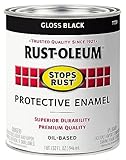
If you only buy one product for a metal fence job, this is it. Rust-Oleum’s Stops Rust line has been the contractor’s default for decades, and the Gloss Black quart earns that reputation every time. Its oil-based alkyd formula bonds directly to bare metal without a separate primer step — the rust-inhibiting pigments in the paint itself act as a first line of defense against moisture penetration. Painters who’ve done dozens of wrought iron and tubular steel fence jobs consistently report 5–8 years between recoats when the prep work is solid.
Application is forgiving: brush, roller, or spray all produce even results because the formula levels well. Dry to touch happens in 2–4 hours; a second coat can go on at 24 hours. The gloss finish repels water aggressively and makes rust staining visible early — which means you can spot a problem before it spreads. One quart covers roughly 100 square feet, so budget two quarts per 50 linear feet of standard picket fencing.
Key spec: Oil-based alkyd formula — bonds directly to metal without a separate primer. Rust-inhibiting pigments built in.
✅ Pros
- No primer needed on clean metal
- Excellent rust inhibition chemistry
- Brush, roller, or spray application
- 5–8 year durability when properly prepped
- Available in many colors beyond black
❌ Cons
- Oil-based — requires mineral spirits cleanup
- Strong solvent smell — ventilate well
- 24-hour recoat window adds project time
Best for: Wrought iron, tubular steel, ornamental metal fencing — any solid metal surface where maximum rust protection matters.
Check Price on Amazon →Via Amazon.com
🔗 Related Reading
- Best Paint Remover for Metal and Wood (2026) — strip old layers before you paint
- Beginner’s Guide to Paint Spray Guns — spray application on large fence sections
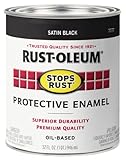
Wrought iron fencing demands a finish that looks as good as it protects. The gloss of our top pick is perfect for some applications, but if your fence borders a garden, front porch, or period-style home, the satin sheen here is far more appropriate. Rust-Oleum’s Satin Black carries the same rust-inhibiting alkyd chemistry as the gloss version — same adhesion, same durability profile — but with a softer, more refined finish that doesn’t show brush marks or minor surface irregularities under direct light.
Wrought iron typically has complex shapes: scrollwork, twisted bars, finials. The satin formula flows into recesses and tight curves without pooling. Homeowners with ornamental iron gate sections consistently report clean, even coverage in two coats without heavy brush dragging. As with all oil-based Stops Rust products, mineral spirits cleanup and adequate ventilation are non-negotiable during application.
Key spec: Satin sheen reduces light reflection — ideal for ornamental iron fencing in architectural or garden settings.
✅ Pros
- Satin finish suits period and ornamental styles
- Same rust-inhibiting formula as gloss version
- Flows well into decorative shapes and scrollwork
- Doesn’t show brush marks under raking light
❌ Cons
- Oil-based — slower dry time and solvent cleanup
- Color options limited compared to water-based lines
Best for: Ornamental wrought iron fences, decorative metal gates, Victorian or period-style fence sections where a gloss finish would look out of place.
Check Price on Amazon →Via Amazon.com
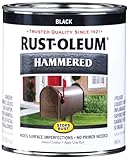
If your metal fence has seen better days — surface pitting, shallow rust craters, minor dents — the hammered texture finish is what professional painters reach for. The multi-fleck pigment formula creates a textured surface pattern that visually disguises small imperfections that would otherwise telegraph through a flat or gloss coat. The base chemistry is still Rust-Oleum’s proven oil-based alkyd with rust inhibitors, so you’re not sacrificing protection for aesthetics.
This finish is popular on older metal estate fencing and tubular steel fences that have surface oxidation but sound structural integrity. The hammered appearance also adds a premium, custom look that plain black can’t replicate — which is why it’s a go-to for painters doing fence restoration on historic properties. Apply in thin coats; the hammered effect develops as the paint levels. Over-applied, it can look clumpy; thin coats produce the most convincing texture pattern.
Key spec: Multi-fleck pigment system conceals surface imperfections — ideal for fences with pitting or minor oxidation damage.
✅ Pros
- Disguises pitting, minor dents, surface rust scars
- Premium decorative appearance
- Same rust-inhibiting alkyd base as other Stops Rust products
- Popular for historic fence restoration
❌ Cons
- Requires thin coats — over-application looks uneven
- Oil-based cleanup; strong odor during application
- Not suitable for smooth, pristine fence sections
Best for: Older metal fences with surface imperfections, estate fencing restoration, any project where you want a custom decorative look alongside solid rust protection.
Check Price on Amazon →Via Amazon.com
🔗 Related Reading
- How to Remove Paint with Steam — strip old layers from iron fencing without chemicals
- How to Paint Garage Walls — same prep principles apply to metal garage doors and panels
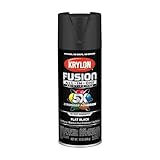
For touch-up work, small fence sections, finials, or intricate scrollwork that a brush struggles to reach, Krylon Fusion All-In-One is the aerosol answer. The Fusion formula bonds directly to metal — no separate primer coat — with a bond that Krylon describes as a “molecular fusion” between paint and surface. In practice, this means noticeably better adhesion than standard spray paints on bare or lightly sanded metal. Coverage per 12-oz can runs approximately 25 square feet, making it best suited for targeted repairs or accent sections rather than full fence painting projects.
Dry time is exceptional: the formula is touch-dry in 20 minutes and can be recoated in an hour. For painters doing fence repairs between rain windows, this speed is a real operational advantage. The spray pattern is consistent, with a wide fan that reduces the risk of striping when you maintain proper 8–12 inch distance. Rust resistance is built in — no separate primer step needed on clean, prepped metal. That said, for heavy rust situations, a dedicated rust-converter primer step still improves longevity significantly.
Key spec: Touch-dry in 20 minutes, recoat in 1 hour — fastest dry time in this roundup. Direct adhesion to metal without primer.
✅ Pros
- No primer needed on clean metal
- Fastest dry time — 20 min touch, 1 hr recoat
- Ideal for scrollwork, finials, detail sections
- Consistent spray pattern; easy for DIYers
❌ Cons
- 25 sq ft per can — expensive for large areas
- Spray drift can be an issue in windy conditions
- Oil-based products outperform it on heavily rusted surfaces
Best for: Touch-ups, intricate ornamental sections, small fence gates, spot repairs on existing painted fences, and quick turnaround projects.
Check Price on Amazon →Via Amazon.com
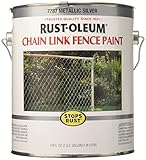
Chain link fencing presents a completely different painting challenge compared to solid metal fence panels. The wire mesh creates hundreds of feet of surface area per linear foot, with tight angles and wire crossings that are nearly impossible to coat evenly with a standard brush. Rust-Oleum designed this gallon-size product specifically for chain link, with a formulation thin enough to penetrate wire crossings via brush or roller without bridging gaps or leaving thick globs at junctions. The metallic silver finish matches the original galvanized look, making it ideal for refreshing older chain link that has dulled or surface-rusted without changing its visual character.
Coverage runs approximately 200 square feet per gallon on chain link — considerably higher than solid fence products because wire mesh has far less actual surface area than flat panels despite its visual density. Rust-inhibiting chemistry is baked in. Many landscape contractors use this product on chain link surrounding commercial properties and school yards where the fence sees heavy weather exposure year-round, and report consistent performance over multiple seasons without significant peeling or flaking at the wire crossings where other paints typically fail first.
Key spec: Formulated specifically for chain link wire — thins enough to coat junctions and crossings without bridging or globbing. ~200 sq ft/gallon.
✅ Pros
- Designed specifically for chain link wire mesh
- High coverage per gallon on wire surfaces
- Metallic silver matches original galvanized look
- Rust-inhibiting formula built in
- Gallon size is cost-effective for longer fence runs
❌ Cons
- Limited to metallic silver color option
- Application still time-consuming on long chain link sections
Best for: Chain link fencing around residential yards, commercial properties, sports courts, and school grounds. Also works on wire mesh garden fencing and livestock panels.
Check Price on Amazon →Via Amazon.com
💡 Pro Tips — Metal Fence Painting
- Rust converter first: On heavily rusted surfaces, apply a rust converter product before painting. It chemically converts active rust into a stable compound that paint bonds to — skipping this step on bad rust is the #1 reason fence paint fails early.
- Spray on flat sections, brush on detail: Use an airless or HVLP sprayer for flat picket panels; switch to a 1-inch natural-bristle brush for scrollwork and finials where overspray control matters.
- Paint temperature: Apply oil-based paints between 50°F and 90°F. Below 50°F, oil-based paints cure too slowly and are vulnerable to moisture intrusion before they fully harden.
- Two thin coats beat one thick coat every time — thick coats trap solvents and develop cracks; thin coats build a dense, flexible film that flexes with the metal through temperature cycles.
You’re in the PAINT phase of the Renovation Protocol. Surface is prepped, rust is neutralized, primer is down. Now the topcoat goes on. Apply in thin, even passes and allow full cure before exposure to heavy rain — typically 24–48 hours for oil-based products.
🧮 Metal Fence Paint Coverage Calculator
Estimated fence surface area: sq ft

How to Choose the Right Metal Fence Paint
Not every metal fence paint performs equally on every fence type. The chemistry that protects a wrought iron gate differs from what survives on a galvanized chain link fence baking in direct sun. Here’s what to evaluate before you buy.
Oil-Based vs. Water-Based for Metal Fences
Oil-based alkyd paints remain the gold standard for outdoor metal because they form a denser, less permeable film that moisture and oxygen struggle to penetrate. Rust-Oleum’s Stops Rust line is oil-based, and field performance data backs up the claim: properly applied oil-based paint on metal fencing routinely lasts twice as long as water-based latex in wet climates.
Water-based (latex) formulas have improved significantly, and they’re legitimately useful where low VOC or faster cleanup matters — especially for painters working near water features or in enclosed spaces. However, for maximum rust protection on outdoor metal fencing, oil-based chemistry still holds a clear durability edge according to the EPA’s coatings guidance for outdoor metal surfaces. Match the formula to the exposure severity, not just convenience.
Direct-to-Metal (DTM) vs. Primer + Topcoat
DTM paints — designed to bond to bare metal without a dedicated primer — have simplified fence painting considerably. The products in this review are all DTM-capable on clean, lightly sanded metal. However, “no primer needed” has limits. On surfaces with active rust, pitting deeper than 1 mm, or previous paint layers in poor condition, a dedicated rust-inhibiting primer applied first will dramatically improve the topcoat’s longevity.
Think of it this way: DTM saves you a step on a fence in good condition. On a fence that’s been neglected for five or more years, skipping primer is the expensive shortcut — you’ll be repainting in two years instead of six. Family Handyman’s metal fence painting guide recommends a rust-inhibiting primer on any surface that shows active rust before the topcoat goes on.
Finish Sheens: Gloss, Satin, and Hammered
Gloss finishes offer the best moisture resistance and are easiest to clean — they repel dirt, bird droppings, and mildew more effectively than flatter sheens. They also show surface imperfections under raking light. Satin finishes offer a middle ground: good moisture resistance with a softer, less reflective appearance that suits traditional and ornamental fence styles. Hammered finishes use texture to conceal surface flaws — excellent on older fences with minor pitting or oxidation damage, where a smooth finish would only make the imperfections more visible.
Coverage vs. Cost: Planning Your Budget
Fence paint cost isn’t just the sticker price — it’s cost per covered square foot over the project. A quart of Rust-Oleum Stops Rust covers about 100 square feet per coat. A gallon of the Chain Link product covers about 200 square feet per coat. For large solid-fence projects, buying gallon sizes cuts per-quart cost by roughly 20%. For chain link fences, plan coverage generously since wire crossings and joints absorb more paint than a flat calculation suggests.
📚 Complete Metal Fence Painting Series
- You are here: Best Paint for Metal Fence — Full Pillar Guide
- Best Paint for Wrought Iron Fence — detailed comparison for ornamental iron
- Best Rust-Resistant Paint for Metal Fence — focused on corrosion protection chemistry
- Best Paint for Rusty Metal — what to use when the rust is already there
Best Paint for Metal Fence: How Long Each Type Actually Lasts
The honest answer to “which one lasts longest” depends less on brand than on chemistry. Here’s what I’ve seen hold up through full seasonal cycles — freeze, thaw, and a summer of direct sun:
- Oil-based DTM enamel — 5 to 8 years. The hardest film of the group and the most forgiving over trace rust. It’s slow to cure and it yellows slightly on white, which is why it’s the default on black iron and almost never on light colors.
- Water-based acrylic DTM — 3 to 5 years. Stays flexible, so it moves with the metal instead of cracking when the fence expands in July. That flexibility is exactly why it’s the better call on long tubular steel runs that shift a lot.
- Aerosol enamel — 2 to 3 years on flat sections. Fine for railings, gate hardware, and touch-ups. On a full fence you’ll run out of patience and consistency before you run out of cans.
- Chain-link specialty coating — 4 to 6 years. Formulated to cling to galvanized wire, which normal enamel sheds within a season.
If your fence already has rust past the surface layer, start with the product breakdown in our guide to rust-resistant paint for a metal fence before choosing a topcoat, and read up on painting metal that’s already rusted — the sequence matters more than the can. For ornate iron with a lot of scrollwork, the technique differs enough that we cover it separately in the wrought iron fence guide. Two thin coats always beat one thick coat, on every one of these.
Prep Steps Before You Paint a Metal Fence
Prep determines whether your paint job lasts two years or eight. This is where most DIYers lose the battle — they buy the right paint and skip the right prep.
- Remove loose and peeling paint. Use a wire brush, angle grinder with a wire cup wheel, or chemical paint stripper. See our guide to the best paint removers for metal for product-level guidance.
- Treat active rust. Apply a rust converter product to any areas with active rust. Let it cure per manufacturer instructions — typically 24 hours. This step is non-negotiable on fences with significant oxidation.
- Sand or scuff the surface. 80-grit sandpaper on flat sections; a wire brush on detail areas. You’re creating mechanical adhesion for the paint. Clean bare metal is the goal.
- Clean with mineral spirits. Wipe down the entire fence to remove grease, dust, and sanding residue. Paint applied over contaminants will peel prematurely — guaranteed.
- Prime if needed. On fences with heavy rust history or surface pitting, apply a rust-inhibiting metal primer before your topcoat. Let it dry fully.
- Check the weather. Ideal painting conditions: 50–85°F, humidity below 85%, no rain expected for 24 hours. Oil-based paints need at least 24 hours to cure before rain exposure.
When Painting a Metal Fence Is the Wrong Call
Four situations where I’d tell you to stop and put the can down:
- New, still-shiny galvanized fencing. Fresh zinc sheds paint. Either let it weather outdoors for six months or use a dedicated etching primer first — a DTM enamel straight onto bright galvanizing will peel in sheets.
- A powder-coated aluminum fence still in good shape. You’d be trading a baked factory finish for a coating you now have to maintain every few years. Clean it and leave it.
- Rust that has pitted through the metal. If a screwdriver sinks into a picket, that’s a welding and replacement job. Paint over structural rust hides the problem instead of fixing it.
- Below 50°F or above 85% humidity. The film skins over before the solvent leaves. It looks fine on day one and lifts at the edges by spring.
Our Verdict
For most metal fence jobs, Rust-Oleum Stops Rust Gloss Black (B000LNQZ32) is the clear first call — proven chemistry, no primer step needed on clean metal, and field-tested longevity in harsh climates. If your fence is wrought iron in a garden or architectural setting, the Satin Black version gives you the same protection in a finish that suits the style. Older fences with surface flaws? The Hammered Finish conceals imperfections while protecting as effectively as the flat alternatives. For chain link, nothing in this price range matches the Rust-Oleum Chain Link Paint — it’s built for the job. Keep the Krylon Fusion in the toolbox for touch-ups and detail sections where a can is faster than setting up a spray rig.
Frequently Asked Questions
What is the best paint for a metal fence?
The best overall paint for a metal fence is Rust-Oleum Stops Rust Gloss Black (B000LNQZ32). Its oil-based alkyd formula bonds directly to clean metal without a separate primer, and the rust-inhibiting pigments provide 5–8 years of protection when applied over properly prepped surfaces. For chain link specifically, Rust-Oleum’s Chain Link Fence Paint is purpose-designed for wire mesh surfaces.
Do you need to prime metal before painting?
On clean, lightly sanded metal without active rust, the DTM (direct-to-metal) products in this review don’t require a separate primer coat. However, on metal with active rust, pitting deeper than 1 mm, or old paint layers in poor condition, applying a rust-inhibiting primer first will significantly extend the life of your topcoat. Think of primer as insurance on fences that have been neglected.
How long does paint last on a metal fence?
With proper prep and quality oil-based paint, a metal fence should hold its finish for 5–8 years in average climates. Coastal areas with salt air or regions with extreme freeze-thaw cycling will shorten that to 3–5 years. Regular inspection — especially at ground contact points and weld joints — lets you catch early rust and touch up before full repainting is needed.
Can you use spray paint on a metal fence?
Yes — aerosol spray paint like Krylon Fusion All-In-One works well on metal fencing for touch-ups, small sections, and detail work like scrollwork or finials. For large fence runs, spray cans become expensive (roughly $1.00 per sq ft vs. $0.16–0.32 for quart/gallon products). For full fence projects, an airless or HVLP paint sprayer with quart or gallon products is far more cost-effective.
Is oil-based or water-based paint better for metal fences?
Oil-based paint outperforms water-based latex on outdoor metal fences in most climates. Oil-based formulas form a denser, less permeable film that resists moisture and oxygen penetration — the two main drivers of rust. Water-based paints have improved but still show shorter recoat intervals in wet or humid climates. If low VOC or easy cleanup is essential, look for water-based DTM paints specifically formulated for metal (not general latex) — they perform better than standard exterior latex on metal.
How many coats of paint does a metal fence need?
Two coats of topcoat are the standard recommendation for metal fencing. The first coat establishes adhesion and seals the surface; the second coat builds film thickness and color uniformity. On fences with prior rust treatment and a primer coat, two topcoats are sufficient. On bare or stripped metal without primer, consider a third thin topcoat for maximum protection at ground-contact points.
How do I prepare a metal fence for painting?
Preparation is the most important step: (1) Remove loose or peeling paint with a wire brush or chemical stripper. (2) Treat active rust with a rust converter and let it cure 24 hours. (3) Sand or scuff all surfaces with 80-grit paper to create mechanical adhesion. (4) Wipe clean with mineral spirits to remove dust and grease. (5) Apply rust-inhibiting primer if needed. (6) Paint in dry conditions between 50–85°F with no rain expected for at least 24 hours.