
The Best Paint for PVC Pipe That Actually Bonds and Lasts
Updated: June 2026 | By Sophie Ulman
Grab the wrong can and your freshly painted PVC looks great for a week, then sheds color in flakes the first time someone brushes against it. That is the trap with plastic: the surface is slick and non-porous, so ordinary spray paint never grips. Finding the right paint for PVC pipe is not about color or shine first. It is about adhesion. Get that wrong and you are scraping flakes off the floor by month two.
I have painted PVC for irrigation manifolds, a closet rod, and a backyard trellis built from leftover fittings. The first time I rushed it, I used a general-purpose enamel straight from the shelf. Here is what I learned: the paint for PVC pipe you reach for has to be formulated to bite into plastic, or nothing else you do matters. Below are the four sprays that actually held.
Quick picks at a glance
| Pick | Best for | Why it works on PVC |
|---|---|---|
| Krylon Fusion All-In-One | Best overall | Bonds directly to plastic, no primer needed |
| Rust-Oleum Painter’s Touch 2X | Outdoor + UV | Tough enamel film, fade-resistant over a scuffed surface |
| Krylon COLORmaxx Paint & Primer | Budget + color range | Built-in primer, widest color selection |
| Krylon Fusion All-In-One Clear | Sealing topcoat | Locks color in and adds abrasion resistance |
The 4 best paints for PVC pipe
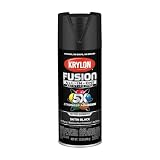
Krylon Fusion All-In-One
Fusion All-In-One is built around a binder that softens the top skin of the plastic and fuses into it as it cures. That is the mechanism that separates a real paint for PVC pipe from a generic enamel: instead of sitting on top of the slick surface, the film mechanically keys into it. On a smooth pipe that is the difference between a coating that survives a fingernail and one that peels in sheets.
I used this on a length of schedule-40 pipe I turned into a garden trellis. It went through a full summer of sun and a wet winter without flaking, even where vines rubbed against it. The one honest limitation: it dries fast, so if you fog one heavy pass instead of two thin coats, you will trap solvent underneath and the finish stays soft for days.
- True direct-to-plastic adhesion
- Touch-dry in about 20 minutes
- UV and weather resistant
- Punishes thick coats with slow curing
- Color range narrower than COLORmaxx
Best for: outdoor PVC projects where you want one product to handle grip, color, and weather without a primer step.
Check Price on Amazon ->Via Amazon.com
Rust-Oleum Painter’s Touch 2X Ultra Cover
This is a heavier-bodied enamel that lays down a thicker, more impact-resistant film than most plastic sprays. The double-cover pigment load means you hit full color in fewer passes, and the cured enamel shrugs off the chalking and fading that wrecks outdoor PVC after a season in direct sun. It is the most durable surface film in this lineup once it is properly anchored.
Here is the catch, and I will not pretend otherwise: Painter’s Touch is not a dedicated direct-to-plastic formula. On bare, glossy PVC it needs a scuff with 220-grit and a wipe-down first, or you will get adhesion failure at the edges. Do that one step and it locks down hard. Skip it and it is the wrong paint for PVC pipe entirely.
- Excellent fade and chip resistance outdoors
- Strong hide in two thin coats
- Huge color and sheen range
- Requires scuff-sanding on glossy PVC
- No built-in plastic bonding agent
Best for: sun-exposed railings, fences, or planters built from PVC where you are willing to sand first for maximum lifespan.
Check Price on Amazon ->Via Amazon.com
Krylon COLORmaxx Spray Paint & Primer
COLORmaxx combines paint and primer in one can, and the primer fraction is what gives it more grip on plastic than a plain enamel. It will not key into PVC as aggressively as Fusion, but the built-in primer fills and grabs the dulled surface well enough for indoor pipe, craft projects, and anything that will not take constant abrasion. It is the value pick when you need an exact color.
I keep a few cans of this for indoor PVC odds and ends — a painted conduit run in my workshop has held color for over a year. The limitation is environmental: on a high-touch or outdoor pipe it does not match the abrasion resistance of Fusion. For low-stress surfaces, though, the price and color selection are hard to beat.
- Widest color and finish selection
- Paint-and-primer in one step
- Lowest cost per can
- Less abrasion resistance than Fusion
- Better suited to indoor or low-touch pipe
Best for: indoor PVC, craft builds, and color-matched projects that will not see heavy handling or weather.
Check Price on Amazon ->Via Amazon.com
Krylon Fusion All-In-One Clear
This is the clear version of the Fusion binder, and its job is to add a sacrificial abrasion layer over your color coat. On a high-touch PVC handrail or a piece that gets bumped, the clear takes the wear instead of your pigment. Because it shares the Fusion chemistry, it bonds to the color coat below without lifting it — something a mismatched lacquer clear can do.
I started adding a clear topcoat after a painted PVC closet rod started showing rub marks where clothes slid across it. One coat of this clear over the color fixed it on the next build. The limitation is simple: it adds a step and a short recoat wait, so skip it on pipe that nobody will touch.
- Adds real abrasion resistance
- Bonds cleanly to Fusion color coats
- Available in matte or gloss
- Extra step and recoat window
- Unnecessary on low-touch pipe
Best for: handrails, closet rods, and any painted PVC that gets touched or rubbed regularly.
Check Price on Amazon ->Via Amazon.com
Pro tips from a peeling disaster
Two thin coats always beat one thick coat. Always. The single fastest way to ruin a PVC paint job is loading it heavy to “get it done.” The surface skins over, the solvent underneath stays wet, and you get wrinkling or soft paint that scratches off for a week.
Dull the shine, do not gouge it. A quick pass with a gray scuff pad or 220-grit knocks the gloss off so paint can grab. You are not trying to sand it smooth — you want a tooth, not a trench.
Wipe with isopropyl alcohol, not just a dry rag. PVC carries mold-release oils and handling grease that you cannot see. Alcohol pulls them off so the first coat actually bonds. Skip this and even the best paint for PVC pipe fails at the edges.
Spray warm, never cold. Below about 50°F the propellant atomizes poorly and the film stays gummy. A warm garage beats a cold driveway every time.
Renovation Stage: PAINT. Painting PVC pipe sits squarely in the paint stage — but the prep stage decides whether it lasts. If your pipe is brand new and glossy, treat the scuff-and-clean step as non-negotiable. Prep matters more than the brand on the can: durability is about half product and half surface preparation.
How many cans of paint for PVC pipe do you need?

How to choose the best paint for PVC pipe
Color and sheen are the easy part. The choice that decides whether your project survives comes down to three things, in this order.
1. Adhesion comes first, always
PVC is non-porous and slick, so paint has nothing to mechanically grab. A dedicated plastic formula like Fusion solves this chemically by softening and bonding to the surface. If you pick an enamel that lacks a bonding agent, you must create the grip yourself with sanding and primer. There is no third option. The same logic drives our best paint for plastic picks, our spray paint for plastic guide, and even our paint for 3D prints roundup.
2. Match the formula to the environment
Indoor pipe that nobody touches can take the budget route. Outdoor PVC in direct sun needs UV resistance or it chalks and fades within a season. High-touch surfaces like handrails need either a tough enamel or a clear topcoat over the color. Think in seasons, not days — how does it look after a full winter, not on day one?
3. Decide if you need a separate primer
A dedicated plastic spray skips the primer. A general enamel does not. If you are working with a tricky or oily plastic, a bonding primer earns its place — the same principle covered in our guide to using primer on the toughest problems and our spray primer picks. For most clean PVC, an all-in-one product is enough. According to Family Handyman, surface cleaning and a light scuff are the steps most people skip — and the reason most plastic paint jobs fail.
When NOT to paint PVC pipe
Do not paint PVC that carries hot water or sees high heat. Paint films and the plastic expand at different rates, so a hot supply line will crack and shed its coating no matter what you used. Pressurized potable water lines are another no — coatings can flake into the line and the joints flex under pressure. Painting PVC is for decorative, structural, drainage, and low-pressure uses, full stop. And if the pipe is brittle, sun-rotted, or already shedding a chalky surface, replace it. Paint will not save failing plastic. The U.S. EPA also notes that choosing safer, low-VOC products matters most in enclosed indoor spaces, so ventilate any indoor PVC painting.
How to paint PVC pipe so it won’t peel
What follows is the short version, the part you need to buy the right can. If you want the full walkthrough with the sanding grit, the flash-off times and the mistakes that cost me a pipe, I wrote it out step by step in how to paint PVC pipe so it won’t peel or flake.
Peeling is not a paint problem. It is a surface problem, and PVC gives paint almost nothing to hold. Run this sequence before you press the nozzle. It takes 15 minutes and it is the whole difference between a one-week finish and a one-year finish.
Step 1 — Clean. Wash the pipe with soapy water, rinse, and dry. PVC collects grease and printing ink that block adhesion.
Step 2 — Scuff. Knock the gloss off with a gray scuff pad or 220-grit. Light and even — you want a dull surface, not scratches.
Step 3 — Degrease. Wipe down with isopropyl alcohol and let it flash off. This removes mold-release oils a rag alone leaves behind.
Step 4 — Paint thin. Two thin coats, 10 to 15 minutes apart, holding the can about 10 inches off the surface and keeping it moving. Patience here is what makes the best paint for PVC pipe actually perform.
The three reasons a job peels anyway
You skipped the degrease. Scuffing a greasy pipe drags the mold-release oil into the scratches instead of removing it. Alcohol after the scuff, never before, and never instead.
You sprayed the first coat too heavy. A wet first coat sits on top of the plastic as a skin and shrinks as it cures, and a shrinking skin lifts at the edges. The first pass should look thin enough that you doubt it worked.
You painted in the wrong weather. Below about 55°F or above 60% humidity the solvent flashes off at the wrong rate and the film never fully bites. Krylon publishes 55°F to 75°F as its working window and that number is not a suggestion.
If a pipe already peeled once, do not paint over it. Scrape or sand every loose edge back to sound plastic first — new paint bonds to old failing paint exactly as well as the old paint is bonded, which is to say not at all.
Painting PVC and vinyl shutters: what changes
Shutters are the same plastic family as pipe — rigid PVC or vinyl — so the bonding rules carry over unchanged. Three things do not.
Heat is the real enemy, not abrasion. A dark shutter on a south wall can run 40°F hotter than the air around it, and vinyl expands as it heats. Dark colors over vinyl are the classic warp story. If you want black or deep navy, look for a vinyl-safe formula rated for heat-reflective pigments rather than a standard enamel, or accept that a lighter shade of the color you want is the safe version.
Faded shutters need washing, not sanding. That chalky grey bloom on an old shutter is oxidized vinyl, and it wipes off. Scrub with soapy water and a stiff brush until a wet finger stops coming away grey, rinse, dry completely. Scuffing comes after, and it is lighter than on pipe because shutter faces are thinner.
Louvers eat time. A brushed shutter with fixed louvers takes roughly four times as long as a flat panel and shows every lap mark between slats. This is the one PVC job where spraying is not a luxury.
I learned the heat lesson the expensive way. I repainted a set of louvered shutters on a client’s west-facing wall a deep charcoal with a standard exterior enamel, and by the second August they had cupped enough that the top corner stood a half-inch off the siding. The paint was fine. The plastic underneath it was not. We replaced them and I have not put a near-black over vinyl since.
Same-family reading if your project is next door to this one: can you paint PVC trim covers the warp question on trim boards, and can you paint a vinyl fence works through the identical heat problem across a much larger surface.
The verdict
For almost everyone, Krylon Fusion All-In-One is the best paint for PVC pipe — it bonds directly, skips the primer, and holds up outdoors. If your pipe lives in full sun and you will sand first, Rust-Oleum Painter’s Touch 2X gives you the toughest film. On a budget or chasing a specific color indoors, Krylon COLORmaxx wins. And for anything that gets handled, seal it with Fusion Clear. Whatever you choose, the prep decides the outcome.
Frequently asked questions
Do you need to prime PVC pipe before painting?
Not if you use a dedicated plastic spray like Krylon Fusion — it bonds without primer on clean, scuffed pipe. If you use a general enamel, yes: prime first or it will peel.
What is the best paint for PVC pipe outdoors?
For sun and weather, a UV-resistant enamel like Rust-Oleum Painter’s Touch 2X over a scuffed surface, or Krylon Fusion All-In-One for a no-prep option. Both resist fading far better than craft paint.
Why does paint peel off PVC pipe?
Because PVC is slick and non-porous, so paint cannot grip a glossy, dirty surface. The fix is cleaning, a light scuff to add tooth, and a plastic-bonding formula. Skip those and any paint flakes.
Can you paint PVC pipe that carries water?
You can paint drainage and low-pressure decorative lines. Do not paint hot-water or pressurized potable lines — heat and pressure flex the plastic and crack the coating.
How long does painted PVC pipe last?
With proper prep and a plastic-bonding spray, expect several years outdoors and longer indoors. A clear topcoat on high-touch pipe extends it further by taking the abrasion.
What paint do you use on PVC and vinyl shutters?
The same plastic-bonding sprays that work on pipe, with one restriction: keep the color light to mid-tone. A vinyl shutter in a dark color absorbs enough heat to expand and cup, and no coating stops that.
How do you repaint vinyl shutters that have faded?
Wash the chalky oxidation off with soapy water and a stiff brush until a wet finger comes away clean, dry fully, scuff lightly, then spray two thin coats. Painting over the chalk is the usual reason a shutter job fails in one season.
Do you have to sand PVC before painting?
Lightly, yes — a quick scuff with 220-grit or a gray pad. You are dulling the gloss to give paint a tooth, not sanding it smooth. Even no-prep sprays last longer over a scuffed surface.