Solid vs Semi-Transparent Deck Stain — What the Pros Know
Updated: May 2026 · By Sophie Ulman · 7 min read
Solid vs Semi-Transparent Deck Stain — What the Pros Know (And DIYers Don’t)
The debate over solid vs semi-transparent deck stain trips up more homeowners than almost any other deck question. Choose the wrong type for your deck’s condition and you’ll be back out there stripping and restaining in 18 months. Choose the right one and your deck looks great for 4+ years with minimal maintenance. This guide cuts through the marketing language to give you a clear decision framework — along with the best product in each category so you can buy with confidence. The difference between solid vs semi-transparent deck stain comes down to three factors: your wood’s current condition, how much maintenance you’re willing to do, and whether you care about seeing the natural grain. Neither option applies to composite decking, which needs its own approach — see can you paint Trex decking.
Solid vs Semi-Transparent Deck Stain at a Glance
🔵 Solid Deck Stain
- Opaque — hides wood grain completely
- Best durability: 3–5 years on decks
- Hides cracks, discoloration, weathering
- More pigment = better UV protection
- Can peel on horizontal surfaces
- Harder to recoat — requires stripping
🟡 Semi-Transparent Stain
- Translucent — wood grain shows through
- Moderate durability: 1–3 years on decks
- Penetrates wood — won’t peel
- Easier to maintain and recoat
- Less UV protection than solid
- Can’t hide major defects or damage
| Factor | Solid Stain | Semi-Transparent | Transparent |
|---|---|---|---|
| Durability on decks | 3–5 years | 1–3 years | 1–2 years |
| Peeling risk | Higher (surface film) | Low (penetrating) | Very low |
| UV protection | Excellent (heavy pigment) | Good | Minimal |
| Hides defects | Completely | Partially | Not at all |
| Wood grain visible | No | Yes | Fully |
| Recoating ease | Hard (strip required) | Easy (clean + recoat) | Very easy |
| Best wood condition | Damaged / old | Moderate weathering | New / excellent |
| Maintenance cycle | Strip every 3–5 yrs | Clean and recoat | Clean and recoat |
Quick Picks by Category
| Category | Product | Best For |
|---|---|---|
| 🔵 Best Solid | Cabot Solid Color Decking Stain — Redwood | Old, damaged decks needing full coverage |
| 🟡 Best Semi-Transparent | Ready Seal 112 Natural Cedar | Moderately weathered decks, easy application |
| 🌿 Best Penetrating Oil | Cabot Australian Timber Oil — Amberwood | Premium restoration, severely weathered wood |
| ⚡ Most Accessible | Thompson’s WaterSeal Transparent — Natural Cedar | New or lightly weathered decks, same-day application |
Top Products for Each Stain Type — Full Reviews
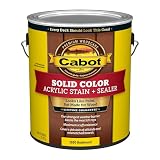
In the solid vs semi-transparent deck stain debate, Cabot’s Solid Color Acrylic Decking Stain represents the solid side at its best. This 100% acrylic formula delivers a rich, uniform color that completely conceals cracked boards, discoloration, old paint, and severe weathering damage — transforming a deck that would otherwise need replacement into a showpiece. The Redwood tone is a classic, warm choice that complements most home exteriors. Applied correctly, it creates a water-repellent, fade-resistant finish that outlasts most semi-transparent options on horizontal surfaces.
The solid formula is designed for use on both new and previously stained or painted wood in clean, sound condition — it bonds exceptionally well to existing coatings without requiring stripping in most cases. Coverage is 200–400 sq ft per gallon for the first coat, improving to 400–800 sq ft for the second coat as the wood becomes less porous. One critical note: once you go solid, you stay solid. Transitioning back to a semi-transparent later requires full stripping, which is a multi-hour project. Choose solid stain when your deck’s condition demands it — not just because you want more durability.
- Completely hides all wood defects
- Excellent UV protection (heavy pigment)
- 3–5 year durability on decks
- Bonds over existing coatings
- 1,000+ custom tintable colors
- Hides natural wood grain entirely
- Peeling risk on horizontal surfaces after year 3
- Requires stripping to switch finish types
- Not ideal for newer wood in good condition
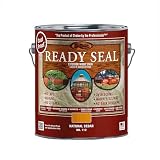
On the semi-transparent side of the solid vs semi-transparent deck stain comparison, Ready Seal 112 is the standout performer for weathered wood. Its oil-based penetrating formula soaks into the wood fibers rather than forming a surface film — which means it physically cannot peel, blister, or flake. For homeowners who’ve had bad experiences with solid stains that peeled after a couple of winters, Ready Seal offers a liberating alternative: you get reliable 2–3 year protection with a recoating process that requires only cleaning (no stripping, no sanding).
The Natural Cedar color enhances the warm tones in cedar and pine boards while showing the full grain and texture of the wood. The self-leveling formula is forgiving on uneven or rough weathered surfaces — it flows into gaps, knots, and cracks without leaving brush marks or lap lines. Coverage runs 150–200 sq ft per gallon on weathered wood. Apply with a brush, roller, or pump sprayer. Ready Seal is the professional deck contractor’s choice precisely because it performs consistently on real-world weathered decks without the preparation demands of solid stains.
- Penetrating oil — zero peel risk
- Recoat with cleaning only (no strip)
- Self-leveling on rough weathered boards
- Stain + sealer in one product
- Multiple natural wood tones
- Can’t hide major wood defects
- Oil-based — 24–48 hr dry time
- Less effective over existing film coatings
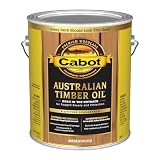
For homeowners who want maximum penetration depth without any surface film, Cabot Australian Timber Oil sits in a category between transparent and semi-transparent deck stain. Its triple-oil formula (linseed, tung, and long-oil alkyd) delivers deeper wood fiber penetration than any film-forming solid stain could achieve. This is the tool professionals reach for when a deck has been severely dried out and needs genuine restoration rather than just a cosmetic coating.
The Amberwood translucent finish is ideal for weathered wood that has gone grey — it neutralizes the grey oxidation color and replaces it with a warm amber-brown tone that looks completely natural. On horizontal decks, expect 2–3 year durability. On vertical surfaces (railings, fascia boards), this formula routinely lasts 4–5 years. The Australian Timber Oil is the benchmark for solid vs semi-transparent deck stain discussions when the goal is restoration rather than coverage. It won’t hide cracks and discoloration the way a solid stain will — but it will keep the wood structurally healthier over time.
- Deepest penetration of the options here
- Restores dried wood from the inside out
- Warm amber tone corrects grey color
- 5+ year longevity on vertical surfaces
- Cannot peel or blister
- Higher cost per gallon
- Lower coverage on porous wood
- Can’t hide structural wood damage
🔧 Pro Tips: Solid vs Semi-Transparent — Making the Right Decision
- Check your wood condition first. Run a finger along the boards. Splinters, deep cracks, grey staining, and previous peeling paint? Solid stain. Firm boards, mild grey coloring, and intact grain? Semi-transparent.
- Know your recoating commitment. Solid stain eventually requires full stripping — a half-day job with chemical stripper and a pressure washer. If you want a deck that only needs a clean and recoat every few years, go semi-transparent penetrating.
- Consider your climate. In high-UV sun belt climates (Florida, Texas, Arizona), the extra UV pigment in solid stains provides meaningful protection that extends wood life. In temperate climates, the difference is smaller and semi-transparent performance is comparable.
- Never switch types without stripping. Applying semi-transparent stain over an existing solid stain (or paint) will fail — the penetrating stain can’t soak through the film. Always strip down to bare wood when changing finish types.
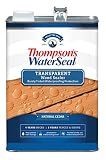
The transparent option in any solid vs semi-transparent deck stain comparison represents the lightest touch — and for new or recently refinished decks, it’s often the right move. Thompson’s WaterSeal Natural Cedar provides reliable waterproofing and UV protection while letting the full natural wood color and grain show. It’s the most accessible deck stain in America, stocked everywhere, and the easiest to apply without specialized tools or preparation requirements.
The transparent formula shines on new cedar and redwood decks where you want to protect the natural color from UV graying without changing or masking anything. It applies in one coat on new wood. On moderately weathered boards, apply two coats for adequate protection. The water-based formula is dry to rain in 2 hours, making it the most schedule-friendly option. Durability is lower than solid or semi-transparent formulas — plan for recoating every 1–2 years on horizontal deck surfaces — but the recoating process is simple: clean and reapply, no stripping ever required.
- Full grain visibility — most natural look
- Same-day application on new PT wood
- Rain-ready in 2 hours
- Available at all hardware stores
- Zero peel risk
- Lowest durability (1–2 years on decks)
- Cannot correct grey or discolored wood
- Minimal UV pigment protection
Renovation Stage: SEAL
Whether you choose solid or semi-transparent, deck staining is a SEAL stage project. Complete all repairs, cleaning, and stripping before application. For our full weathered deck restoration guide, read Best Deck Stain for Weathered Wood.
🧮 Deck Stain Coverage Calculator
Solid and semi-transparent stains have different coverage rates. Solid stains cover more per gallon (200–400 sq ft); semi-transparent penetrating stains cover less on porous wood (150–200 sq ft).

Full Breakdown: Solid vs Semi-Transparent Deck Stain
Durability: The Real Numbers
Solid deck stains win on raw durability — they last 3–5 years on horizontal surfaces compared to 1–3 years for semi-transparent formulas. The reason is straightforward: more pigment and more film-forming binders create a thicker protective layer. According to This Old House’s deck maintenance guide, solid stains also provide better UV protection because the dense pigment blocks more ultraviolet light from degrading the wood fibers underneath.
However, durability on a horizontal deck surface is more nuanced than the label suggests. Solid stains form a film that can peel once moisture gets underneath it — and on horizontal decks, moisture infiltration from below the boards is nearly impossible to prevent entirely. Semi-transparent penetrating stains, by contrast, literally cannot peel because they’ve soaked into the wood. A 2-year semi-transparent stain that simply fades is far easier to deal with than a 4-year solid stain that peels and requires full stripping before recoating. That maintenance reality is why professionals often favor penetrating stains on horizontal surfaces even though their raw durability numbers are lower.
Maintenance: The 10-Year Cost Calculation
When evaluating solid vs semi-transparent deck stain, the 10-year maintenance picture changes the math significantly. A solid stain lasts 4 years but requires a full strip (2–3 hours with chemicals + pressure washer) before each recoat. Over 10 years, you strip and recoat twice. A semi-transparent penetrating stain lasts 2–3 years but recoats with just cleaning. Over 10 years, you clean and recoat 3–4 times — but each application takes 60–90 minutes less than the solid stain process. For the average homeowner, the long-term time investment is roughly equal. The difference is in the nature of that work: chemical stripping vs. a deck wash and roller.
Which Is Right for Your Deck?
The decision tree for solid vs semi-transparent deck stain is simpler than most guides suggest. Ask these three questions in order:
- Does my deck have cracked, splintered, or severely discolored boards? If yes → solid stain. It hides damage that semi-transparent cannot conceal.
- Is my deck currently coated with solid stain or paint? If yes → continue with solid stain. Switching to semi-transparent requires full stripping.
- Do I care about seeing the natural wood grain? If yes → semi-transparent. If no → solid is fine either way.
If you answered “no” to all three, semi-transparent penetrating stain is almost always the better long-term choice. The combination of no-peel protection and easy recoating makes it more practical for most homeowners, even if the label durability numbers look less impressive. For our full guide to the best options specifically for older, grey wood, see our best deck stain for weathered wood roundup. For protecting other exterior wood surfaces with the right finish type, see our best exterior paint for wood siding guide. According to Family Handyman, choosing the wrong opacity level is the single most common cause of premature deck stain failure among homeowners.
Verdict: Solid vs Semi-Transparent Deck Stain
For decks with visible damage, old paint, or severe weathering: Use a solid stain. The Cabot Solid Color Acrylic Decking Stain is our pick — it adheres over existing coatings, provides maximum UV protection, and delivers the clean uniform look that hides all imperfections.
For decks in reasonable condition where the natural wood look matters: Use a semi-transparent penetrating stain. Ready Seal 112 is our recommendation — oil-based, self-leveling, zero peel risk, and recoatable with nothing more than a deck wash.
The bottom line: In the solid vs semi-transparent deck stain debate, there’s no universal winner. The right answer depends on your wood’s condition, your tolerance for maintenance work, and whether you want to see the natural grain. Choose based on your deck’s actual state — not based on which durability number looks bigger on the label.
Frequently Asked Questions
Is solid or semi-transparent deck stain better for durability?
Solid stain lasts longer on paper — 3–5 years vs 1–3 years for semi-transparent. But semi-transparent penetrating stains don’t peel, so real-world maintenance is often easier. On horizontal decks where moisture comes from below, a peeling solid stain every 4 years can actually require more total work than a clean-and-recoat semi-transparent cycle every 2 years.
Can I apply semi-transparent stain over solid stain?
No — not without stripping first. Semi-transparent penetrating stains need to soak into bare wood fibers. If there’s a solid stain or paint film on the surface, the penetrating stain can’t penetrate and will sit on top, leading to rapid failure. Always strip to bare wood before switching from solid to semi-transparent.
Which type of deck stain is easiest to maintain?
Semi-transparent penetrating stains are far easier to maintain long-term. When they fade or wear, you clean the deck and reapply — no stripping, no sanding required. Solid stains require full chemical stripping before each recoat, which is a multi-hour project. This maintenance difference is why many professionals prefer penetrating stains for residential decks despite the lower labeled durability.
What is semi-solid deck stain and how is it different?
Semi-solid stain sits between semi-transparent and solid — it shows some wood grain but provides more color coverage than semi-transparent. It’s a good middle-ground option for decks with moderate imperfections where you want more UV protection than semi-transparent but aren’t ready to commit to a full solid look. Semi-solid stains typically last 2–4 years on horizontal surfaces and require less stripping than solid stains at recoat time.
Does solid deck stain peel more than semi-transparent?
Yes — solid stains form a surface film that can peel when moisture gets underneath. Semi-transparent penetrating stains soak into the wood and cannot peel. On horizontal deck surfaces, moisture infiltration from below is a persistent reality, which is why peeling is more common with solid stains applied to decks. Vertical surfaces (fences, siding) rarely peel because water doesn’t pool on them the same way.
How do I know if my deck needs solid or semi-transparent stain?
Inspect the wood closely. If boards have deep cracks, visible splintering, severe grey or black discoloration, multiple layers of old paint/stain, or structural damage, choose solid stain. If boards are structurally sound with mild greying, intact grain texture, and minimal damage, choose semi-transparent penetrating stain. When in doubt, the rule is: if your deck would embarrass you with a transparent finish, use solid.