What is Milk Paint? A Complete Guide for Homeowners and DIY Enthusiasts
Milk paint is a powdered paint made from milk protein (casein), lime and pigment that you mix with water just before you use it. It dries to a flat, slightly uneven matte that soaks into raw wood and, on sealed or painted surfaces, chips away into the worn antique look it is known for.
That definition matters when you shop, because a lot of what is sold as milk paint today is a ready-mixed acrylic made to imitate the look. If you want the real thing, a powdered casein paint such as Real Milk Paint is what the definition above describes. Below I cover the finish, how long it lasts, where it works and where an acrylic look-alike is the better buy.
What Does Milk Paint Mean?
At its core, milk paint is one of the oldest types of paint in history. Made from natural ingredients, typically milk protein (casein), lime, and pigments—it has been used for centuries to paint furniture, walls, and even historic buildings.
Unlike many modern paints, milk paint does not rely on synthetic chemicals. That means it’s biodegradable, non-toxic, and environmentally friendly, making it a favorite among eco-conscious homeowners.
Think of it as a blend of tradition and style—a paint that not only colors your space but also carries history in every stroke.
What is Milk Paint Finish?
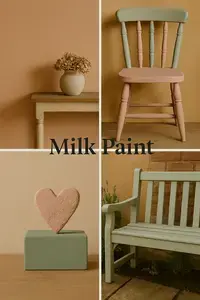
When you apply milk paint, the finish you get is very distinct. It can range from a smooth, matte surface to a chippy, vintage look, depending on how you prepare the surface and whether you add bonding agents.
- On raw or porous surfaces, milk paint soaks in and creates a rustic, authentic finish.
- On pre-painted or sealed surfaces, it can chip naturally, giving a distressed, antique vibe that’s hard to replicate with modern paints.
This makes it a versatile option, whether you want a clean modern wall or a farmhouse-style kitchen table.
The milk paints worth knowing, and what to seal them with:
Real Milk Paint for Multiple surfaces
What it is: a true powdered milk paint, casein plus lime and pigment, that you mix with water. It soaks into raw wood, plaster and other porous surfaces and gives the chalky, uneven matte people mean by milk paint. Mix only what you will use that day, and stir often, because the pigment settles.
General Finishes Water Based Milk Paint
What it is: despite the name, a ready-mixed water-based acrylic rather than a casein paint. It brushes on smoothly and levels well, which is why it is popular for cabinets and furniture, but it will not chip and distress the way true milk paint does. Over bright white, test your clear coat on a scrap first, because some topcoats add a faint yellow cast.
Rust-Oleum 331052 Milk Paint Finish
What it is: a ready-to-use paint sold as a milk paint finish, with a light texture and flat sheen that reads as antique on dressers and side tables. No mixing, no settling, and far more predictable than powder, at the cost of the patchy character of the real thing. Made for indoor pieces.
General Finishes High Performance Water Based Topcoat
What it is: a water-based clear coat for sealing milk paint on anything that gets handled: tables, chairs, cabinet doors. It dries quickly and changes the color very little. Put on two or three thin coats rather than one heavy one, and sand lightly between them.
General Finishes Water Based Dye
What it is: a water-based wood dye, not a paint. I list it because the classic two-tone look, a milk-painted base with a wood top, needs something for the wood half. Dampen the wood first to raise the grain, let it dry, sand it back, then dye.
General Finishes Water Based Wood Stain
What it is: the other option for the wood half of a two-tone piece: a water-based stain that dries fast and has little smell compared with oil stains. Blotch-prone woods like pine and maple take it more evenly with a conditioner first.
Milk Paint Pros and Cons
Before you rush to buy a bucket of milk paint, it’s important to weigh the advantages and disadvantages:

Pros
- Eco-friendly: Made from natural ingredients, it’s safe for both the environment and your home.
- Beautiful texture: Creates a unique finish that regular latex paint can’t replicate.
- Customizable colors: Powder-based, so you can mix your own milk paint colors.
- Breathable: Allows walls and wood to “breathe,” reducing trapped moisture issues.
Cons
- Short pot life: Once mixed with water, it spoils within 24–48 hours.
- Learning curve: Requires practice to achieve consistent results.
- Not always smooth: If you want a perfectly modern, uniform finish, milk paint might not be for you.
Milk Paint Colors: A Wide Range of Options
Gone are the days when milk paint only came in muted tones. Today, you can find milk paint in a wide range of colors, from earthy neutrals to vibrant blues and greens.
Because it’s sold as a powder, you can even experiment by blending different pigments to create custom milk paint colors that perfectly match your design style.
If you’re already thinking about how colors impact your home, check out this guide on the best ceiling paint color to create harmony across your interior.
Is Milk Paint Durable?
One of the most common questions people ask is: Is milk paint durable? The answer depends on how and where you use it.
- On furniture, milk paint can last for decades—especially if sealed with oil or wax.
- On walls, it can hold up well in dry, interior spaces, but may require a sealant for high-moisture rooms like bathrooms.
For spaces with constant exposure to humidity, you may want to consider specialized coatings such as best ceiling paint for bathrooms for long-lasting protection.
Milk Paint Uses: Where Can You Apply It?
The beauty of milk paint lies in its versatility. Here are the most common milk paint uses:
- Furniture Refinishing: Perfect for giving old chairs, tables, and cabinets a vintage makeover.
- Interior Walls: Creates a breathable, natural look for rustic or historic homes.
- Craft Projects: Works wonderfully on small wooden décor pieces.
- Exterior Applications: When sealed properly, it can even be used outdoors.
Before painting walls or ceilings, make sure to clean walls before painting for the best adhesion.
Using Milk Paint: How to Get Started
If you’re wondering what is milk paint how to use, don’t worry, it’s simpler than it sounds.

- Mix the Powder: Combine milk paint powder with water until smooth.
- Test the Color: Always test on a sample piece before applying.
- Apply with Brush or Roller: A natural bristle brush gives the best texture.
- Seal for Durability: Use oil, wax, or polyurethane for a longer-lasting finish.
If you’re working on walls or ceilings, you may also want to check guides like best way to paint a ceiling for professional-looking results.
Milk Paint for Walls: Is It a Good Choice?
Many people hesitate when it comes to milk paint for walls, but it can be an excellent choice, especially in living rooms, bedrooms, or spaces where you want a soft, breathable, and natural look.
However, in high-humidity areas, using alternatives like best paint for bathroom ceilings may be more practical.
What is the Difference Between Milk Paint and Chalk Paint?
This is one of the most common comparisons homeowners make.
- Milk Paint: Powder form, eco-friendly, and provides a natural, authentic finish. Best for porous surfaces and creating an aged look.
- Chalk Paint: Comes pre-mixed, offers a smooth matte finish, and adheres to most surfaces without priming.
If you want a rustic, unpredictable finish, go with milk paint. If you prefer a modern, consistent look, chalk paint might be the better option, and you can tint your own with my four-ingredient chalk paint recipe. For walls, the other old-school mineral finish is limewash paint, which gives a soft, cloudy color that milk paint does not.
Tips for Success When Using Milk Paint
- Prep the surface: Sand lightly and clean well before painting.
- Work in small batches: Because milk paint has a short shelf life once mixed.
- Experiment with layers: Applying multiple coats can give you different textures and finishes.
- Seal strategically: Depending on whether you want a matte, glossy, or distressed look.
For quicker projects, you may also want to explore techniques like how to make paint dry fast.
When NOT to Use Milk Paint
- You want a smooth, uniform finish on cabinets. True milk paint is patchy by nature. A ready-mixed acrylic or a cabinet enamel will look far more even.
- The surface is glossy and you do not want chipping. Without a bonding agent, milk paint flakes off sealed finishes.
- Bathrooms and kitchen splash zones, unsealed. Bare milk paint marks and stains with water. Seal it or choose a washable paint.
- Exterior work you cannot reseal. It can work outdoors under a proper sealer, but it is not a fit-and-forget exterior paint.
Frequently Asked Questions
What is milk paint made of?
Milk protein (casein), lime and pigment, sold as a powder that you mix with water. Some brands add a little clay or chalk as filler.
Is milk paint the same as chalk paint?
No. Milk paint is a powder you mix yourself and it soaks into porous surfaces, often chipping on sealed ones. Chalk paint comes ready mixed and sits on top of most surfaces with a smoother, more even matte.
Do you need to seal milk paint?
On anything that gets handled or wiped, yes. Wax or hemp oil keeps the soft matte look; a water-based topcoat is tougher for tables and cabinets.
Will milk paint stick to painted or varnished furniture?
Not reliably on its own. On a sealed surface it chips, which is the look some people want. If you do not want chipping, add a bonding agent to the mix or scuff-sand and prime first.
How long does mixed milk paint last?
Mixed powder is best used the same day. Kept covered in the fridge it often lasts a day or two longer, but it thickens and can start to spoil, so mix small batches.
Final Thoughts: Is Milk Paint Right for You?
So, what is milk paint? It’s an eco-friendly, versatile paint that has stood the test of time. With its natural ingredients, unique finishes, and wide range of uses, it’s a fantastic choice for DIYers, homeowners, and professionals who value both style and sustainability.
Whether you’re considering milk paint for walls or planning to refinish furniture, this paint offers a look and feel that modern paints often can’t match.
Before you begin, make sure to prepare properly, use the right tools, and consider protective sealants for durability. And if you’re working on a full home makeover, don’t forget to explore guides like benefits of painting your home to get the most out of your project.
About the author — Sophie Ulman
Sophie Ulman has renovated and painted more rooms than she can count — and made every mistake in the book so you don’t have to. She focuses on real-world durability: not how products perform on day one, but whether the repair holds through a full seasonal cycle.