Best Hospital LED Ceiling Panels: A Buyer’s Guide For Patient Comfort, Staff Performance, And 24-Hour Reliability
Lighting in healthcare is not décor, it is clinical infrastructure. The best hospital LED ceiling panels balance comfort for patients, visual accuracy for clinicians, strict safety and hygiene needs, and true 24 hour lighting for hospital operations. This guide explains hospital led lighting requirements in plain language, shows how to choose panels that actually work in patient rooms and corridors, and reviews dependable products you can buy today.
Hospital LED Lighting Requirements, what matters and why
Hospitals use a range of illuminance targets depending on the room and task. Guidance such as ANSI, IES RP-29, and healthcare lighting research emphasize visual comfort, safety, color fidelity, and day–night flexibility, rather than a single “bright as possible” approach. RP-29 frames best practices by space type, encourages glare control, good color rendering, night modes, and layered controls for healthcare environments.
Patient well-being also responds to lighting patterns. Clinical studies and white papers show that disruptive night lighting, poor day–night contrast, or high blue content at the wrong time can impair sleep and mood, while dynamic, circadian-aware lighting can improve sleep timing and even operational outcomes.
Some hospital systems publish practical standards, for example specifying 3500–4100 K in surgical zones with minimum CRI thresholds, a helpful benchmark when vetting vendor data sheets.
Key specs checklist for ceiling panels
If you are new to ceiling work, brush up on surfaces while you are planning light placement. Our guides on the best way to paint a ceiling, best ceiling paint, and best paint for acoustic ceiling tiles are handy when refreshing patient rooms between lighting upgrades.
Lighting requirements for hospital rooms, by space
1- Patient rooms, comfort first, care ready
Use low-glare, dimmable panels that support calm night settings and brighter exam scenes. Aim for selectable CCT and scene control so nurses can increase light for rounds without waking other patients in multi-bed rooms. Research links better day–night cycles to improved sleep and mood, so plan day mode, evening mode, and true night mode with amber night lights for bathrooms.
2- Corridors and nurse stations, safe navigation and visibility
Corridors need even, shadow-free lighting for wayfinding, falls prevention, and observation. Typical guidance sets modest to moderate illuminance with strong uniformity, exactly where flat LED panels excel. Use sensors and scheduling for energy and night comfort.
3- Procedure rooms and clean support areas, accuracy and control
Increase light levels, keep CRI high, and insist on flicker-free drivers. In critical care and surgical suites, follow your facility standards for CCT and minimum CRI.
For finishing touches during renovations, see our practical posts on best ceiling paint color, best way to paint edges between wall and ceiling, and how to clean walls before painting.
24 hour lighting for hospital operations, reliability that never sleeps
Hospitals never power down, which means luminaires must manage heat, hold lumen output over time, and integrate with emergency power. Panels with listed emergency battery options or compatible external packs are a strong plus. Where code requires, tie panels to central emergency circuits and test schedules.
What we can learn from Philips hospital lighting
Philips hospital lighting solutions, including the HealWell system, demonstrate how dynamic lighting can support circadian rhythms in patient rooms, with warm mornings, brighter midday, and low, warm nights. Even if you are not buying a full turnkey system, these principles inform how you configure selectable CCT panels and controls in wards and recovery spaces.
The best hospital LED ceiling panels, real-world picks with pros and cons
Below are dependable, widely available panels suitable for many non-surgical hospital spaces. Always confirm local code, listings, and your infection control needs before procurement.
1) Hykolity 2×4 FT LED Flat Panel Troffer, wattage and CCT selectable
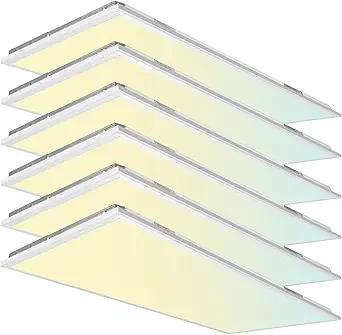
Why it stands out, selectable 40, 50, 60 W operation, 0–10 V dimming, multiple color temperatures, recessed or surface mount with a frame kit, uniform PMMA diffuser that resists yellowing.
Best for, patient rooms and nurse stations where you need day, evening, and night scenes without changing fixtures.
Pros, flexible output and CCT in one SKU, smooth dimming, well documented performance
Cons, frame kit is often a separate purchase, confirm flicker specs if you plan very low night levels
2) Sunco 2×4 LED Flat Panel, selectable CCT and wattage, 0–10 V dimmable
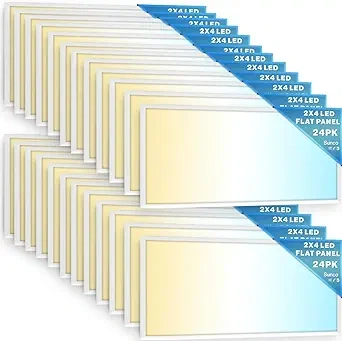
Best for, corridors, staff areas, step-down units that need reliable, uniform light with simple setup.
Pros, easy CCT selection during install, seamless dimming, reputable brand support
Cons, large multi-packs are common, plan your order quantities and spares
3) LED Energy Plus 2×4 LED Flat Panel with Emergency Battery Backup
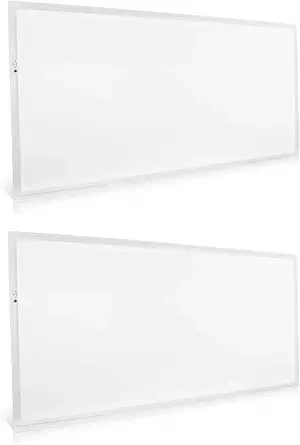
Best for, egress paths, med rooms, and any location where you need stand-alone emergency capability in addition to central systems.
Pros, published backup duration, simple visual status, peace of mind in blackouts
Cons, heavier driver pack, confirm charging clearances and periodic testing workflow
4) Hykolity 2×4 LED Troffer Panel, tunable, back-lit, robust build
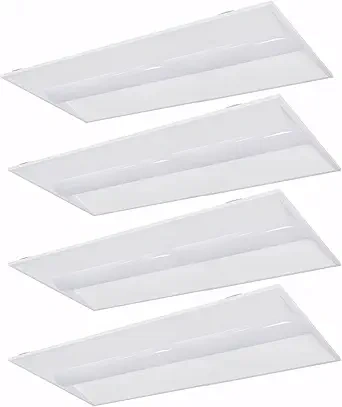
Best for, wider corridors and nurse stations needing higher uniformity and brightness.
Pros, sturdy housing, multiple mounting options, bright and even distribution
Cons, may be overpowered for small patient rooms unless dimming is well tuned
5) Parmida 2×2 LED Panel, compact, dimmable troffer
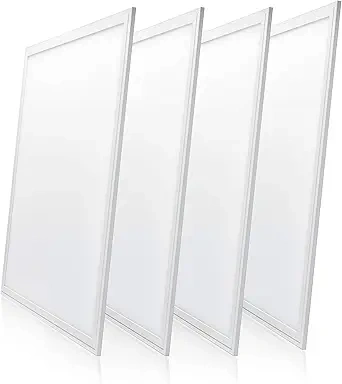
Best for, exam alcoves, small isolation anterooms, or dense grid ceilings.
Pros, size flexibility, tidy integration, established brand
Cons, fewer selectable options than newer 2×4 panels, check driver compatibility with your dimmers
How to integrate panels into hospital lighting systems
Controls and scenes that make a difference
Program scenes like Day, Evening, Night, and Exam, and ensure every panel on a zone dims smoothly. RP-29 updates encourage day and night level strategies in public spaces too, which helps older patients adapt to changes in brightness as they enter from outside.
Circadian support without a premium system
Prefer selectable CCT panels, then schedule warmer CCT and lower levels at night. Combine with low, amber night lights in bathrooms to avoid blue-rich light exposure after midnight. This mirrors Philips hospital lighting principles without buying a full solution.
Emergency planning
If you rely on fixture-level batteries, add them to your life-safety inspection schedule, record test intervals, and label panels clearly. Some panels offer 90 to 120 minutes of emergency output, confirm this against your egress and clinical needs.
Installation checklist for hospital ceiling panels
- Confirm grid type: plenum depth, and infection-control requirements before ordering
- Verify panel listings: driver type, and dimmer compatibility in a mockup room
- Map zones: write a one-page control intent for staff, simple is better
- Add emergency labeling: testing instructions, and QR codes for maintenance logs
- Commission scenes: at real shift times, get nurse feedback before rollout
- Document final CCT: and light levels, and capture photos for future audits
If you are refreshing ceilings, our posts on zinsser ceiling paint and best washable ceiling paint can help you choose durable finishes for high-traffic healthcare environments.
Smart buying tips, avoid common pitfalls
For more specialty panel roundups that you can reuse across admin spaces and clinics, explore our lighting guides for best 2×4 LED ceiling panels, best dimmable LED ceiling panels, and best recessed LED ceiling panels.
Frequently asked questions
Are hospital troffers different from office panels
Sometimes they are the same hardware, but hospitals need better controls, night modes, stricter hygiene requirements, and emergency integration. Choose panels and drivers that support these.
What CCT is best in patient rooms
Many hospitals deploy 3500–4000 K for general use, brighter 4000–5000 K scenes for exams, and warm, very low levels at night. Confirm with your facility standards.
Do I need emergency batteries in each panel
Not always. If you already have central emergency power, batteries add redundancy in key areas. If the facility is smaller or lacks central backup, fixture batteries are valuable.
Final Words
Hospitals require more than just light. They need lighting that heals. The best hospital LED ceiling panels deliver consistent, uniform illumination that supports healing, empowers staff, and ensures safety, even during emergencies.
When selecting, don’t stop at lumens and wattage. Ask:
- Does this panel dim smoothly?
- Can it run 24/7 without failure?
- Does it support patient comfort at night and clinical accuracy during the day?
- Does it integrate with my hospital lighting system and backup plan?
Panels like the Hykolity 2×4, Sunco flat panel, and LED Energy Plus with battery backup check many of these boxes. Paired with thoughtful design and control, they can transform sterile hospital spaces into environments of comfort, safety, and healing.
In healthcare, lighting is care. Choosing the right panels is choosing better outcomes.